


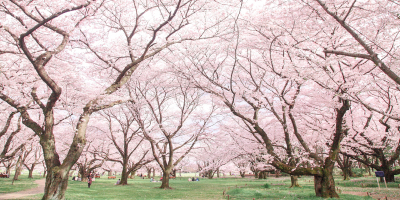


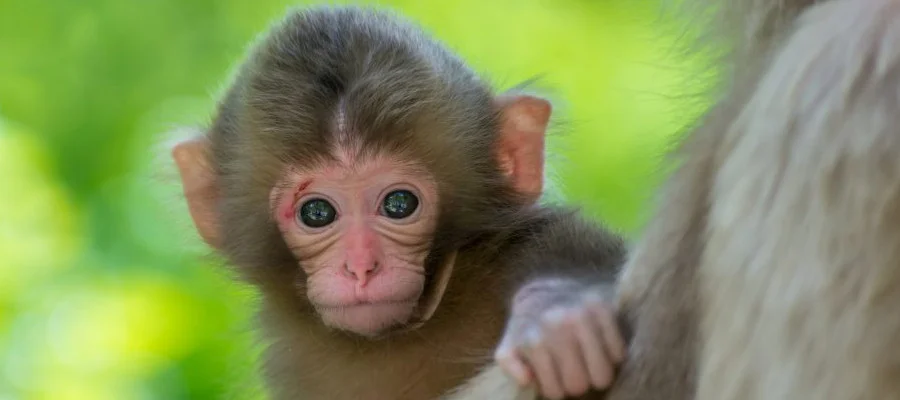
As the weather warms in April and Nagano shakes off its long, cold winter, spring offers many unique reasons to visit the Jigokudani Monkey Park. It is a season of renewal and new beginnings, marked by the blooming of the region’s iconic cherry blossoms and the arrival of the season's first newborn baby monkeys.
Spring at a Glance
Nagano’s Spring: A Season of Late Bloom
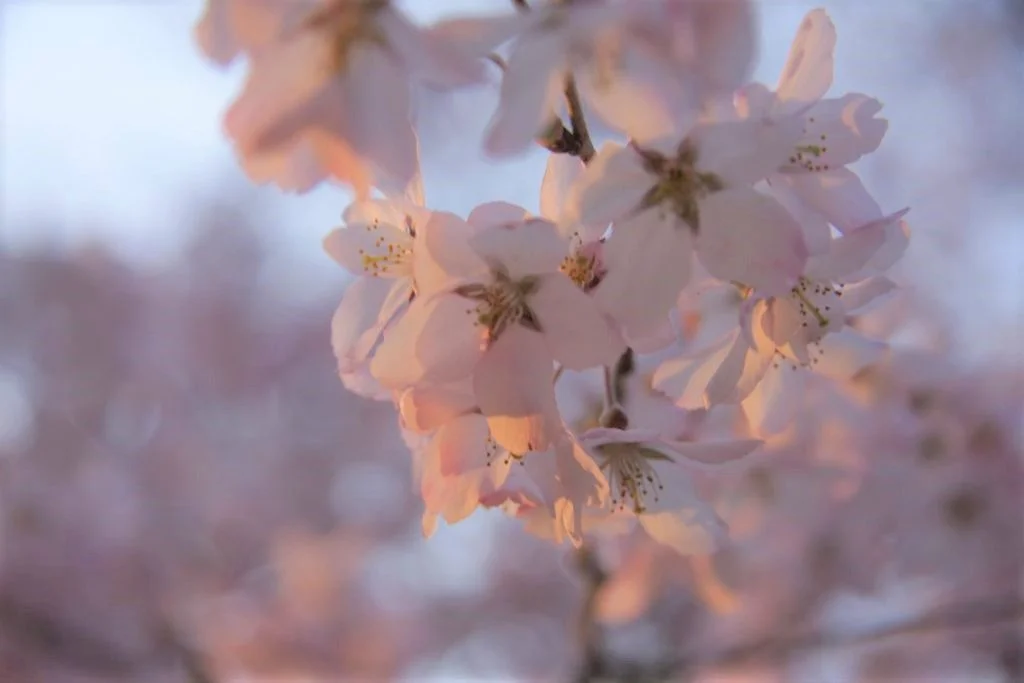
Spring in Nagano arrives slightly later than in other parts of Japan. The heavy winter snow slowly begins to melt from late March into April, revealing a landscape in transition.
As the region awakens, several of Nagano’s most iconic alpine destinations become accessible once again, making spring an ideal time to combine your monkey park visit with other world-class attractions:
- The Tateyama-Kurobe Alpine Route: Featuring its famous massive snow walls.
- Kamikochi: Japan's premier alpine valley.
- The Nakasendo Trail: Historic walking paths through preserved post towns.
The Highlight: Newborn Baby Monkeys
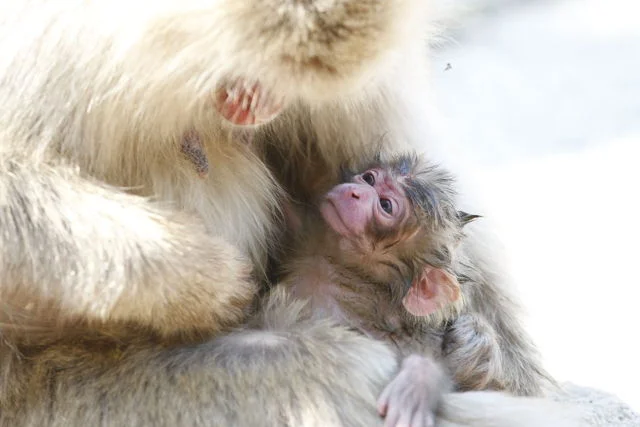
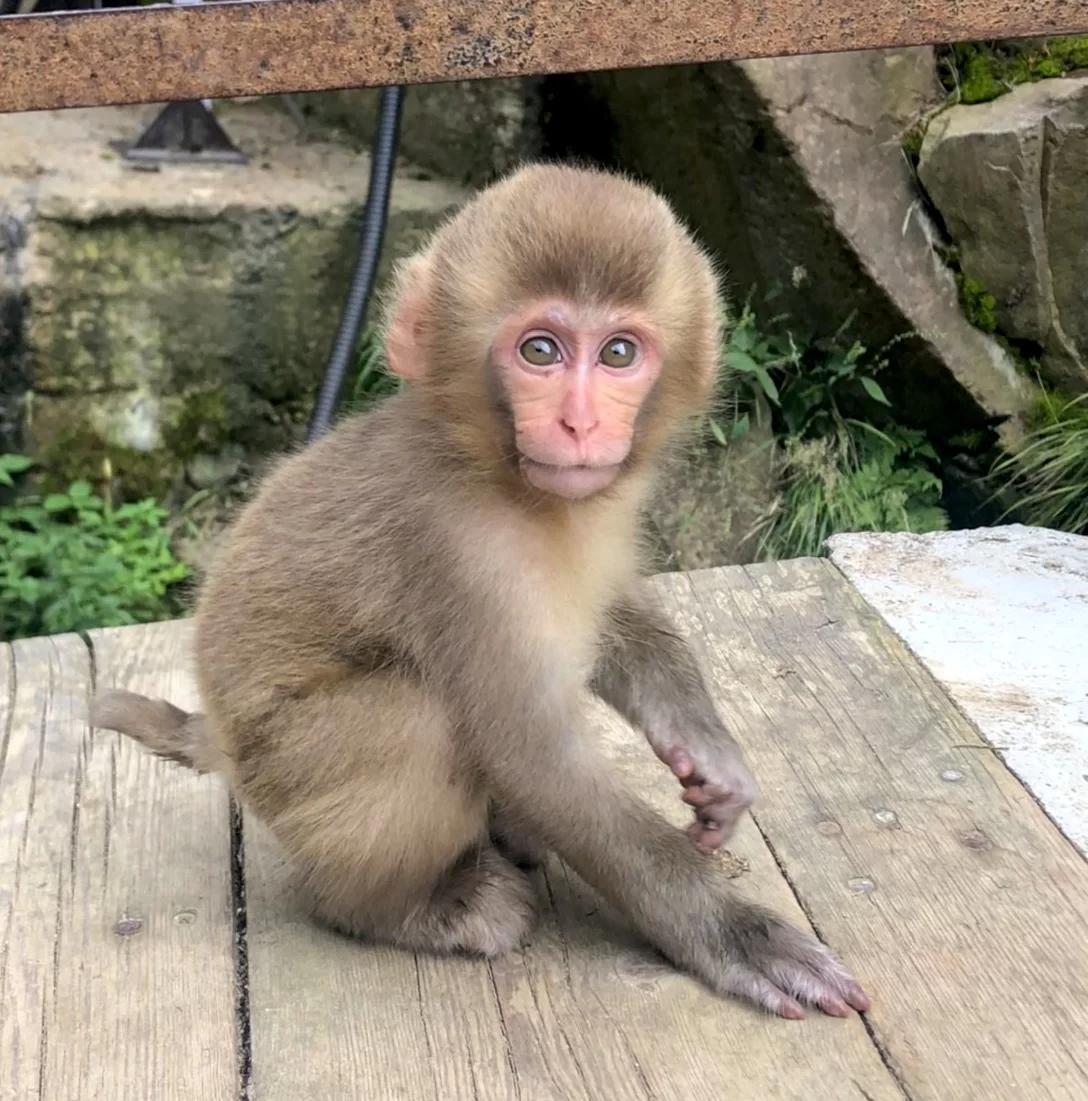
Perhaps the most endearing reason to visit during the spring is to see the newborn baby monkeys. Births typically begin in late April and continue throughout May. Watching these tiny infants cling to their mothers or curiously explore their surroundings is a highlight unique to this time of year.
Snow Monkey Park Operating Hours in Spring
If you are planning a spring visit, it is essential to note that the park’s operating hours change mid-season. The schedule is split into two distinct periods: the Winter Season (November–March) and the Green Season (April–October).
Spring Schedule Breakdown
- March (Winter Season Hours): Typically 9:00 to 16:00.
- April & May (Green Season Hours): Typically 8:30 to 17:00.
Because spring spans both operational blocks, your visiting window will be slightly longer if you arrive in April or May compared to March.
Important Seasonal Notes
- Switchover Dates: Please be aware that the exact date the park switches from winter to green season hours does not always fall on the first of the month; it can vary slightly each year based on local conditions.
- Weather Disruptions: While rare, park hours are subject to change without notice due to extreme inclement weather or other events that may interfere with safe operations.
- Final Entry: We recommend arriving at the trail entrance at least 45–60 minutes before closing time to ensure you have enough time to walk the 1.6km path and see the monkeys before the park gates shut. The last entry for the park is 30 minutes before the listed closing time.
What to Expect in Spring
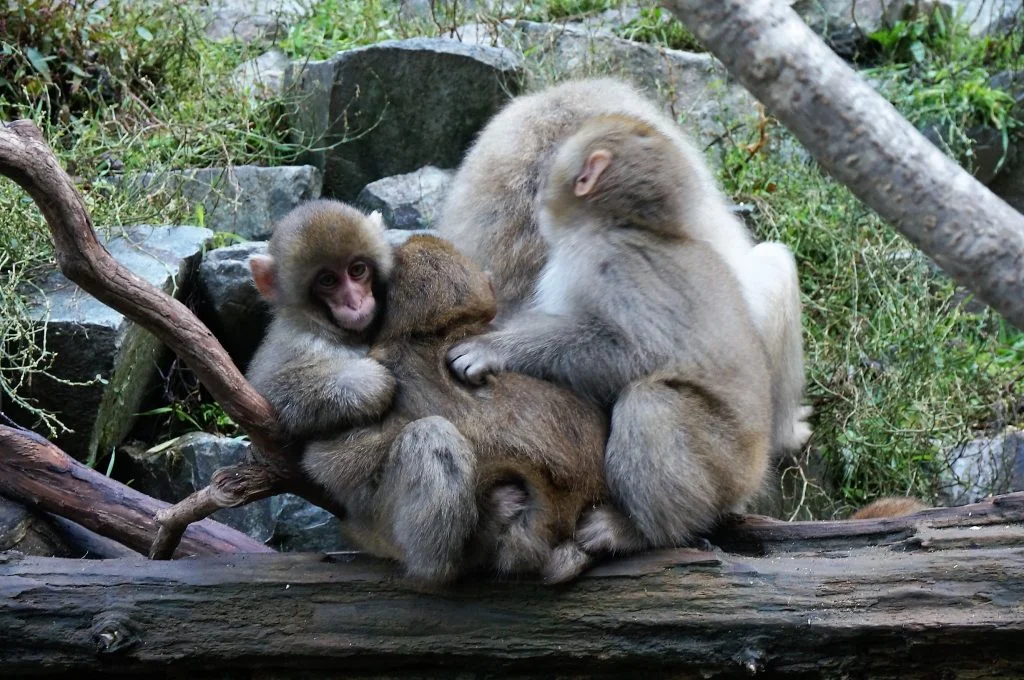
The months of April and May are a fantastic time to experience the park. As the snow vanishes, warmer days trigger a transformation, turning the valley into a lush green sanctuary by late May. You’ll notice the monkeys become notably more active, scurrying through the forest and across the park as they embrace the end of the long winter.
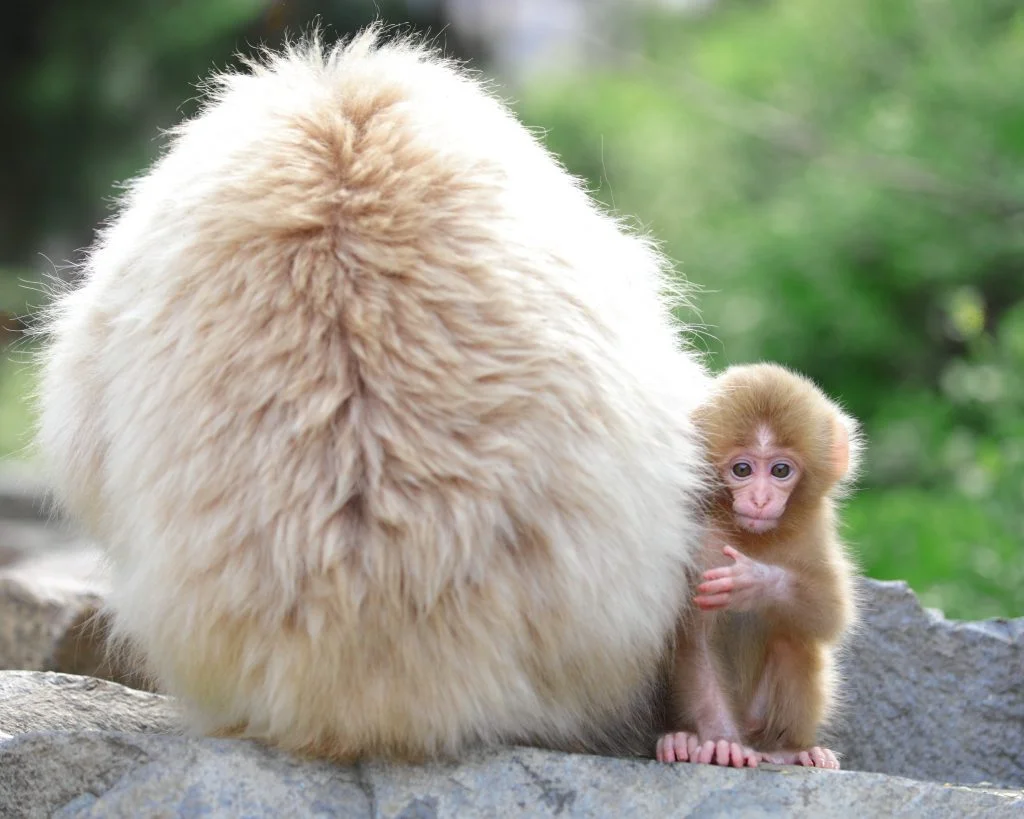
Monkey Behavior & Baby Season
- New Arrivals: From late April onward, expectant mothers retreat into the mountains to give birth in private.
- The Return: After about a week, the mothers return to the park with their newborns.
- Troop Numbers: While total numbers may fluctuate slightly during this "birthing retreat," there are still plenty of monkeys to observe in the park throughout the spring.
The monkeys behavior is reliable from late-April onward, expectant mothers will give birth. Prior to doing so, they retreat into the mountains where they give birth away from prying eyes. Once comfortable again, the mums will return with their babies, often after around a weeklong absence. This means that total monkey numbers can sometimes be less in spring but it isn’t something to worry about.
Trail Conditions & Preparation
- The Path: By April, the trail and park are typically free of snow and ice.
- Footwear: While the walk is easier than in winter, high-quality, sturdy footwear is still highly recommended for the 1.6km forest path. Be prepared for the walk to the park.
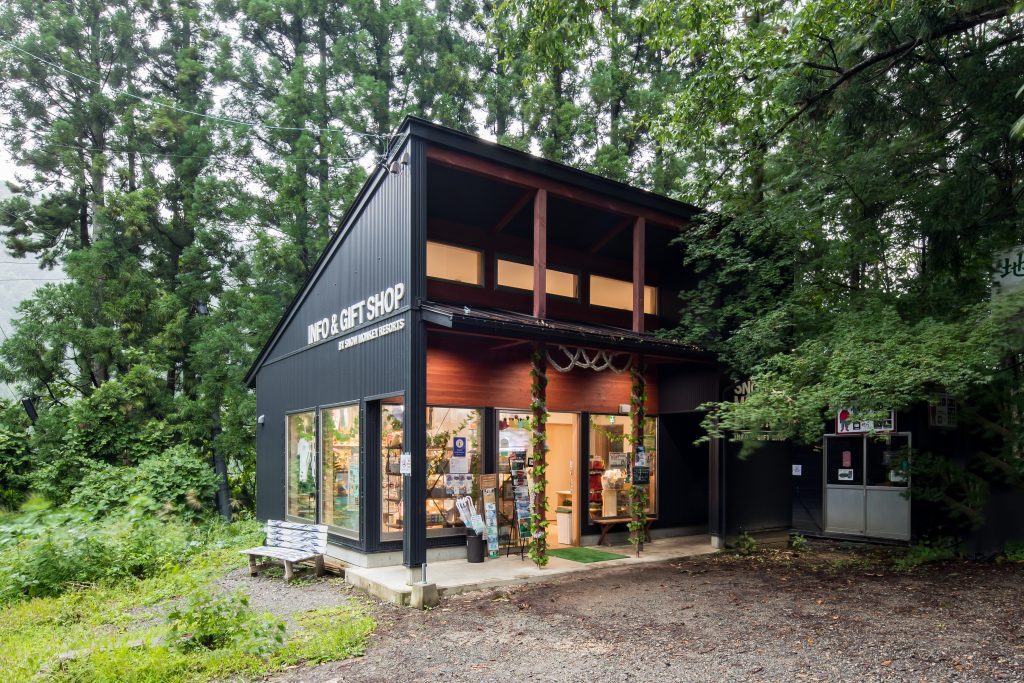
- Support: If you need gear, English-language information, or souvenirs, the Snow Monkey Resorts Gift & Info Shop is located right at the trail entrance.
Dining Near the Park
After your walk, there are two excellent dining options located near the trail entrance:
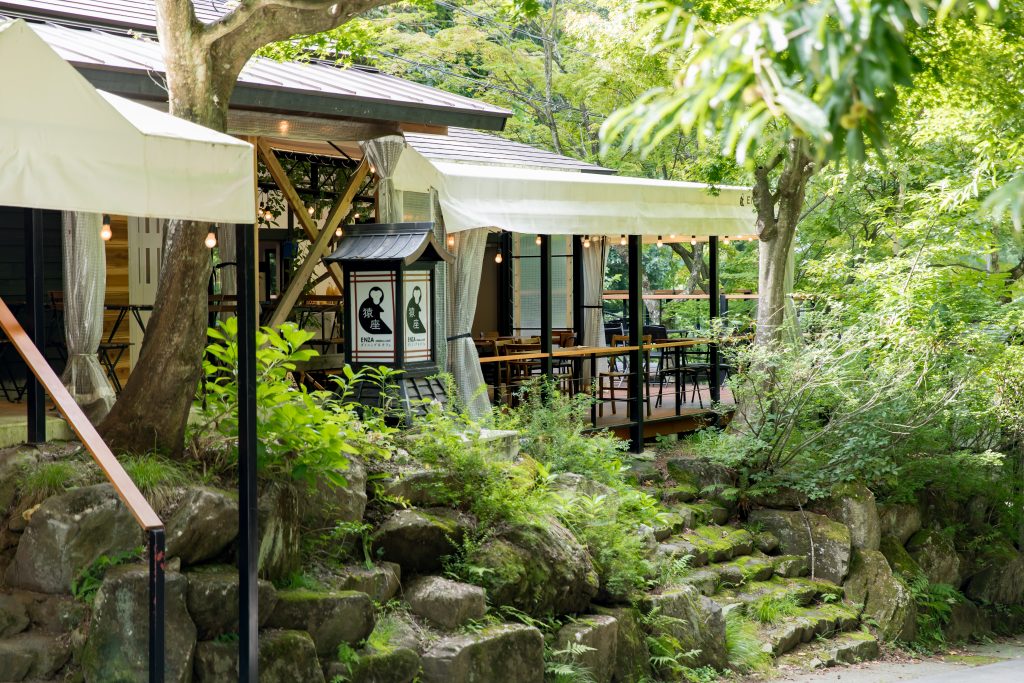
- Enza Cafe: Located just down from the trail entrance, Enza is open year-round. It serves a mix of Japanese and Western favorites with both indoor and outdoor seating—perfect for relaxing after your visit.
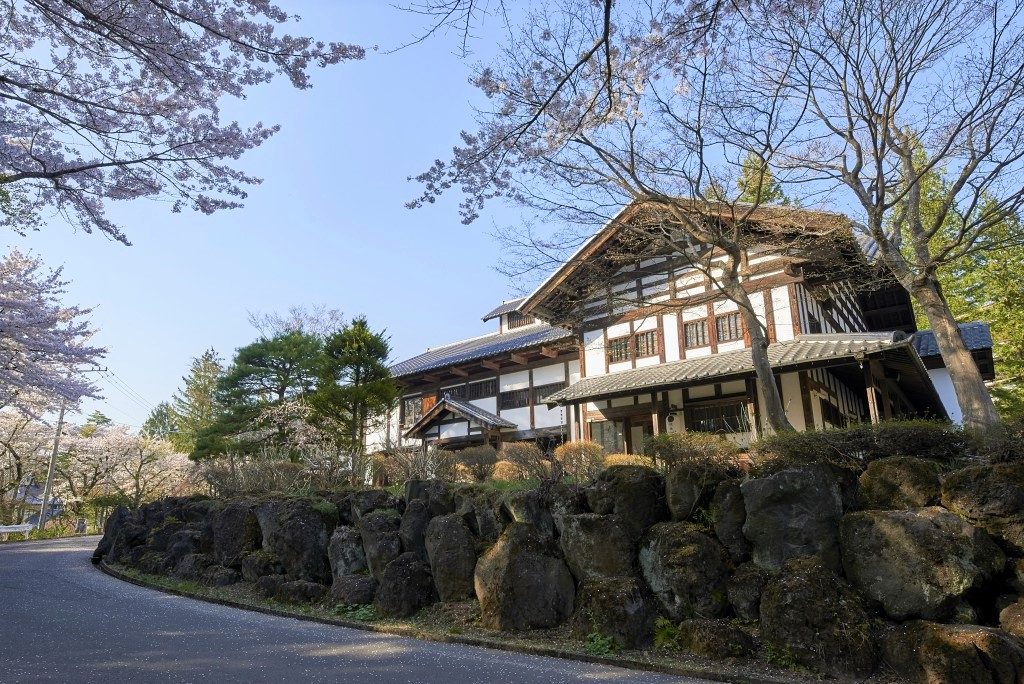
- Hotarutei: Situated near the Nagaden Express Bus stop, this restaurant offers high-end Japanese cuisine inside a beautifully renovated, 170-year-old farmhouse. Note: Reservations are required.
Weather & Crowds
Spring is the "quiet season" at the park. With peak winter crowds gone, you can enjoy a much more peaceful experience.
- Typical Temperatures: Daytime highs usually range between 10°C and 20°C.
- Unexpected Dips: Weather can be unpredictable; temperatures can suddenly drop to around 5°C, so we recommend bringing a light jacket or layers.
The weather will typically go up and down through spring. However one thing is certain - peak season at the park is over and visitor numbers will be much lower. For information regarding other seasons in the monkey park, please refer our ‘Snow Monkey Park Throughout the Year’ page.
Baby Monkeys at the Snow Monkey Park
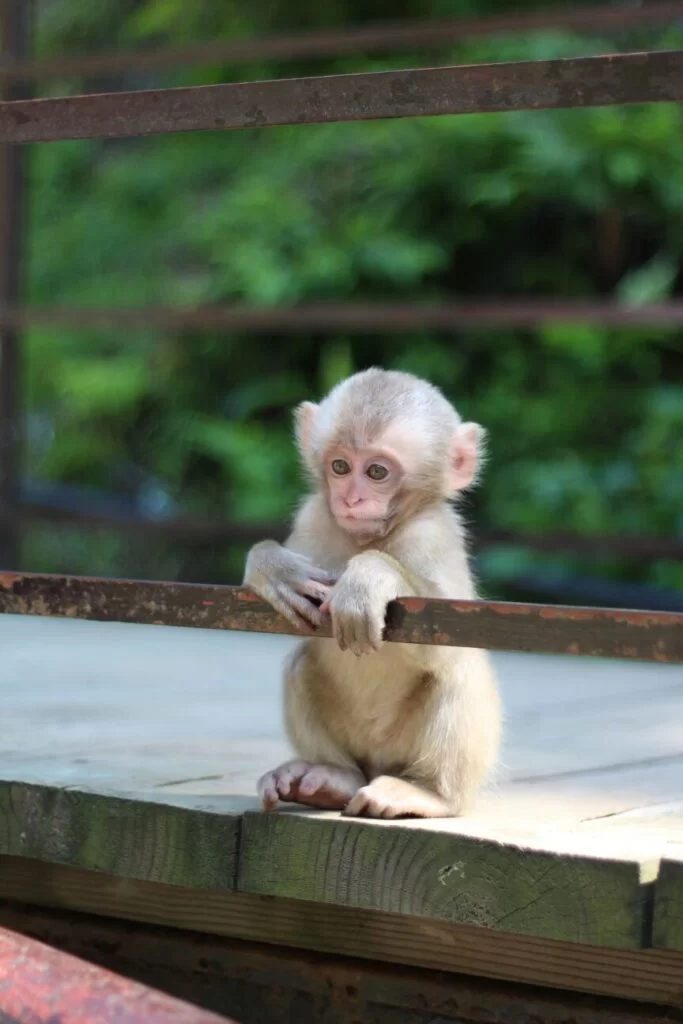
While the winter snow fades, spring brings the park’s most heart-melting attraction: the arrival of the newborn macaques. Late April through May marks the peak of baby season, offering a rare glimpse into the earliest days of a snow monkey’s life.
Watching the New Arrivals
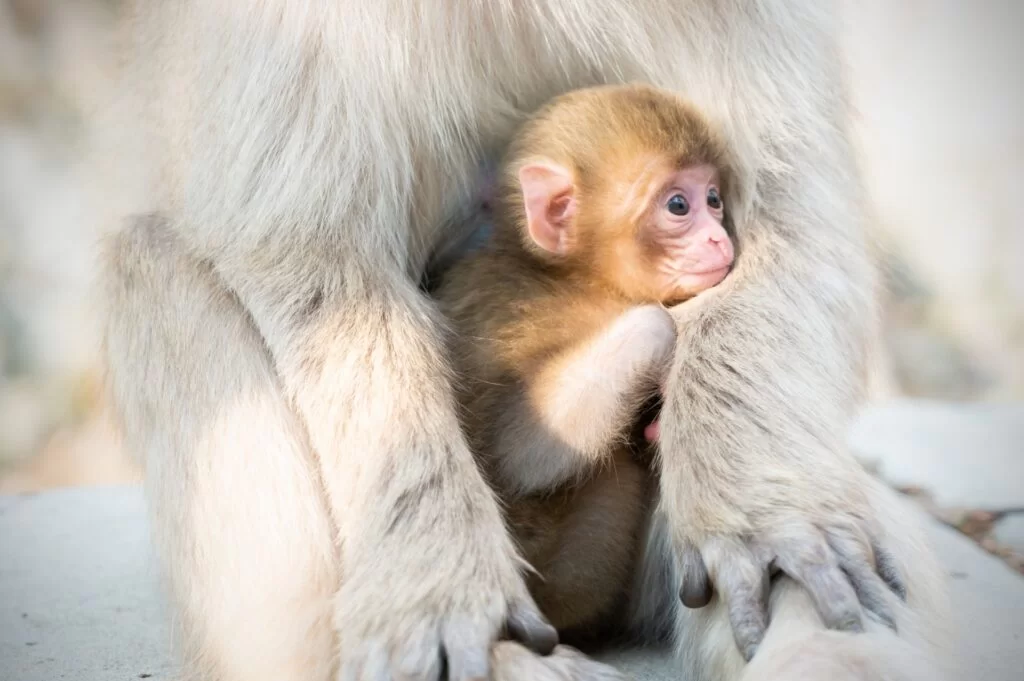
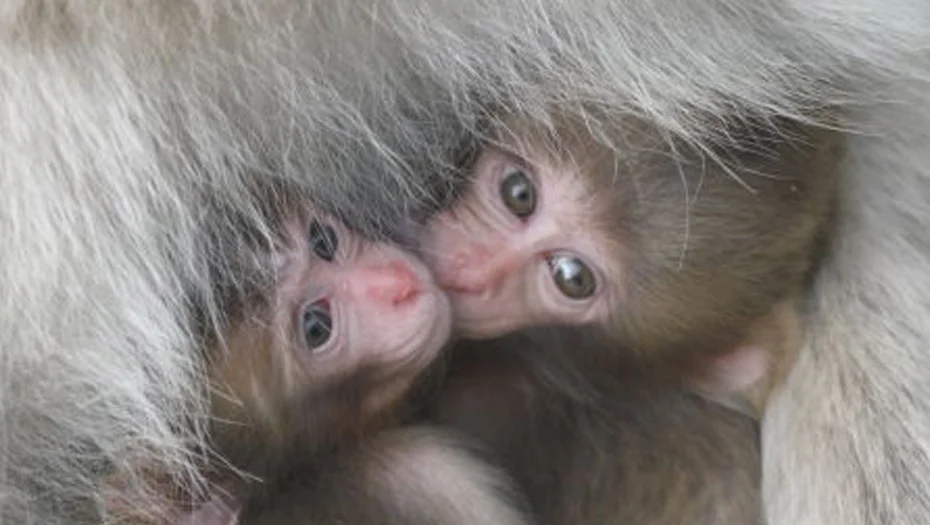
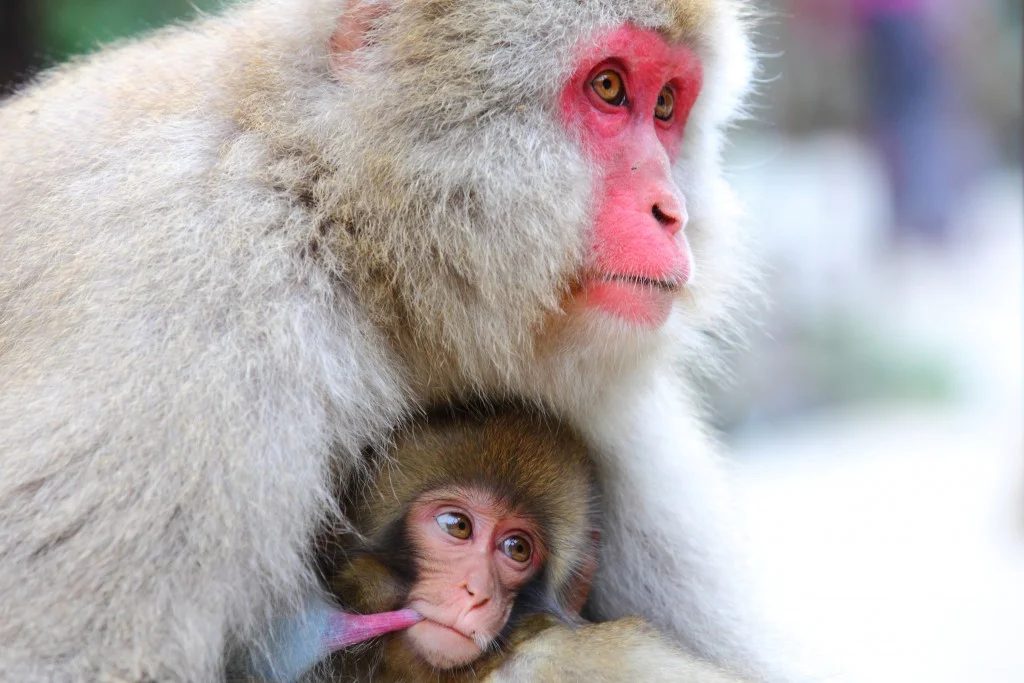
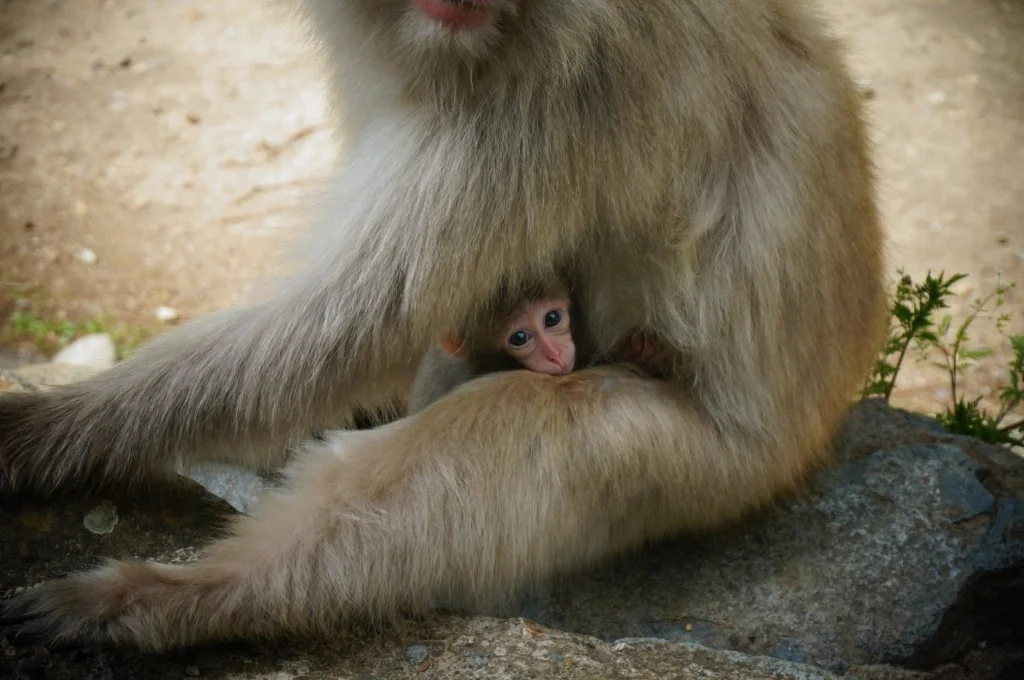
- Early Spring (Late April): The newborns are incredibly tiny and entirely dependent on their mothers. You will see them clinging tightly to her fur—either tucked under her stomach or riding on her back—as she moves through the park.
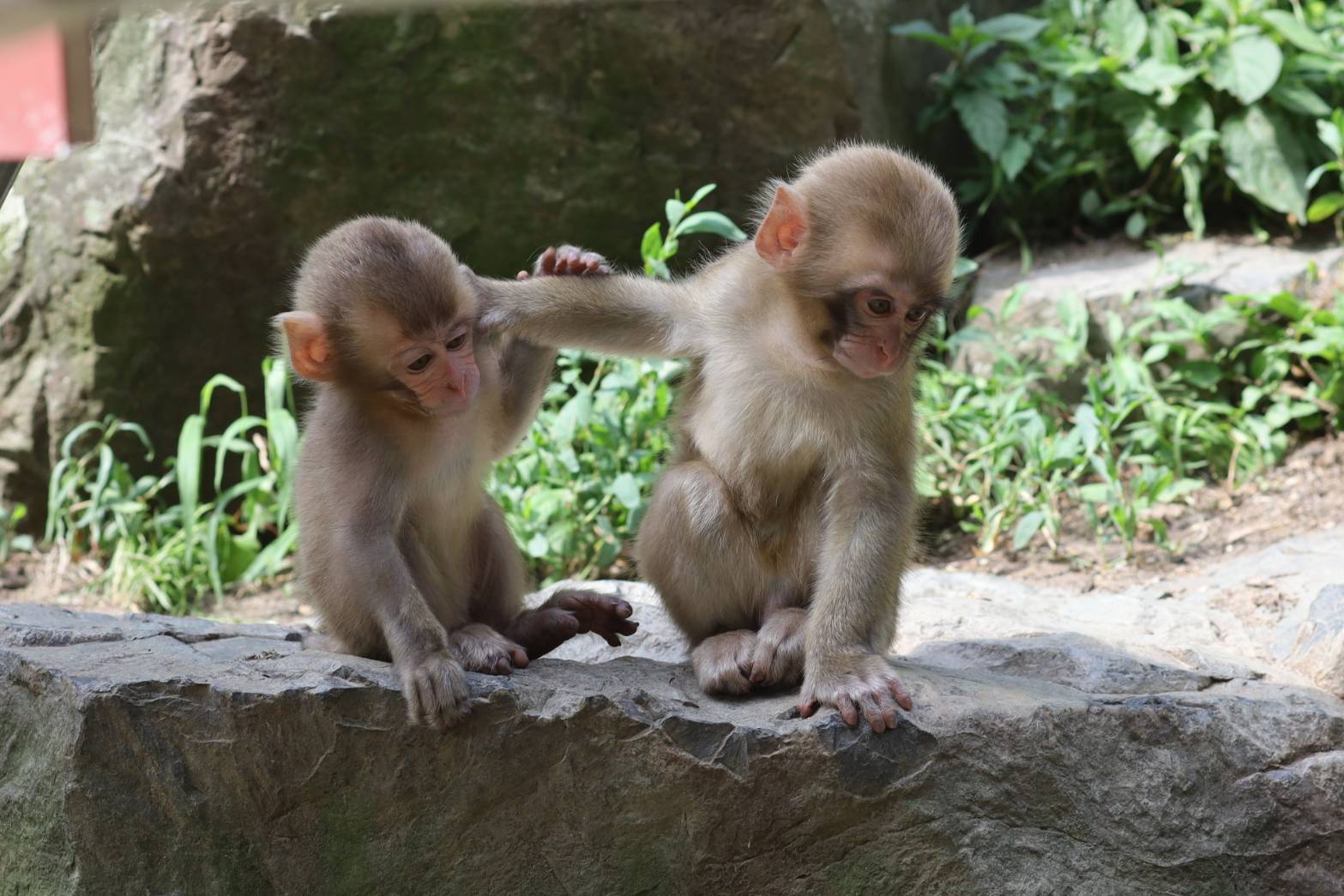
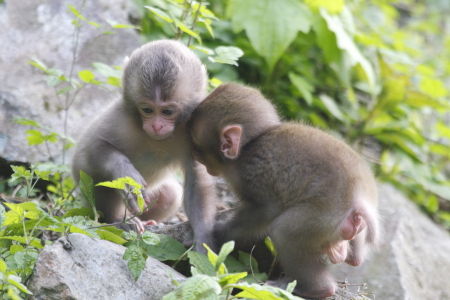
- Late Spring (May): As they grow, the babies become more adventurous. They begin to venture a few steps away from their mothers to play with other infants born in the same year or tumble around with the "toddlers" from the previous season.
Unique Features of Infants
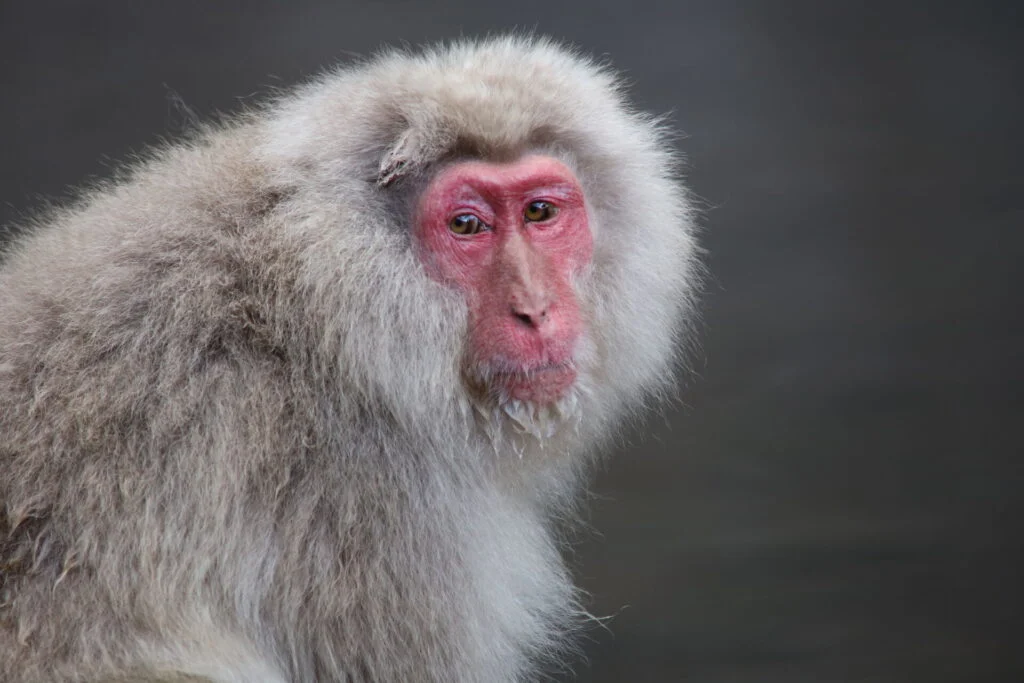
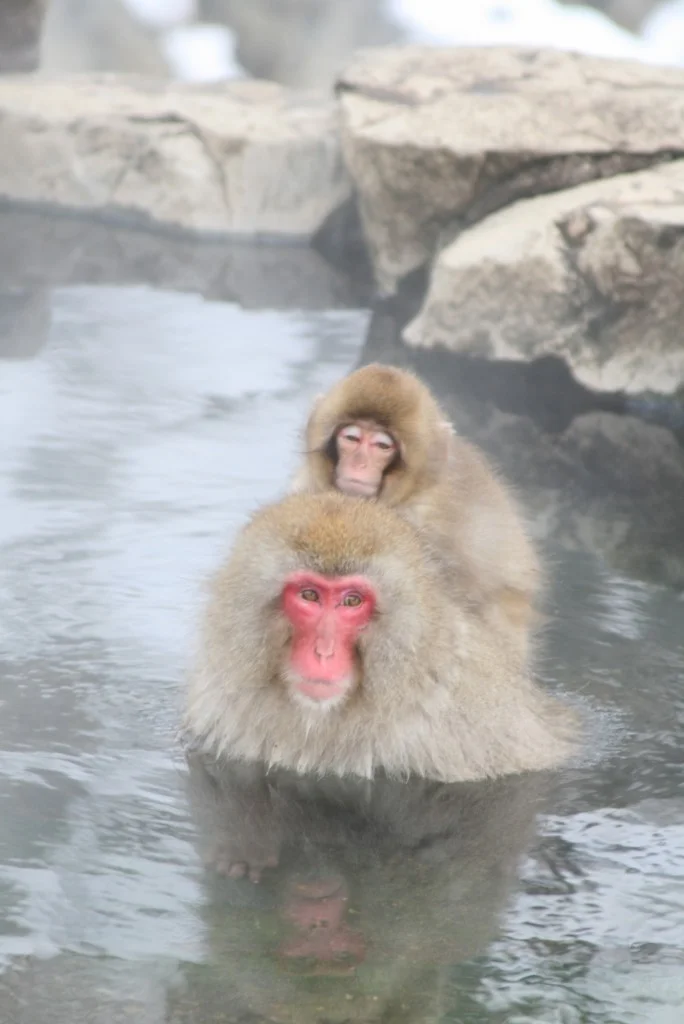
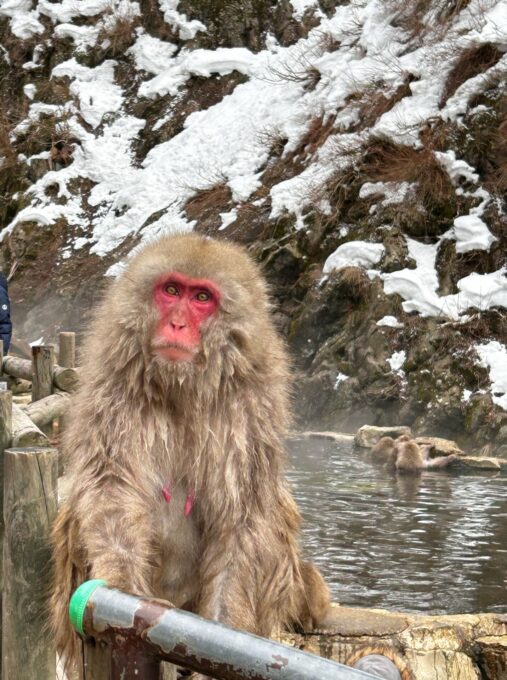
Unlike the famous red-faced adults, baby monkeys are born with pale skin and dark fur.
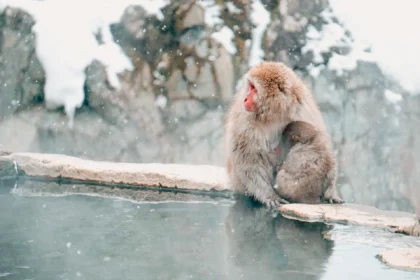
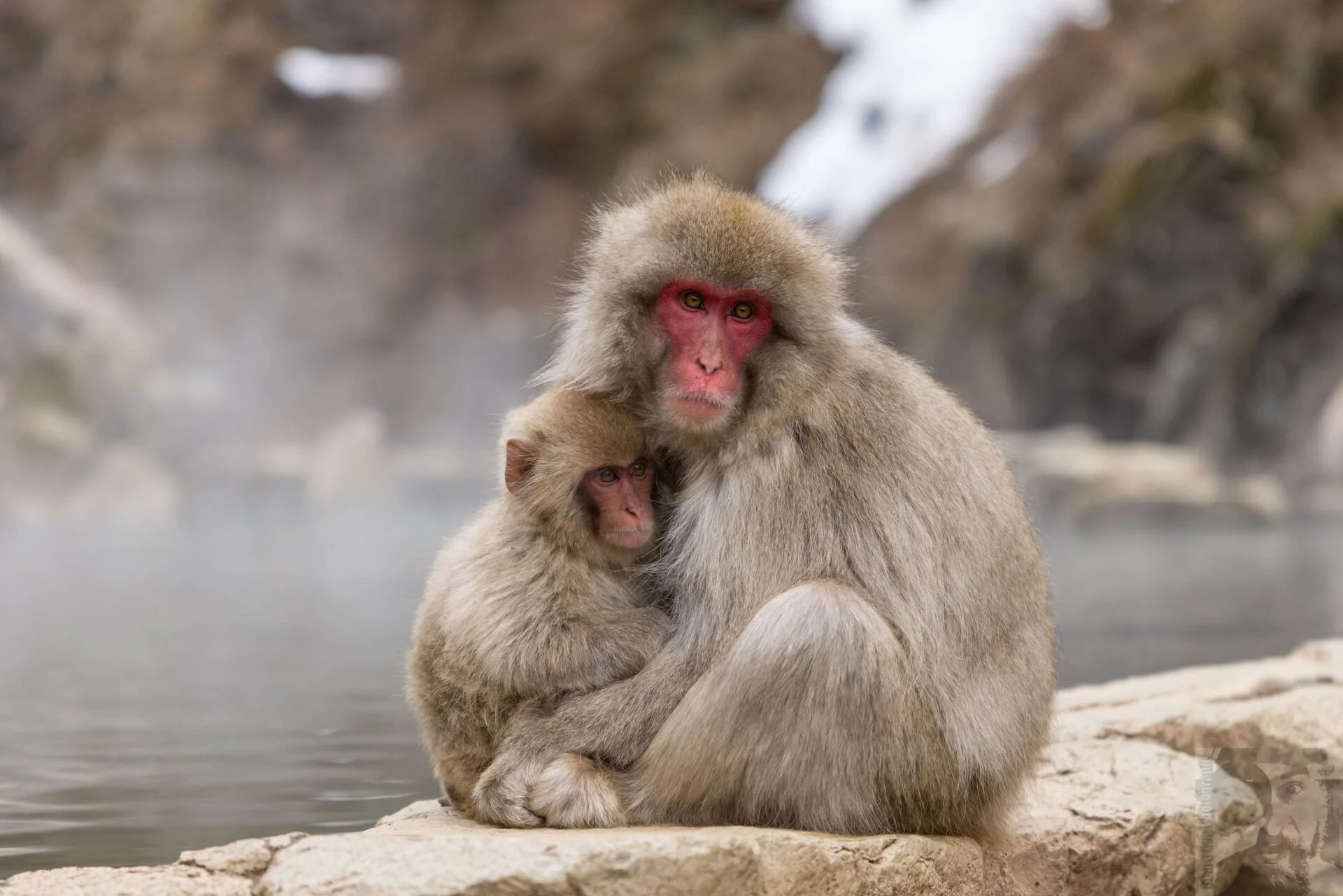
- The "Red Face": In Japanese macaques, a bright red face and posterior are signs of maturity and reproductive readiness.
- Growth: It takes several years for a monkey to develop these vibrant colors. For now, the spring babies remain wide-eyed and fluffy, focused entirely on exploring their new world under the watchful eye of their protective mothers.
Why Spring is the Best Kept Secret
For visitors who choose a spring getaway, the joy of seeing these "little furballs" is the ultimate reward.
- Fewer Crowds: Because peak winter tourism has subsided, the park is much quieter.
- Unlimited Viewing: With fewer people competing for space at the edge of the hot spring, you can take your time observing the playful antics of the infants without feeling rushed.
March in the Snow Monkey Park
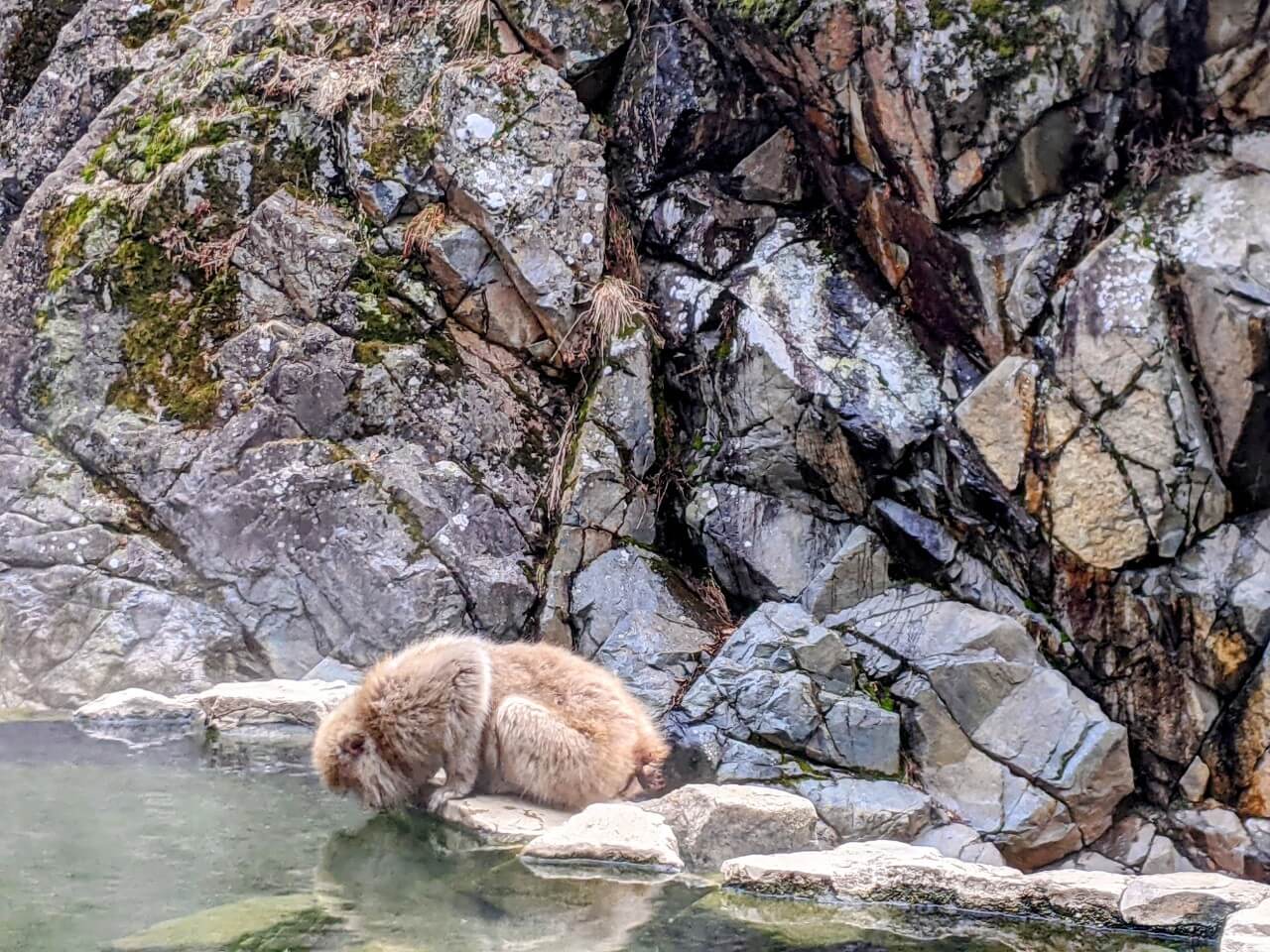
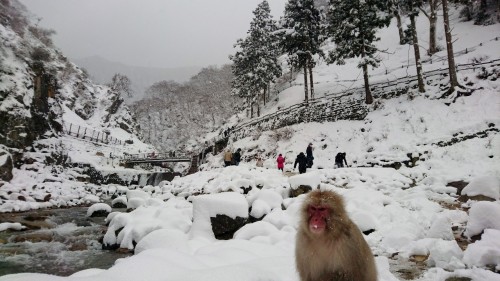
Technically the start of spring, March in the valley still feels very much like winter. While you may experience a few warmer days toward the end of the month, frequent snow and freezing temperatures remain common.
March Weather & Conditions
- Temperature Fluctuations: Daytime highs can reach 15°C on rare sunny days, but more often hover below 10°C or even 5°C. Nights remain below freezing.
- Precipitation: Both heavy snow and rain are possibilities.
- Our Advice: Dress in warm layers and bring a sturdy umbrella and a quality jacket to ensure your trip isn't cut short by the cold or wet.
Monkey Behavior in March
For the monkeys, March is a month of anticipation.
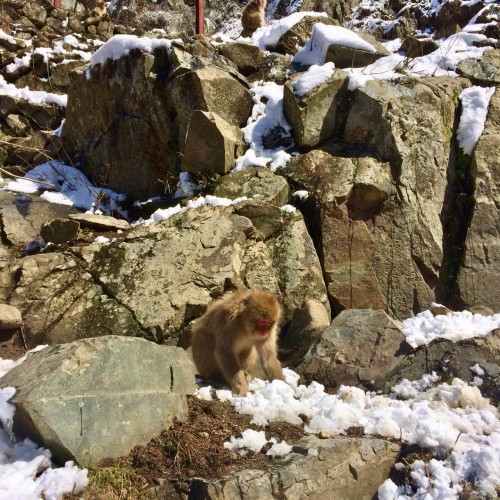
- The Expectant Mothers: Many pregnant monkeys visit the hot spring frequently during this time, likely seeking relief from the aches and pains of late-stage pregnancy.
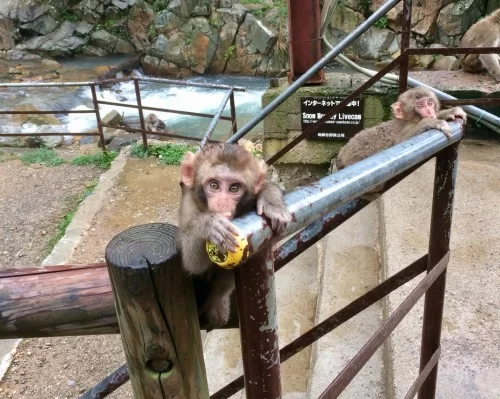
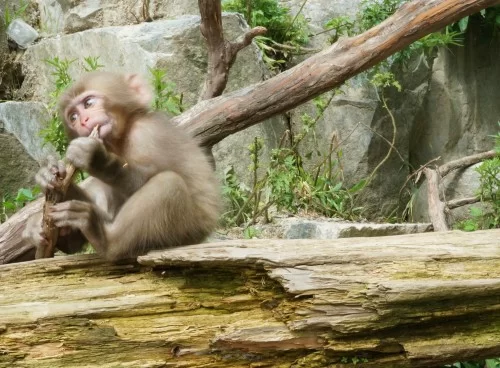
- The "Toddlers": While the new year’s babies won't arrive until late April, the youngsters from the previous spring are still small, fluffy, and incredibly active. Like human toddlers, they spend their days climbing, chewing on everything, and testing their acrobatic skills—giving their mothers a much-needed break to forage or soak.
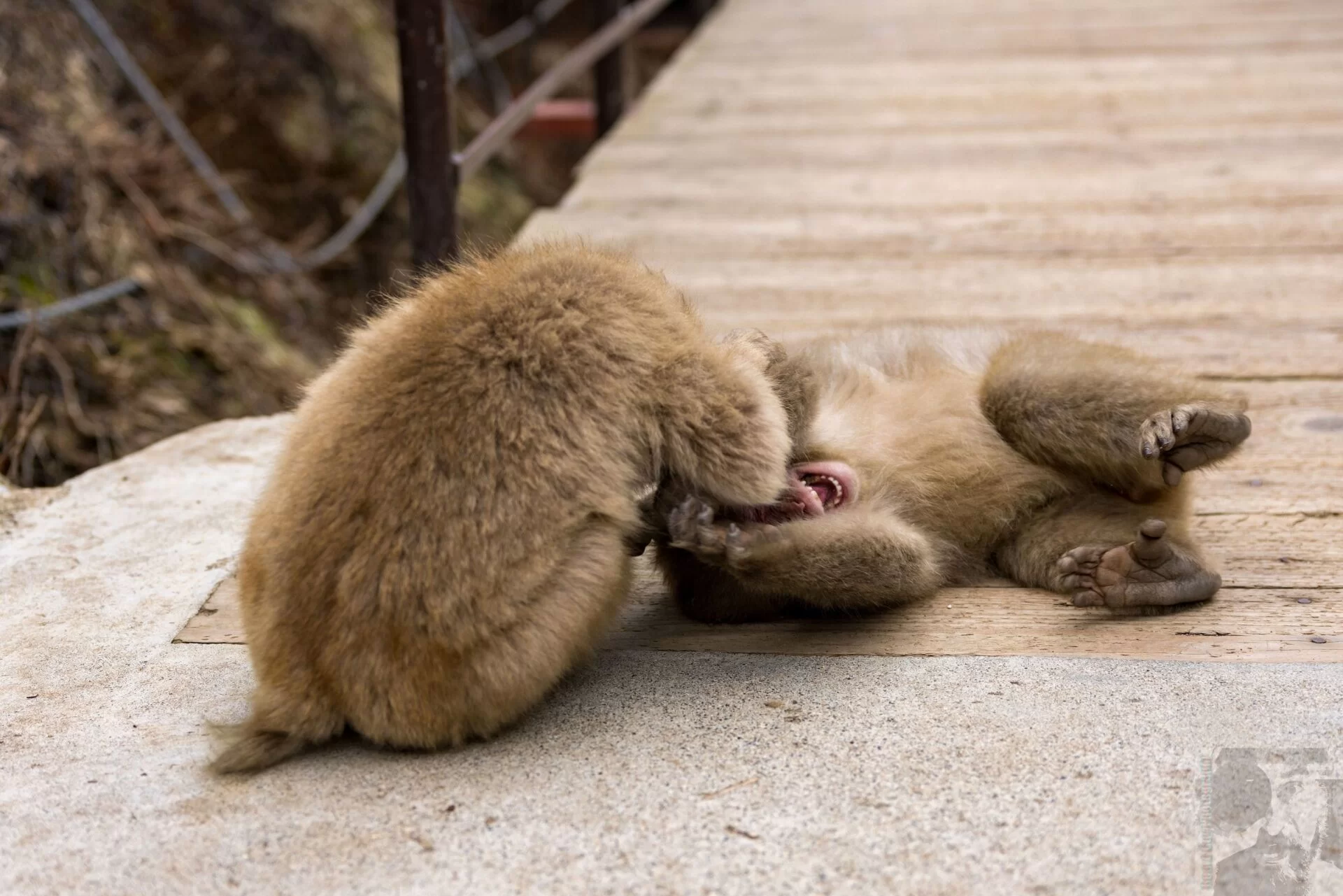
- Socializing: On sunny days, you'll find the troop grooming or play-wrestling in patches where the snow has melted.
The "Best of Both Worlds" Month
March is often considered a "secret" peak time for photography and viewing.
- Snowy Backdrops: You can still capture iconic "Snow Monkey" photos against a white landscape.
- Fewer Crowds: The massive crowds of January and February have subsided, meaning you won't have to compete for a view at the edge of the pool.
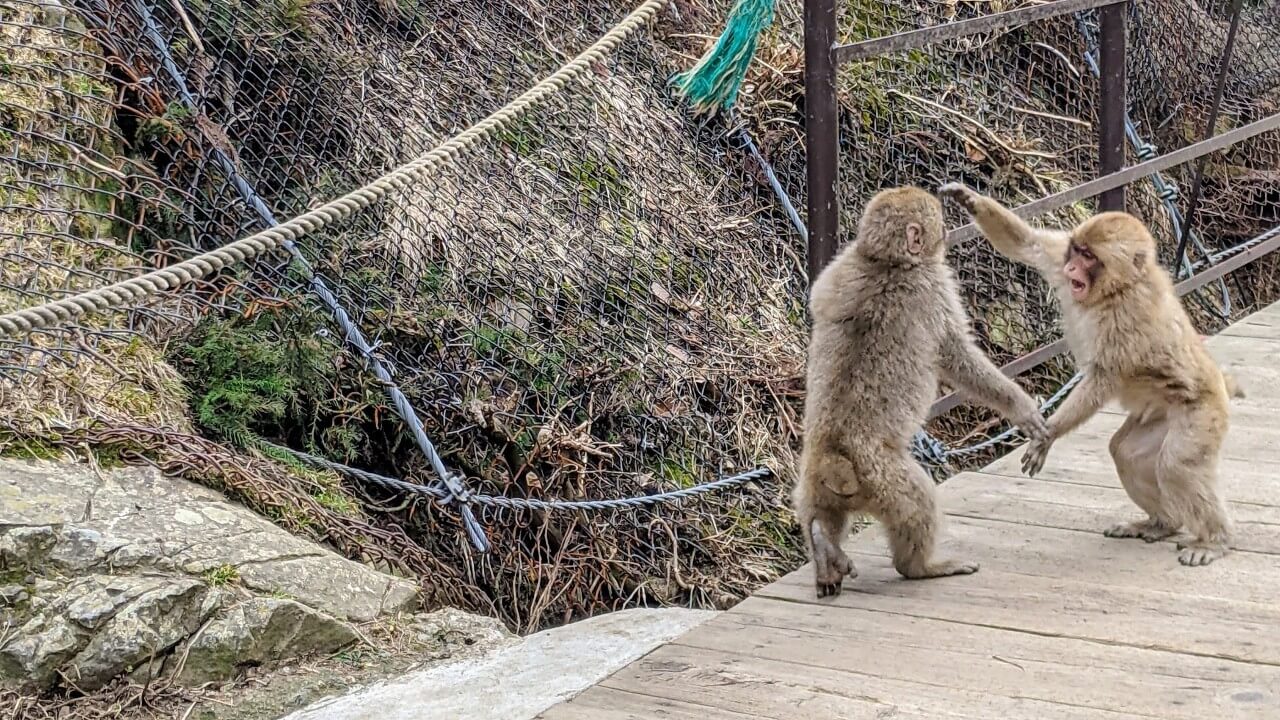
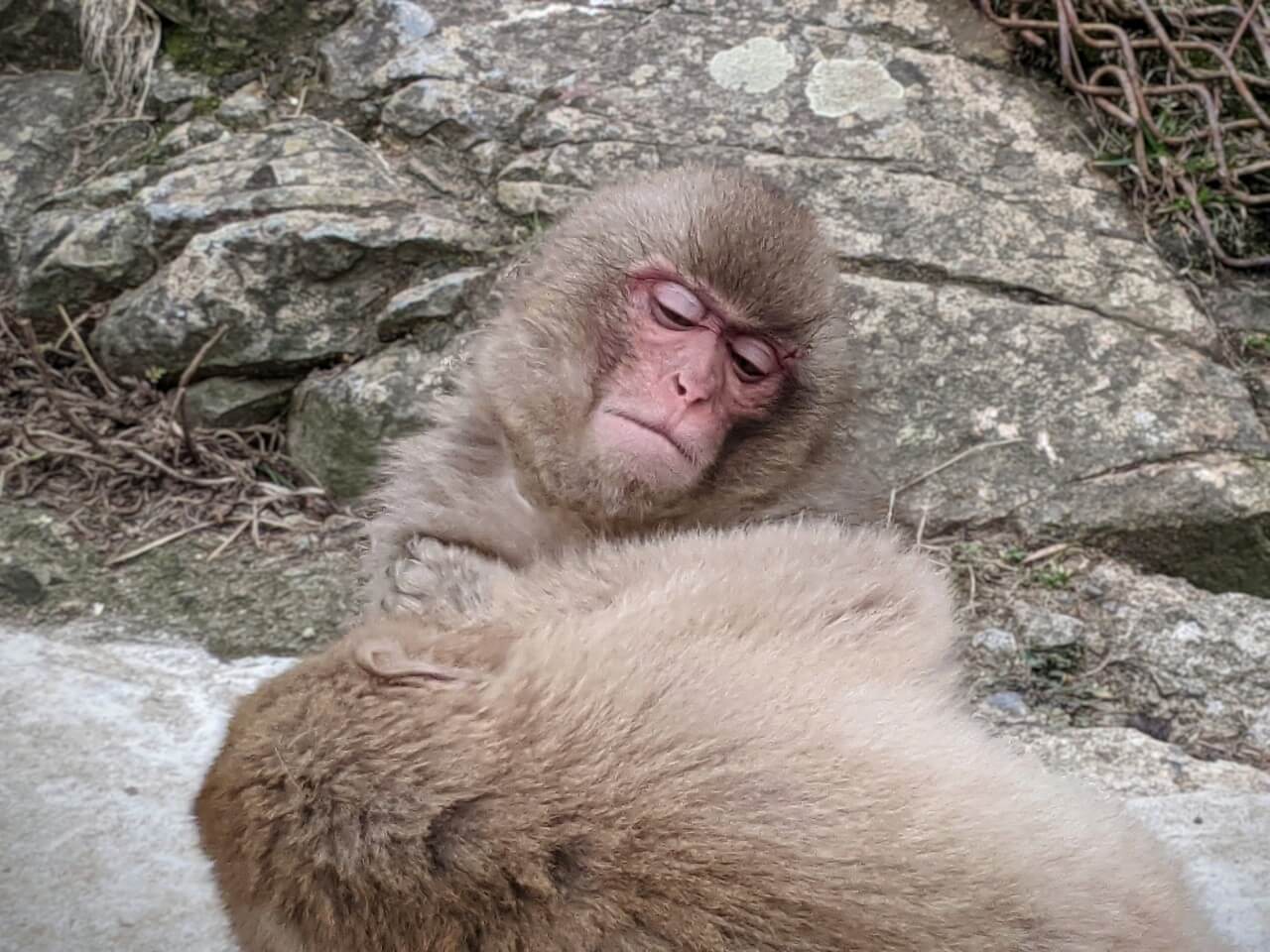
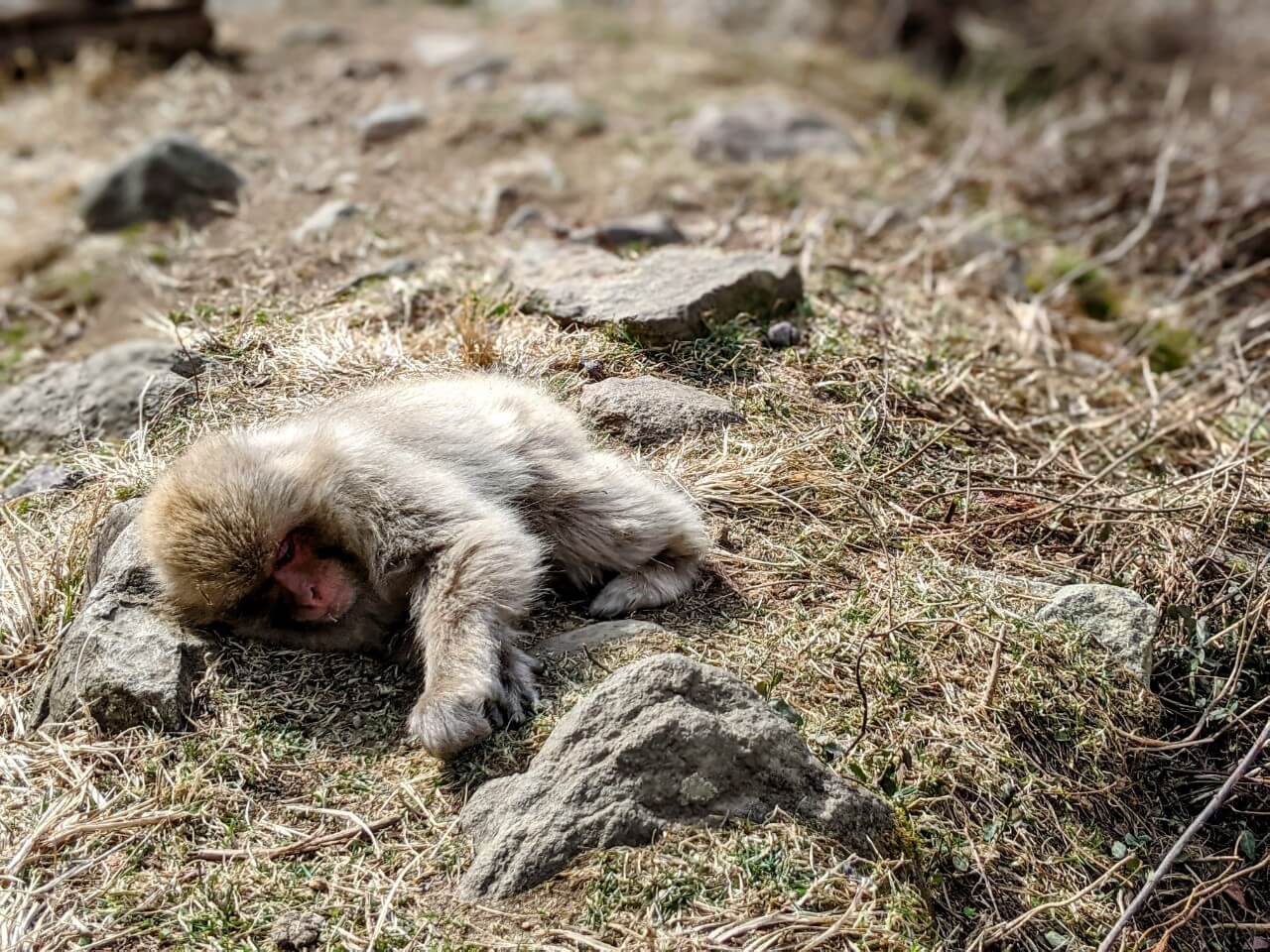
Since March can feel like both spring and winter depending on the day, you never know exactly what behavior the monkeys will be up to, but it will be entertaining regardless.
Because the cold air still hangs around for most of the month, there will almost certainly be at least a few monkeys in the bath at any given time. This makes March a "secret" peak time for photography: you can still capture iconic "Snow Monkey" photos against a white landscape, but with much smaller crowds than the peak season in January and February.
April in the Snow Monkey Park
While March can still feel wintery, April heralds the undisputed start of spring and the return of greenery to the valley. With newborn babies arriving and a troop of happy monkeys finally relieved of the winter chill, April offers a dynamic viewing experience with significantly fewer crowds.
April Weather & Conditions
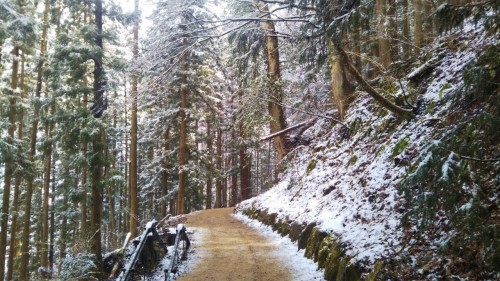
- Temperatures: Daytime highs can soar over 20°C on the warmest days, though early April often sees cooler highs between 10°C and 15°C.
- Nights: Evenings remain chilly but usually stay above freezing, so a heavy winter parka is no longer necessary.
- Spring Snow: A light dusting of "spring snow" is not unheard of early in the month. This rarely hinders a visit and often creates a beautiful contrast against the newly emerging buds.
- Rain: Showers are common; we recommend checking the forecast and carrying an umbrella if the skies look grey.
Monkey Behavior: Births & Bathing
April is a month of high activity for the troop:
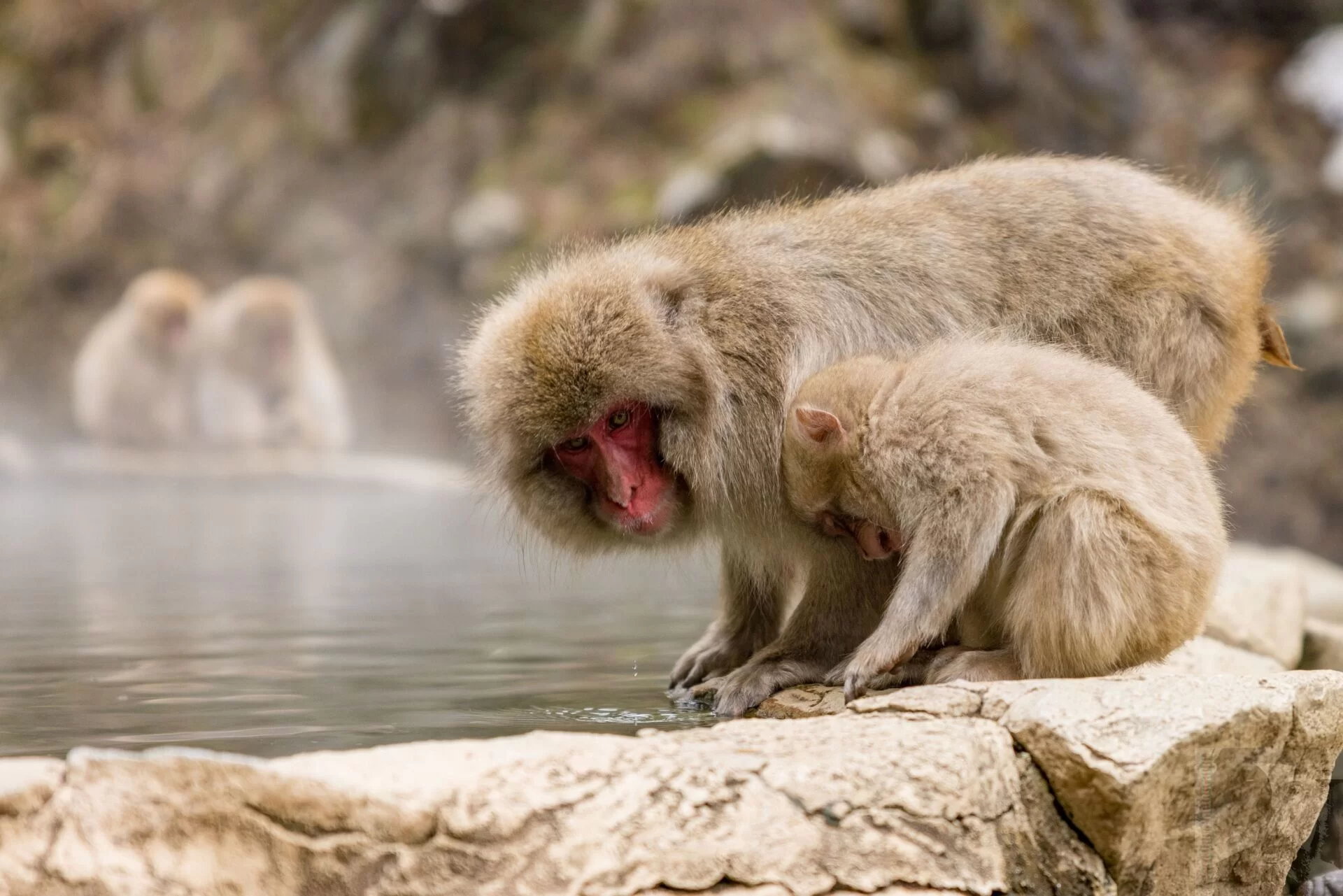
- The New Arrivals: Newborn babies are born every day throughout the month. You'll see these tiny infants—and the older babies from the previous year—clinging tightly to their mothers.
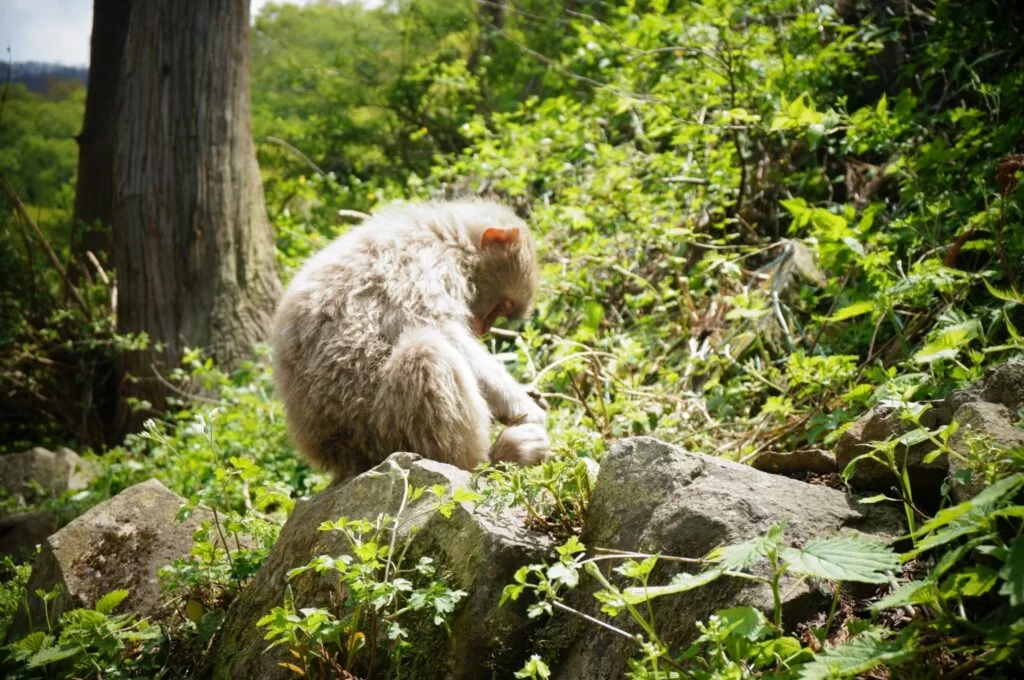
- Foraging: Because the trees remain bare for much of April, it is incredibly easy to spot the monkeys frolicking in the branches or searching for edible new shoots.
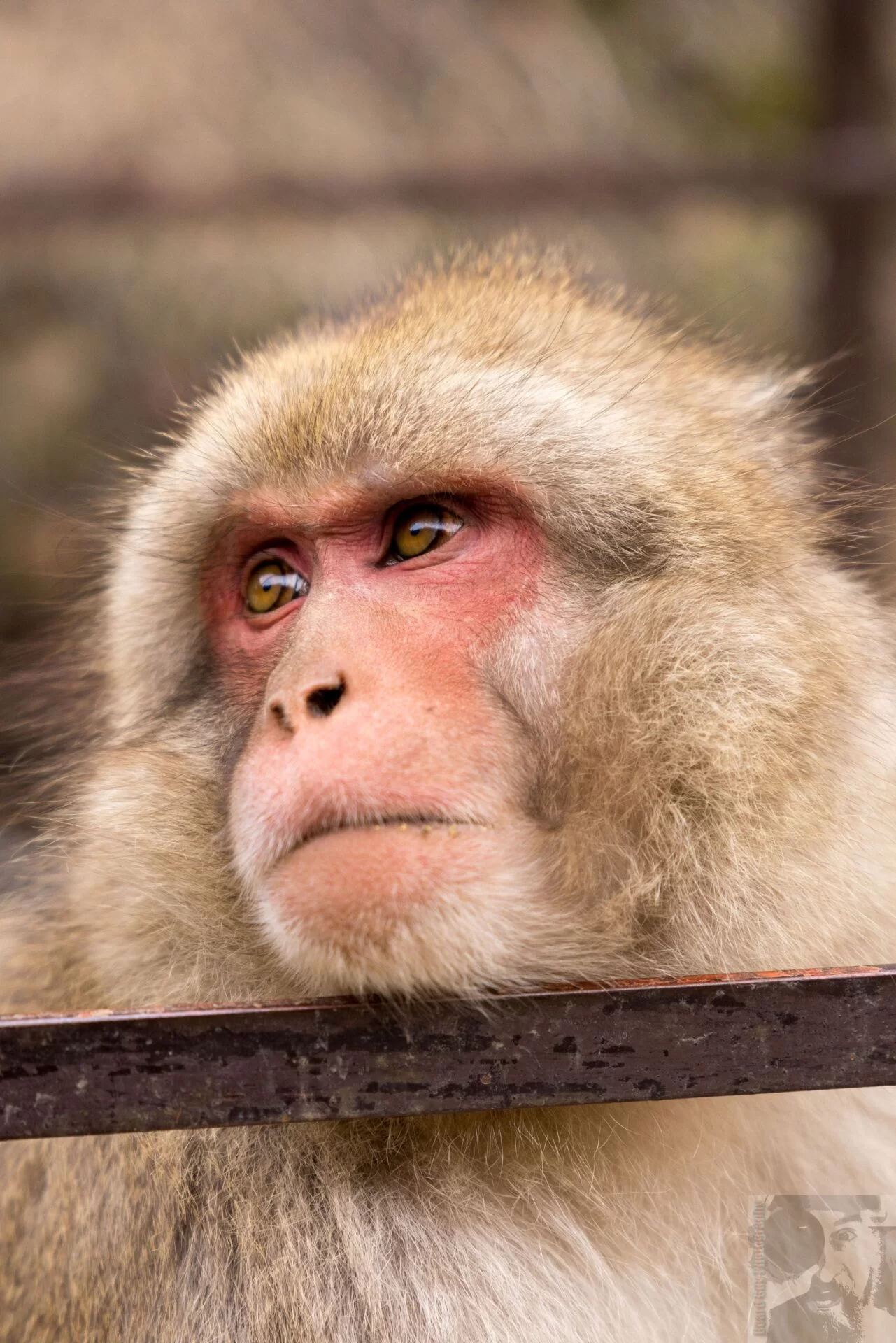
- The Sharp Eye: Since the monkeys rarely all congregate at the hot spring at once, look up! Their coats blend into the mountainside, but you can often see them scattered far up the surrounding slopes.
- Rainy Day Perks: While rain might not be ideal for a stroll, the damp, cool weather actually encourages more monkeys to enter the hot spring. A rainy day can often result in better "monkey in the bath" photos than a warm, sunny one.
- Sunny Day Perks: Expect to see more of the play wrestling, grooming, and food collecting that make the monkeys endlessly enjoyable to watch.
May in the Snow Monkey Park
In May, the greenery finally triumphs over winter. The valley returns to its full glory, with vibrant "fresh green" (shinryoku) leaves enveloping the landscape around the park. For both the monkeys and human visitors, the warm weather and abundant sun create a relaxing environment to observe the troop’s daily life.
April Weather & Conditions
- Temperatures: Expect daytime highs of 20°C to 25°C (68°F–77°F). Nights remain mild, hovering around 12°C to 15°C (54°F–59°F).
- Clothing: A long-sleeve shirt or hoodie is usually sufficient. During the midday sun, short sleeves are suitable for most travelers.
- Conditions: By May, all snow has melted, and the trail is typically dry and firm. You can truly feel summer around the corner.
The Highlight: Newborn Babies in Full Force
The absolute best part of May is the newborn baby monkeys, who are now visible in large numbers.
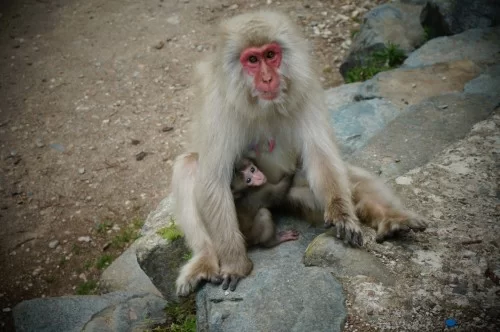
- Spotting the Infants: You might initially confuse the one-year-old "toddlers" for newborns, but once you see a true newborn—tiny, with dark fur and wide eyes, clinging tightly to its mother’s stomach—the difference is unmistakable.
- Behavior: At this stage, the infants rarely leave their mothers. The mothers go about their lives relatively normally, as the babies are well-behaved and know to hold on tight.
Troop Dynamics: The "Teenagers"
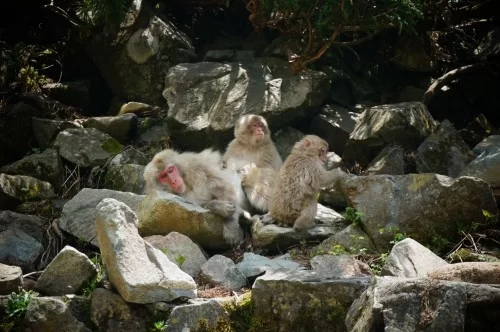
While the mothers and infants are calm, the "gangs" of teenagers and young adult monkeys are a different story.
- Social Hierarchy: These older juveniles take advantage of the warm sun to push their luck within the social hierarchy.
- Playful Antics: You’ll often see them wrestling, chasing each other, and occasionally trying to "boss around" their elders, making for highly entertaining viewing.
Spring Tours and Charters at the Snow Monkey Park!
Featured Monkey Day Tours in Spring
Snow Monkeys, Zenkoji Temple & Sake in Nagano
Operating year-round, this is our most popular full-day itinerary. It combines Nagano’s "Big Three" into one seamless experience:
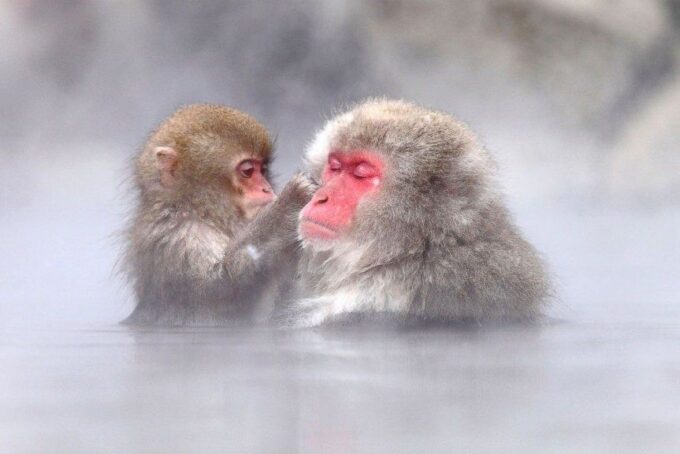
- The Itinerary: Enjoy a guided tour of the Snow Monkey Park, visit the 1,400-year-old Zenko-ji Temple, indulge in a delicious local lunch, and participate in a guided sake tasting.
- Stress-Free Travel: Forget the hassle of navigating local bus schedules or missing train connections. You’ll ride in a comfortable tour bus with a professional guide who handles all the logistics for you.
Best Selling
1-Day Tour: Snow Monkeys, Zenkoji Temple & Sake in Nagano
- Spots:
- NaganoSnow MonkeyHakuba
- Pick-up:
- Nagano CityHakuba
- Drop-off:
- Nagano CityHakuba
The Perfect Day Trip from Tokyo
For travelers based in the capital, our spring tours are easily accessible as a day trip from Tokyo.
- Fast Access: The Hokuriku Shinkansen (Bullet Train) whisk you from Tokyo to Nagano Station in roughly 90 to 110 minutes.
- Why Spring? This is the "secret" season. Visitor numbers drop significantly after the winter peak, the weather is milder, and the monkeys are at their most playful. You’ll have more space to enjoy their antics at your own pace and plenty of time to chat with your guide.
Customized & Private Experiences
If you are looking for a more personalized journey or traveling with a group, we offer private tours and charters.
- Flexible Pickups: We can arrange private transport from Nagano Station and other major regional hubs, including Matsumoto City and nearby ski resorts.
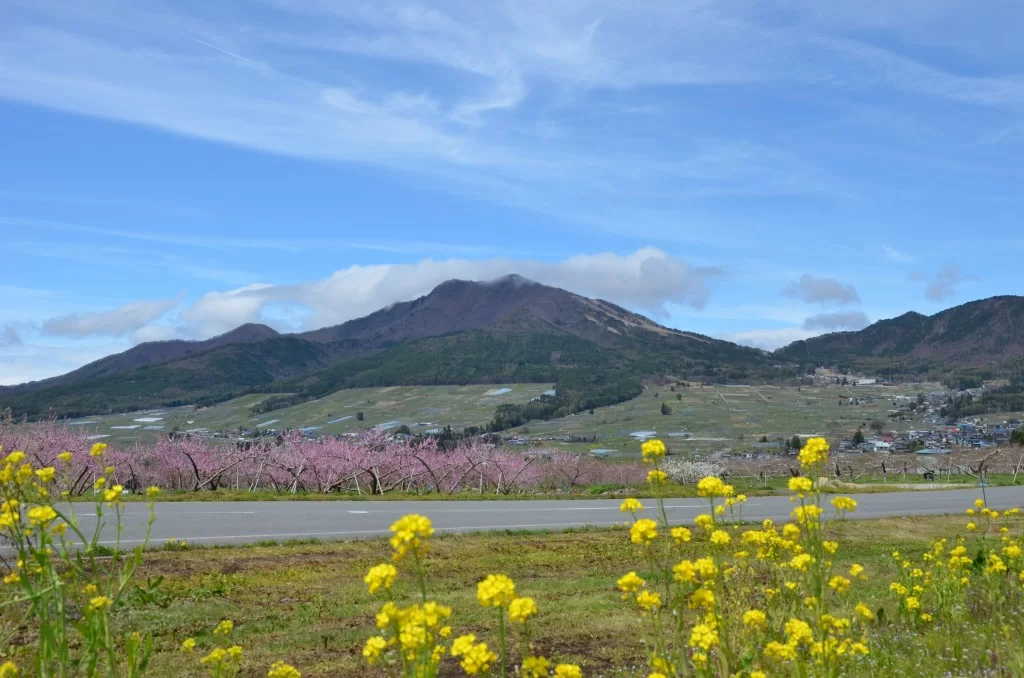
- Tailored Itineraries: A private tour allows you to set the pace and focus on the sights that interest you most, from the monkeys to hidden cherry blossom spots.
Popular
[START FROM NAGANO CITY] Private Snow Monkey Tour
- Spots:
- NaganoSnow Monkey
- Pick-up:
- Nagano City
- Drop-off:
- Nagano CityHakubaNozawa OnsenShiga KogenMadaraoMyoko
For guests searching for a more personalized experience, we also offer private tours from a number of locations including Nagano City and surrounding ski resorts. For a full list, please look at our Snow Monkey Park Tour Page.
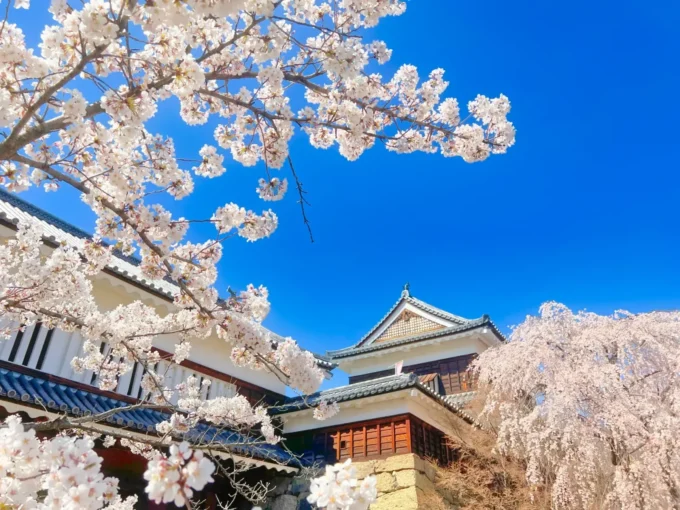
Spring Special: Snow Monkeys & Cherry Blossom (Sakura) Day Tour
Experience the best of Nagano’s spring with this seasonal day tour. This itinerary combines a morning visit to the Jigokudani Monkey Park with an afternoon dedicated to hanami (cherry blossom viewing) at a hand-picked local site.
- Morning: The Snow Monkeys – Enjoy a guided walk to the park to see the monkeys and their newborns in the mild spring weather.
- Afternoon: Hand-Picked Sakura – Because bloom times are unpredictable, our guides scout the region daily to select the best viewing location for your tour date. We’ll take you to the most beautiful "peak bloom" spots, including hidden local gems away from the major crowds.
- Lunch & Transport: Includes a delicious local lunch and seamless round-trip transport from Nagano Station.
This is the perfect way to witness Japan’s most iconic spring sights in a single, stress-free day trip from Tokyo.
Popular
(Spring Only) 1-Day Tour: Snow Monkeys & Cherry Blossoms in Nagano
- Spots:
- NaganoSnow Monkey
- Pick-up:
- Nagano City
- Drop-off:
- Nagano City
Regional Spring Highlights: Beyond the Monkey Park
Nagano’s spring is a season of dramatic reveals. As the snow recedes, some of Japan’s most iconic alpine and cultural landscapes become accessible once again.
The Tateyama-Kurobe Snow Walls
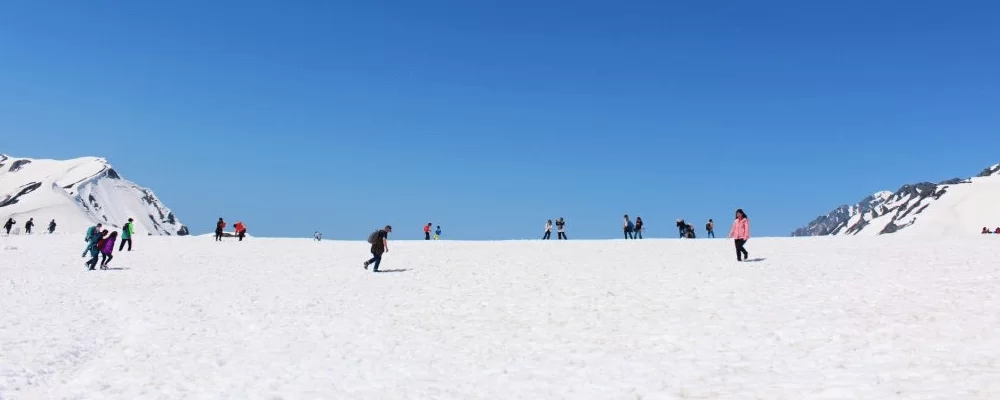
Sitting over 3,000 meters above sea level, Mt. Tate is part of the "Roof of Japan". After being closed all winter, the route reopens in mid-April as engineers re-carve the road through immense snowdrifts.
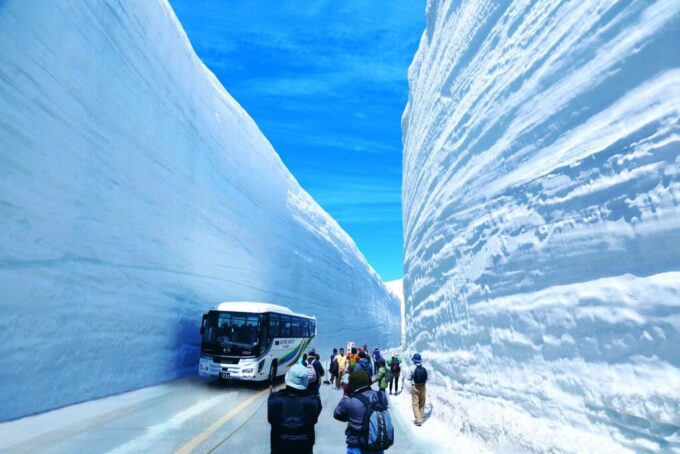
- The Sight: Towering grand Snow Walls of Tateyama-Kurobe up to 20 meters high dwarf the coaches that transport visitors to Murodo Station.
- The Experience: This is one of Japan’s most iconic sights, available only for a few months each spring.
Best Selling
[Spring Only] 1-Day Tour from Nagano: Snow Walls of Tateyama-Kurobe Alpine Route
- Spots:
- NaganoAlpine Route
- Pick-up:
- Nagano City
- Drop-off:
- Nagano City
Togakushi: Shrines & Ninja Heritage
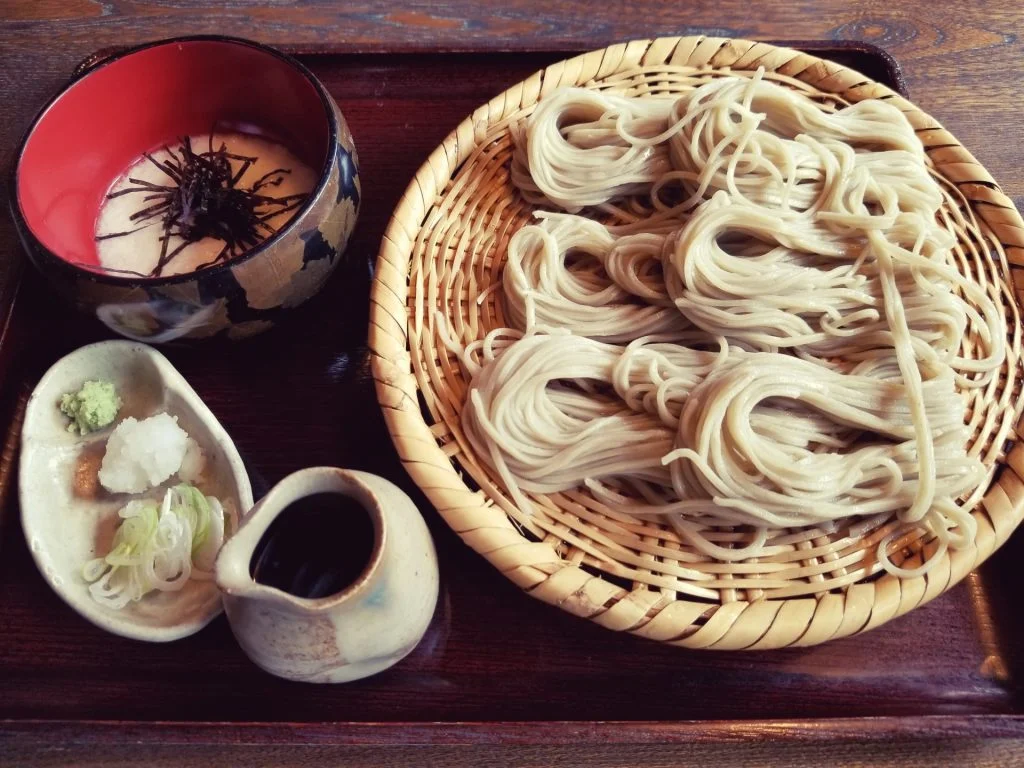
Located on the doorstep of Nagano City, Togakushi is a tranquil mountain retreat home to some of Japan’s most important Shinto shrines .
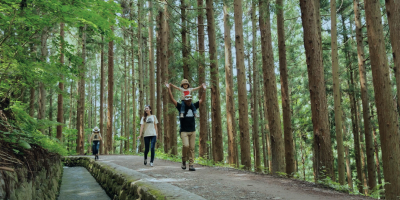
- Forest Sanctuaries: Well-maintained walking tracks lead you through ancient forests set against a dramatic mountain backdrop.
- More Than Shrines: Togakushi is also famous for its Togakure Ninja School, world-class soba (buckwheat noodles), and traditional bamboo crafts.

Recommended
1-Day Togakushi Legends Tour: Hands-on Soba Noodles, Ninja Village, and Hidden Shrines
- Spots:
- NaganoTogakushi
- Pick-up:
- Nagano City
- Drop-off:
- Nagano City
Matsumoto Castle & Kamikochi Alpine Valley
While our monkey tours are famous, this is our best-selling spring itinerary for those who want to combine Japan’s feudal history with its most breathtaking alpine scenery.
Tour Highlights:
- Matsumoto Castle: Explore one of Japan’s few remaining original castles and a registered National Treasure. You’ll have the chance to ascend its six stories for a unique glimpse into samurai history and panoramic views of the city.
- Frog Street (Nawate-dori): Enjoy a stroll through this charming riverside street, home to over 50 quirky shops and cafes.
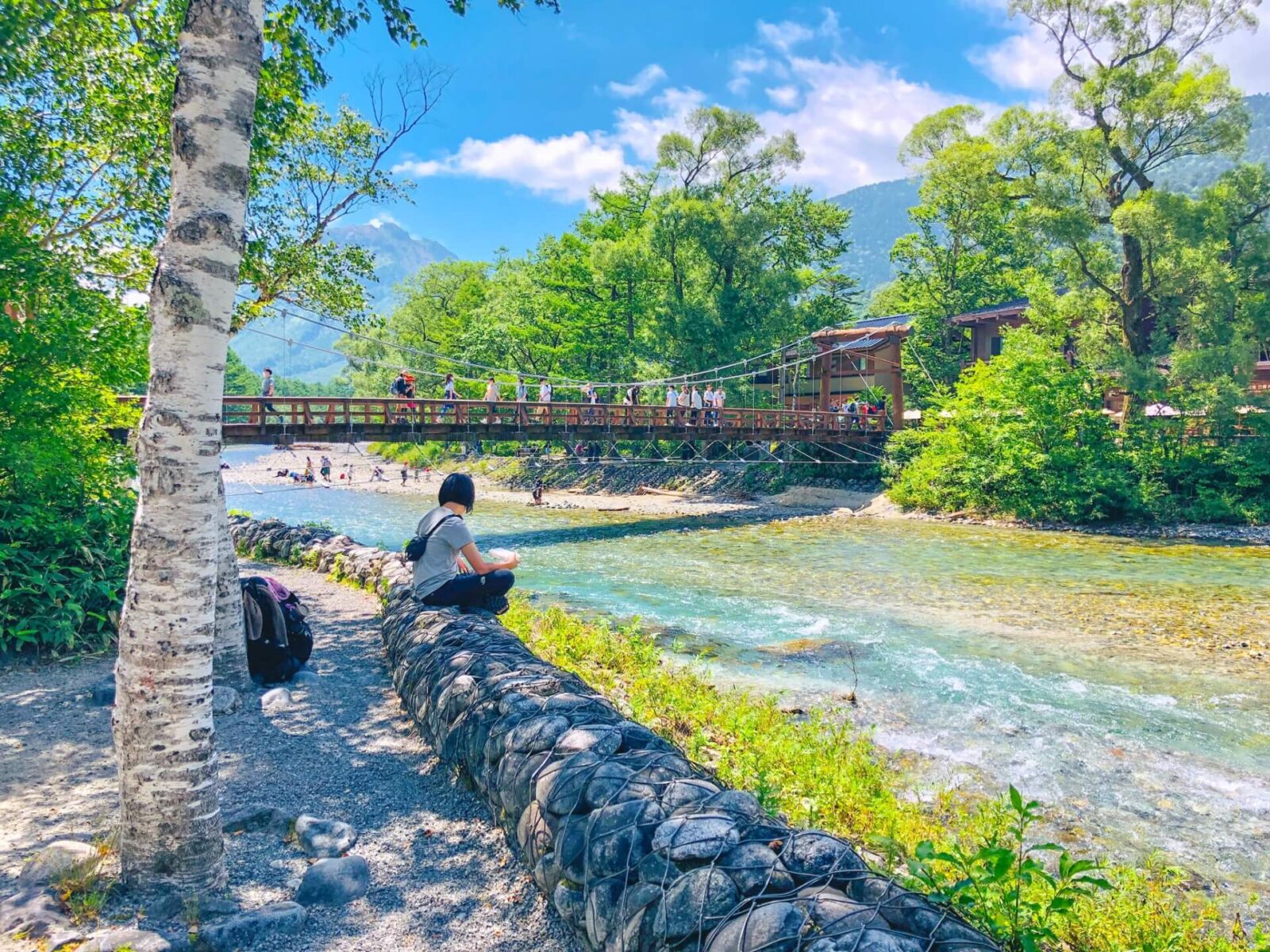
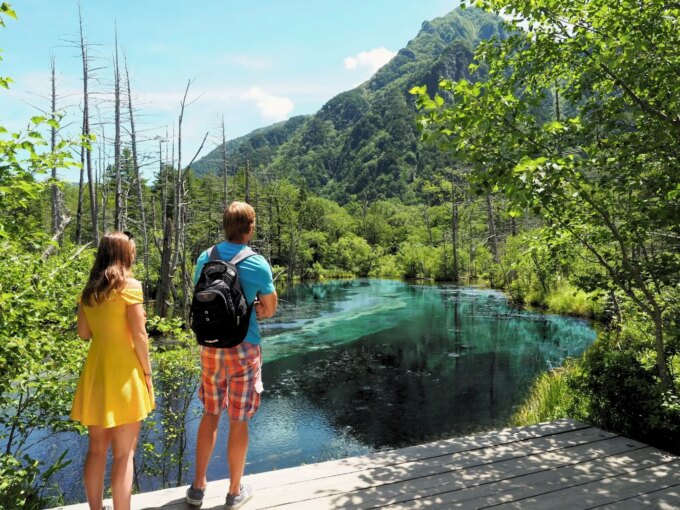
- Kamikochi Alpine Oasis: Head deep into the North Japan Alps in Kamikochi to experience the jewel of the Chubu Sangaku National Park.
- Guided Nature Walk: Your guide will lead you on a gentle 3km walk along the azure Azusa River, starting from the mirror-like Taisho Pond and ending at the iconic Kappa Bridge.
Best Selling
1-Day Tour from Nagano and Matsumoto: Kamikochi & Matsumoto Castle
- Spots:
- NaganoMatsumotoKamikochi
- Pick-up:
- Nagano CityMatsumoto
- Drop-off:
- Nagano CityMatsumoto
For a complete list of spring tours, itineraries, and activities you can enjoy at or near the monkey park, please see a complete list here: Snow Monkey Tours and Itineraries in Spring.
Private Charters: Personalized Transport to the Snow Monkey Park
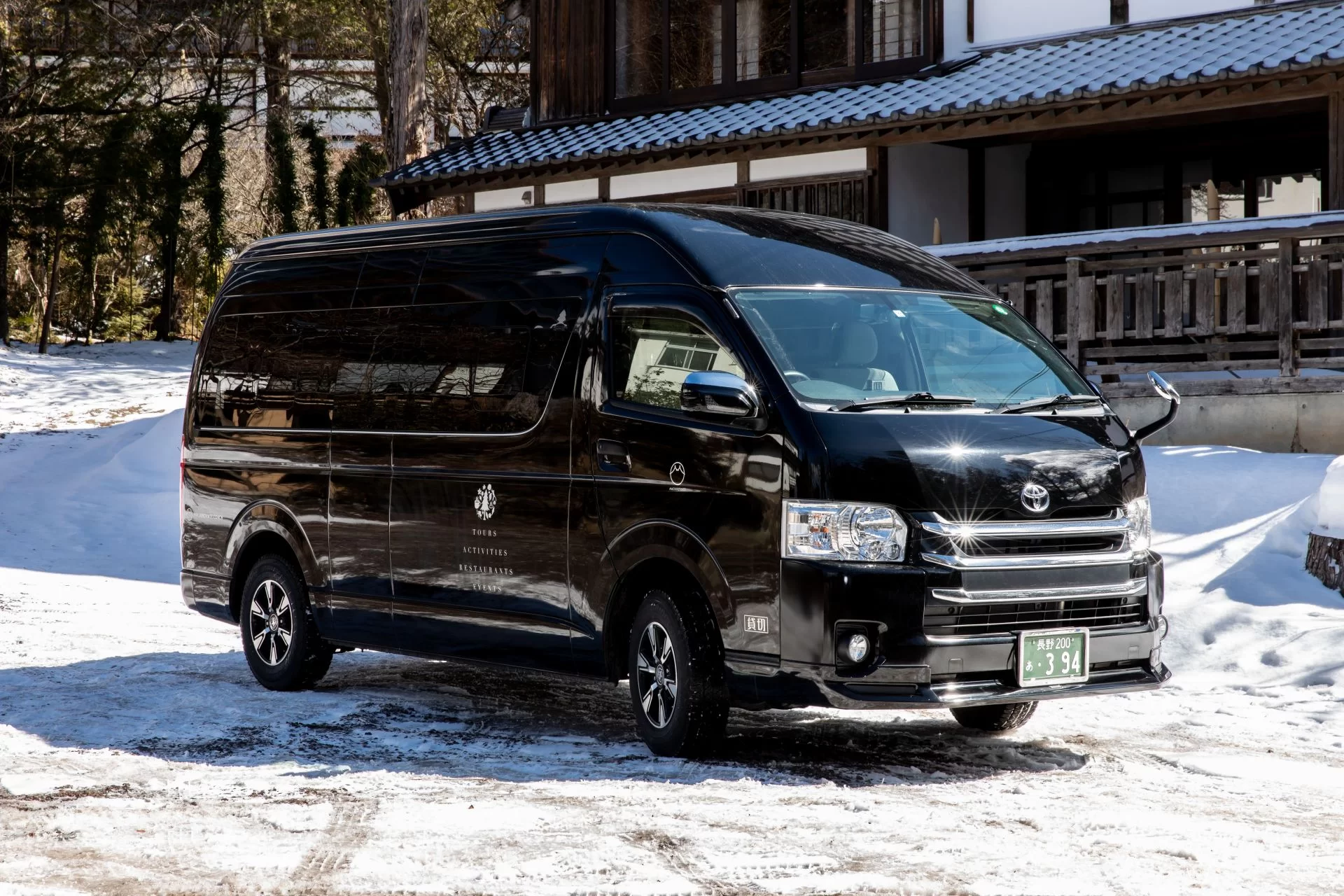
We also offer charters to the Monkey Park (and other destinations around Central Japan) for travelers in need of transportation only. Many starting point options are available such as Nagano Station, Hakuba, Nozawa Onsen, and more.
Why Choose a Private Charter?
- Direct & Efficient: Enjoy a seamless 50-minute journey from Nagano Station directly to the park trailhead, saving you from the multiple transfers required by train and local bus.
- Door-to-Door Service: We can pick you up and drop you off at your preferred location, including hotels, stations, or airports.
- Flexible Scheduling: You aren't tied to a rigid tour itinerary—choose your own departure and return times to suit your travel plans.
- Luggage Friendly: Our vehicles can easily accommodate large suitcases, skis, and snowboards.
Flexible Starting Points
We provide charter services from all major hubs and ski resorts in the region:
- Nagano Station & Nagano City Hotels
- Hakuba
- Nozawa Onsen
- Myoko Kogen
- Madarao & Shiga Kogen
Vehicle Options for Every Group
We operate a range of clean, licensed, and air-conditioned vehicles to suit your group size:
- Full-size Vans (HiAce): Ideal for up to 8 passengers with luggage (or 12 without).
- Microbuses: Perfect for groups of up to 14 with luggage (or 17 without).
- Large Coaches: Available for groups of up to 40+ people.
Please see our safe, timely, personalized transportation option to and from the Snow Monkey Park from Nagano Station.
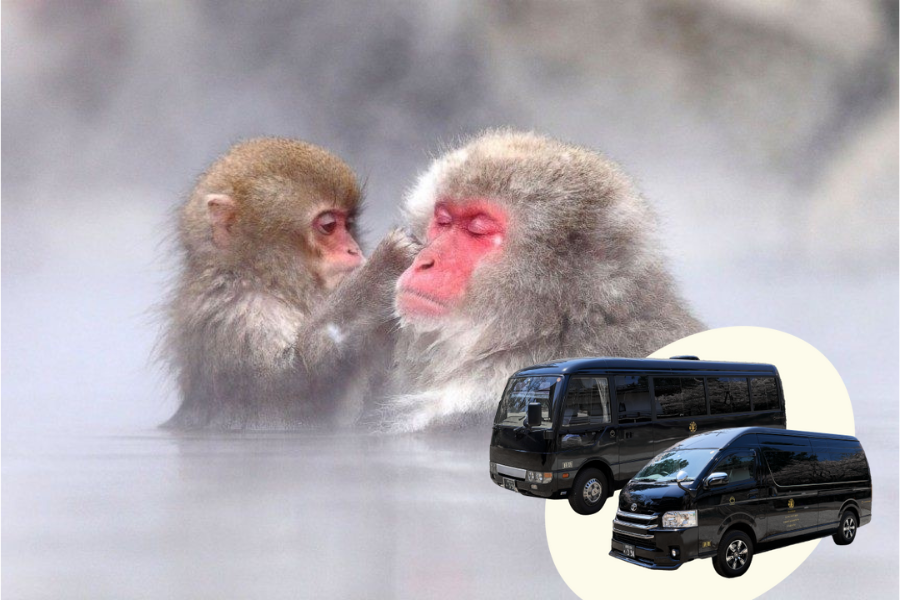
NAGANO STN → SNOW MONKEY PARK (3HR)→ NAGANO STN
- Duration:
- 4-5 Hours
- Spots:
- Nagano, Snow Monkey
25 Things to do Around the Park and Where to Stay
Often referred to as the Snow Monkey Park, you’d be forgiven for thinking the park is only open and the monkeys only venture there in winter. While it’s true they are most famous for their winter antics, the monkeys come to the park all year round and there are just as many reasons to visit in spring, summer and autumn. Located in the beautiful rural enclave of Yamanouchi and within easy reach of Nagano City, visiting the park can be easily combined with plenty of nearby destinations and activities, as a day-trip or multi-day visit. Our '25 Things To Do Around The Jigokudani Monkey Park & Where To Stay' page has lots of great tips and suggestions of what's on offer throughout the year.
Frequently Asked Questions (FAQ)
Births typically begin in late April and continue through May. While you can see "toddlers" from the previous year in March and early April, the brand-new infants are most visible from early May onward.
March often still feels like winter with varying levels of snow on the ground depending on the conditions. In April, the snow begins to melt rapidly, but you may still see a "light dusting" of spring snow early in the month. By May, the snow is usually completely gone.
Yes, though their behavior changes as it warms up. In the chilly weeks of March, they soak frequently to stay warm. In April and May, they may spend less time in the water on hot, sunny days, but they are very likely to jump in if it is rainy or a bit brisk.
March: Full winter gear and waterproof boots are essential as the trail is icy and slushy.
April/May: The trail is mostly dry but can be muddy in spots. Sturdy sneakers or hiking shoes are recommended. Even if it’s warm in Nagano City, the forest trail is shaded and can be 5°C–10°C cooler, so bring layers.
Absolutely. Spring is considered the "quiet season". Once the peak winter ski crowds depart in late March, you will find much more space at the park to observe the monkeys without the large winter crowds.
The park is open 7 days a week, 365 days a year. Closures only occur in extremely rare cases of severe weather, such as heavy flooding or typhoons that might affect the safety of the forest trail.