




Japan's torii gates are among the country's most recognizable symbols, marking the entrance to Shinto sacred spaces and creating striking gateways between the everyday world and the realm of the kami. While some are famous for their size or history, others stand out because of their dramatic surroundings, unusual design or the traditions associated with them.
From gates standing in the waters of Lake Biwa to enormous torii overlooking the Osaka skyline, here are some of Japan's most beautiful and unique torii gates to add to your travel list.
Why Are Torii Gates So Important?
Torii are traditionally understood as gateways marking the transition from the ordinary world into a sacred space associated with Shinto kami. They can range from simple wooden structures to enormous monuments, and their locations are often just as important as the gates themselves.
Some stand beside the sea, others deep in mountain forests, while others have become landmarks overlooking modern cities. This variety is part of what makes exploring Japan's torii gates so rewarding.
How to Respect Torii Gates
Torii are more than decorative gateways, so a little awareness goes a long way when visiting them.
Before entering:
- Bow once before passing through the torii as a sign of respect.
- Walk slightly to the side rather than directly through the center, which is traditionally regarded as the path of the kami.
- If there are multiple torii, repeat the gesture as you enter different sacred areas.
While visiting:
- Don't climb, lean, sit on or hang from torii gates.
- Never write, carve or attach graffiti or stickers to them.
- Avoid blocking the gate while taking photographs.
- Follow signs and any restrictions around sacred areas.
- Keep voices reasonably quiet, particularly near worship areas.
When praying at a shrine:
The usual form of worship is two bows, two claps, followed by one final bow. Before praying, visitors normally purify themselves at the temizuya or purification fountain.
Most importantly, remember that you're visiting a place of worship, not simply a photo location. The torii is the entrance to a sacred space, not an Instagram prop.
Chugoku & Shikoku Regions (Hiroshima)
Miyajima's Floating Torii Gate — Hiroshima
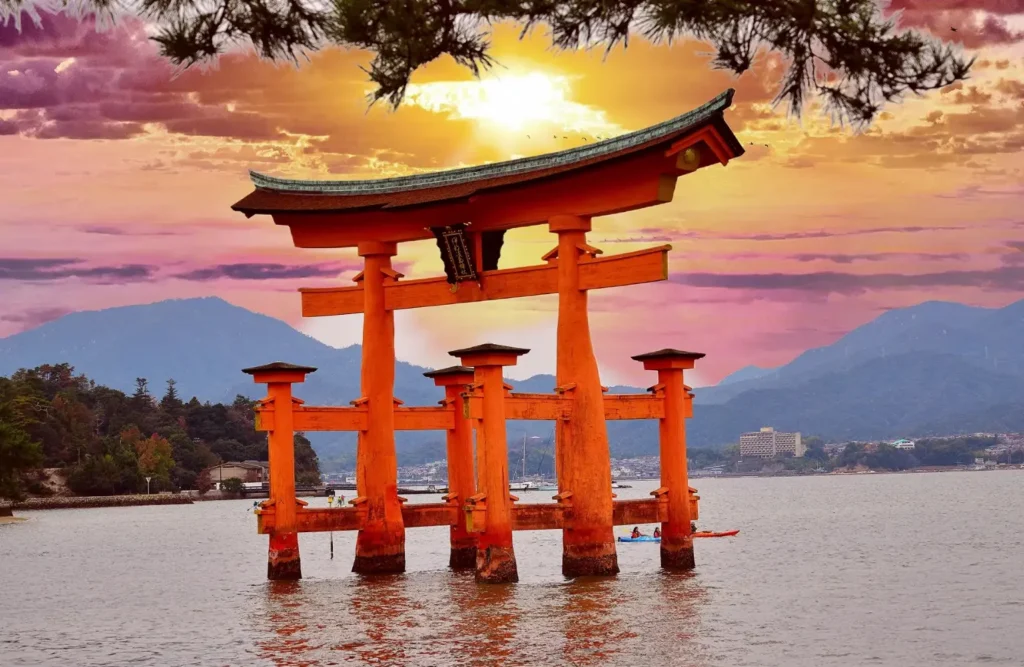
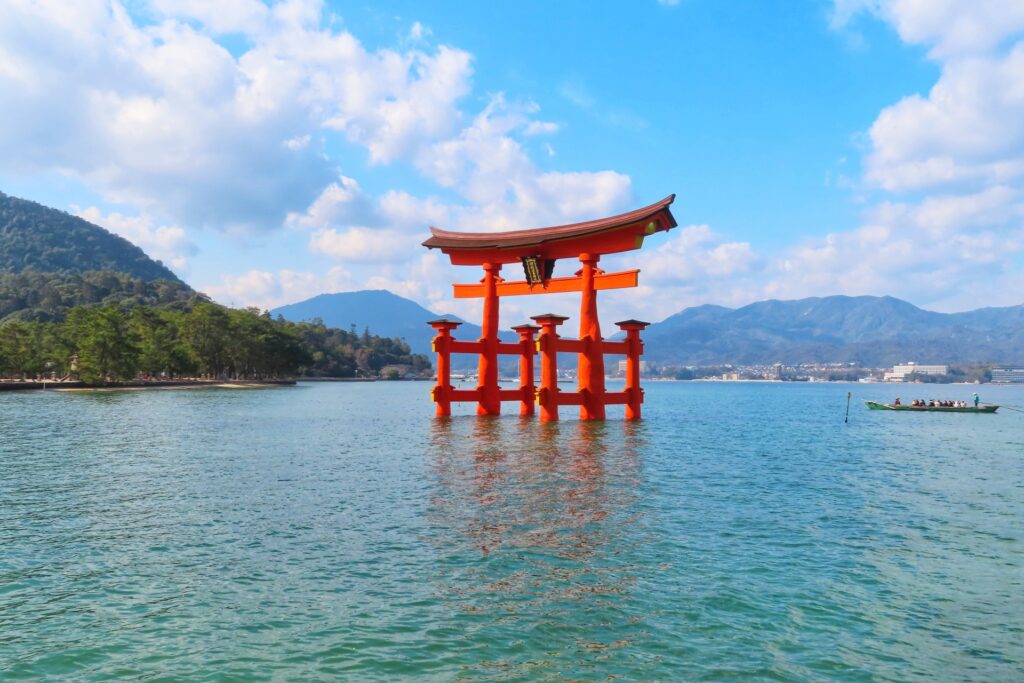
Perhaps the most famous torii gate in Japan, the great torii of Itsukushima Shrine appears to float in the waters of the Seto Inland Sea at high tide. Located on Miyajima Island near Hiroshima, the gate has become one of Japan's most iconic sights.
The current gate is a reconstruction of the traditional design and stands approximately 16 meters tall. Its dramatic setting changes throughout the day as the tide rises and falls, allowing visitors to see it from the water or walk out toward it at low tide.
The combination of the vermilion gate, surrounding mountains and sea makes this one of Japan's most spectacular Shinto landscapes.
Motonosumi Shrine Torii Gates — Yamaguchi
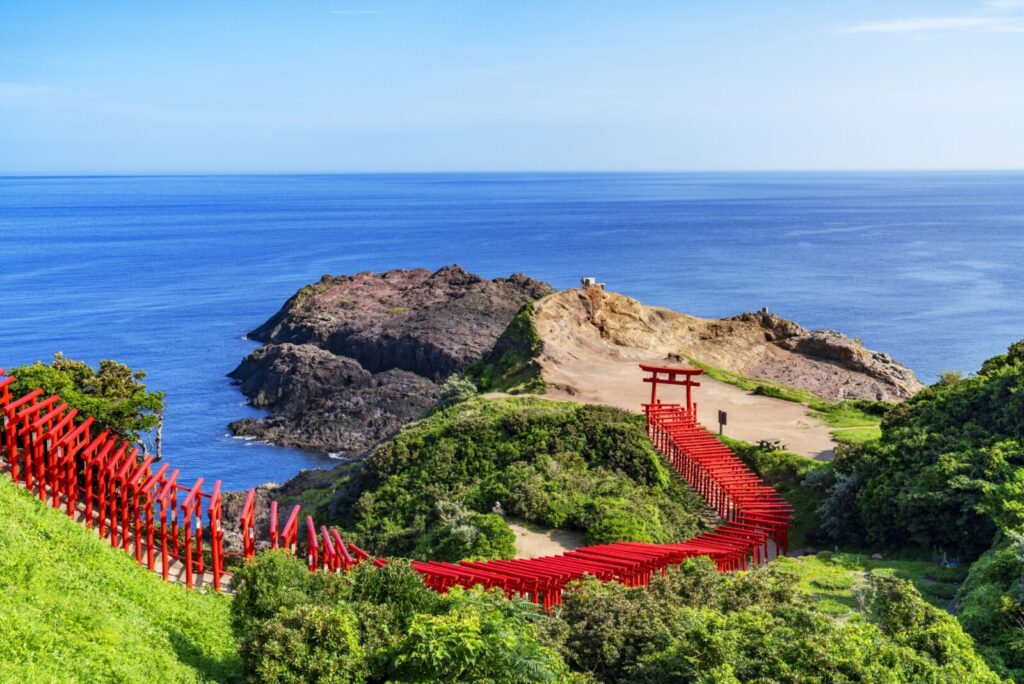
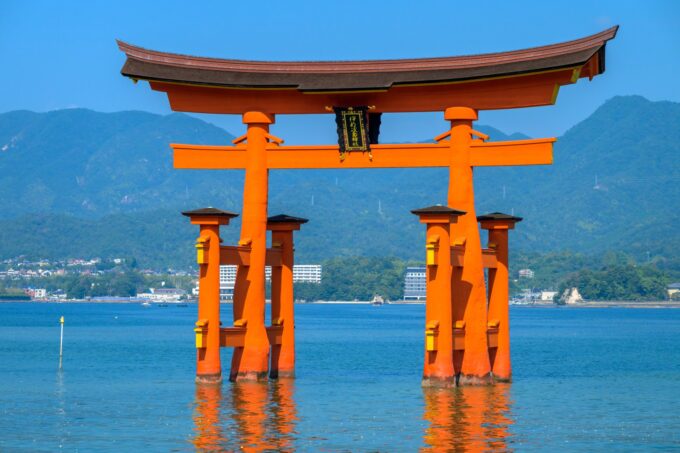
Perched dramatically along a sheer coastal cliff in Yamaguchi Prefecture, Motonosumi Shrine features a striking tunnel of 123 bright red torii gates that wind down toward the deep blue waters of the Sea of Japan. Erected following a local fisherman's encounter with a sacred white fox, the vibrant vermilion pathway stretches for over 100 meters, creating a breathtaking contrast against the green hills and crashing waves.
Because the shrine sits in a remote coastal area with limited public transportation, most visitors arrive by car or taxi. To manage heavy congestion and pedestrian safety on the narrow approaches, local authorities implement strict traffic and access restrictions. During peak periods—including weekends, national holidays, Golden Week, and Obon—vehicle queues can back up significantly, and portions of the torii pathway may experience temporary walking restrictions or closures to regulate crowds. Checking local traffic updates and visitor advisories ahead of time is essential for a smooth trip.
Kansai Region (Osaka, Kyoto, Kobe & other areas)
The Torii Gates of Fushimi Inari — Kyoto
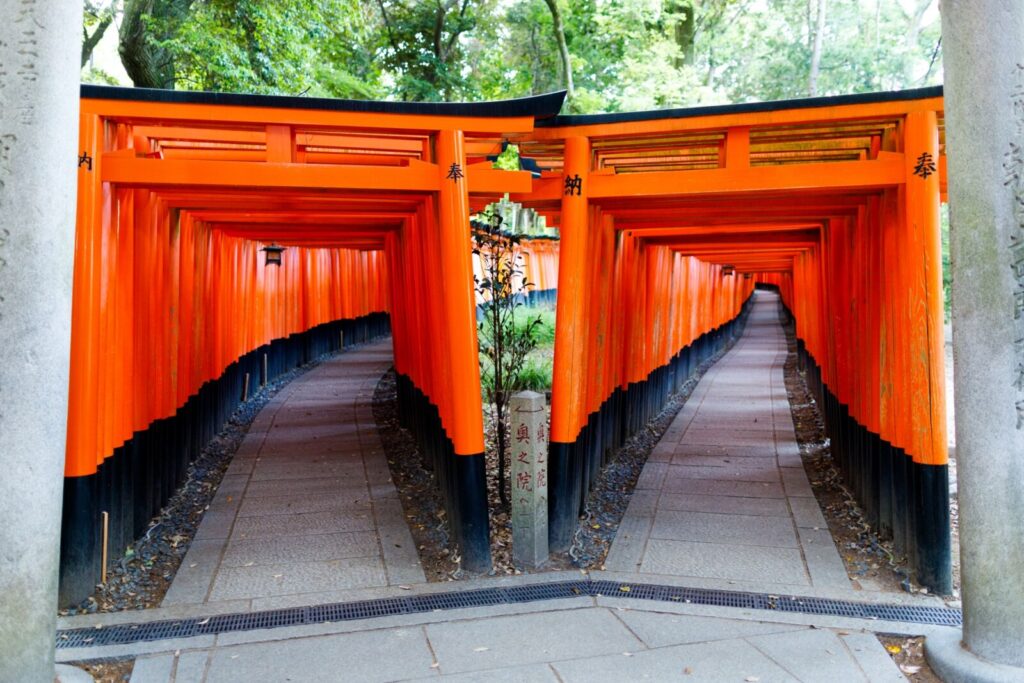
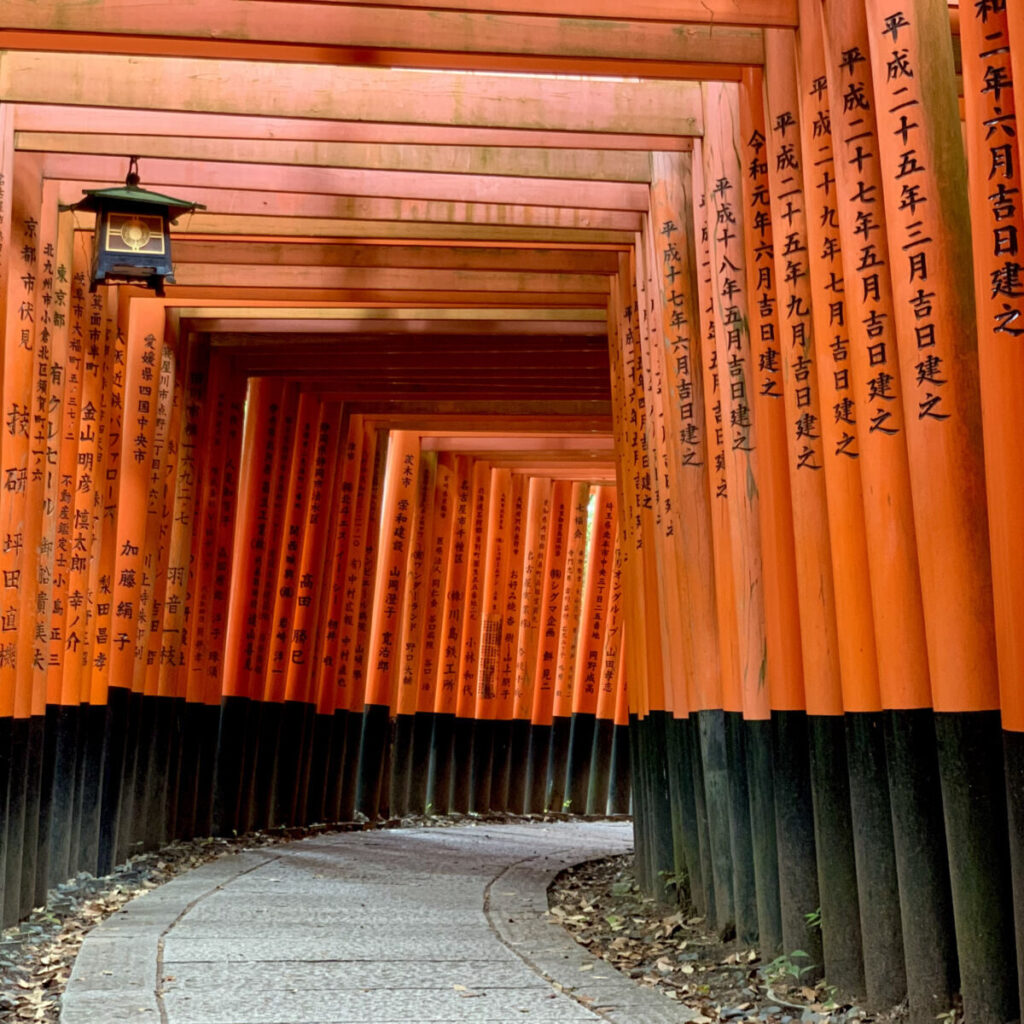
Few places in Japan demonstrate the visual power of torii gates better than Fushimi Inari Taisha in Kyoto. Thousands of vermilion torii gates wind up the forested slopes of Mount Inari, creating the famous tunnels known as Senbon Torii, or "Thousand Torii."
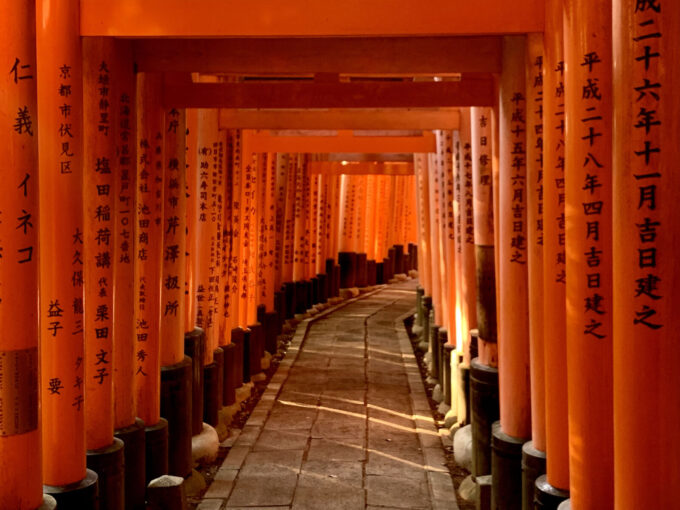
The gates have been donated by individuals and businesses over many generations, with the donor's name and date of dedication traditionally recorded on the back of each gate.
While the main paths can become extremely busy, continuing farther up Mount Inari reveals quieter sections of the shrine and beautiful views over Kyoto.
Miyazaki Torii — Chikubu Island, Shiga
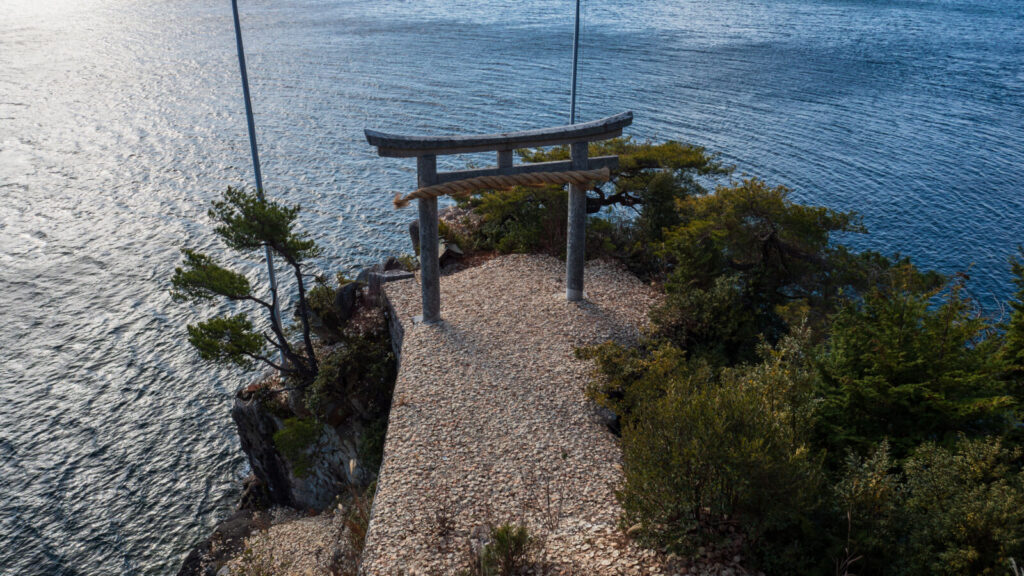
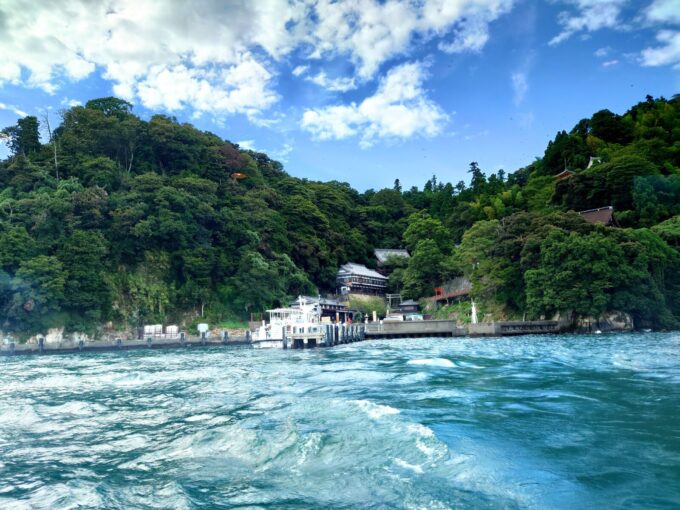
For a truly unusual torii experience, head to Chikubu Island, a small sacred island floating in the northern part of Lake Biwa. Here, the Miyazaki Torii stands at the edge of the lake below Tsukubusuma Shrine.
The gate is particularly special because of the traditional kawarake-nage ritual performed at the nearby Ryujin Worship Place. Visitors write their name and a wish on small unglazed clay discs before throwing them toward the torii. According to tradition, a wish will be fulfilled if the kawarake passes through the gate.
The location itself is just as impressive. The worship area projects out toward Lake Biwa and is considered one of the island's best viewpoints, creating an unusual combination of sacred tradition, open water and mountain scenery.
Want to experience it yourself? Our Lake Biwa tour combines a visit to Chikubu Island with a cruise across Lake Biwa and a visit to historic Hikone Castle.
The "Torii in the Sky" — Ikeda, Osaka
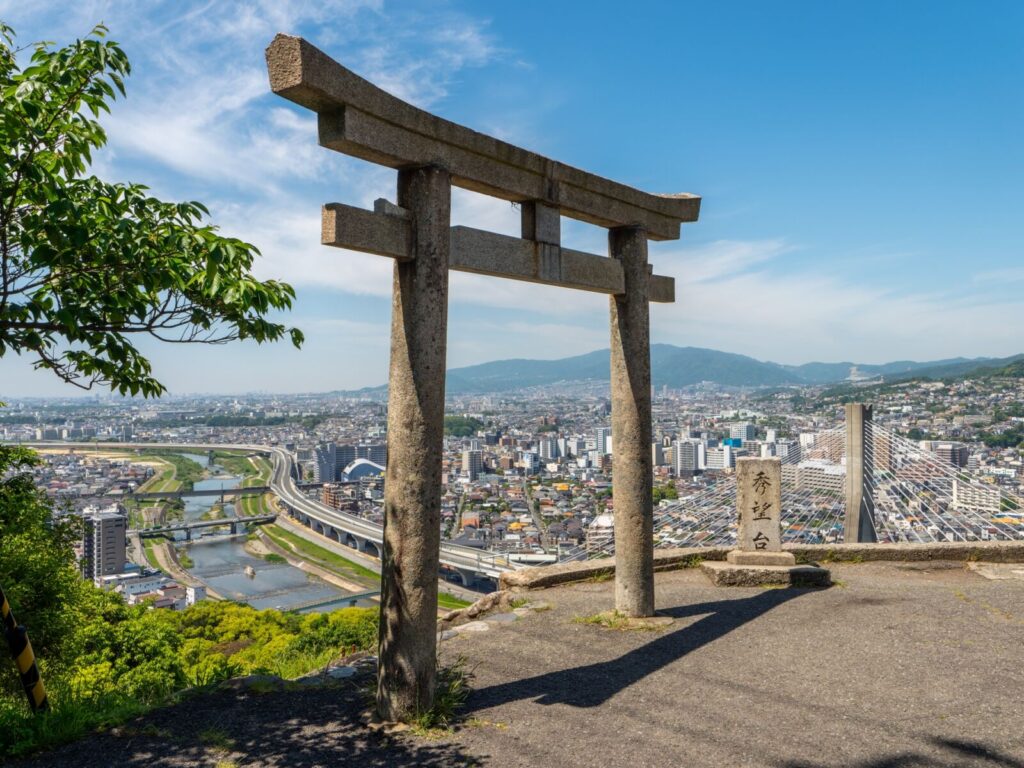
One of Osaka's lesser-known torii gates can be found high above Ikeda City on the slopes of Mount Satsuki. Known locally as the "Torii in the Sky," this enormous gate frames a sweeping view across Ikeda and toward the Osaka metropolitan area.
Rather than being surrounded by dense forest or standing beside a shrine, the torii's appeal comes from its elevated position and the cityscape beyond it. The contrast between the traditional Shinto gate and the sprawling modern city makes it one of the more unusual torii viewpoints in the Kansai region.
The viewpoint is particularly beautiful toward evening, when the city begins to light up below.
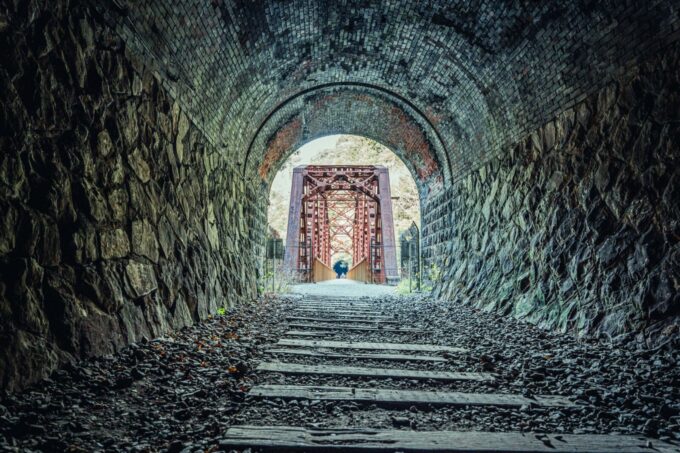
You can visit the Torii in the Sky as part of our Takedao Railway Hike & Foot Bath and Panoramic Views Tour, which combines the viewpoint with historic temples, the abandoned Takedao railway and the mountains of northern Osaka.
The Giant Torii of Kumano Hongu Taisha — Wakayama
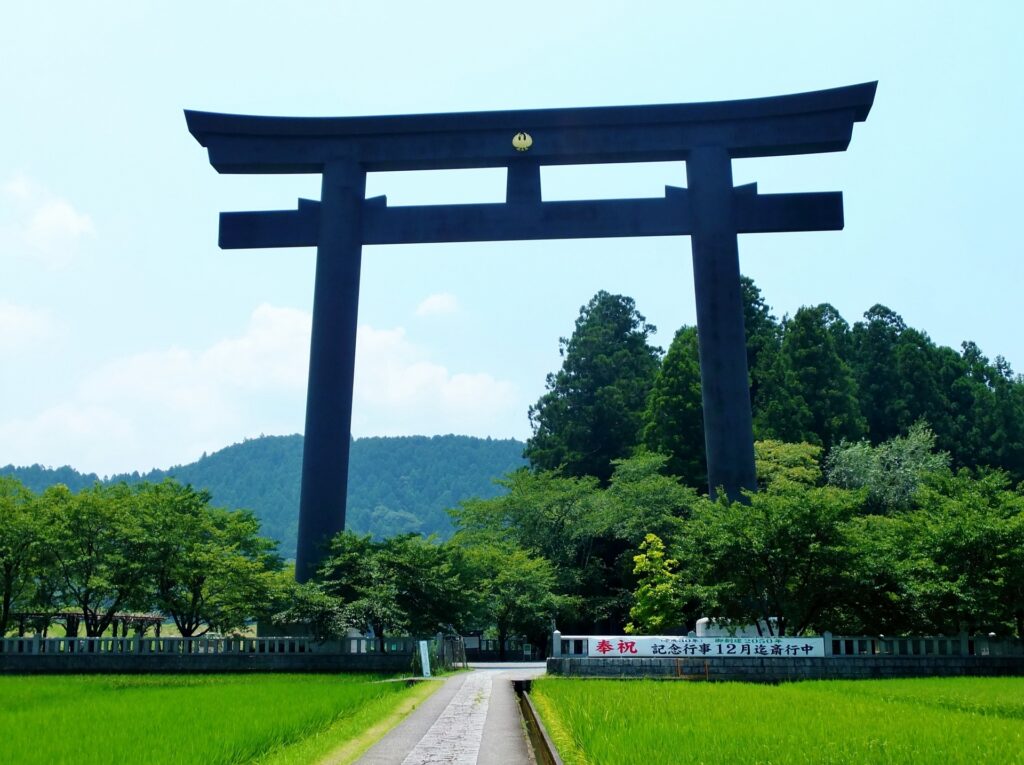
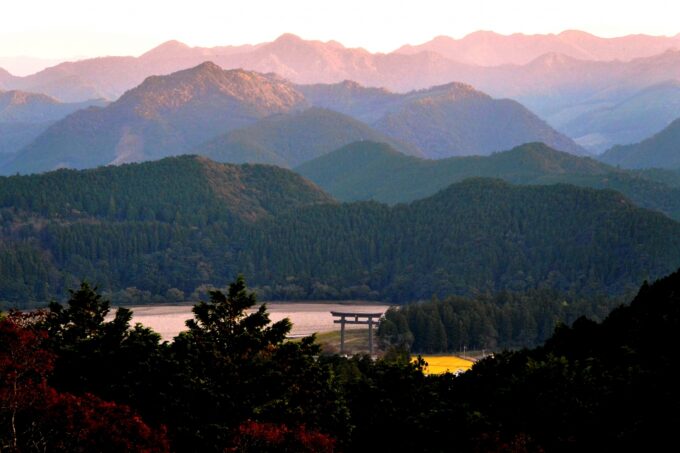
For sheer scale, few torii can compete with the enormous gate at Oyunohara in Kumano. Standing at approximately 34 meters tall, it is widely recognized as one of the world's largest torii gates.
The gate marks the entrance to the former site of Kumano Hongu Taisha, where the shrine originally stood before flooding forced its relocation to higher ground in the late 19th century.
Surrounded by the mountains of the Kii Peninsula, the enormous gate serves as a dramatic reminder of the deep connection between the Kumano pilgrimage routes and the sacred landscape.
Sannō Torii — Hiyoshi Taisha, Shiga
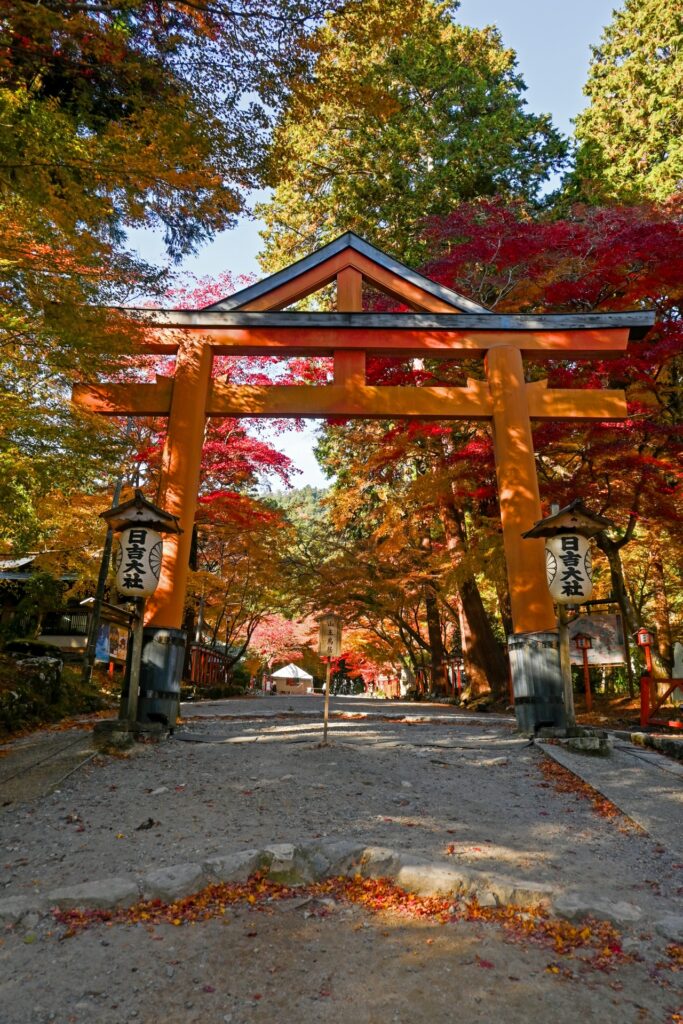
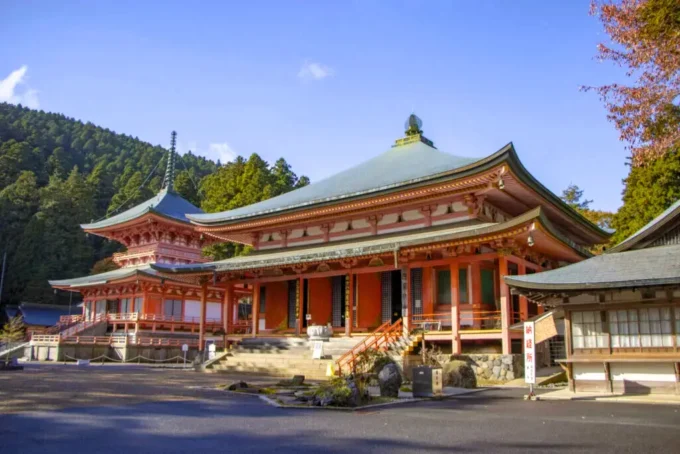
The Sannō Torii at Hiyoshi Taisha is unlike most torii in Japan. Instead of the usual simple horizontal crossbeam, the gate has a distinctive triangular structure rising above it.
The unusual design is closely associated with Sannō worship and reflects the long history of interaction between Shinto and Buddhism at Hiyoshi Taisha and nearby Mount Hieizan. The triangular form is also said to represent Mount Hiei.
Hiyoshi Taisha contains several Sannō Torii, making the shrine one of the best places in Japan to see this unusual style.
Visit with us: The Sannō Torii is included on our Sacred Peaks of Mount Hieizan experience alongside Enryaku-ji Temple.
Oiwa Shrine's Inshō Dōmoto Torii — Kyoto
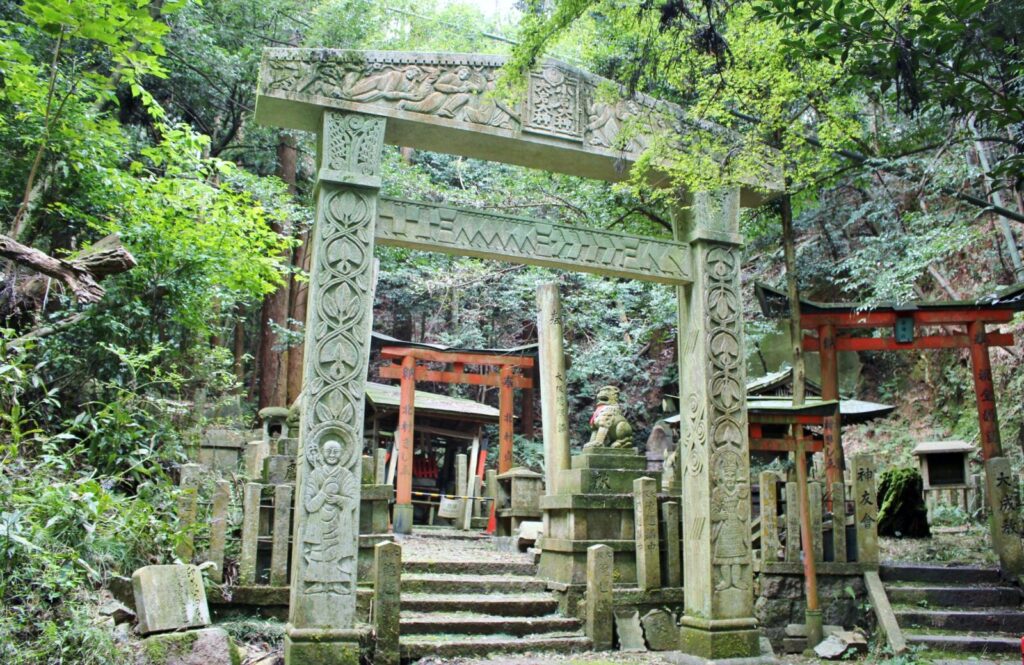
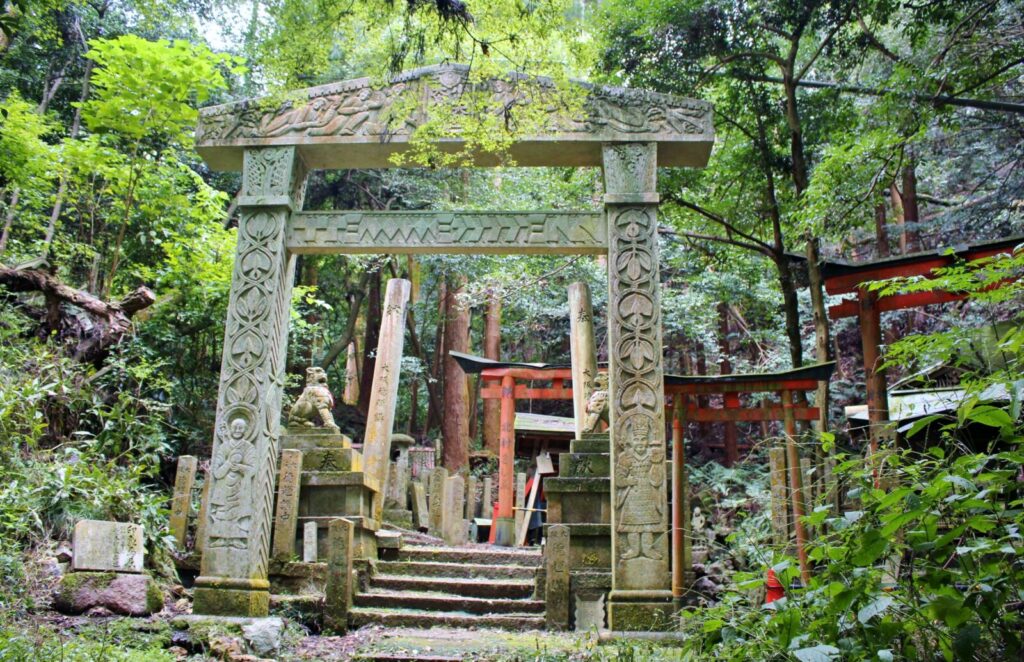
Hidden among the forested hills of southern Kyoto, Oiwa Shrine feels far removed from the city's famous temples and crowded streets. The shrine is dedicated to sacred rocks, and its secluded paths lead to one of Kyoto's most unusual torii gates.
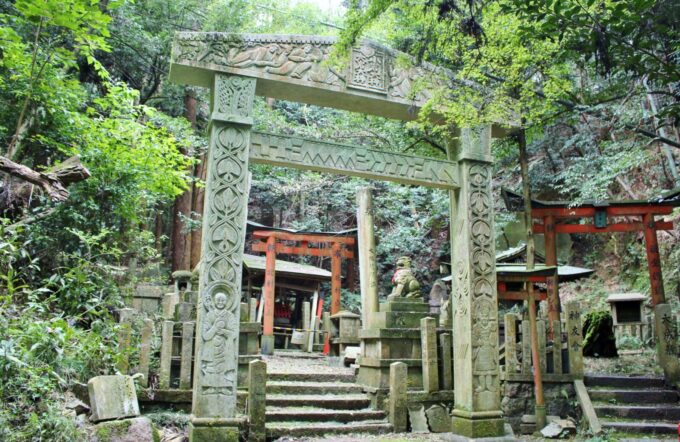
The Inshō Dōmoto Torii was designed and donated by Inshō Dōmoto, one of Japan's celebrated 20th-century Japanese-style painters. Rather than following the traditional simplicity of a torii, Dōmoto decorated the stone gate with carvings of animals, human figures and abstract patterns, transforming it into something closer to a work of sculpture.
Dōmoto had a personal connection to Oiwa Shrine, where his family had prayed for his mother's recovery from illness. The torii was his expression of gratitude, giving the gate a deeply personal spiritual meaning.
Today, discovering the unusual gate among the moss, trees and sacred rocks of Oiwa Shrine is an atmospheric experience — and a glimpse of a side of Kyoto that few visitors encounter.
Visit with us: Oiwa Shrine is featured on our Hidden Shrines & Warrior Paths of Kyoto Tour, which explores some of the city's lesser-known sacred sites away from the usual tourist routes.
The Torii of Ōmiwa Shrine — Nara
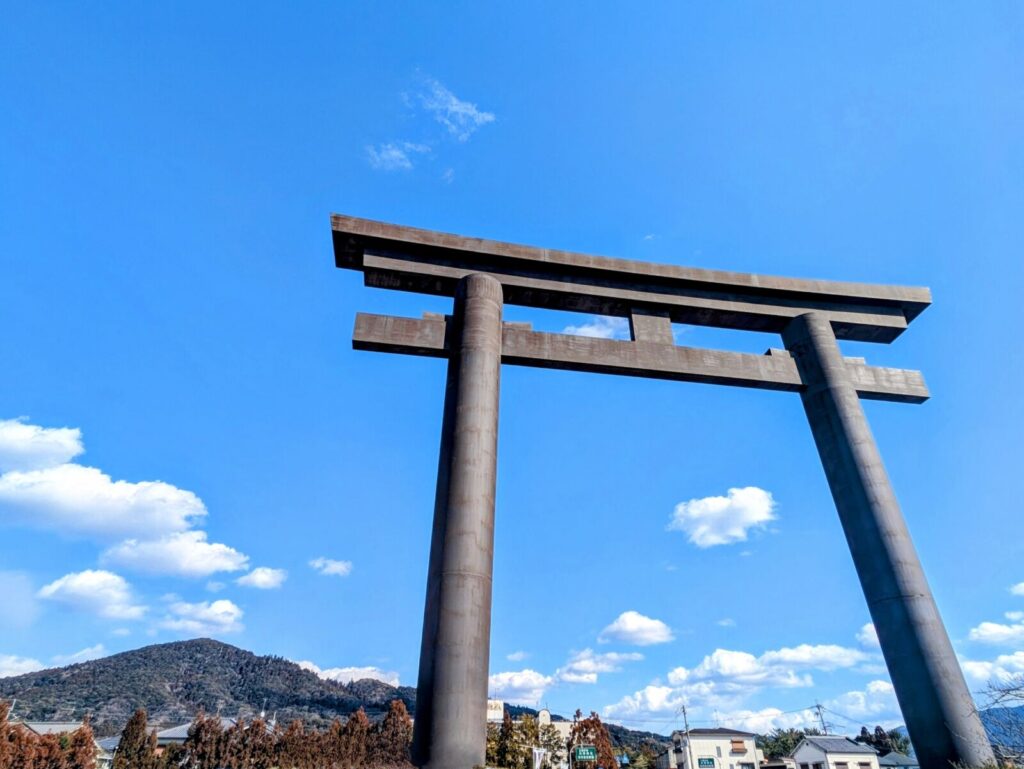
Ōmiwa Shrine is one of Japan's most ancient and spiritually distinctive shrines, where Mount Miwa itself is worshipped as the sacred body of the kami. Rather than housing its deity in a conventional main sanctuary, worshippers have prayed toward the mountain for centuries, preserving one of Japan's oldest forms of nature worship.
The approach begins with the enormous Ōtorii (Great Torii), rising 32.2 meters above the surrounding landscape and visible from across Sakurai. From here, the traditional Nino Torii (Second Torii) leads visitors deeper into the sacred grounds and toward the forested slopes of Mount Miwa.
The spiritual heart of the shrine, however, is the extraordinary Mitsutorii, also known as the Miwa Torii. Three torii are joined together to form a single gateway, separating the worship hall from the sacred area of Mount Miwa beyond. Because the mountain itself is the object of worship, the Mitsutorii effectively takes the place of a conventional main sanctuary. Its origins are unknown, and the shrine has traditionally regarded it as one of its great mysteries.
Together, these torii tell the story of Ōmiwa: from the enormous gateway announcing the sacred mountain to the ancient and mysterious barrier where the human and divine worlds meet.
Visit with us: Discover Ōmiwa Shrine as part of our Yamanobe-no-Michi Tour, walking through the ancient landscapes around Mount Miwa and experiencing one of Japan's most fascinating expressions of nature worship.
Nachi Taisha Torii — Wakayama
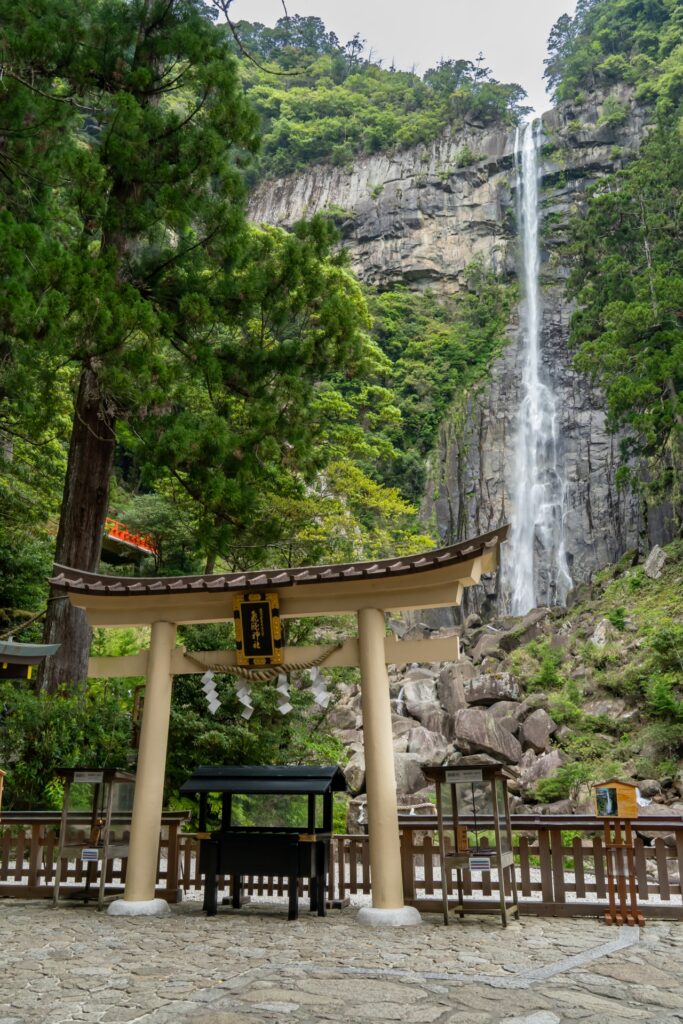
Few torii in Japan create such a dramatic sense of arrival as those at Kumano Nachi Taisha. Set high on the forested slopes of Nachi Mountain, the vermilion gates lead into one of Japan’s most sacred landscapes, where Shinto worship has long been inseparable from the surrounding nature.
The spiritual heart of Nachi is Nachi Falls, a spectacular 133-meter cascade that has been worshipped as a divine presence since ancient times. At the nearby Hiro Shrine, the waterfall itself is the sacred object of worship. From the shrine grounds, the torii, brilliant vermilion buildings, towering cedar forests and distant falls come together in a landscape that feels almost otherworldly.
Nachi is also one of the three great shrines of Kumano and a major destination on the ancient Kumano Kodo pilgrimage routes. Walking through its gates feels like entering a sacred world shaped by mountains, forests and water for centuries.
Chubu Region (Nagoya, Kanazawa & other areas)
Meoto Iwa, The Natural Torii of Ise — Mie
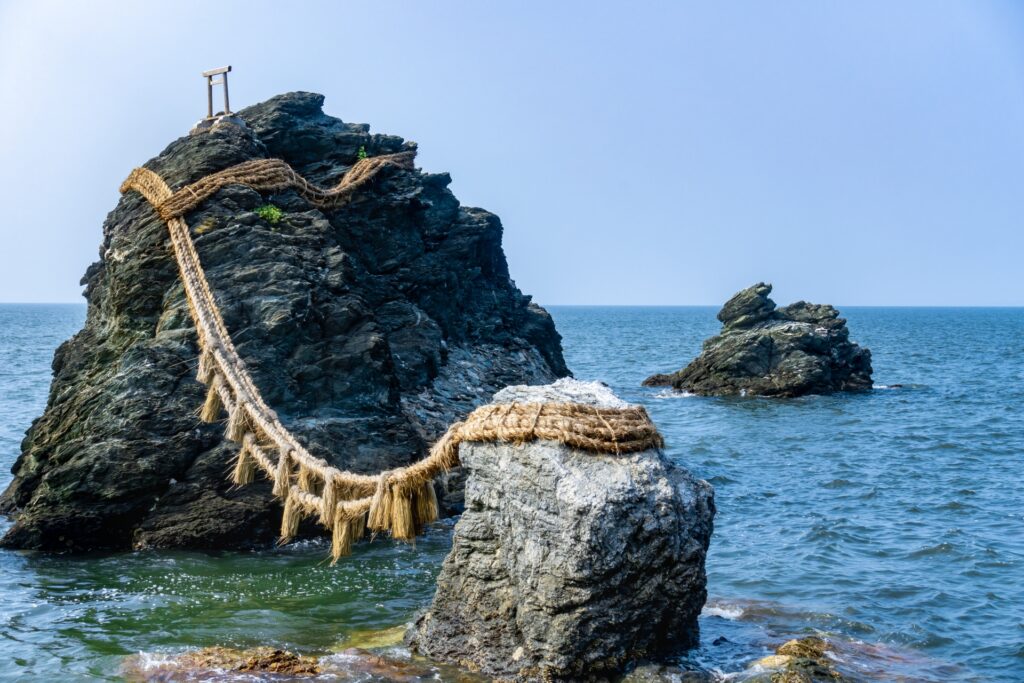
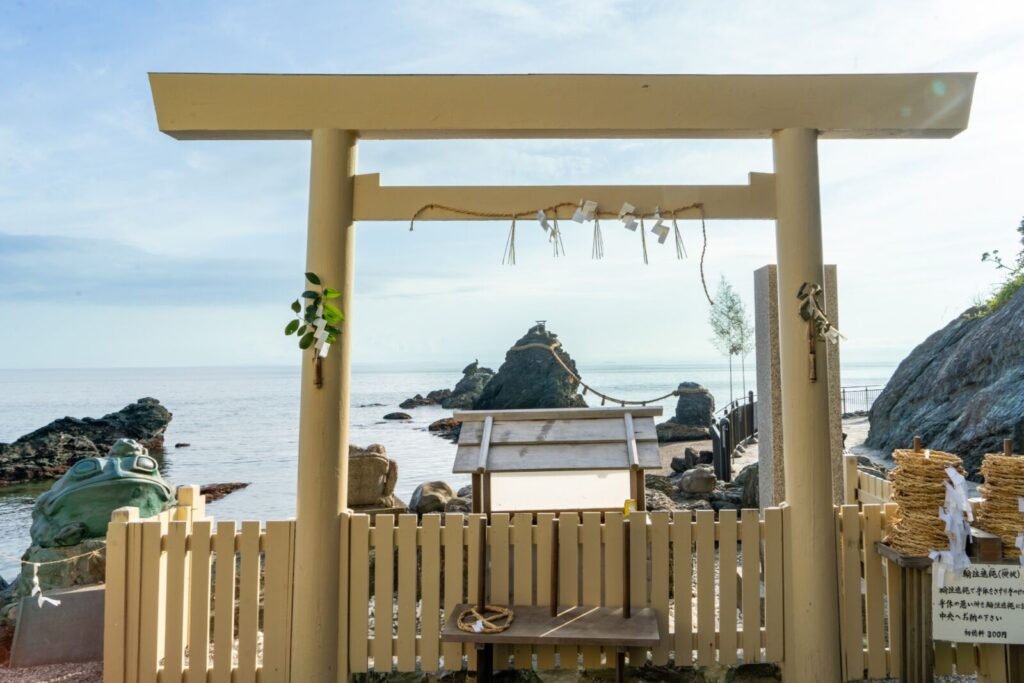
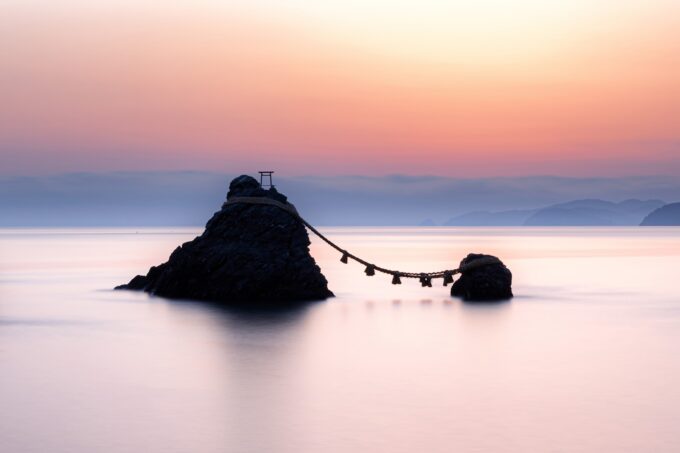
Along the coast of Mie, two sacred rocks rise from the sea, bound together by a massive shimenawa rope. Known as Meoto Iwa, or the "Wedded Rocks," they represent the divine union of husband and wife and are one of Japan's most beloved sacred landscapes.
Yet the rocks have another, more spiritual purpose. Together, they form a natural torii, creating a gateway through which worshippers traditionally look toward the sacred Okitama rock offshore and the rising sun. Around the summer solstice, the sun rises between the two rocks, creating an especially powerful sight.
The surrounding Futami Okitama Shrine was historically a place of ritual purification for pilgrims traveling onward to Ise Jingu. Visiting Meoto Iwa therefore isn't simply about seeing a beautiful coastal landmark — it is part of an ancient spiritual journey toward Ise.
Visit with us: Meoto Iwa is the final stop on our Ise Sacred Shrines & Captivating Coastlines Tour, giving you the chance to experience this remarkable coastal sanctuary alongside Ise Jingu and the traditions of the Ise-Shima region.
Sanko Inari Shrine — Aichi
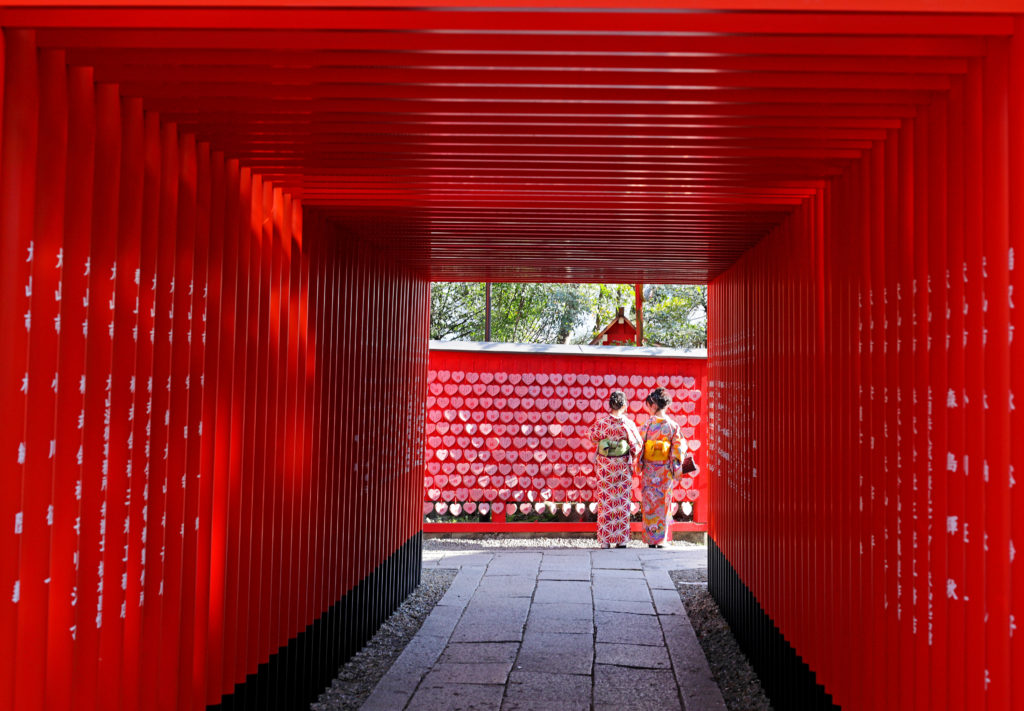
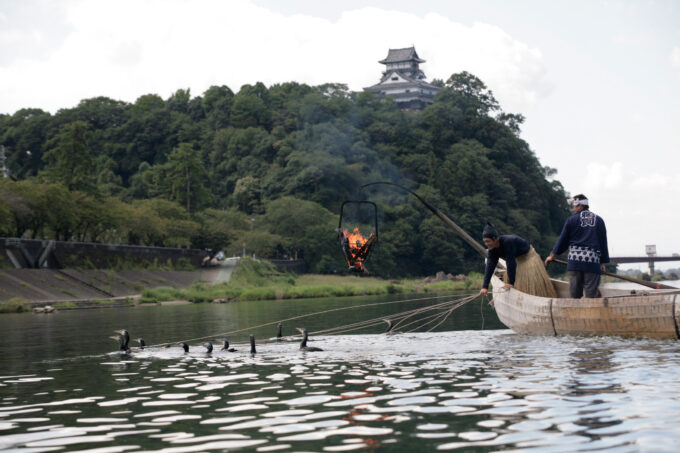
Resting at the base of Inuyama Castle in Aichi Prefecture, Sanko Inari Shrine is famous for its vibrant tunnel of bright pink ema plaques and its unique connection to ritual purification. Dedicated to protecting the local area, the shrine features an inner sanctuary and a sacred pond where visitors historically washed their money to attract financial prosperity.
Yet the shrine grounds hold an equally sacred purpose for matters of the heart. Within the complex lies the subordinate Hime-no-miya, dedicated to marital harmony and romantic fulfillment, where worshippers pray beneath cascades of heart-shaped votive ema. Visiting Sanko Inari Shrine therefore isn't simply about admiring a picturesque castle-town landmark—it is an immersive stop for those seeking blessings in love, fortune, and purification.
Visit with us: Sanko Inari Shrine is a key highlight on our Inuyama Half-Day Tour from Nagoya, giving you the chance to experience its vibrant pink ema plaques and purification traditions alongside the historic majesty of Inuyama Castle and a traditional matcha tea experience.
Kanto Region (Mt. Fuji & other areas)
Hakone Peace Torii — Yamanashi
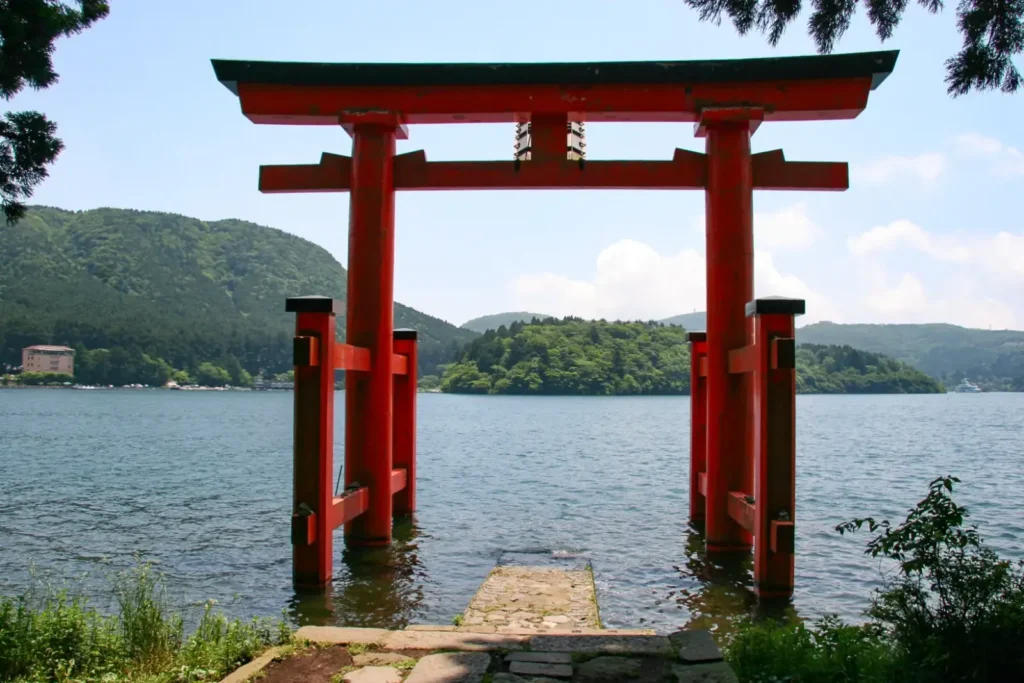
Rising gracefully from the waters of Ashinoko Lake, the striking vermilion Peace Torii marks the entrance to Hakone Shrine and frames breathtaking views of Mount Fuji in the distance. Known as the "Torii of Peace," this iconic structure acts as a serene water gate connecting the sacred shrine grounds with the misty, mountainous expanse of the lake.
Yet the gate serves a deeper spiritual purpose as a sacred boundary between the secular world and the divine realm of the mountains. Historically, Hakone Shrine protected travelers navigating the treacherous Hakone Pass along the ancient Tokaido highway. This shrine is part of an enduring journey of safe passage and mountain veneration.
Kawaguchi 'Torii in the Sky' — Gunma
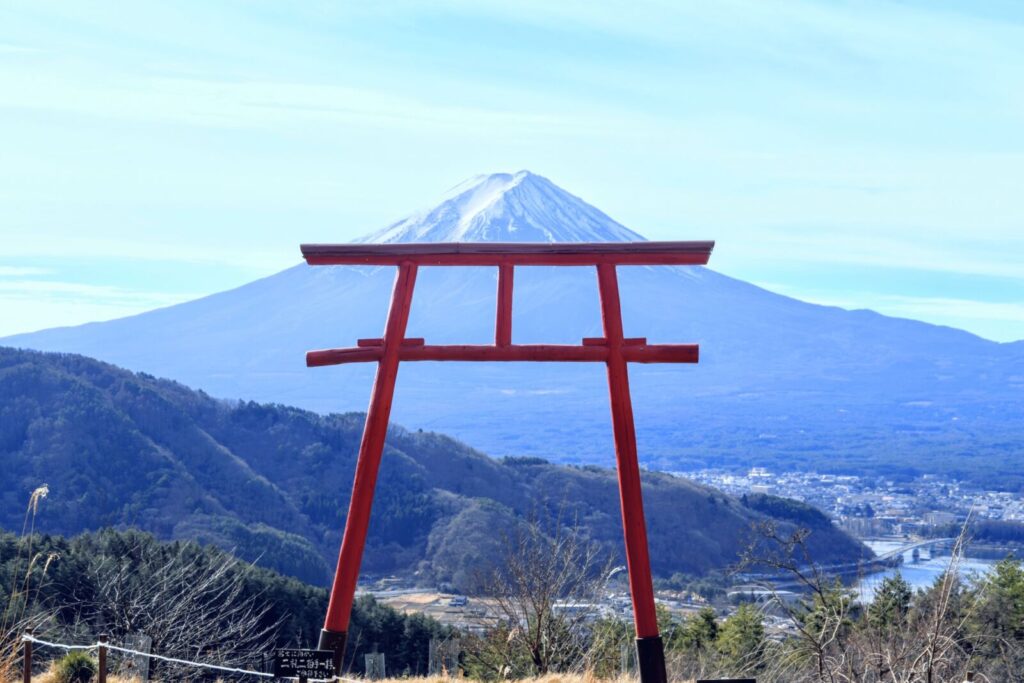
Perched high on a forested hillside overlooking Lake Kawaguchiko, the stunning "Torii in the Sky" frames an unobstructed, postcard-perfect panorama of Mount Fuji soaring directly behind it. Formally associated with Ubuyasu Shrine, this elevated gateway stands as a magnificent vantage point where the sweeping expanse of the lake meets the towering majesty of Japan's most sacred peak.
Beyond its striking visual impact, the high-altitude gate serves as an ethereal portal bridging the mortal world with the sacred, cloud-shrouded domain of the mountain deities. Historically, the surrounding area acted as a focal point for ancient Fuji mountain worship, where pilgrims offered prayers before embarking on grueling volcanic ascents. Feel connected to a centuries-old tradition of spiritual devotion and high-altitude pilgrimage.
Oarai Isosaki Shrine — Ibaraki
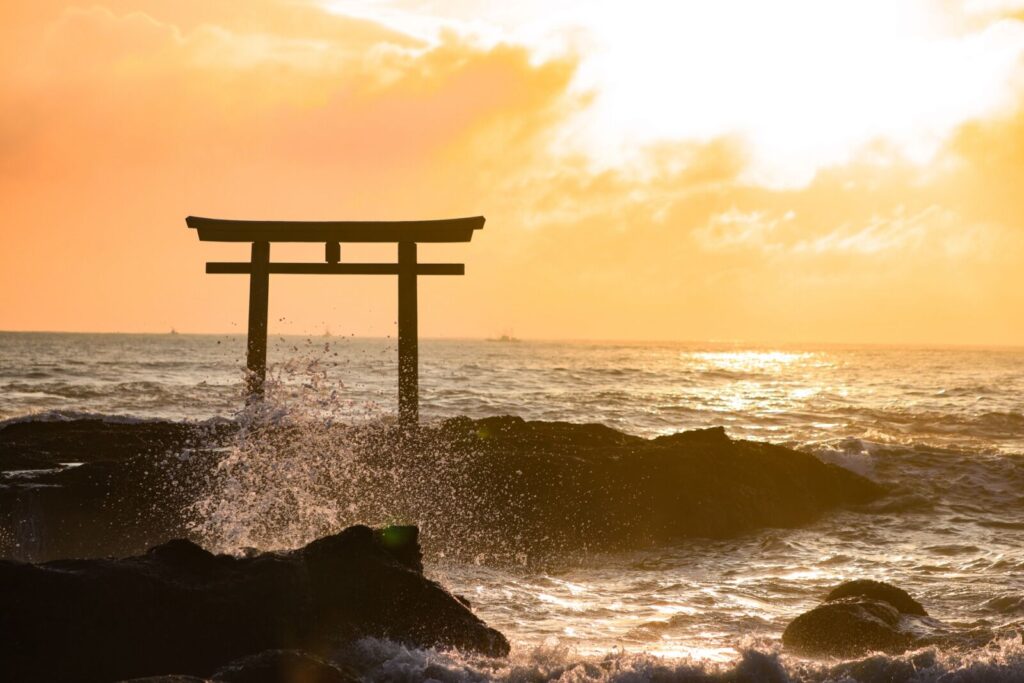
Atop rugged black coastal rocks where the Pacific waves crash, the Kamiiso-no-Torii of Oarai Isosaki Shrine emerges dramatically from the sea spray as a timeless symbol of devotion. This solitary, wave-washed stone gate captures the raw power of the ocean, creating a mesmerizing vantage point where the rising sun illuminates the horizon in brilliant hues of gold.
The sacred structure functions as a divine threshold marking the exact location where guardian deities are said to have descended to earth. For generations, the shrine has endured as a sanctuary for sea-faring prayers, dedicated to blessing maritime journeys and coastal abundance.
Tohoku Region (Sendai & other areas)
Yudonosan Shrine — Yamagata
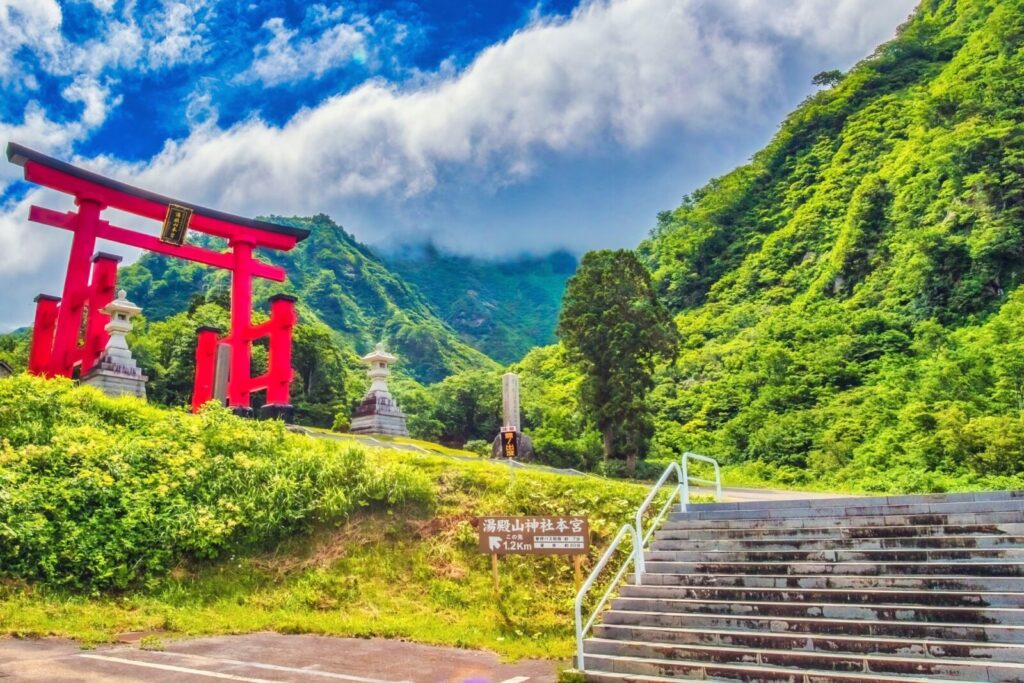
Nestled deep within the mist-shrouded slopes of Mount Yudono, the sacred shrine eschews traditional structures entirely, requiring visitors to remove their shoes and undergo ritual purification before stepping onto its holy, crimson-hued bedrock. This revered sanctuary honors natural volcanic energy and primeval mountain spirits, centering around a steaming, warm-water spring that emerges directly from the sacred earth.
Rather than featuring standard architectural markers, the holy site serves as the ultimate, deeply guarded sanctuary of the ancient Dewa Sanzan pilgrimage. For centuries, spiritual ascetics have climbed these mist-veiled heights to undergo symbolic rebirth and commune with the raw, elemental forces of nature. This shrine is an immersion into one of Japan's most secretive realms of ascetic mountain faith.
Takayama Inari Shrine — Aomori
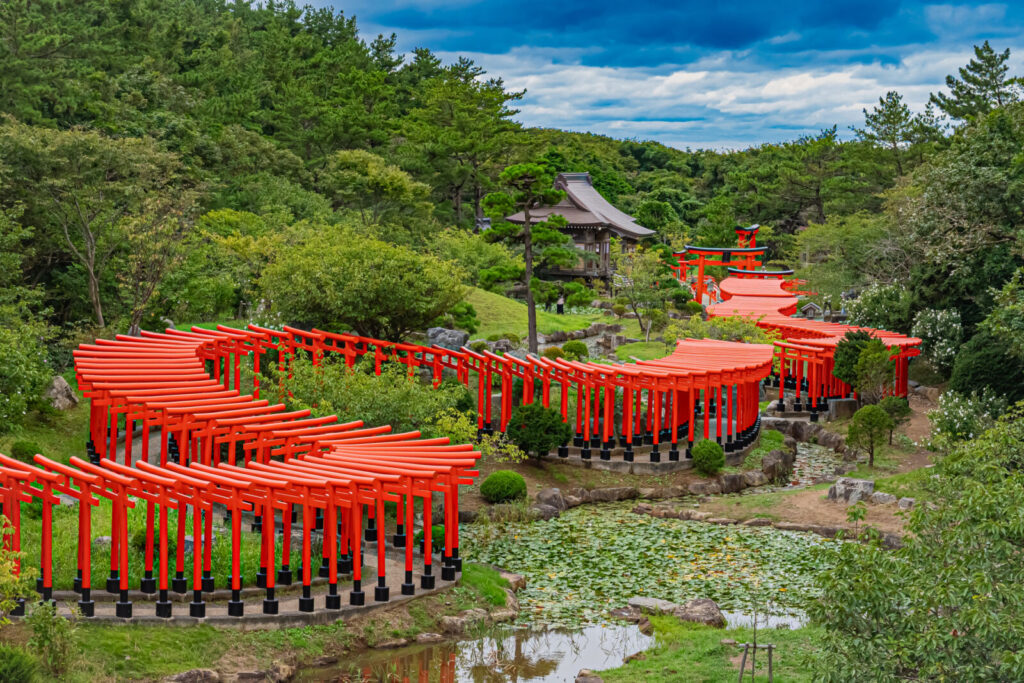
Tucked away on a windswept coastal bluff in northwestern Aomori Prefecture, Takayama Inari Shrine captivates with its mesmerizing procession of nearly three hundred vermilion torii gates winding dramatically across rolling green hills and tranquil ponds. This striking architecture creates a vibrant pathway that contrasts sharply with the vast, open skies and the distant waters of the Sea of Japan.
The sprawling shrine operates as a deeply revered ground for agricultural prosperity, maritime safety, and family protection, dedicated to the guardian deity Inari. Generations of worshippers have traversed its undulating corridors to offer prayers to the fox messengers said to safeguard the local harvests and coastal communities. Experiencing this remote northern landmark goes beyond ordinary sightseeing, drawing visitors deep into a landscape of localized folk devotion.
Iwakiyama Shrine — Aomori
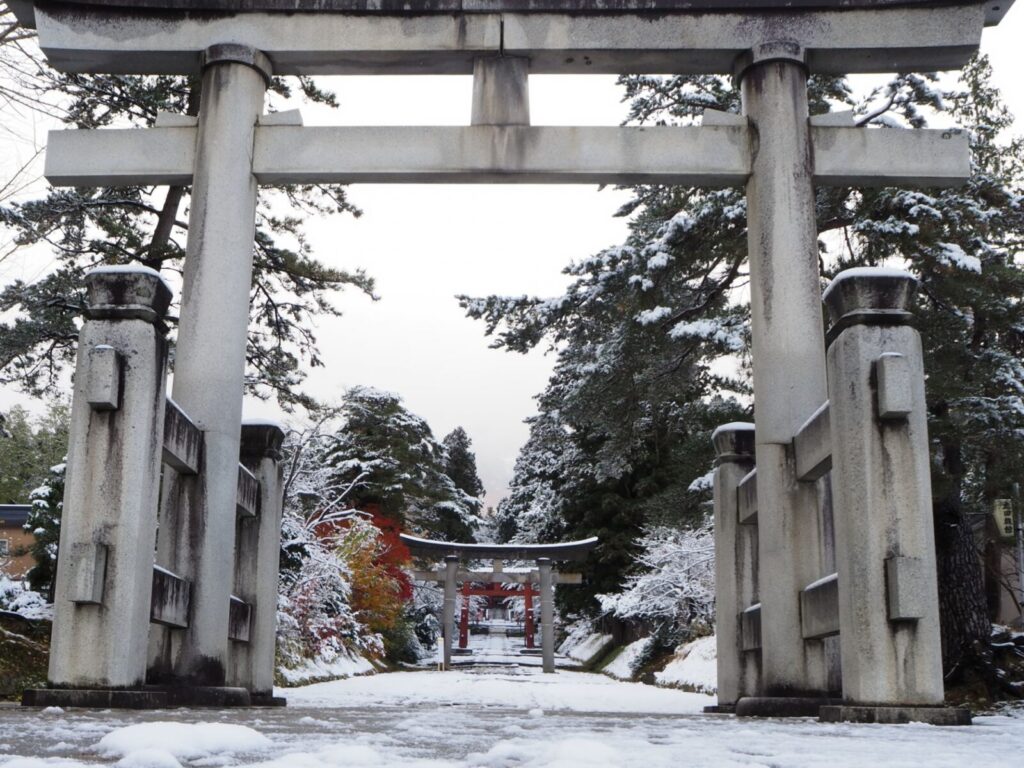
Positioned solemnly at the sprawling, timber-shaded base of Mount Iwaki—affectionately celebrated as the "Fuji of Tsugaru"—the grand complex of Iwakiyama Shrine commands attention with its cedar-lined approach and masterfully restored Momoyama-era pavilions. The sanctuary's crimson structures and dense, intricate woodwork radiate a profound sense of feudal grandeur against the rugged backdrop of the north's most formidable volcano.
Beyond its striking visual splendor, the sanctuary serves as an essential spiritual portal dedicated to the ancient veneration of the towering volcano. For generations, local farmers and mountain ascetics have gathered at its hallowed altars to supplicate the peak's divine guardians, seeking favorable weather, robust harvests, and safe passage across the rugged slopes.