







Gift-giving in Japan runs on rules most people never see coming, from how you're supposed to hand something over to the exact amount of money to give at a wedding.
In this article, we'll cover the everyday manners behind giving and receiving, clarify whether tipping is necessary, go over wedding money, and share a few fun tidbits like the two formal gift-giving seasons and Valentine's Day culture.
Why Japanese Gift-Giving Works Differently

Around the world, it is the general notion that gift-giving is personal and occasional, tied to a birthday, a holiday, or a specific relationship.
In Japan, gift-giving is also structural. It marks group membership, ongoing obligation, and social debt in ways that are scheduled and, in some cases, nearly mandatory.
The clearest example is omiyage (souvenirs), the items Japanese travelers bring back from a trip. On a personal holiday, omiyage is a nice gesture. On a business trip, it is close to an obligation. Bringing back local snacks for coworkers acknowledges that the traveler represented the group while away, and owes them a small share of the experience. This is different from temiyage, a gift brought to someone's home specifically when visiting.
Should You Bring a Gift as a Visitor?
Visitors are not expected to bring gifts to Japan, but a small one is often well received in specific situations, and the right choice depends on who it's for.
For guides, hosts, or families you stay with: something packaged and from your home country works best (e.g. a regional snack, a small branded item, or something that represents where you're from.)
For hotel staff: gifts are not expected and can occasionally create an awkward obligation, since most standard hotel staff are not in a position to reciprocate or even accept personal items on the job. This is different from a private guide or a homestay host, where a small gift is a natural gesture of thanks at the end of the trip.
If traveling for business: a gift for a Japanese business partner follows different rules than a casual one. Bring something modest, well-packaged, and not overly personal or expensive, an expensive gift can create pressure to reciprocate at an equal level, which puts the recipient in an uncomfortable position. The gift is typically presented at the end of a first meeting rather than at the start, and offered with both hands (see "How Gifts Are Actually Exchanged" below). Avoid sets of four items (the number four being seen as an unlucky number since it sounds similar to the Japanese word for 'death'), and avoid sharp objects like scissors or letter openers, a common blind spot for Western business travelers, since anything bladed can symbolically suggest "cutting" the relationship.
How Gifts Are Actually Exchanged

Beyond the occasions themselves, the physical moment of giving and receiving follows its own set of norms.
It is common for a Japanese recipient to hesitate or "lightly protest" before accepting a gift. This is called enryo (restraint, or holding back), and it is expected social cue rather than genuine reluctance. It reflects a broader norm of modesty around receiving as well as giving.
Gifts, and cash in particular, are typically given and received with both hands, a small physical gesture that signals attention and respect. The item is usually set aside and opened later, in private, rather than in front of the person who gave it, though this is loosening somewhat among younger generations.
There is also a well-known phrase used when handing over a gift: tsumaranai mono desu ga ("this is a boring thing, but..."), an example of the same self-deprecating modesty. It is accurate to the tradition, but again, it reads as old-fashioned to many younger Japanese people today.
Tipping: What Is Actually True in Current Day
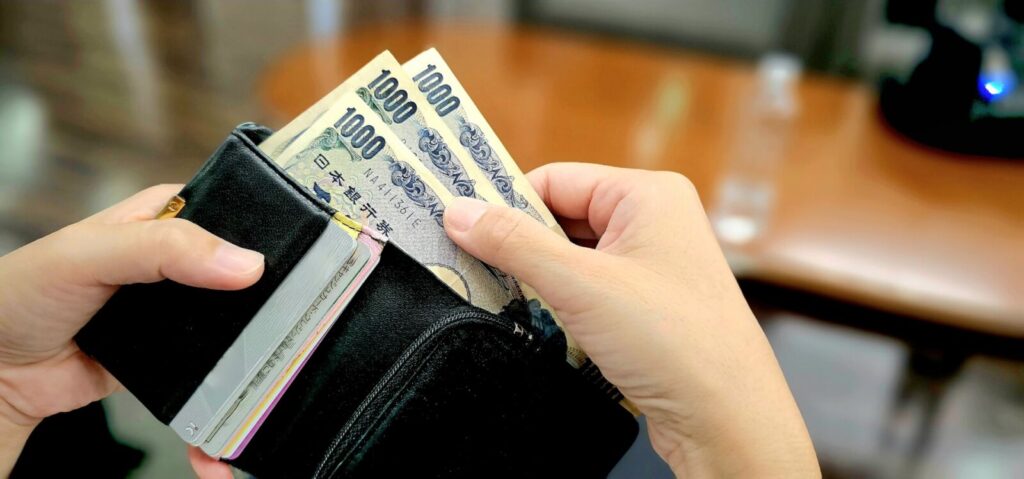
The standard notion, that tipping is not part of Japanese culture, is still fundamentally accurate. Excellent service is considered the baseline, not an add-on to be rewarded, and in most restaurants, taxis, and hotels a tip will be politely refused rather than accepted.
One long-standing exception is at a ryokan (traditional Japanese inns) where tipping the nakai-san (room attendant) is a genuine pre-existing custom known as kokorozuke (a discreet cash thank-you). It is offered in an envelope, never handed over as loose cash.
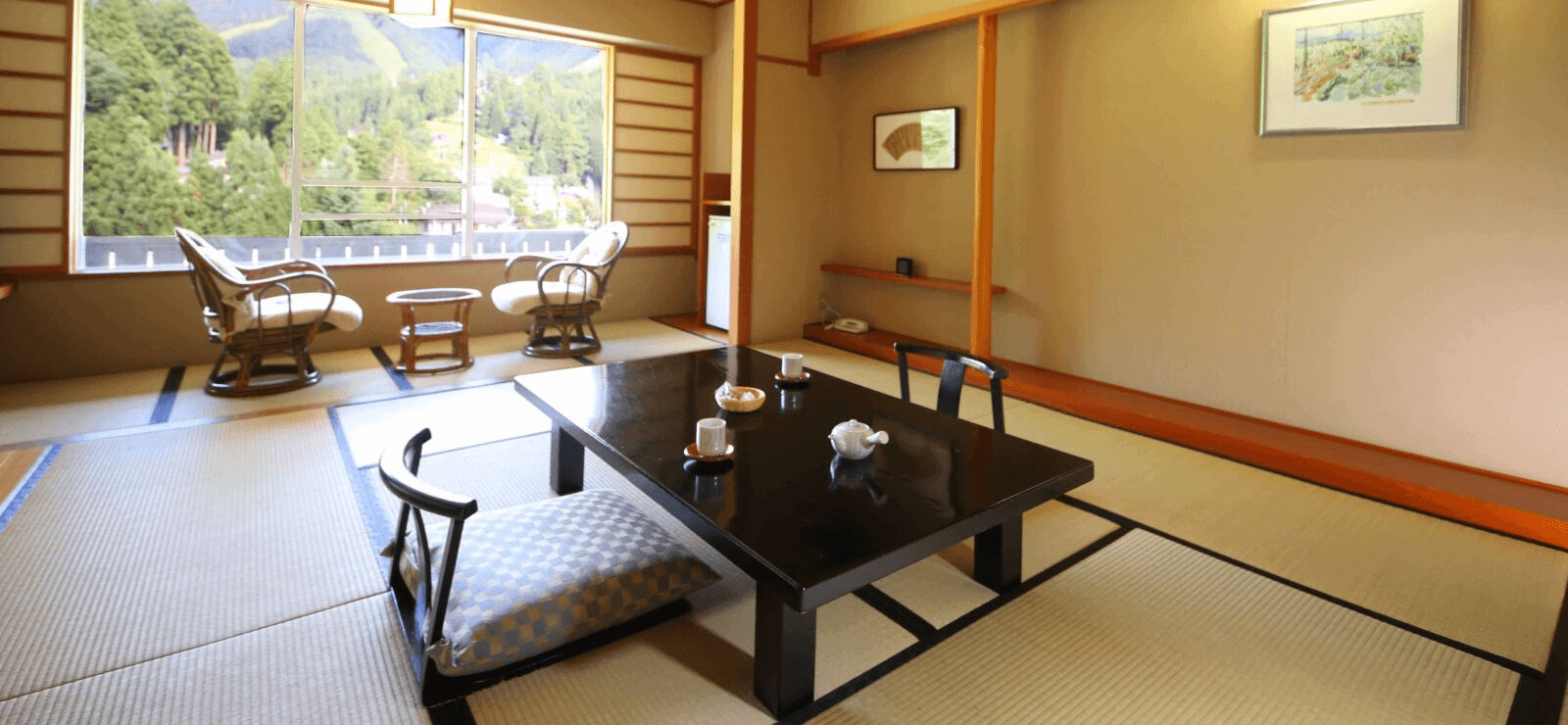
However, as international visitor numbers have grown, small pockets of change have appeared. Tip boxes have started showing up at cafes and bars in tourist-heavy areas of Tokyo, such as Asakusa, and in parts of Kyoto. Also, private guides and long-distance or charter drivers are the roles most likely to accept a small thank-you today, unlike restaurant waitstaff or standard taxis.
Where tipping is appropriate, consider the following as a rough guide:
- Private guides and charter drivers: 1,000 to 3,000 yen per day is a reasonable range if offering a tip, though it is genuinely optional, not doing so will not be seen as rude.
- Ryokan staff (kokorozuke): typically 1,000 to 2,000 yen, offered in an envelope at check-in to the attendant, not at checkout.
- Standard hotel staff (bellhops, housekeeping, front desk): no tip expected or customary. This differs from ryokan staff specifically, standard hotels operate on Western-style service norms where tipping isn't part of the culture at all.
- Restaurant and taxi staff: no tip, and one may be politely refused if offered.
The safest default in most situations remains not to tip. Where a gratuity is appropriate, presentation matters more than the amount: offer it respectfully, with both hands.
Wedding Money
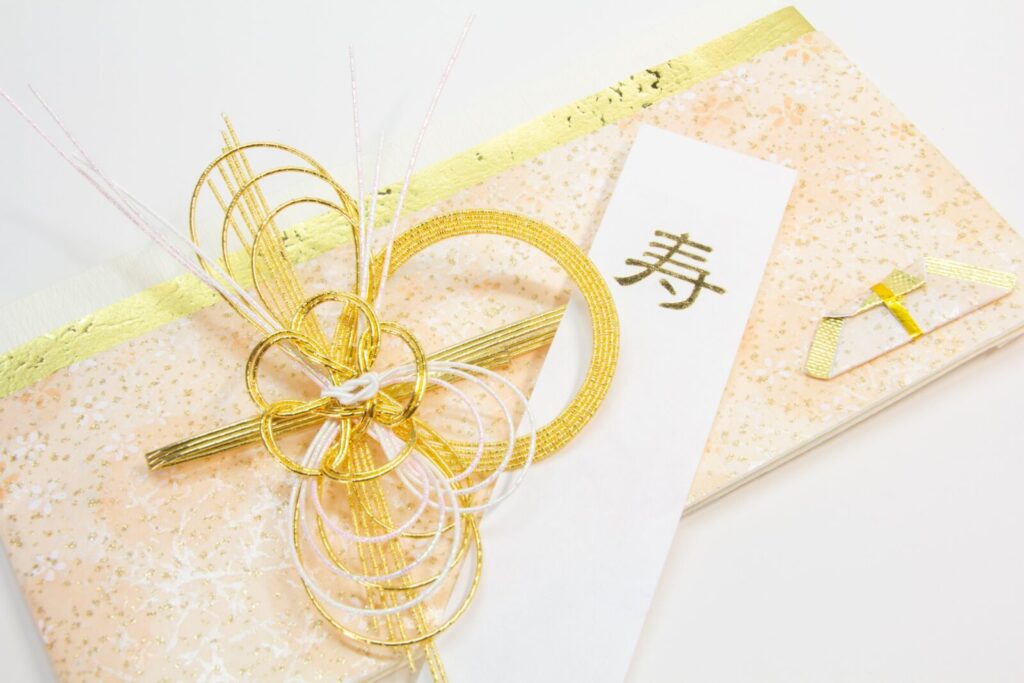
Attending a wedding in Japan? Here's what to know before the big day.
Cash is the standard wedding gift in Japan, given in a decorated envelope called a shugi-bukuro. The amount is never arbitrary. Sums divisible by two are avoided, since an evenly divisible number symbolically suggests the couple splitting apart. The numbers 4 and 9 are avoided outright, since they sound like the words for death and suffering. Because of this, common gift amounts are precise odd numbers such as 30,000 or 50,000 yen.
The bills themselves also have to be fresh: crisp, unwrinkled notes, never bills pulled straight from a wallet. It is common practice to visit a bank ahead of time specifically to exchange for new, unworn notes, since presenting worn or creased bills can come across as a lack of care or forethought.
Even the envelope's ribbon carries meaning. The knot, called mizuhiki (a decorative cord), is tied in a style called musubikiri (a knot that is difficult to untie), representing a bond meant to be permanent.
How Locals Approach Gift-Giving Year-Round
Beyond individual occasions, gift-giving in Japan follows its own annual rhythm. While visitors generally do not need to worry about abiding by these customs, we think these tidbits give a clear insight into how deeply the custom runs through daily life.
The Two Gift-Giving Seasons Most People Outside Japan Have Never Heard Of
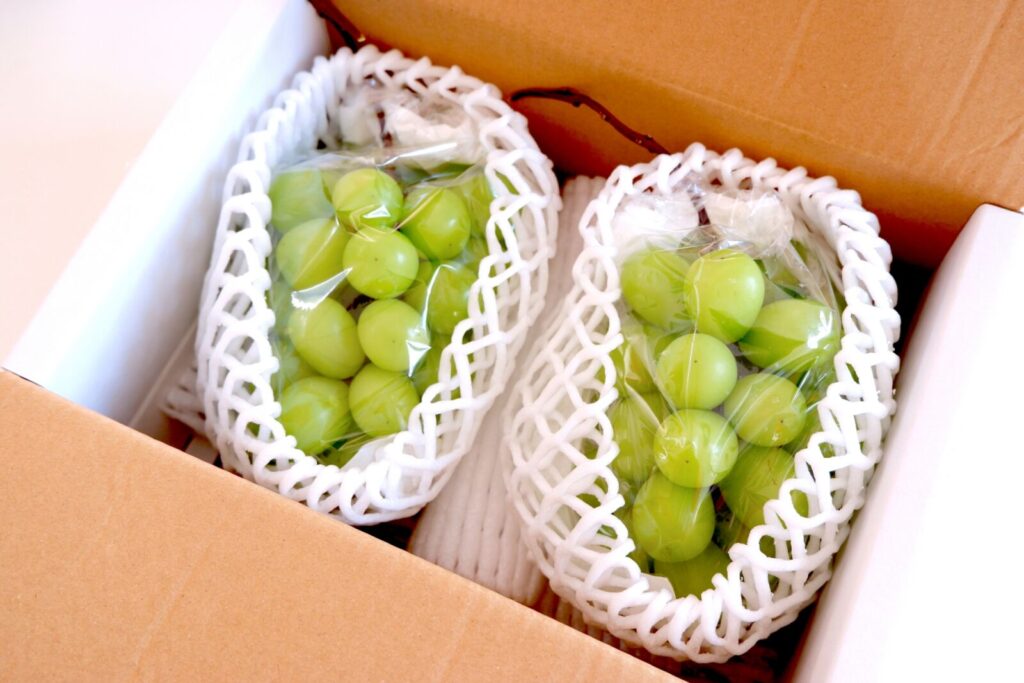
Japan runs two formal, calendar-based gift-giving seasons. Department stores dedicate entire floors and catalogs to them, and for many Japanese households, participating is closer to an obligation than a choice.
Ochugen (a mid-year gift of gratitude)
A mid-summer round of gifts given to people one is indebted to: bosses, business contacts, in-laws. Timing varies by region, with Kanto households typically sending gifts in early to mid-July, and Kansai and other regions often continuing into August.
Oseibo (a year-end gift of gratitude)
The year-end equivalent, given in December, and generally considered the more important of the two.
Both are almost always consumable gifts, food, drinks, or cooking oil, rather than keepsakes. The point is expressing ongoing gratitude, not creating a bigger obligation to reciprocate.
Valentine's Day and White Day: A Reversal With a Surprisingly Recent Origin

On February 14th, women give chocolate, split into two categories: giri-choco (obligation chocolate, for coworkers, bosses, or male friends) and honmei-choco (true feelings, for a partner). On March 14th, White Day, men are expected to reciprocate.
The direction of giving, women to men rather than the reverse, is not an old tradition; it is a 20th-century commercial invention. The earliest known Valentine's chocolate advertisement in Japan dates to 1936, placed by the Kobe confectioner Morozoff, but the custom did not take hold nationally until more chocolate companies ran sustained marketing campaigns through the 1950s-60s, cementing the practice by the 1970s. One widely repeated origin story holds that a Morinaga campaign in the 1960s intended to promote the Western custom of men giving chocolate to women, and a translation error flipped the direction instead. While accounts of the exact origin vary, the underlying point holds that this is a marketing-driven custom, and not an ancient one.
New Year's Postcards
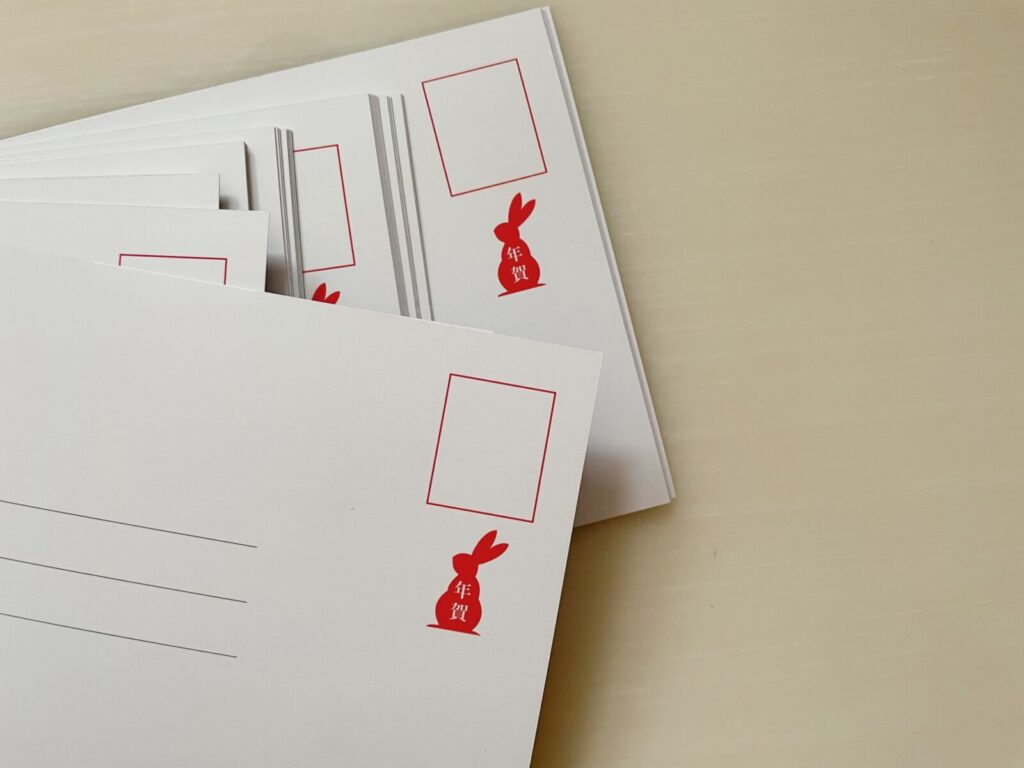
Japan has a strong tradition of exchanging postcards at the New Year, known as nengajo (New Year's greeting cards). The timing detail matters: they are mailed in December specifically so Japan Post can hold and deliver all of them on January 1st itself, a logistical undertaking carried out nationwide every year.
There is also a formal opt-out custom, mochu hagaki (a mourning notice), a card sent in advance by households that experienced a death in the family that year, informing recipients not to send a nengajo out of respect for the mourning period.
Frequently Asked Questions (FAQ)
Do people tip in Japan?
Not generally. Excellent service is considered standard rather than something to reward, though small exceptions have grown for private guides and long-distance drivers.
How much money should I give at a Japanese wedding?
An odd, un-splittable amount such as 30,000 or 50,000 yen, given in fresh, unwrinkled bills, avoiding the numbers 4 and 9.
What are ochugen and oseibo?
Japan's two formal gift-giving seasons: a mid-summer round of gifts and a year-end round, both typically consumable and given out of obligation and gratitude rather than personal preference.
Who gives chocolate on Valentine's Day in Japan?
Women give chocolate to men, a custom shaped by chocolate industry marketing from the 1930s through the 1970s rather than an old tradition. Men reciprocate a month later on White Day.
What is nengajo?
New Year's postcards, mailed in December and timed so that the Japan Post delivers them all on January 1st.