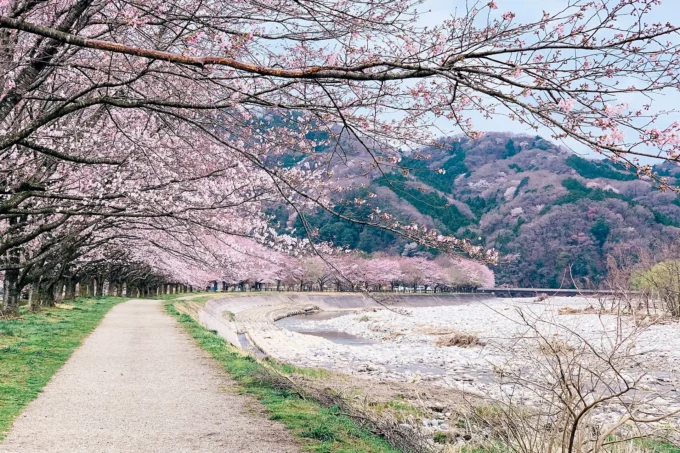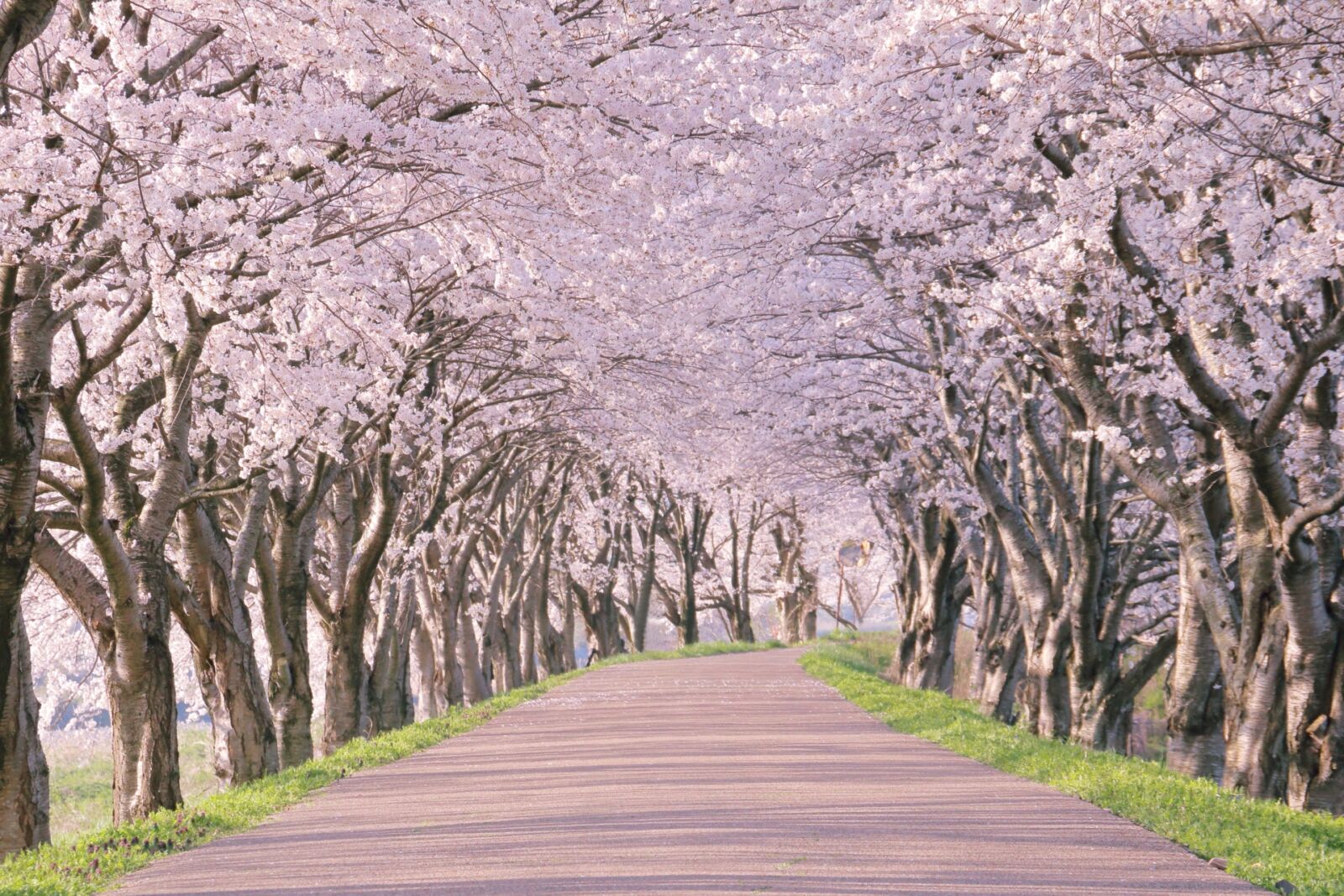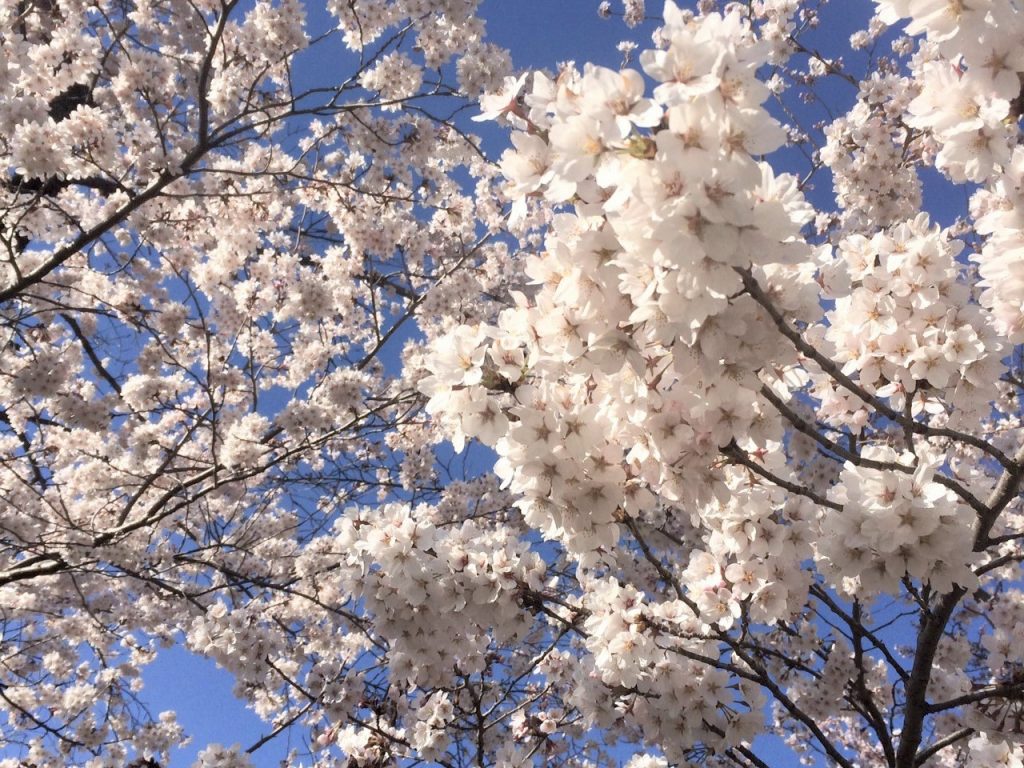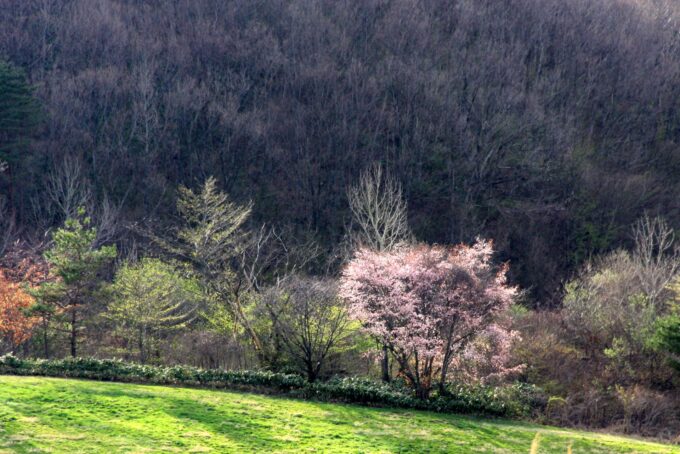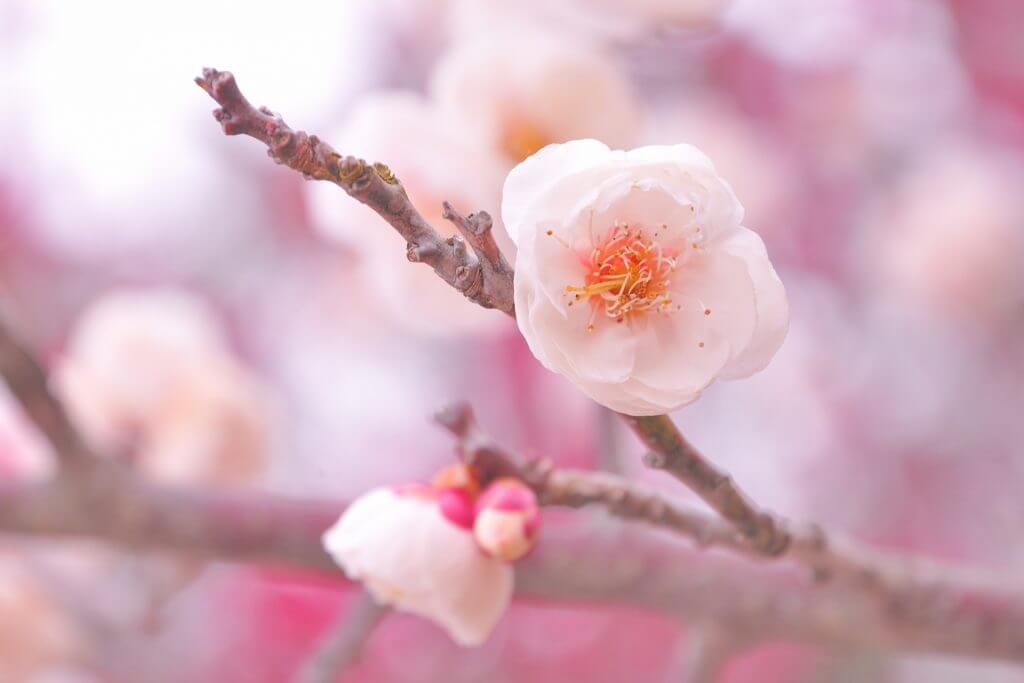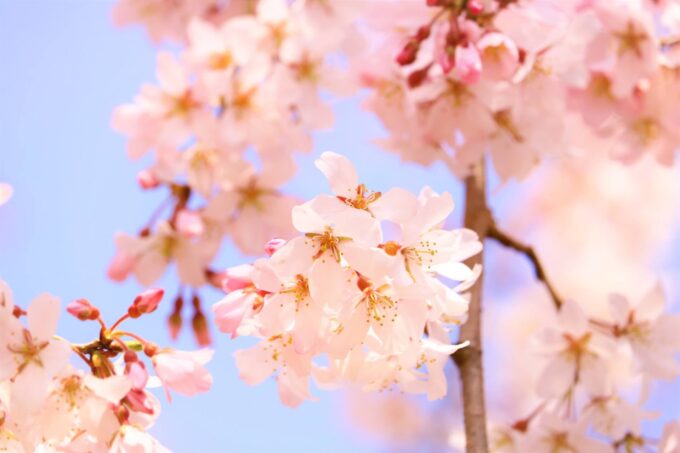
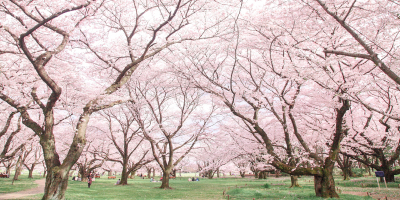
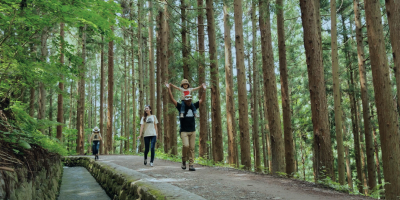

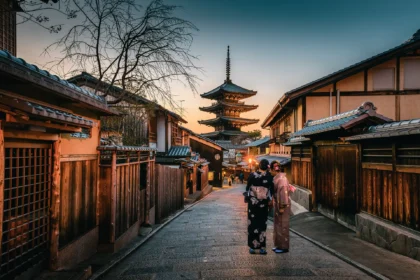

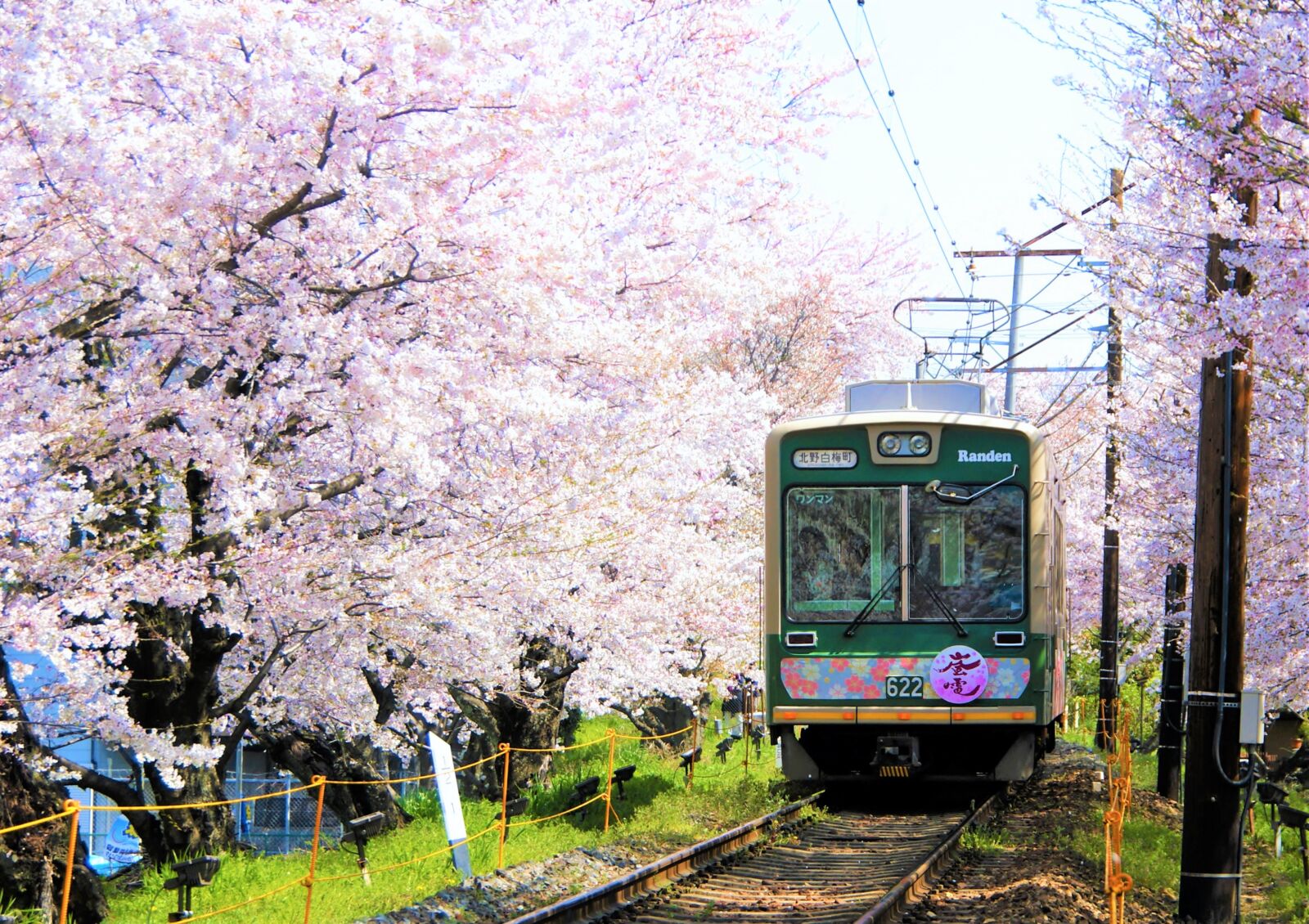
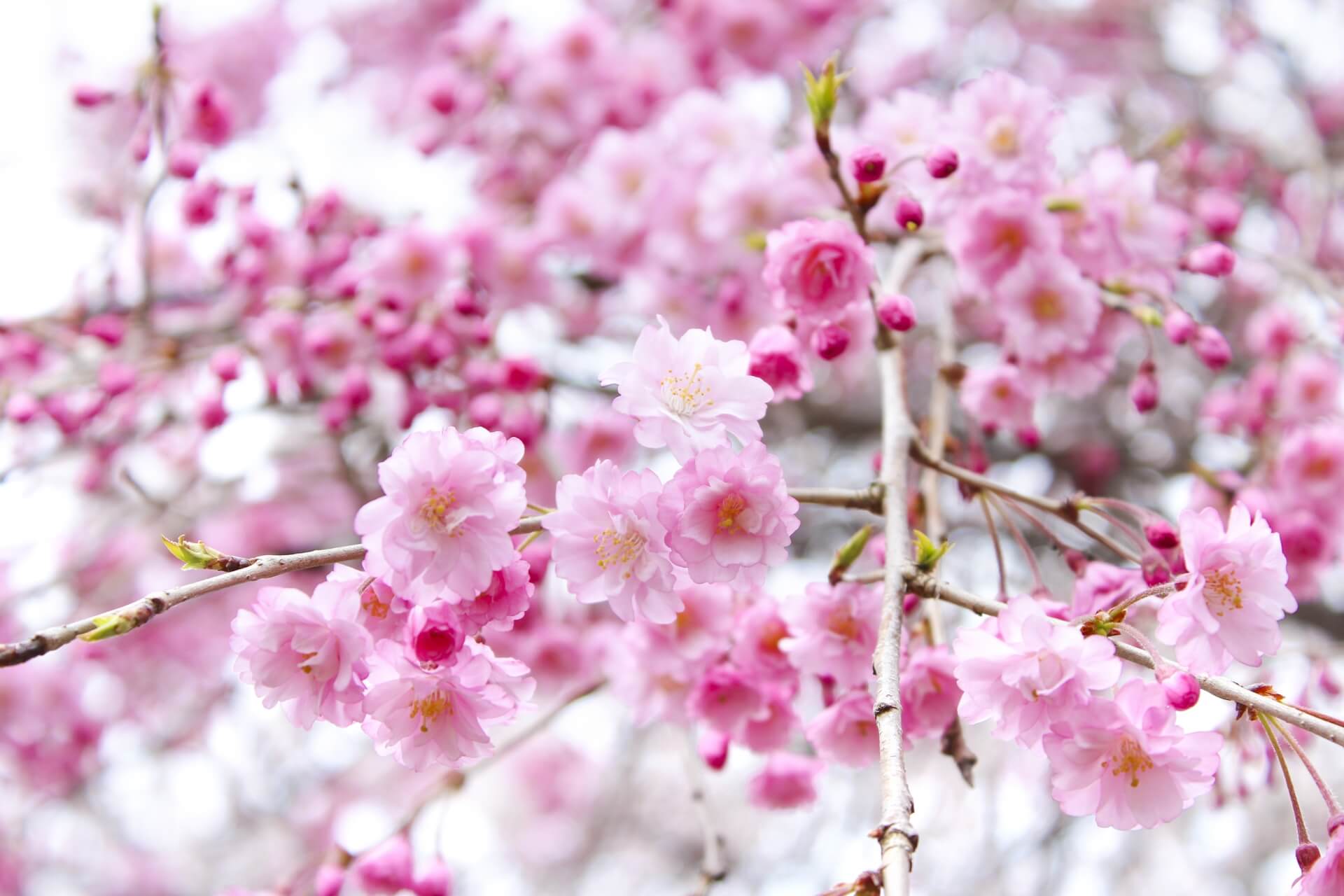
Cherry blossoms play an important role in Japanese culture and for the brief time they are in bloom each spring, capture the imagination of the public. Known as ‘sakura’, the fragile beauty and fleeting nature of the blossoms is seen to reflect that of life itself – something to be cherished and delighted in with family and friends. Cherry blossoms—sakura—are the fleeting soul of spring in Japan. In Kyoto, they bloom against a backdrop of temples, shrines, rivers, and lantern-lit streets, creating scenes that feel timeless yet alive in the moment. More than just a spectacle of nature, sakura season is tied to new beginnings: the school year, work transfers, fresh chapters in life. For locals and visitors alike, hanami (flower-viewing) is a celebration of both beauty and impermanence—ichi-go ichi-e—a once-in-a-lifetime gathering beneath the blossoms.
Kyoto’s blossoms typically bloom from late March to early April, with full bloom (mankai) arriving around the first week of April. Timing varies each year, and higher-elevation spots such as Yoshimine-dera or Kurama may bloom a little later, letting you chase the season across the city.
Predicting the 2026 Cherry Blossom Season
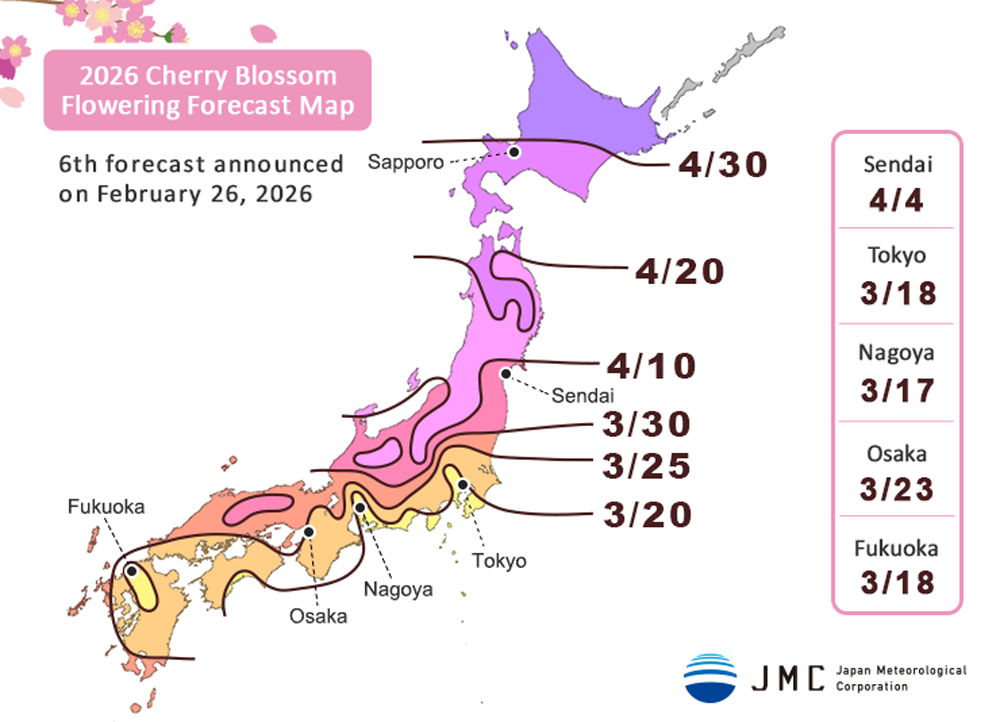
Each year, the Japan Meteorological Corporation (JMC) releases its official cherry blossom forecast, refining predicted bloom dates as spring approaches.
According to early projections for 2026, Kyoto is expected to see blossoms begin opening in the final week of March, with full bloom (mankai) arriving in late March to early April. In recent years, flowering has typically started around March 25–30, reaching peak within approximately one week.
Because bloom timing depends heavily on temperatures in March, dates may shift by several days. We will update this page as the official forecast is refined. Higher elevation areas in the prefecture will be expected to see later dates as well, so if you have missed the peak in the city, heading up the mountains may be a remedy.
Crowds, Traffic & Access During Peak Season
Cherry blossom season is Kyoto’s busiest time of year. During peak bloom, expect:
- Heavy foot traffic at major temples, parks, and riversides
- Long lines for buses and taxis between 10:00–16:00
- Temporary road closures near popular viewing areas
- Limited entry windows for evening illumination events
For the best experience, visit early in the morning (before 9:00) or later in the evening where illuminations are available.
The Best Spots to See Cherry Blossoms in Kyoto
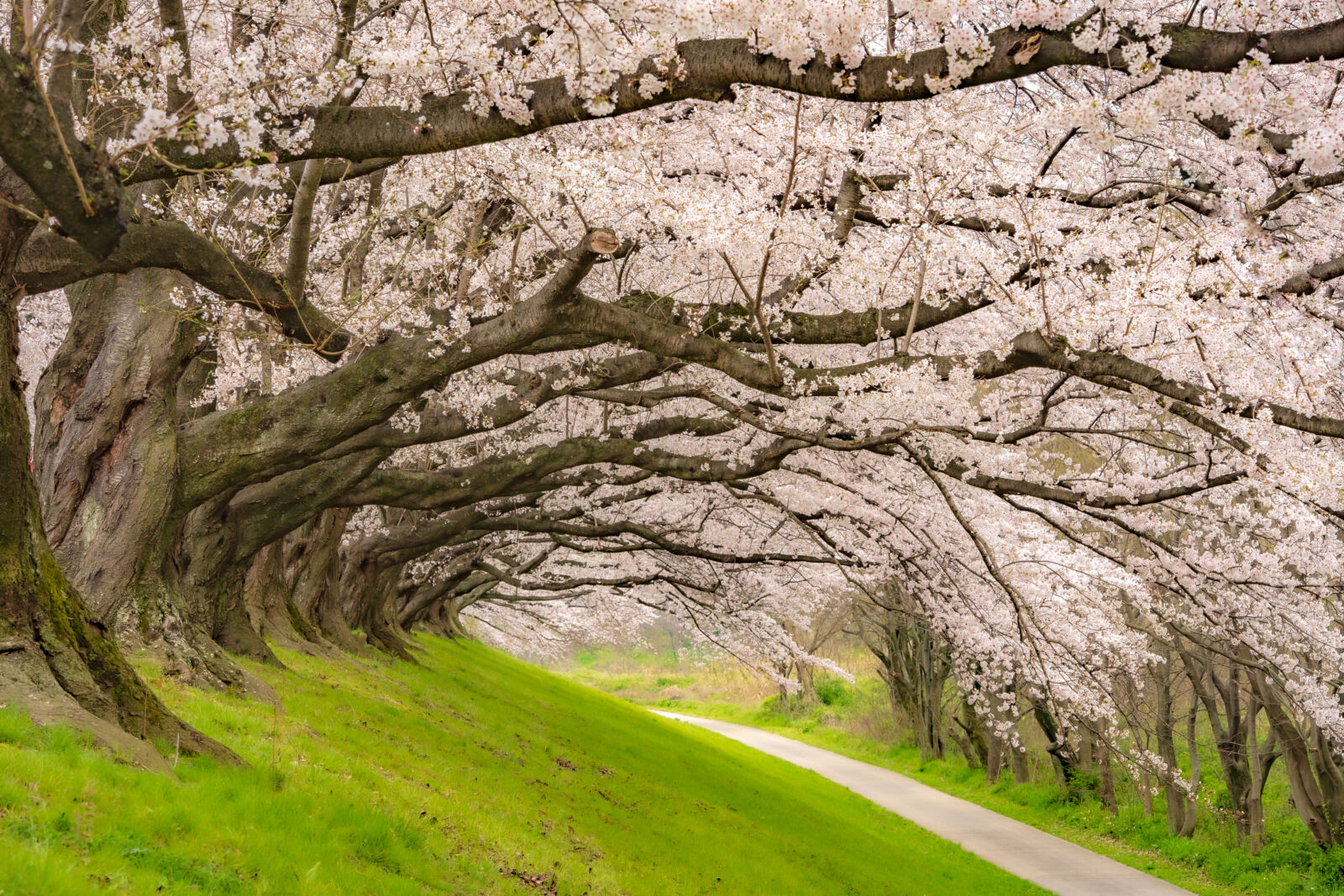
Spring in Kyoto is nothing short of magical. For just a few fleeting weeks each year, the city transforms into a living painting. Temples, shrines, canals, and mountainsides are framed with delicate pink petals. Locals and visitors gather for hanami (flower-viewing picnics), carrying on a tradition that has been cherished for over a thousand years.
Cherry blossoms embody ichigo ichie — the Japanese idea that every encounter is once-in-a-lifetime. Blossoms bloom, drift, and fall within days, reminding us of life’s fleeting beauty. Experiencing them in Kyoto, with its blend of history, culture, and natural landscapes, is something truly unforgettable.
Our curated list of the best cherry blossom spots in Kyoto will help you find the perfect place to enjoy this season — whether you’re looking for lively festivals, serene riversides, or off-the-beaten-path mountain villages. And the best part? Many of these places are part of our guided tours, so you can experience them with expert insights, cultural context, and a stress-free itinerary.
Maruyama Park & Yasaka Shrine / best: early-April
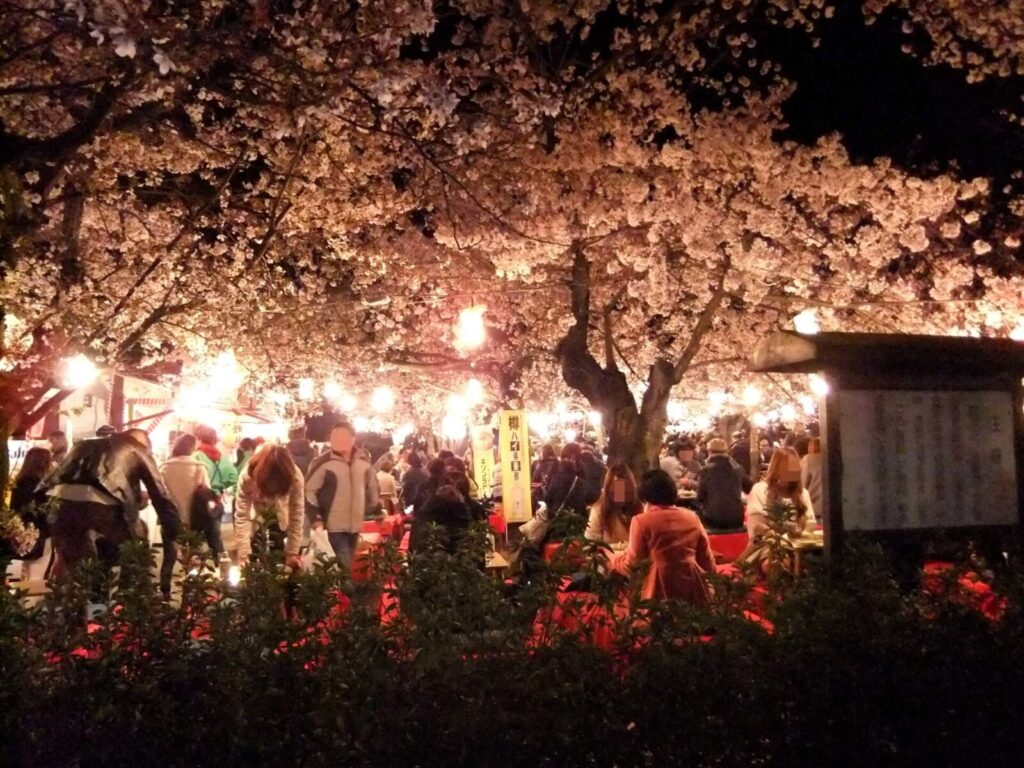
Best for: Drinking parties, festival vibes, night viewing
Maruyama Park is Kyoto’s most iconic hanami spot, famous for its massive weeping cherry tree that glows dramatically during evening illuminations. By day, the park buzzes with families, students, and friends spreading blankets beneath the blossoms. At night, it transforms into a festival-like wonderland with food stalls, lanterns, and the weeping cherry glowing at its heart. Right next door, Yasaka Shrine frames the scene with vermilion gates and traditional architecture, making this one of the most photogenic spring settings in the city.
Many of our Kyoto tours pass through Gion and Yasaka Shrine, making it easy to pair cultural exploration with an unforgettable hanami experience.
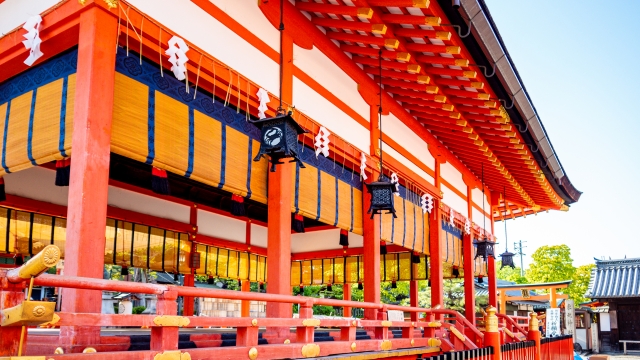
Philosopher’s Path (Tetsugaku no Michi) / best: Early to mid-April

Best for: Quiet walks, couples, photography
A stone walkway tracing the canal between Ginkaku-ji and Nanzen-ji, the Philosopher’s Path is lined with hundreds of cherry trees arching gracefully over the water. Named after a Kyoto University philosopher who strolled here in reflection, it’s a place for quiet, meditative hanami. The blossoms here capture Kyoto’s poetic heart.
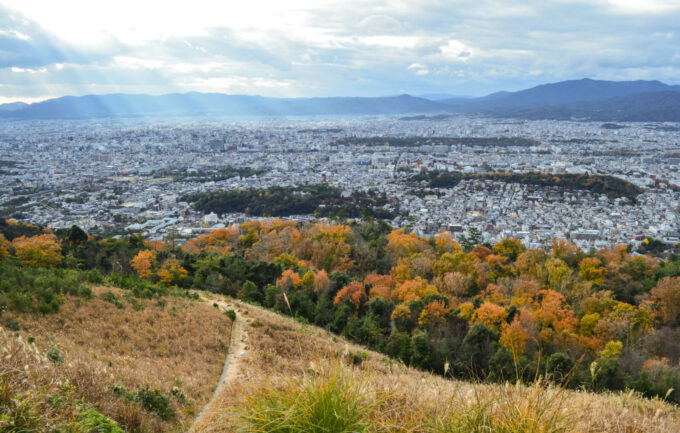
If you're interested in a quiet, meditative blossom walk, our 1-day Walking tour goes through the Philosopher’s Path. We also have a tour that gives you the best view of Kyoto from Daimonji Mountain.
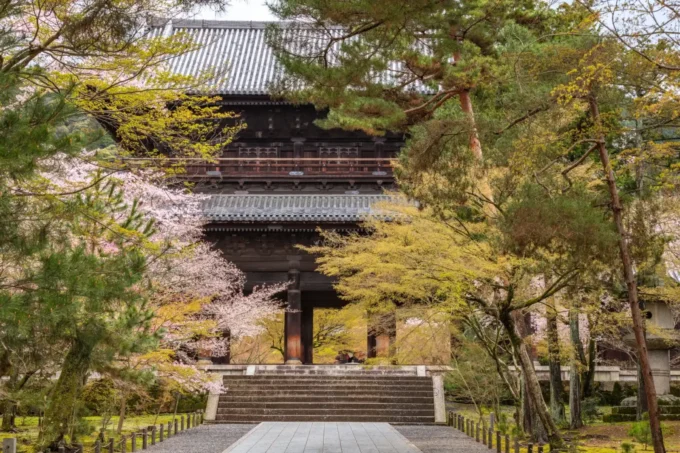
Keage Incline / best: Early-April
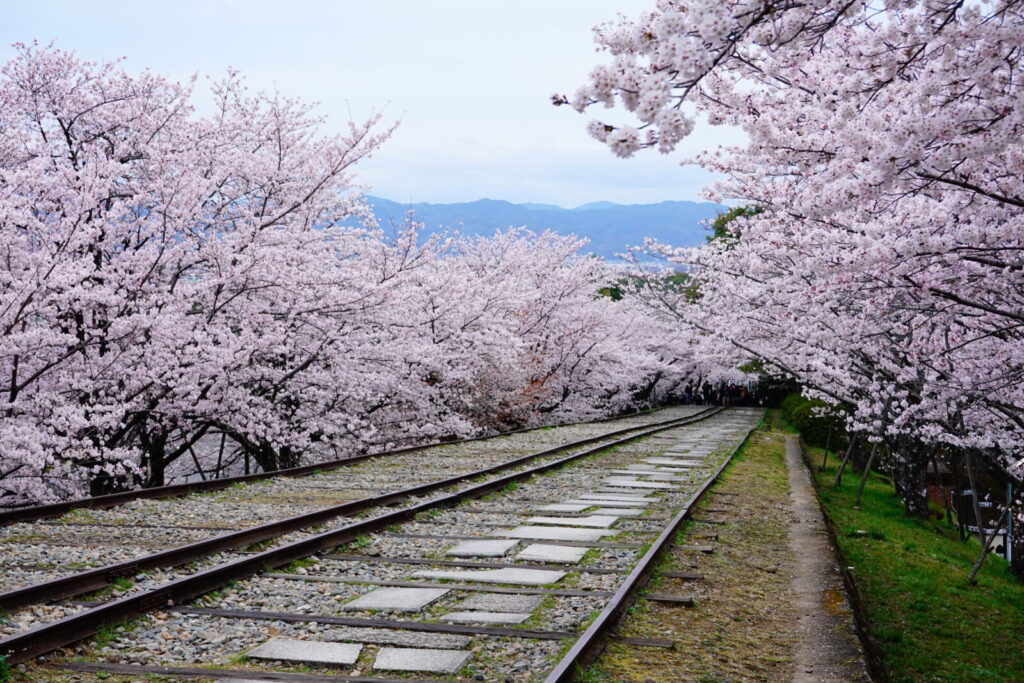
Best for: Families, photographers, Instagram moments
A disused railway track now flanked by 90 cherry trees, forming a dramatic pink tunnel. One of the most photogenic spots in all Kyoto.
Located near Nanzen-ji, we often recommend pairing Keage Incline with our Eastern Kyoto walking tours.
Kiyomizu-dera & Ninenzaka / Early-April
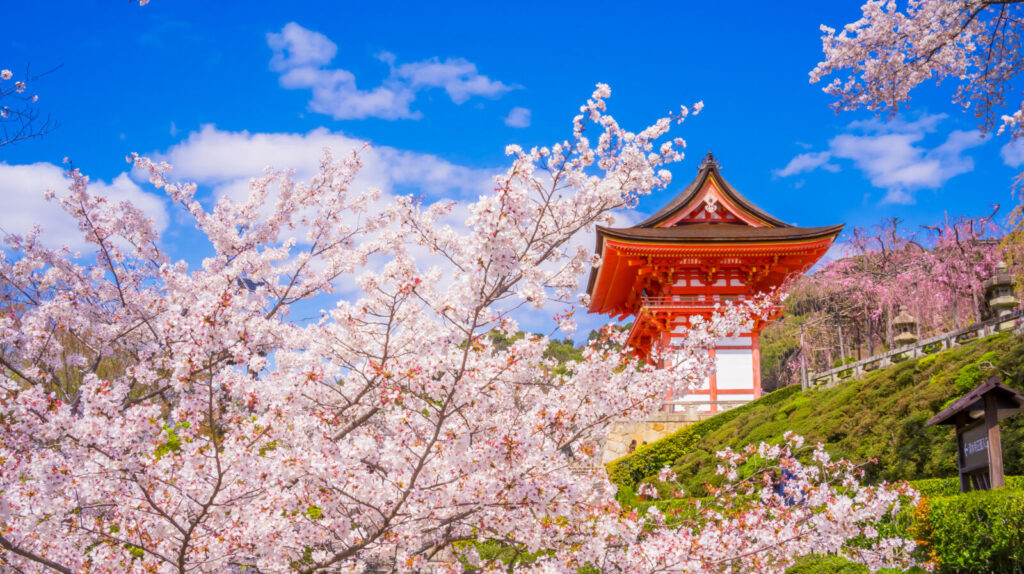
Best for: Culture lovers, temple illuminations, first-time visitors
Perched on a hillside with sweeping city vistas, Kiyomizu-dera offers one of the most dramatic cherry blossom backdrops in Kyoto. Over 1,000 cherry trees surround the wooden stage, and when in full bloom, they create the illusion that the temple floats on a sea of pink. Evening illuminations in April highlight the temple against a soft haze of blossoms and the twinkling city below, creating a view that lingers in memory long after the petals have fallen.
If you want to get the most out of your time in Kyoto, join our Kyoto Heritage Path walking tour that takes you to some of the best places in Kyoto.
Gion District & Shirakawa Canal / Early April
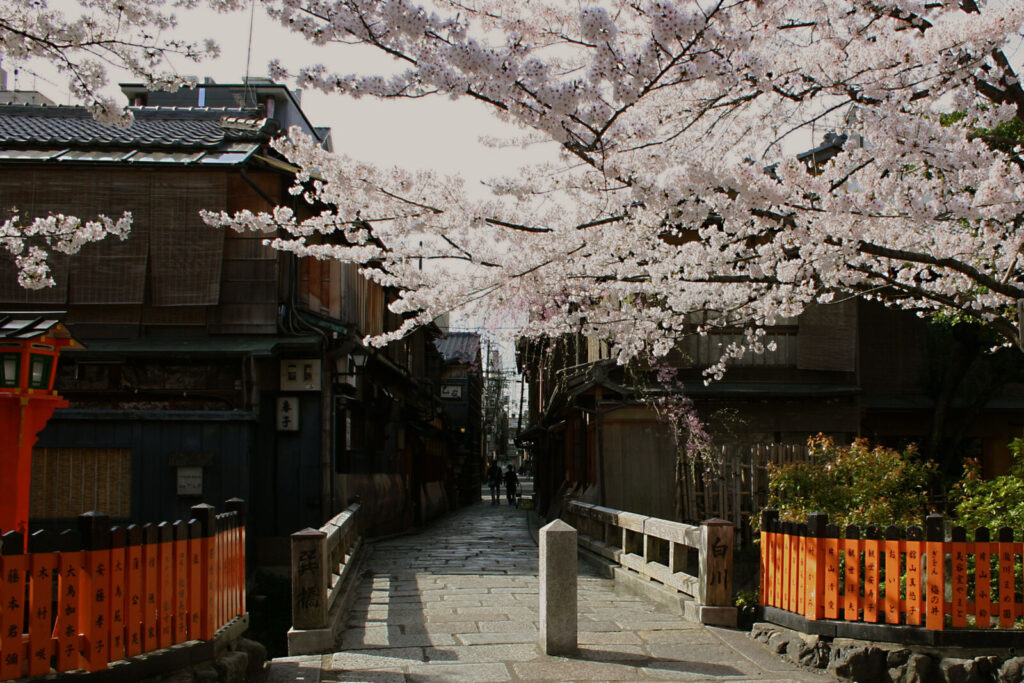
Best for: Romantic walks, history buffs, evening strolls
The Shirakawa area of Gion is Kyoto at its most elegant—stone-paved lanes, teahouses, and blossoms overhanging the canal. Visit at dusk for a chance to glimpse a maiko.
Our Gion walks take you right through these historic blossom-lined streets.
Fushimi Sake District & Chushojima / best: Early-April
Best for: Adults, food & drink, off-the-beaten-path charm
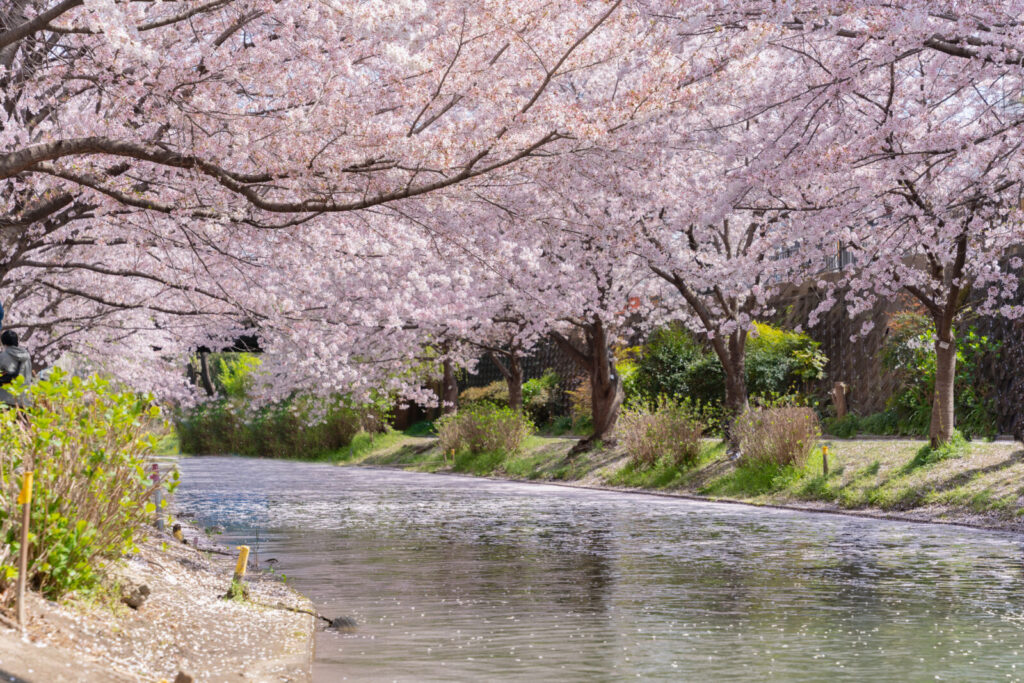
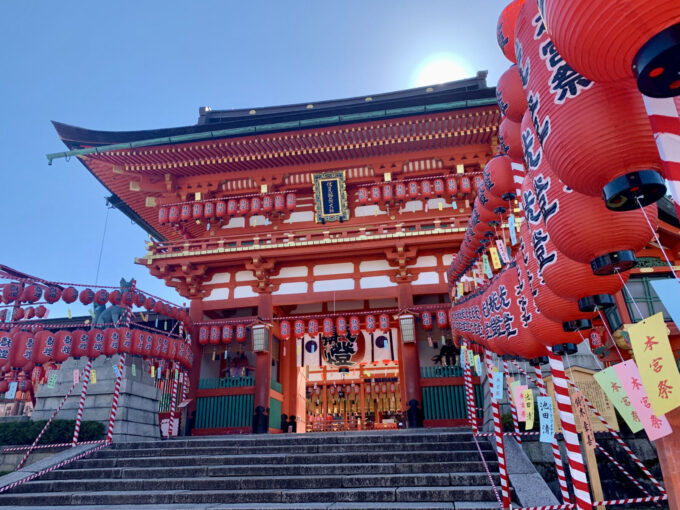
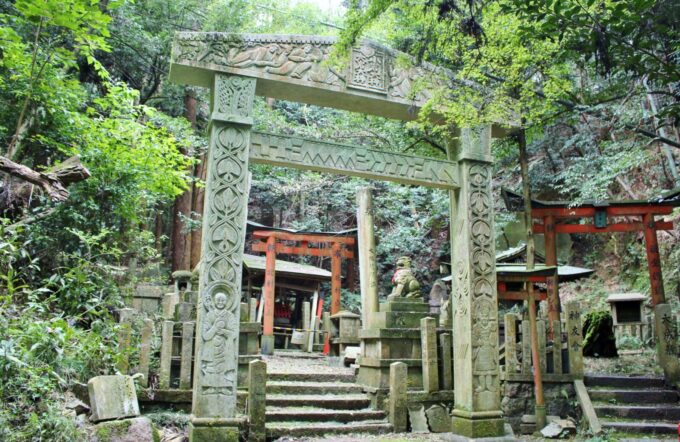
The famous red torii paths of Fushimi Inari are lightly scattered with blossoms — a subtle but beautiful contrast to the vermilion gates. Nearby, the Fushimi Sake District in Chushojima offers canals lined with cherry trees, where brewery tours and tastings pair perfectly with hanami strolls.
Our Fushimi Sake Tour takes you straight to the heart of this district, blending cherry blossoms with Kyoto’s best sake.
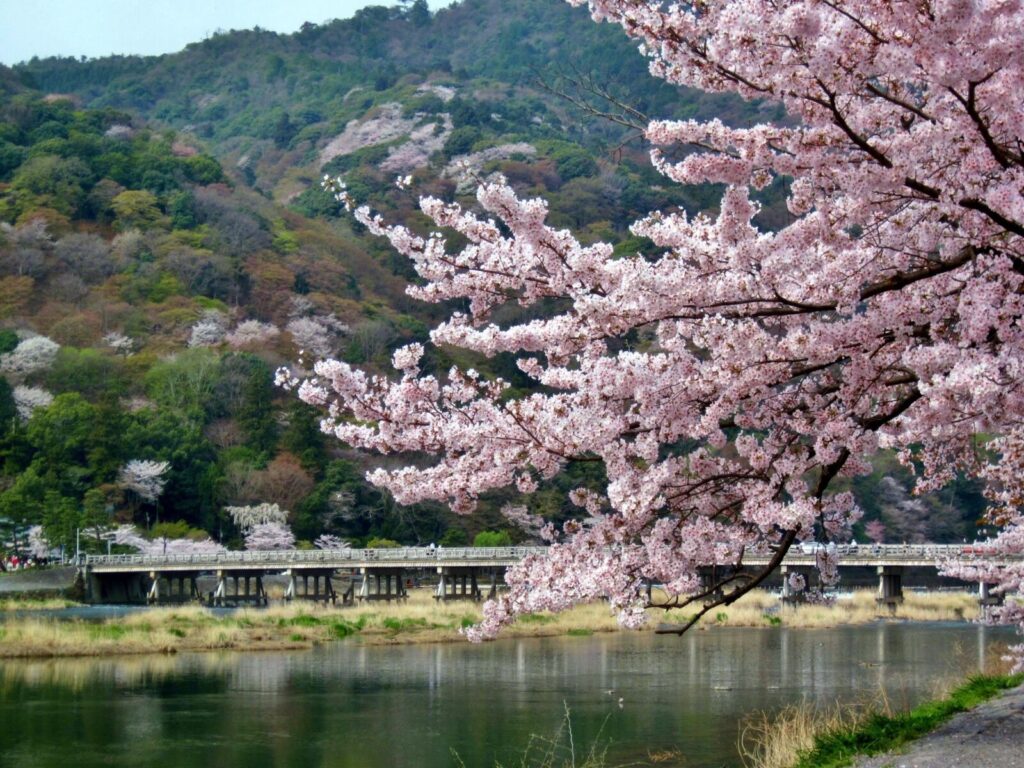
Arashiyama (Togetsukyo & Nakanoshima Park) / Best time: Early to mid-April
Best for: Families, river walks, scenic day trips
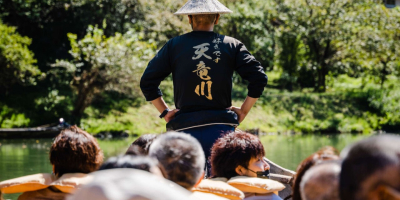
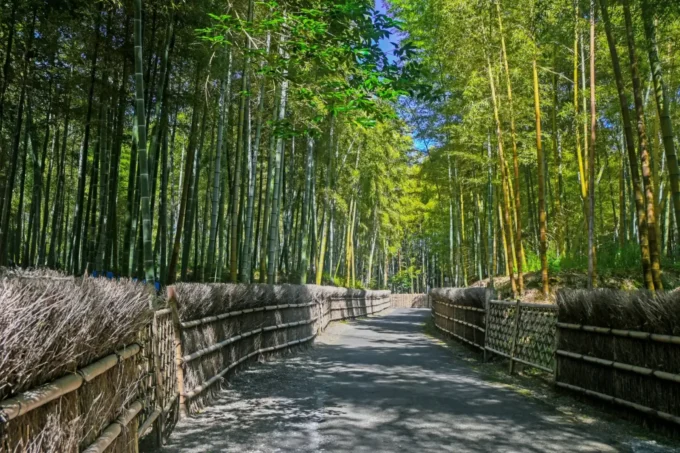
Arashiyama is famous for the Sagano bamboo Grove, but in spring its riverside bursts into pink. Cherry trees flank the Togetsukyo Bridge, and boat rides along the Katsura River provide hanami views from the water. Nearby Tenryu-ji Temple and its gardens are also stunning during blossom season.
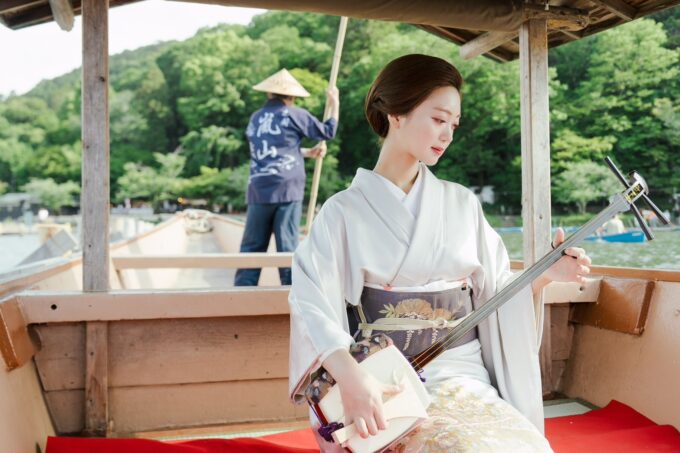
Our Arashiyama tours combine cherry blossoms with bamboo groves, temples, and even traditional encounters with maiko.
Small Group
Sacred Stone and Flowing Silk: Arashiyama Temples, Bamboo Forests, and Maiko River Cruise
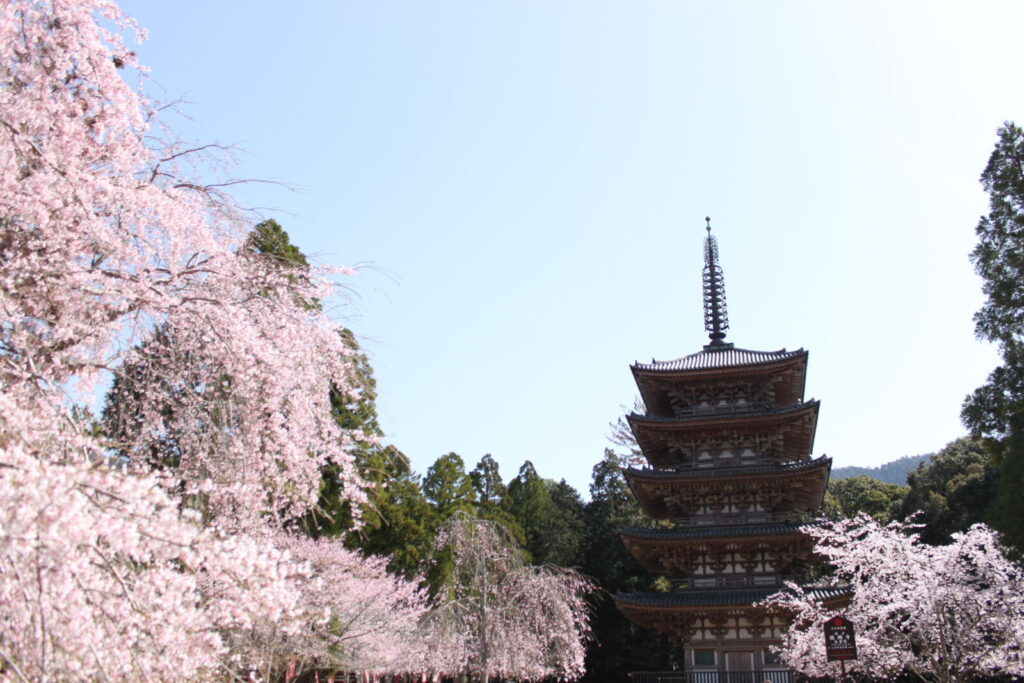
Daigo-ji Temple / Best Time: Early-April
Best for: History lovers, festival fans, temple illuminations
A UNESCO World Heritage site famous for its “Daigo Hanami,” once hosted by Toyotomi Hideyoshi. Thousands of blossoms cover temple grounds, with illuminations in the evenings.
Yodogawa Riverside Park (Yawata) / best Time: Early April
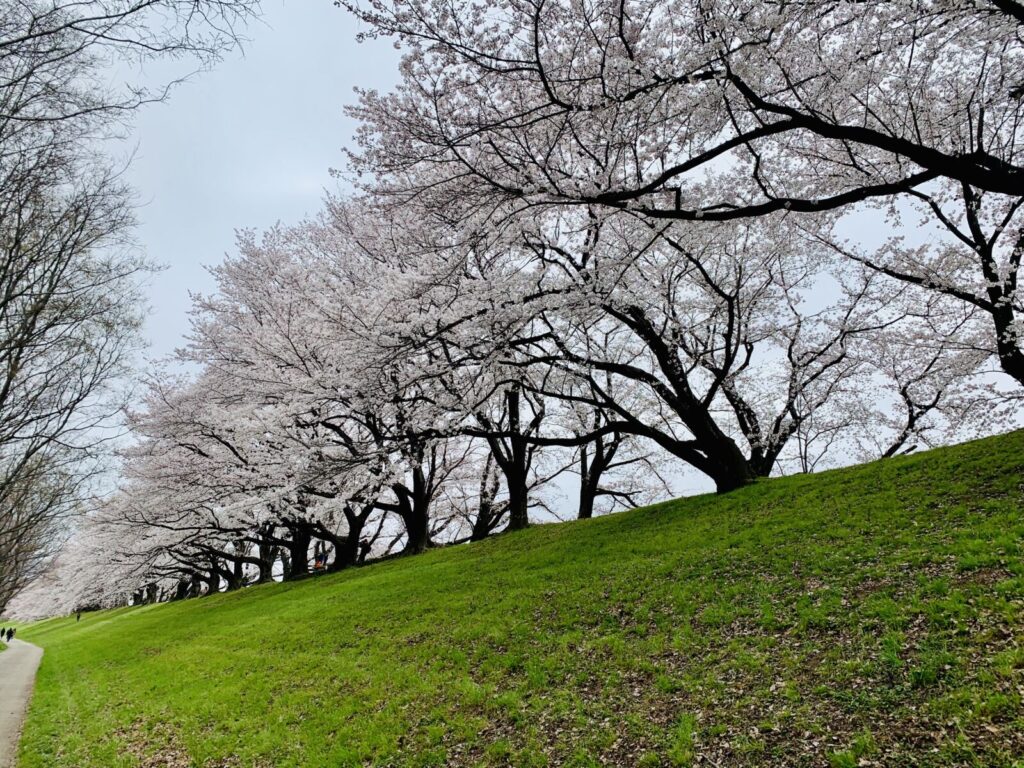
Best for: Hanami picnics, families, large groups, photographers
Located south of Kyoto City in Yawata, Yodogawa Riverside Park features over 250 cherry trees along spacious riverbanks. It’s ideal for large hanami gatherings, with plenty of room for food, drinks, and games beneath the blossoms.
Yawaragi Road (Nagaokakyo) / Best Time: Early April
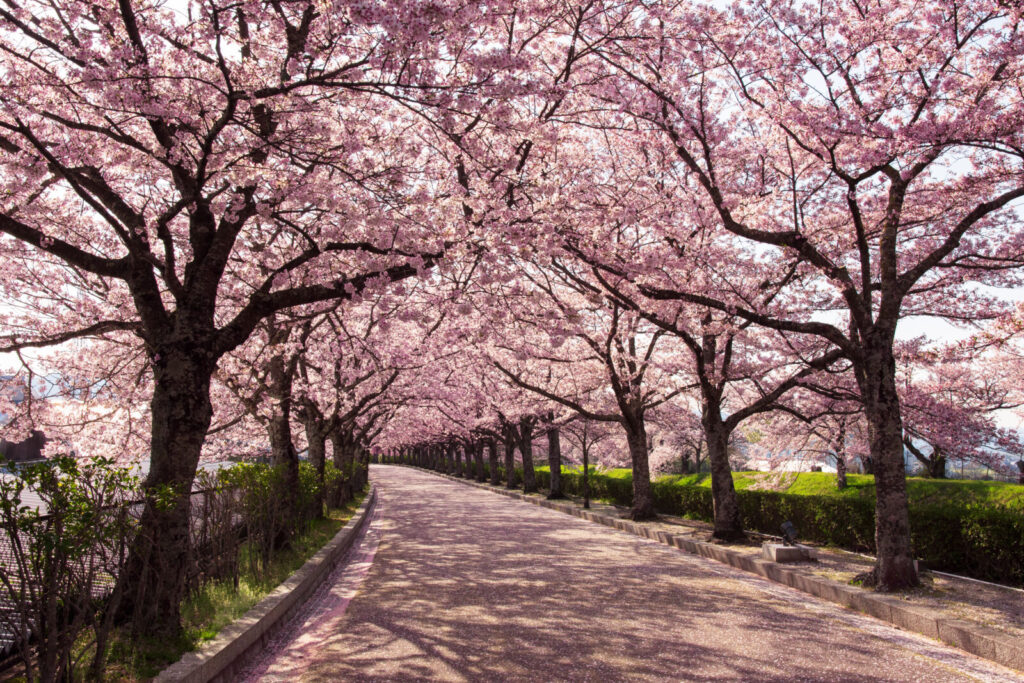
Best for: Families, photographers, off-the-beaten-path explorers
Stretching along the Hozugawa River in Kameoka, Yawaragi Road is lined with over 1,500 cherry trees. It’s popular with cyclists and walkers looking for a longer, scenic hanami stroll away from the crowds of central Kyoto.
Kiyamachi and Kamogawa Riverside / Best Time: Early April (daytime hanami at Kamogawa, evening strolls along Kiyamachi)
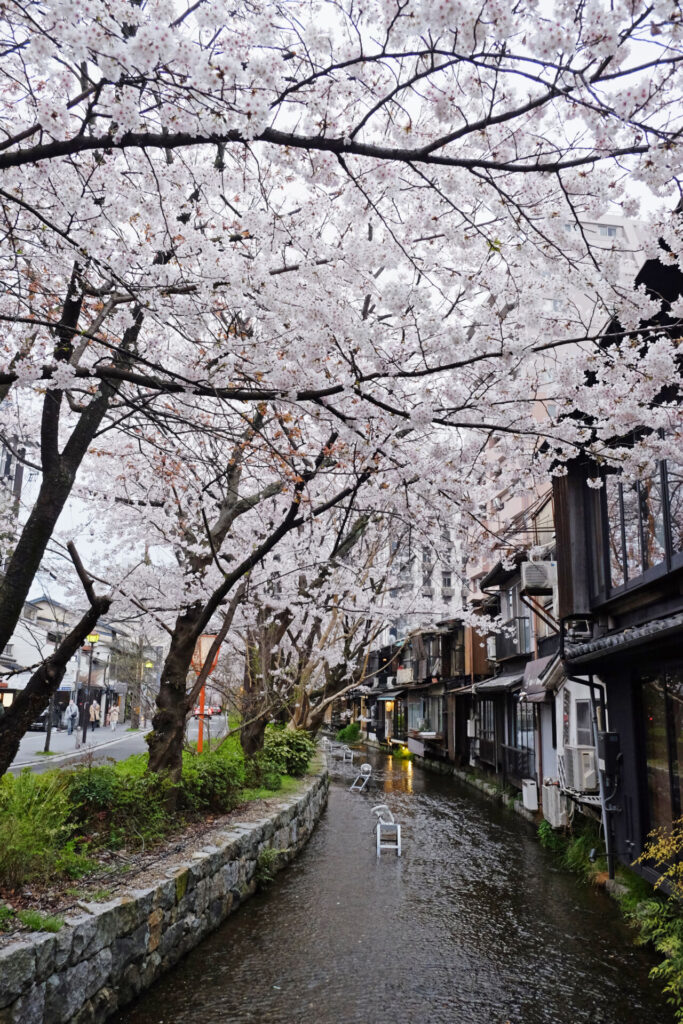
Best for: Friends, couples, food & drink lovers, nightlife explorers
Few places capture Kyoto’s hanami spirit like the Kamogawa River. During the day, locals spread picnic sheets along the banks, sipping sake and enjoying simple hanami under rows of blooming trees. The gentle flow of the river, with cherry blossoms reflecting in the water, creates one of the most relaxed and authentic hanami atmospheres in the city.
As the sun sets, the mood shifts. Just a short stroll away, Kiyamachi Street comes alive with lantern-lit canals and cherry trees arching over the narrow walkways. Restaurants, izakaya, and bars line the street, making it the perfect spot to continue the evening with food, drinks, and riverside views. In spring, blossoms are illuminated softly by shopfronts and lanterns, blending romance with Kyoto’s vibrant nightlife.
Our tours often pass through Pontocho and Kamogawa, letting you pair hanami with Kyoto’s lively food and nightlife scene.
Nijo Castle / Best Time Early April
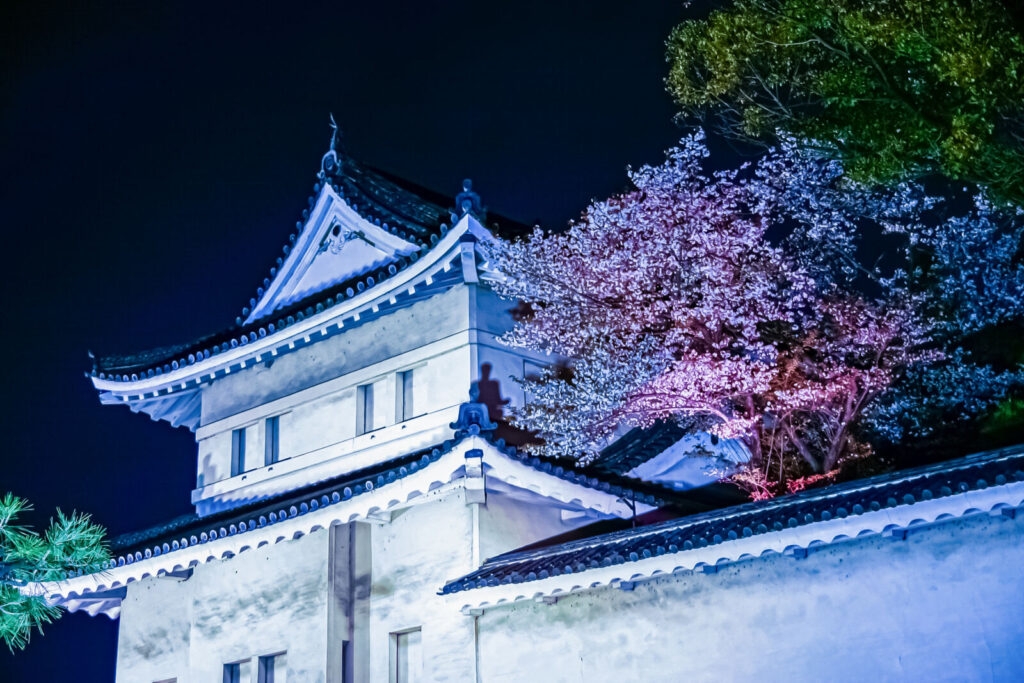
Best for: Families, history buffs, night owls (illumination events)
Once the seat of shoguns, Nijo Castle comes alive each spring with hundreds of cherry trees across its expansive grounds. Night illuminations highlight the blossoms against historic stone walls and moats, making it one of Kyoto’s most spectacular nighttime hanami sites.
Imperial Palace Park (Kyoto Gyoen) / Best Time: Early April; afternoons are ideal for picnics.
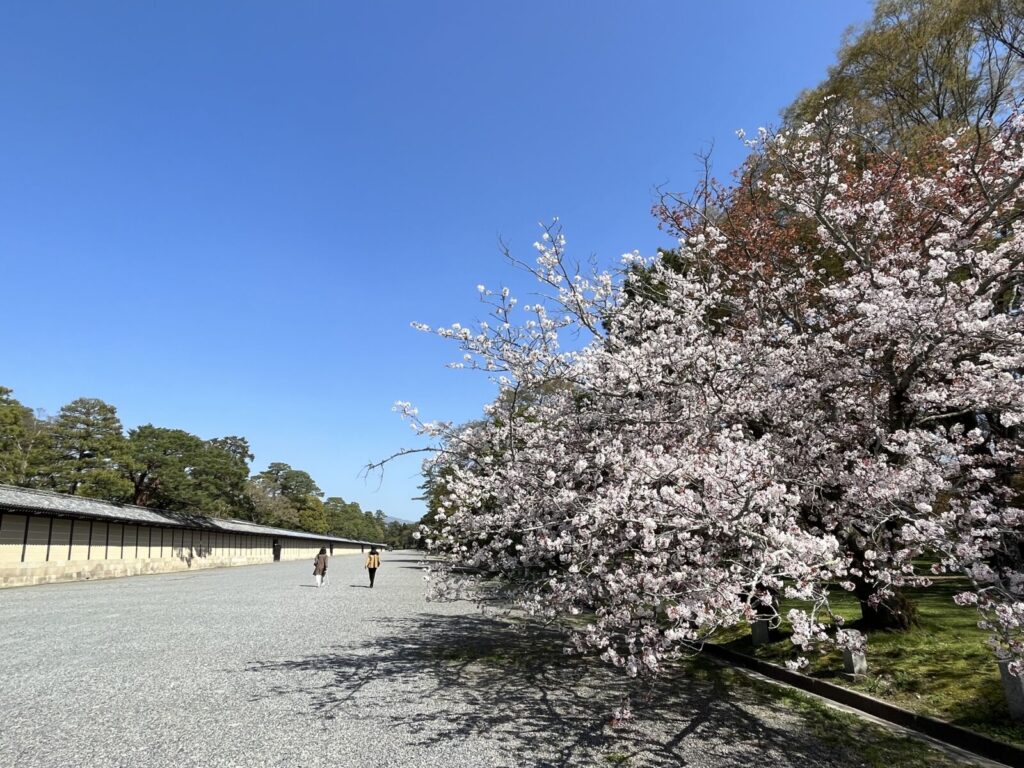
Sprawling Kyoto Gyoen Park, surrounding the Imperial Palace, has open lawns perfect for spreading a blanket beneath the blossoms. Unlike busier spots, it feels relaxed and local, with families enjoying picnics and children playing under the trees.
Hirano Shrine / Best time: Early April; both day and night are festive.
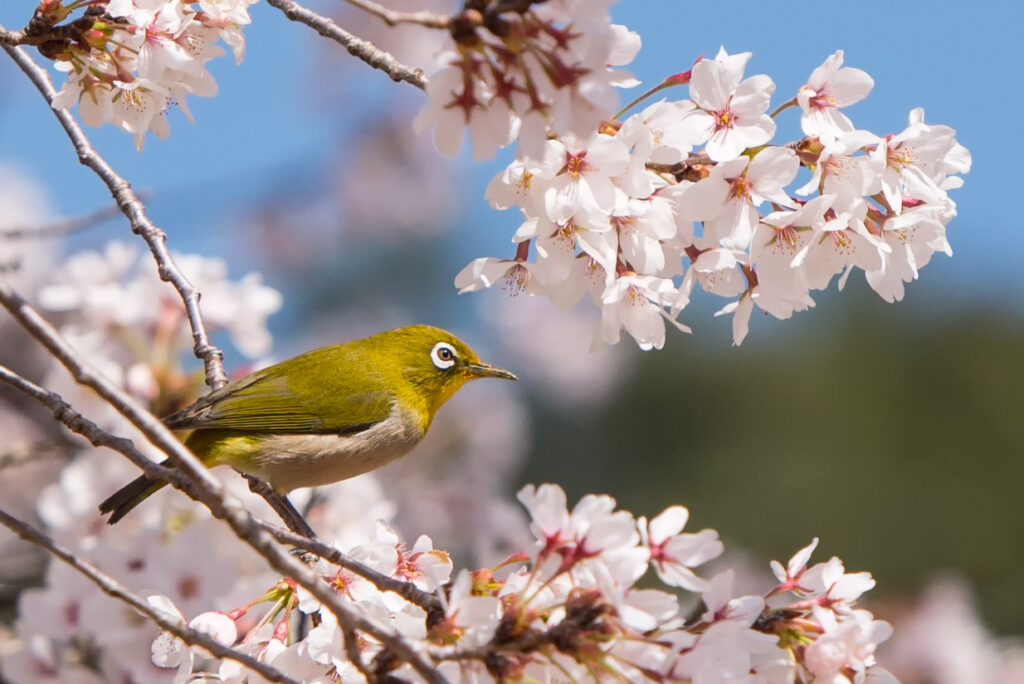
Best for: Families, festival lovers, evening illuminations
Hirano Shrine is one of Kyoto’s oldest hanami spots, celebrated for its variety of cherry blossoms and festive atmosphere. Stalls and lights make the evenings lively, while the shrine grounds remain steeped in history and tradition.
Okazaki Canal & Heian Shrine / Best time: Early April, both day and evening.
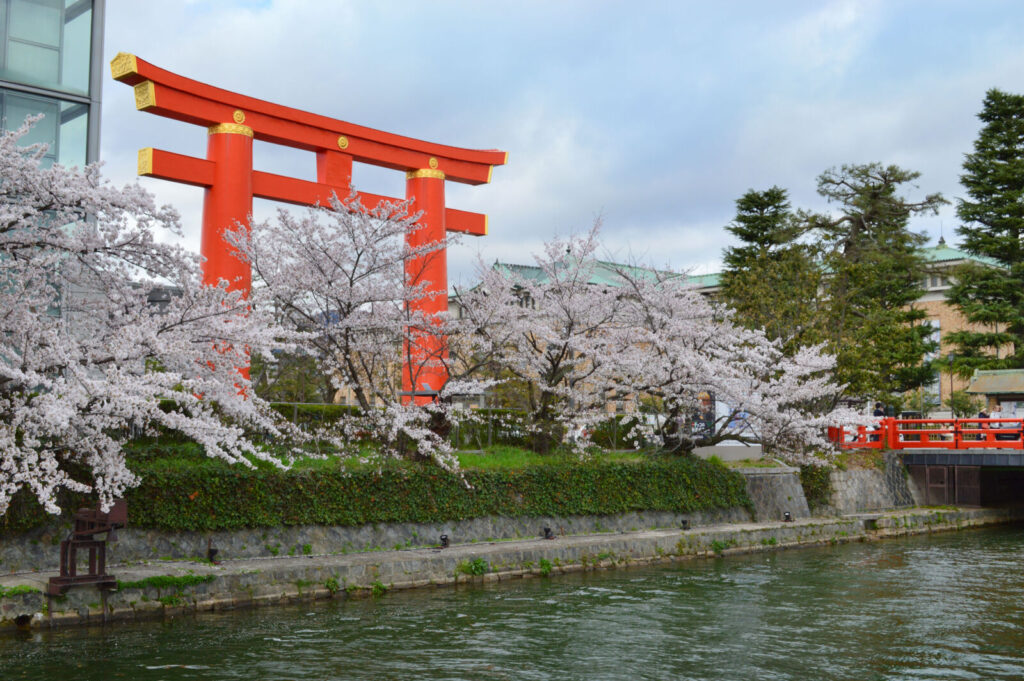
Best for: Families, garden lovers, foodies (festival stalls)
Spring transforms Okazaki Canal into one of Kyoto’s most charming hanami spots. Small boats glide under canopies of blossoms, creating postcard-perfect views. The nearby Heian Shrine and its expansive gardens bloom in tandem, offering both festival excitement and peaceful retreats. Night illuminations of the canal make this area extra special.
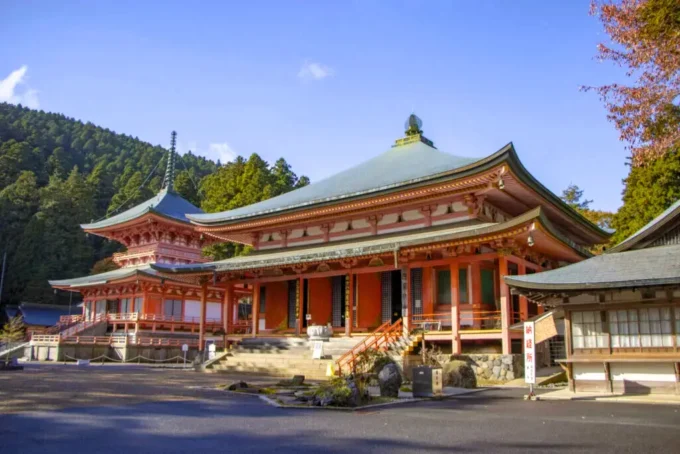
Enryaku-ji Temple & Hiyoshi Taisha (Otsu) / Best time: Mid-April, slightly later due to higher elevation.
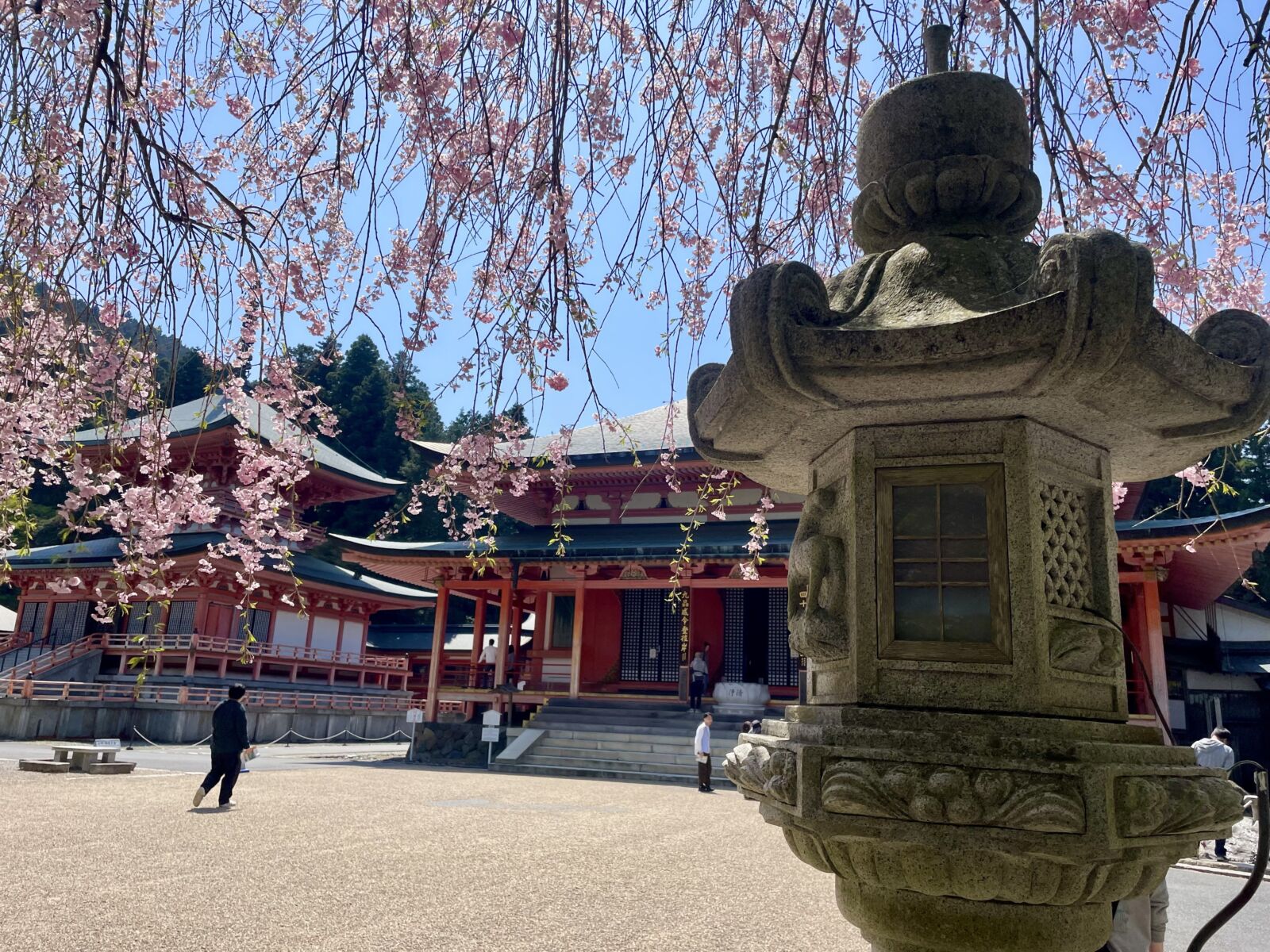
Best for: History lovers, hikers, spiritual seekers
Just outside Kyoto, Enryaku-ji Temple sits on sacred Mt. Hiei, surrounded by mountain cherry trees that bloom slightly later than in the city. Nearby, Hiyoshi Taisha in Otsu is equally enchanting, with blossoms framing its iconic bridges and shrine architecture. The combination is both spiritual and scenic, offering hanami beyond the city’s bustle.
Our tours to Mt. Hiei and Hiyoshi Taisha bring you into a quieter, more spiritual cherry blossom experience.
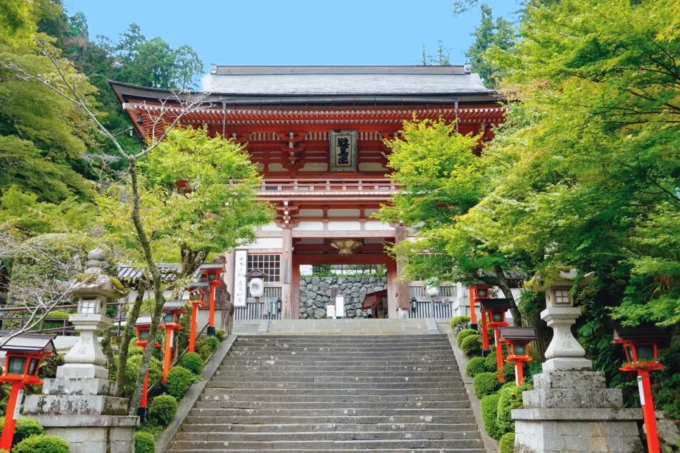
Kurama & Kibune / Best time: Mid-April, slightly later than Kyoto city.

Best for: Hikers, spiritual travelers, those seeking off-the-beaten-path hanami
While not classic hanami destinations, Kurama and Kibune offer unique experiences. The mountain paths and temple precincts bloom with wild cherry trees, creating a rustic, mystical spring atmosphere. Combine a hike between the villages with hot spring visits, and you’ll enjoy blossoms in a completely different setting from central Kyoto.
Our Kurama and Kibune tours offer this serene escape, with blossoms, temples, and onsen woven into one memorable day.
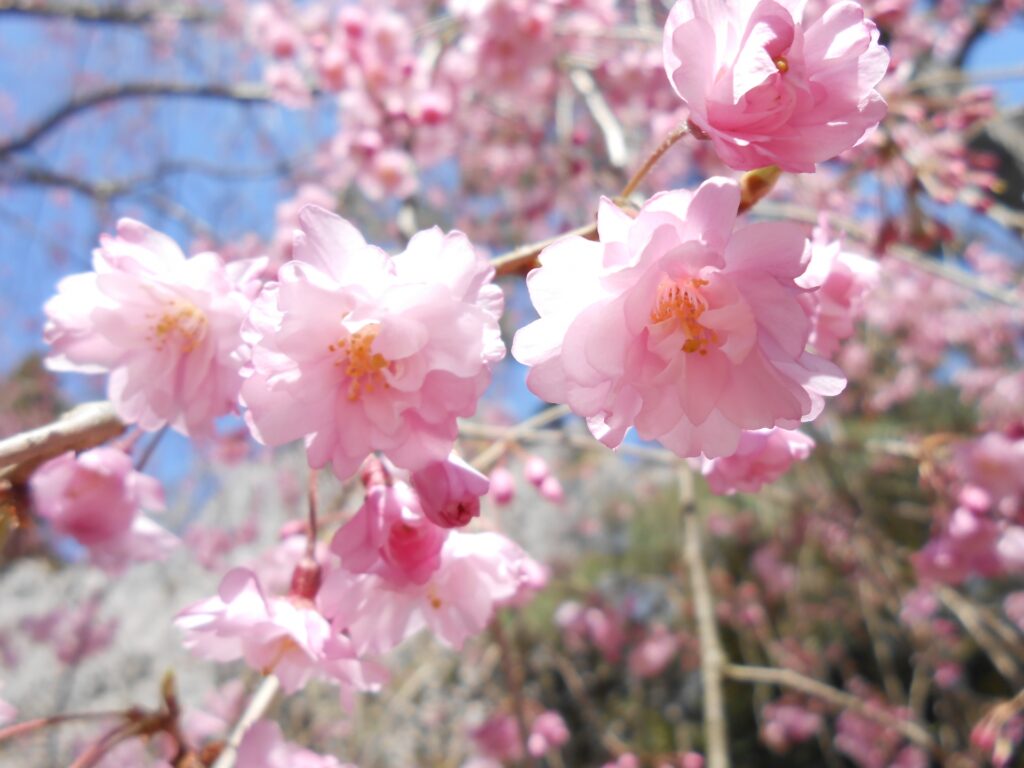
Kyoto Botanical Gardens / Best time: Early to mid-April; extended bloom thanks to multiple varieties.
Best for: Families, gardeners, plant lovers
Home to one of the widest collections of cherry trees in the city, the Kyoto Botanical Gardens offers everything from early to late-blooming varieties. Wide lawns, greenhouses, and peaceful walking paths make it ideal for families and those seeking variety.
Hanami Etiquette: How to Enjoy Cherry Blossoms Respectfully
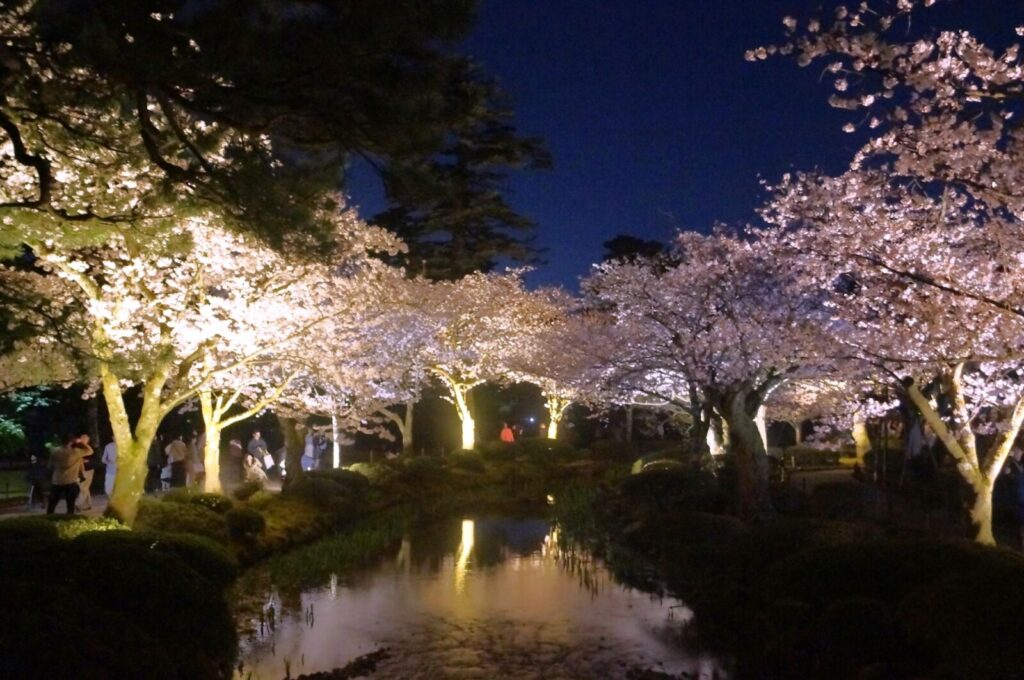
Hanami is joyous, but it’s also important to respect the trees, the spaces, and the people around you. Here are some key etiquette tips:
- Don’t shake the trees
It may look pretty, but shaking branches to create “blossom showers” damages the trees and shortens the bloom. Be patient — petals fall naturally in their own time. - Never break or pick branches
Taking blossoms home as souvenirs harms the tree and ruins the experience for others. Instead, take photos — that’s the memory you’ll cherish. - Stay off the trees
Climbing or leaning on cherry trees for photos can damage delicate bark and branches. Please admire them from the ground. - Respect picnic space
Hanami spots can get crowded. Spread out your mat reasonably and keep walkways clear. - Take your trash home
Garbage bins are often limited. Carry a bag and clean up after yourself. Leaving litter under the blossoms spoils the magic. - Drink responsibly
Hanami often includes sake and beer, but keep it fun and respectful — especially in family-friendly areas. - Mind the locals
Many hanami spots are near homes and shrines. Keep noise down late at night, and remember you’re in someone else’s neighborhood.
Following these simple guidelines ensures the cherry blossom season stays beautiful — for you, for others, and for future years.
What Makes Cherry Blossoms Special?
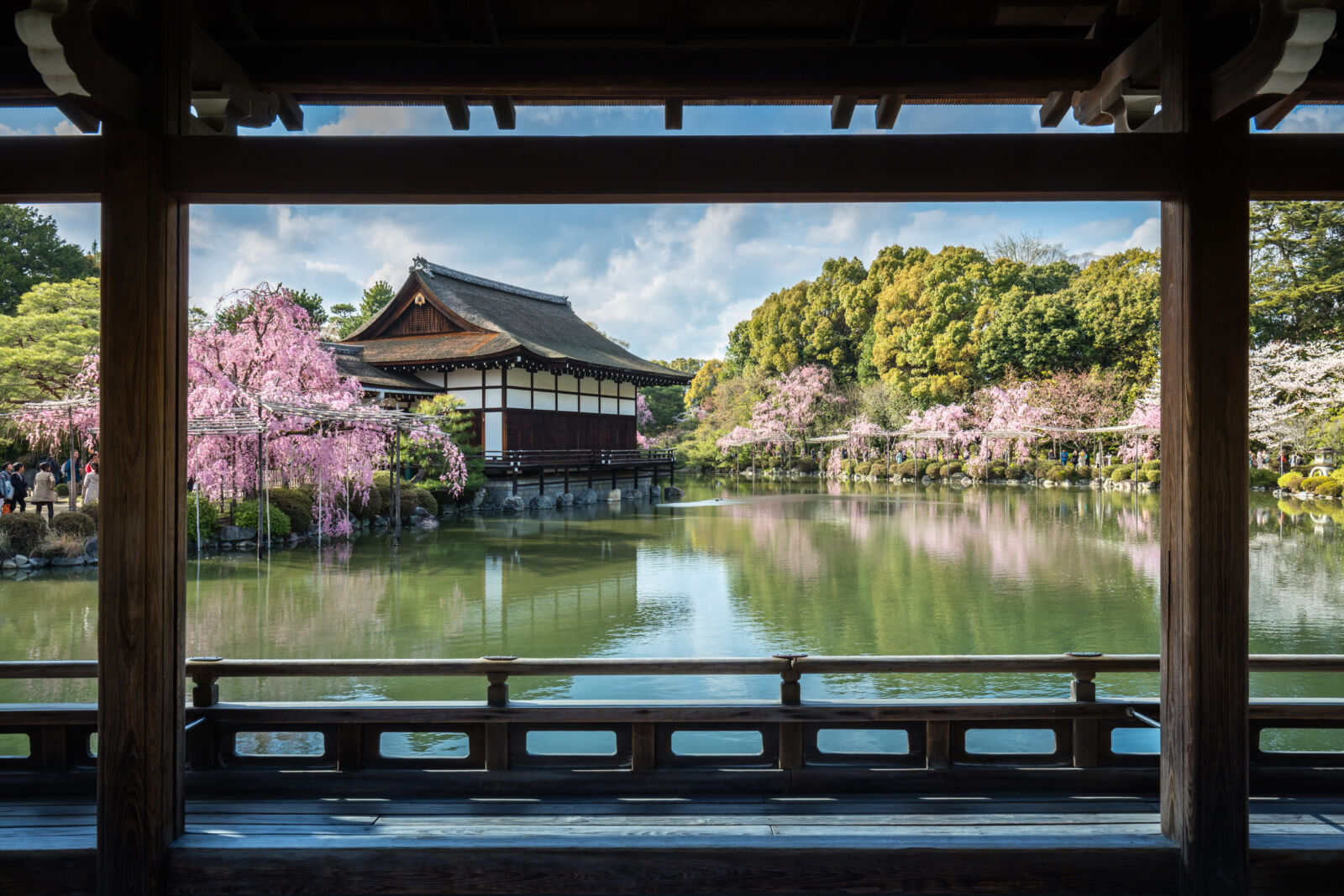
Although Cherry Blossoms can be found in countries outside of Japan, there is nowhere else where such a high cultural importance is placed on these five-petaled flowers. Overseas, the cherry blossom, or 'Sakura', usually ranks alongside even Mt. Fuji, samurai, and sushi as one of Japan's most recognizable symbols. But how did things come to be this way?
Ancient Japan had a lively culture of poetry and appreciation for natural beauty, and taking inspiration from the outdoors. It is no surprise then that a plant as strikingly beautiful as the cherry blossom would be noticed and celebrated widely. From the earliest record of Japanese poetry, the Manyoshu (compiled around 759 AD), the cherry blossom receives much praise and is featured in many of the recorded poems. This would continue up until the modern day, with references in art and literature appearing nonstop throughout recorded history.
The importance of the cherry blossom is not limited to poetry - it even extended into mythology and religion! It is said in the oldest written collections of myths in Japan that Ninigi, the grandson of the Sun Goddess, was sent to Earth by the other gods to establish rule there and create a new country. Upon doing so, he meets a mountain god who has two daughters - Flower Princess and Rock Princess. Ninigi is offered the choice of one of these daughters as his wife, and the choice is seemingly easy; Rock Princess is nothing special to look at, while Flower Princess is extremely beautiful. Upon doing so however, he becomes cursed by Rock Princess. Had he chose her, his descendants would be immortal and unchanging as a solid rock, but by choosing Flower Princess as his wife his descendants will instead be short lived, much as the cherry blossom falls from the tree after only a brief amount of time. In this way, the people of Earth came to have a limited lifespan, unlike the immortal gods.
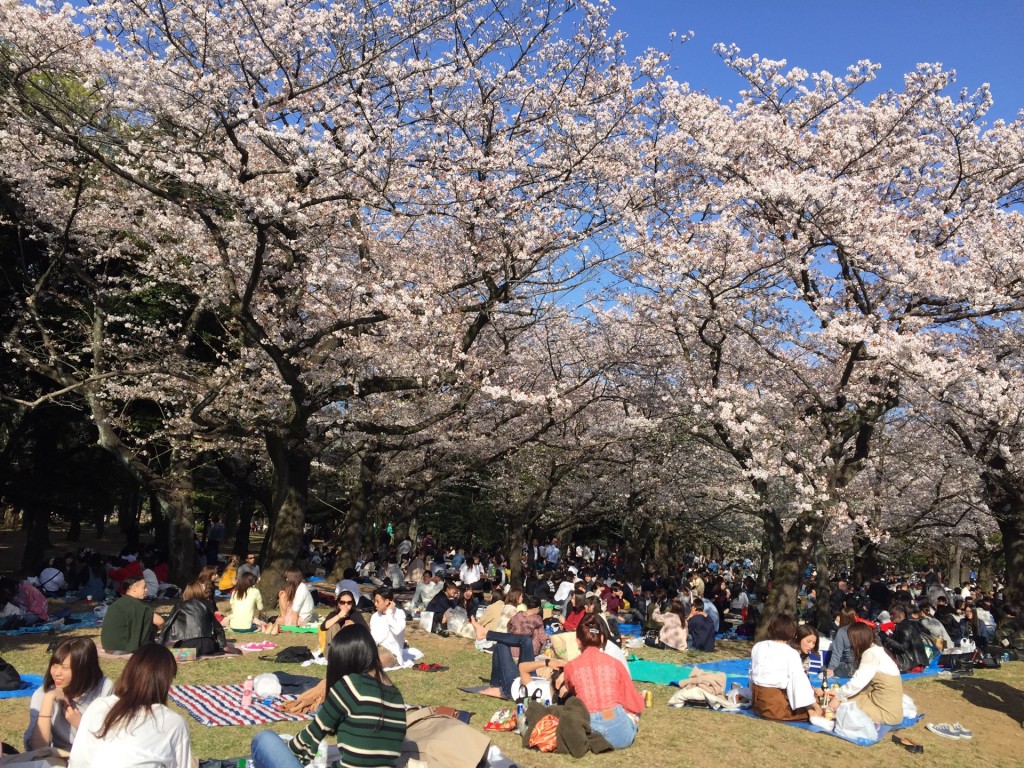
There is another special feature of the cherry blossom season that makes it so memorable - Hanami (literally flower-viewing) - wherein revelers pick a spot at a park, roll out a picnic blanket or sheet, invite some friends and family, and enjoy the flowers under the open sky for a day of food, drink, and (hopefully) good company. This tradition is also quite old, and has been enjoyed by the masses since at least the Edo Era (1600-1868). In that period of peace and economic growth, many parks full of cherry blossoms were established by local lords and even the shoguns themselves. Some of these areas are still around today, such as Daigo Temple which was used by Hideyoshi. Having a picnic under the blossoms isn't just a fun day out - its a tradition.
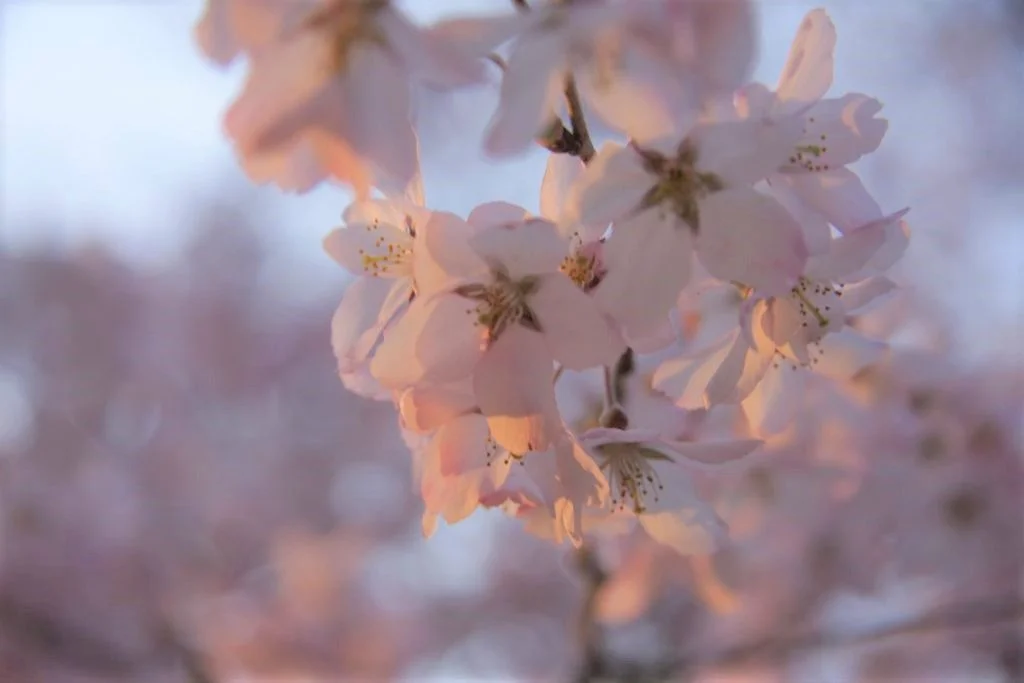
As Japan is a rather long country north to south, and also contains cities and towns at many different elevations, the cherry blossoms do not all bloom at the same time nationwide. Come spring, they will start from the south, in places such as Fukuoka, Kagoshima, Hiroshima (Hiroshima Cherry Blossom) and Shikoku, around mid March. Heading north, the major cities of Tokyo,(Tokyo Cherry Blossom) Osaka, (Osaka cherry blossom), and Kyoto, Nagoya (Nagoya Cherry Blossom) will usually get their yearly show a little later around the end of March. Continuing north, the cold regions of north Japan such as Nagano (check out our Nagano Cherry Blossom page) and Hokkaido will not get a full bloom until late April or even early May.
Frequently Asked Questions
When is cherry blossom season in Kyoto?
Blossoms usually bloom from late March to early April, with peak bloom lasting about one week. Some areas in the mountains (like Kurama, Kibune, or Mt. Hiei) bloom later, around mid-April.
What’s the best time of day to see cherry blossoms?
Early mornings are quiet and peaceful — perfect for photos. Afternoons are lively with picnics. Evenings bring illuminations, especially at temples like Kiyomizu-dera, Maruyama Park, and Nijo Castle.
Are all cherry blossom spots crowded?
Popular sites like Maruyama Park and Kiyomizu-dera get very busy, but quieter options exist — like Yawaragi Road, Kurama & Kibune, or the Imperial Palace Park.
Can I drink alcohol at hanami spots?
Yes, in most places (especially parks like Maruyama or Yodogawa). Just be respectful and clean up after yourself.
What if I miss peak bloom?
Some locations (like the Kyoto Botanical Gardens) have late-blooming varieties, and higher-altitude areas (like Enryaku-ji or Kurama) bloom later, extending the season.
Do I need to reserve a spot for hanami?
Usually no — but at very popular spots, people arrive early to claim picnic space. On our guided tours, we’ll take the hassle out of planning so you can just enjoy.
Tours and Charters to See the Blossoms
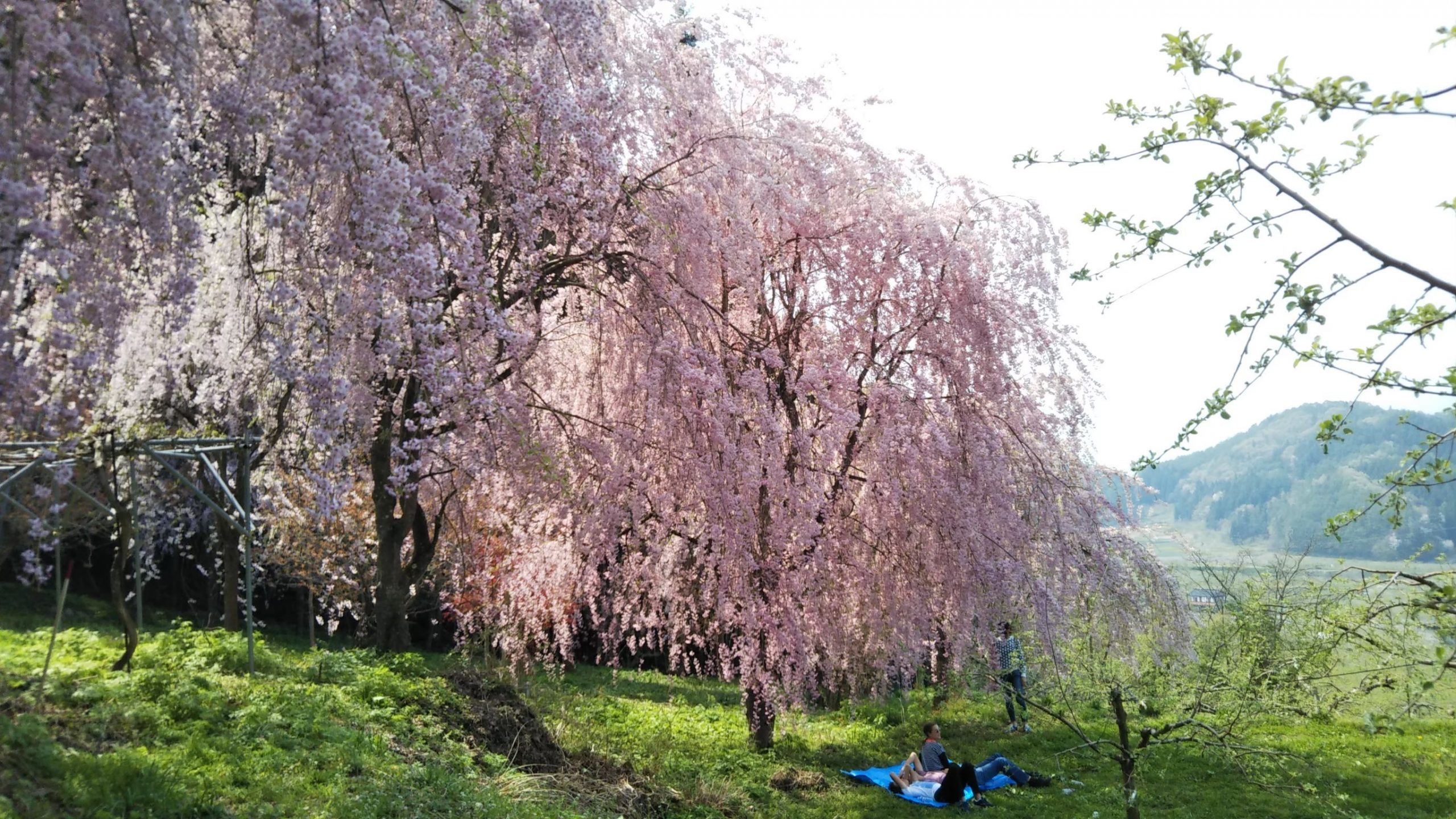
Cherry Blossoms can be very fickle - they do not bloom at the same time every year, nor at the same time in every region. Timing your trip can therefore be a little difficult without some insider knowledge about where the flowers are blooming for that specific day. Luckily, we are here to help - with group tours and charter services available to bring you to the blossoms.
Available only in Spring (of course!) Where you will go to see the blossoms is not set - instead, we use our local expertise to pick the best spot for each day that the tour runs and guarantee that you can see the best possible scenery. This is the safest and easiest way to enjoy a day out in nature without any hassle or stress.
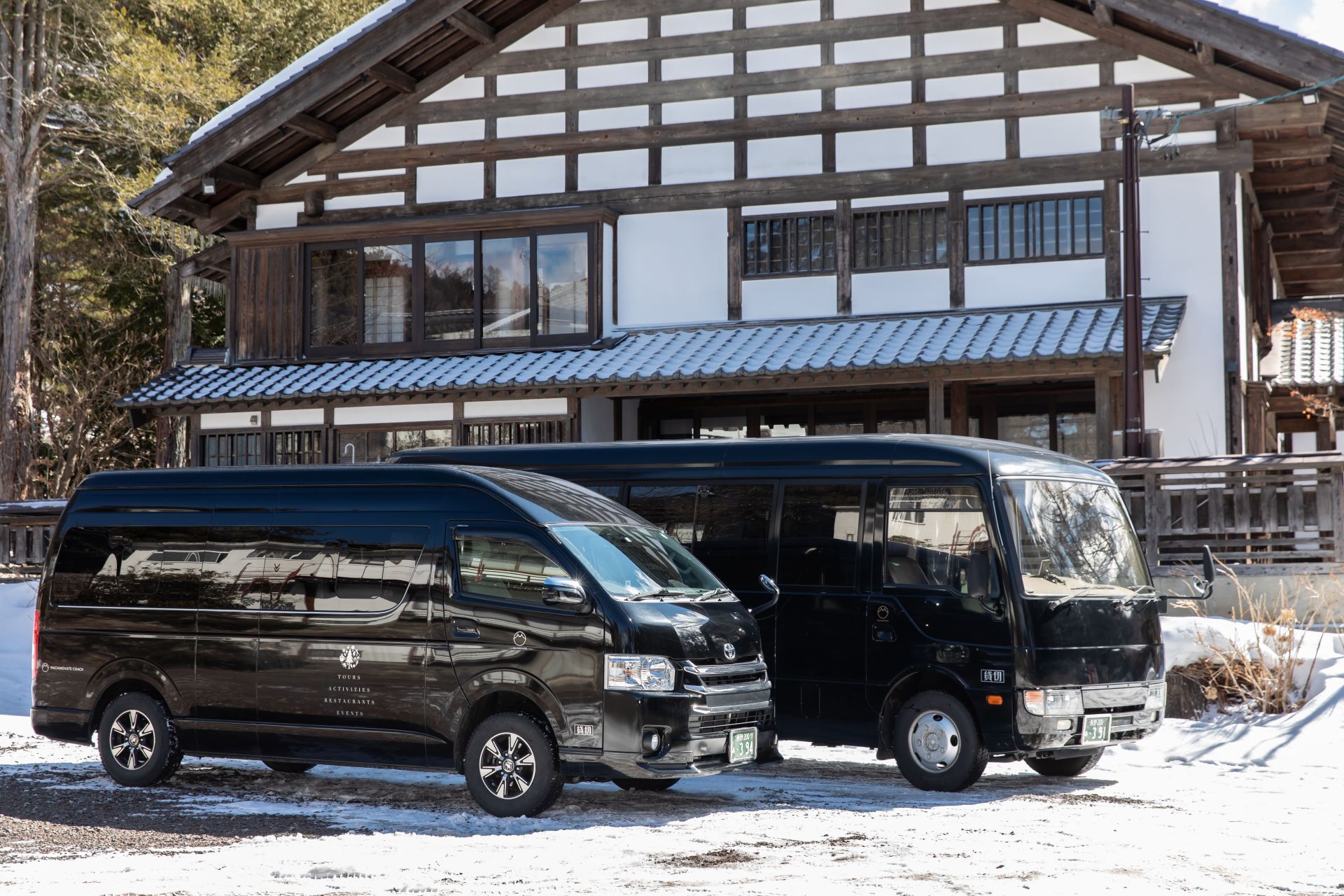
If a guided tour is not what you are after, our private charter service may be more your style. With friendly, certifies drivers and clean vehicles, we will pick you up from your accommodation (or wherever you choose to be picked up from) and bring you to any great cherry blossom spot of your choice. If you need advice, just feel free to ask and we can put together an itinerary for you using our local knowledge and experience. Please click HERE for more information on pricing and availability.