

Across Japan, there are more than 200 Pokemon manhole covers featuring bright, colourful and locally-themed designs. These manhole covers become a popular tourist attraction and, much like their namesake suggest, many are on an important journey because they gotta catch 'em all.
This page includes all the info that you need to find the manhole covers spread out across what is known as the Hokuriku region, spanning Ishikawa, Toyama and Fukui prefectures. We've also included small explanations about what each manhole cover is referencing, as there is usually a lot of little detail hidden in the designs! As you travel through this off-the-beaten path region, keep an eye out for the PokeLids along the way!
Kanazawa Manhole Covers
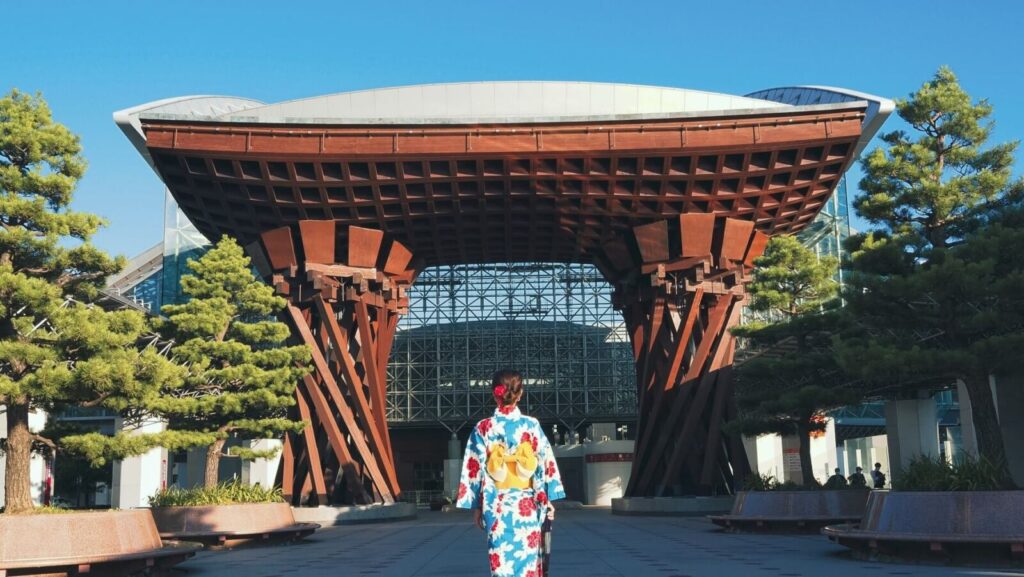
Starting off in Kanazawa, the most popular tourist destination of the three areas on this list today. It's a vibrant city with heaps of history to uncover. People are increasingly finding this charming city an alternative or supplement to the notoriously-crowded Kyoto.
If you're planning a trip to Kanazawa, we have plenty of help for you to make the best of it! Don't miss out on our "Things to Do Around Kanazawa" page. There's also our "Kanazawa's Famous Foods" guide to help you get the best of the local cuisine. If you're into photography, there's our "Best Photo Spots in Kanazawa" and "Best Spots for Autumn Leaves Around Kanazawa" guides. To get the most of the seasonal weather, you might be interested in taking a look at our "Best Beaches Near Kanazawa and Fukui" and "Ski Resorts Near Kanazawa and Fukui" pages!
Unfortunately for PokeLid hunters, Ishikawa only has one in the entire prefecture. It does, however, have an amazing Pokemon Center right beside Kanazawa Station that you're sure to want to visit!
Pokemon Center Kanazawa
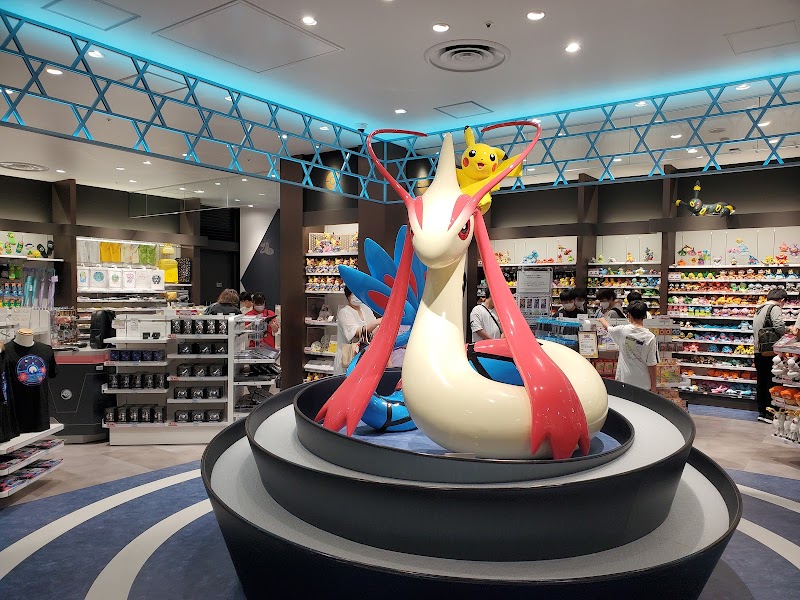
Each Pokemon Center in Japan has its own large statue and Kanazawa is no different. This Pokemon Center features Milotic, a Generation III Pokemon. Milotic was chosen to represent Kanazawa because it is supposed to be one of the most beautiful cities in Japan and no Milotic is said to be the most beautiful Pokemon of all.
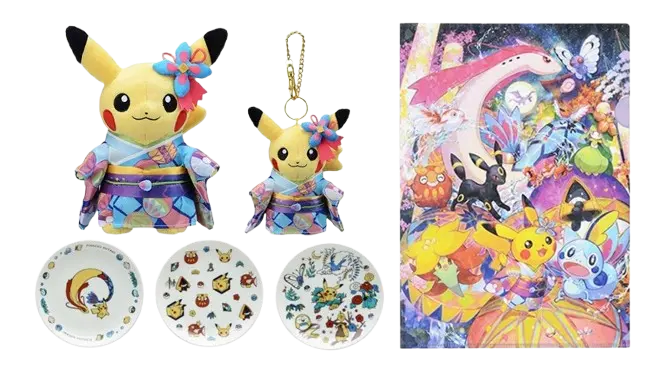
Inside you will find a variety of merchandise that can only be bought here in Kanazawa. The Pikachu plush references Kanazawa's rich geisha history, found in the Higashi Chaya District, with a kimono decorated with traditional kaga yuzen painting techniques. The plates are kutani yaki, another local craft.
- 1 - Outside the National Crafts Museum
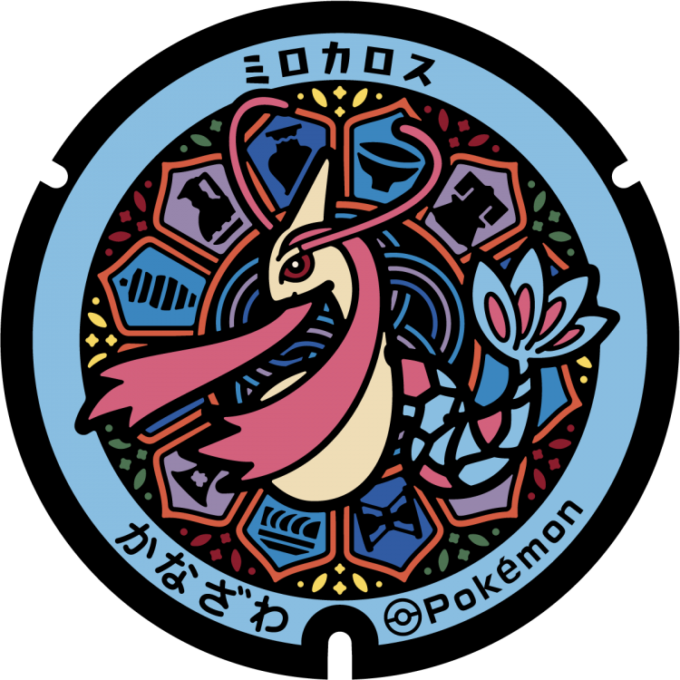
The Kanazawa PokeLid can be found just outside of the National Crafts Museum, near to Kenrokuen Garden. The museum sits in the centre of Kanazawa's "Cultural Zone" of museums - right beside the Ishikawa Prefectural Museum of Art and the Ishikawa Prefectural Museum of History.
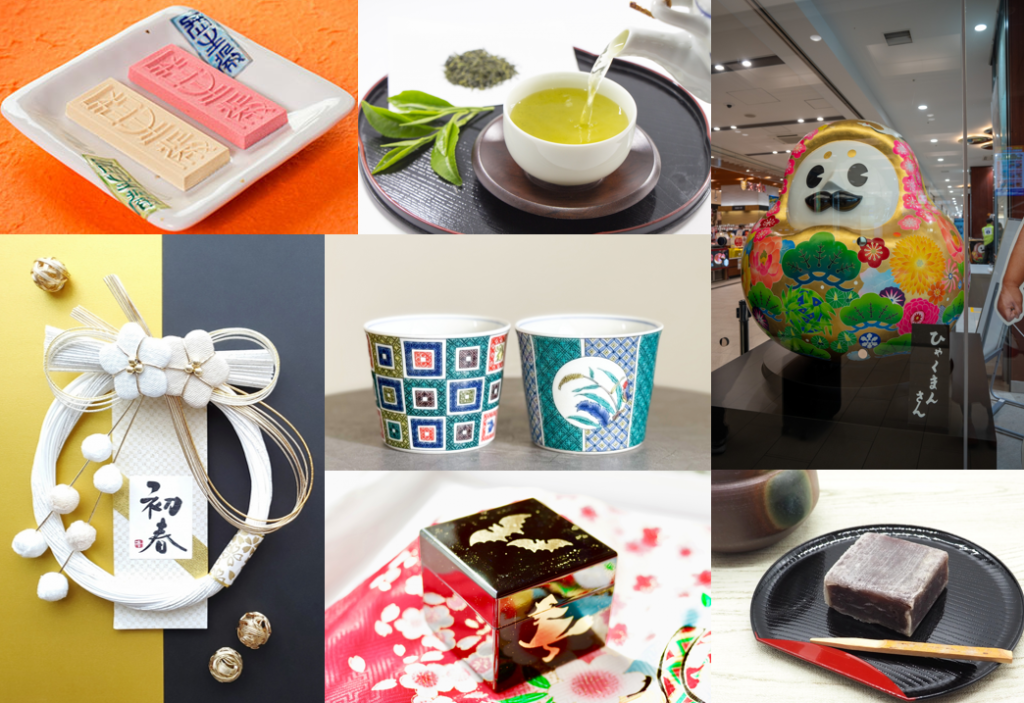
The PokeLid again references Milotic and Kanazawa's beauty. The background depicts different porcelain objects which is a reference again to Kanazawa's variety of traditional crafts. In the centre behind Milotic is a knot of mizuhiki, a type of decorative art made of paper string. Finally, the colours around the edge of the picture are a reference to Kanazawa's visually-distinct seasonal changes, as the city is said to wear a new face every time the season changes.
Toyama Manhole Covers
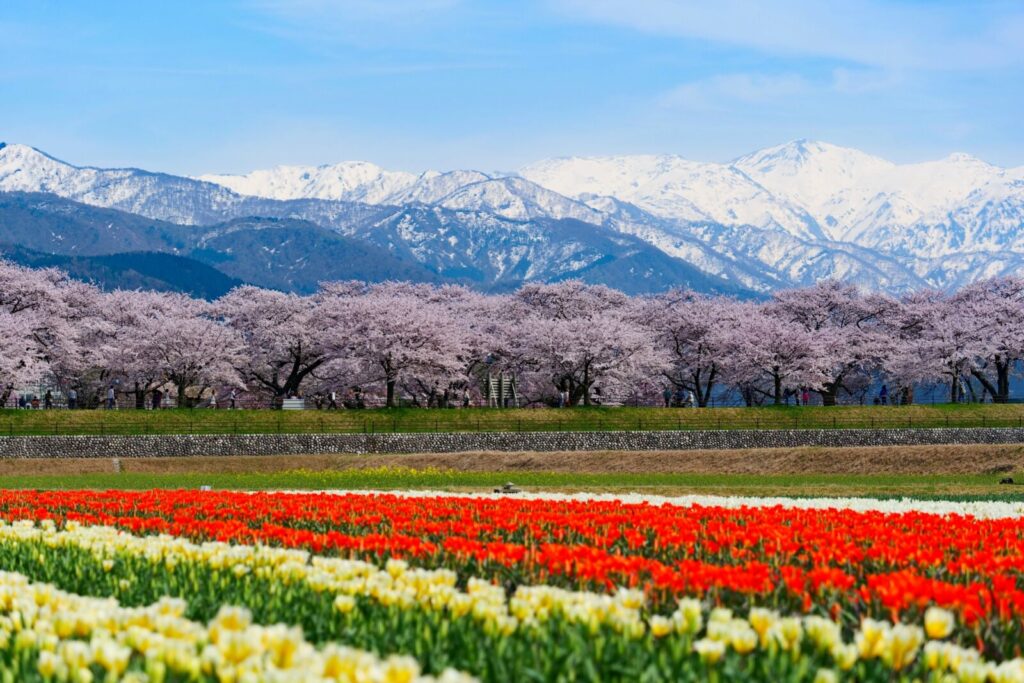
Toyama is fortunate to have triple the number of PokeLids that Kanazawa does! You can find them all easily in a day by following the map below. In terms of traditional attractions, Toyama as a city has less to offer visitors compared to Kanazawa, but is nonetheless a great place to spend a day. Many of the attractions it does have are very accessible from Toyama Station. If you're planning a trip to Toyama, be sure to have a read of our "Things to Do Around Toyama" guide. You can also check out our "Best Onsen Hot Springs in Toyama" page if you're looking for somewhere to take a relaxing bath.
For photographers, we also have guides for each of the seasons in Toyama - Spring, Summer, Autumn, and Winter. Finally, having explored so much of the region, you're bound to have worked up an appetite! Don't miss our "Famous Foods in Toyama" page to get your mouth watering.
- 1 - In Toyama Castle Park
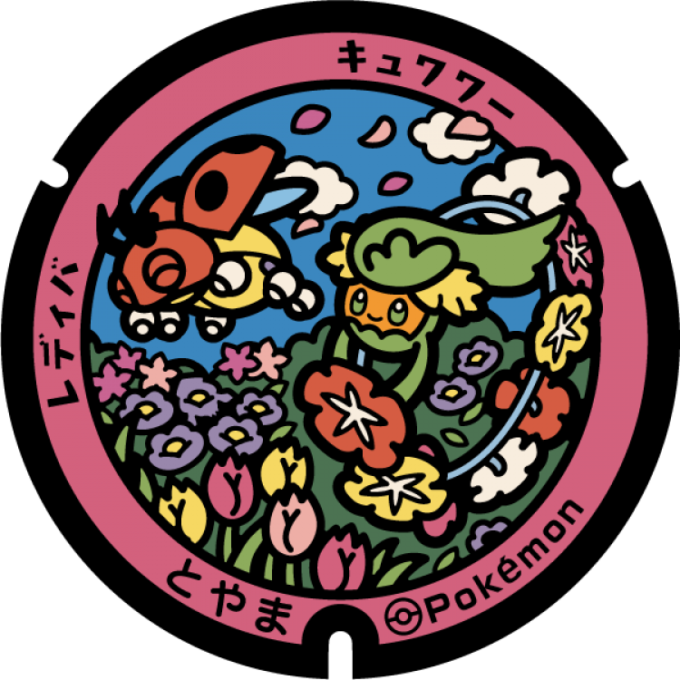
We find our first PokeLid in Toyama Castle Park. It shows Ledyba and Comfey frolicking in a bright field of flowers. Toyama houses some of largest fields of flowers in Japan, known as the Spring Quartet, and the prefecture is said to burst to life in spring.
While the two Pokemon shown bear no specific significance to Toyama, springtime is when all the wildlife begin to show again. Sadly, they can't all be as cute as the Pokemon.
- 2 - Near the Toyama Prefectural Museum of Art and Design
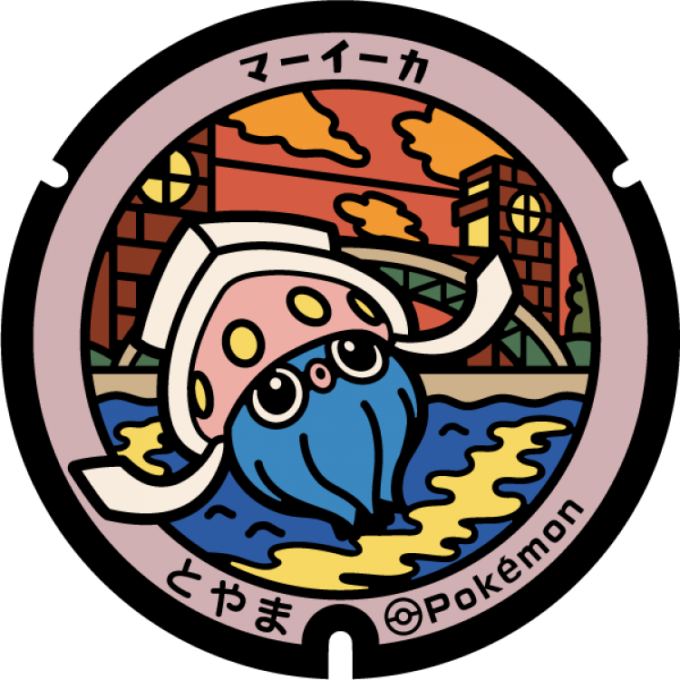
Just between the Toyama Prefectural Museum of Art and Design and Toyama Bay, this PokeLid depicts Inkay floating through the bay. Toyama is a prefecture known for its fresh seafood. The bay has a depth of 1000 metres, so is said to be a natural fish tank. One of the chief among these are squid, which Inkay is supposed to be.
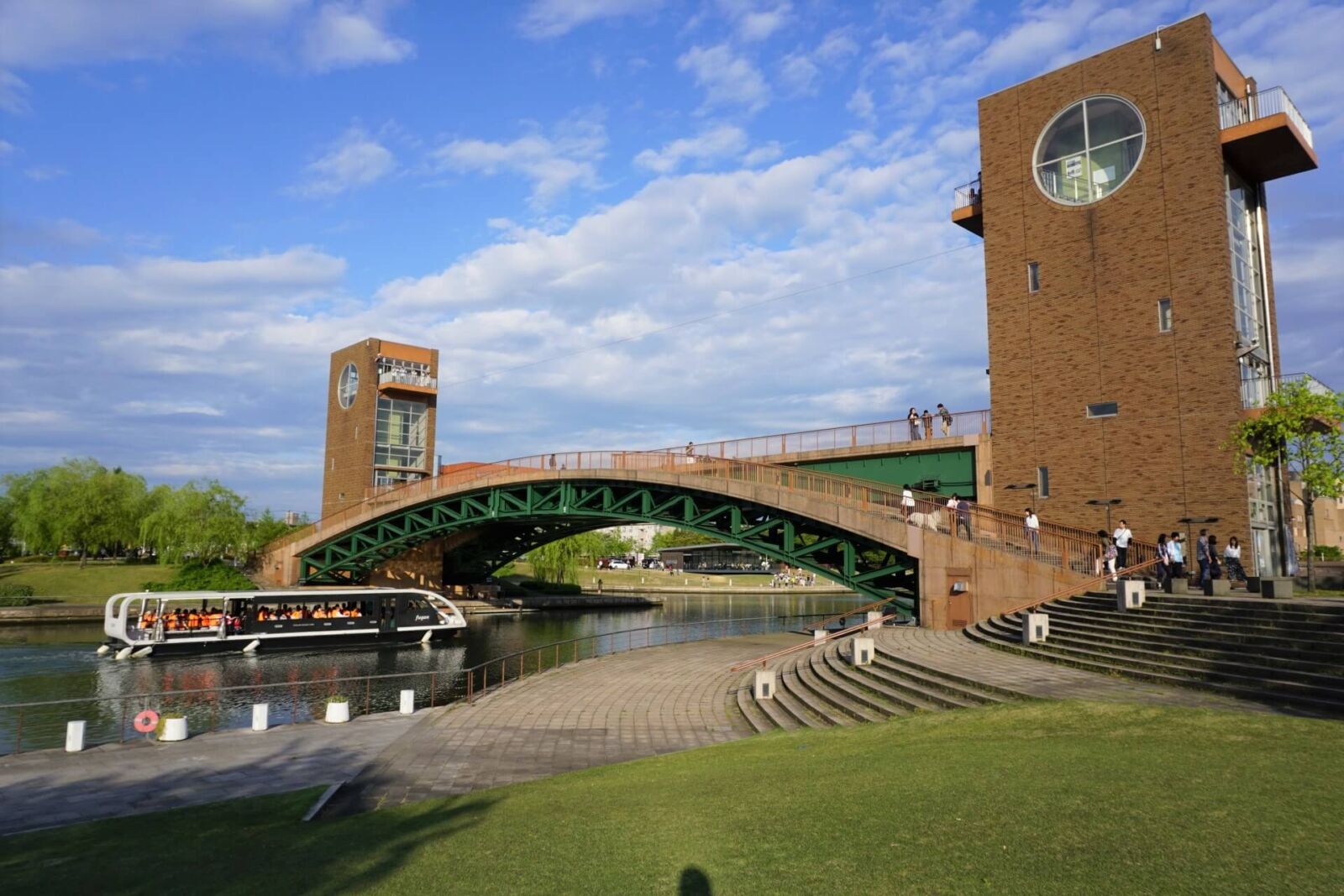
Toyama is also a popular destination for cruise ships, which Inkay's hat resembles. In the background of the PokeLid is the Tenmon-kyo Bridge. The bridge spans the canal and has two observation towers. From the tops of these towers, you can see all the way to Tateyama Mountain on a clear day. The park also includes what is claimed to be the most beautiful Starbucks in the world, so be sure to stop by there for a coffee!
- 3 - Toyama City Butaigeijutsu Park
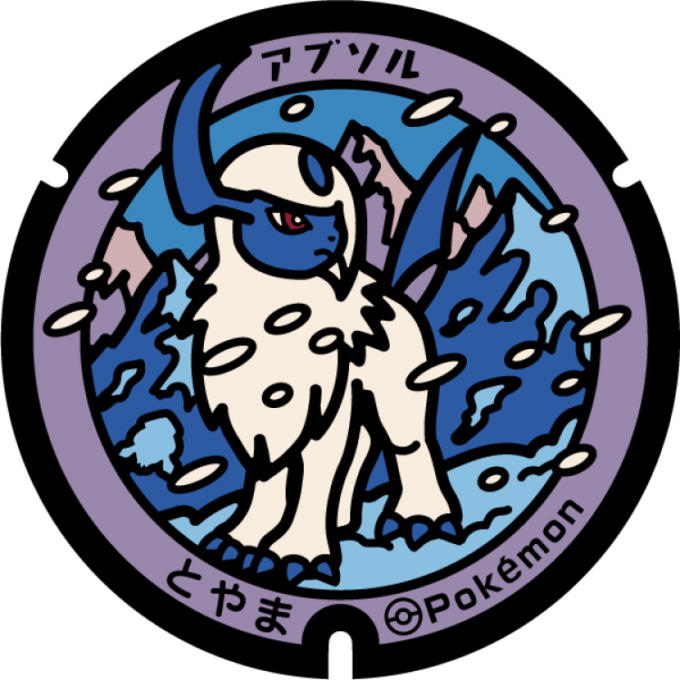
The farthest from Toyama Station of the three Toyama PokeLids is also the best. The PokeLid in Toyama City Butaigeijustsu Park depicts Absol atop Tateyama Mountain in the midst of the snow.
Tateyama is one of the Three Sacred Mountains of Japan, along with Mt. Fuji and Mt. Haku in Ishikawa Prefecture. The snowy scene is a reference to Toyama's heavy snowfall - third in Japan, behind only Hokkaido and Aomori far to the north. A short walk from the PokeLid is Cafe Kureon, a popular cafe which was designed by world-famous architect Kengo Kuma. Kuma also designed the Tokyo Olympic Stadium and several pavilions at the Osaka World Expo, so you can balance your visit to the PokeLid with some high-art architectural appreciation.
North Fukui Manhole Covers
Fukui has the most PokeLids of any prefecture in Central Japan with a whopping 17 manhole covers dotted around the area. Because of the sheer number of them, we've split the prefecture into halves - North and South - for your convenience. As you will notice, all of Fukui's PokeLids feature Dragonite in one way or another. That's because Fukui has a local partnership with the Pokemon Company and Dragonite is their official representative! If Dragonite is one of your favourite Pokemon, Fukui should be the first place on your list to visit!
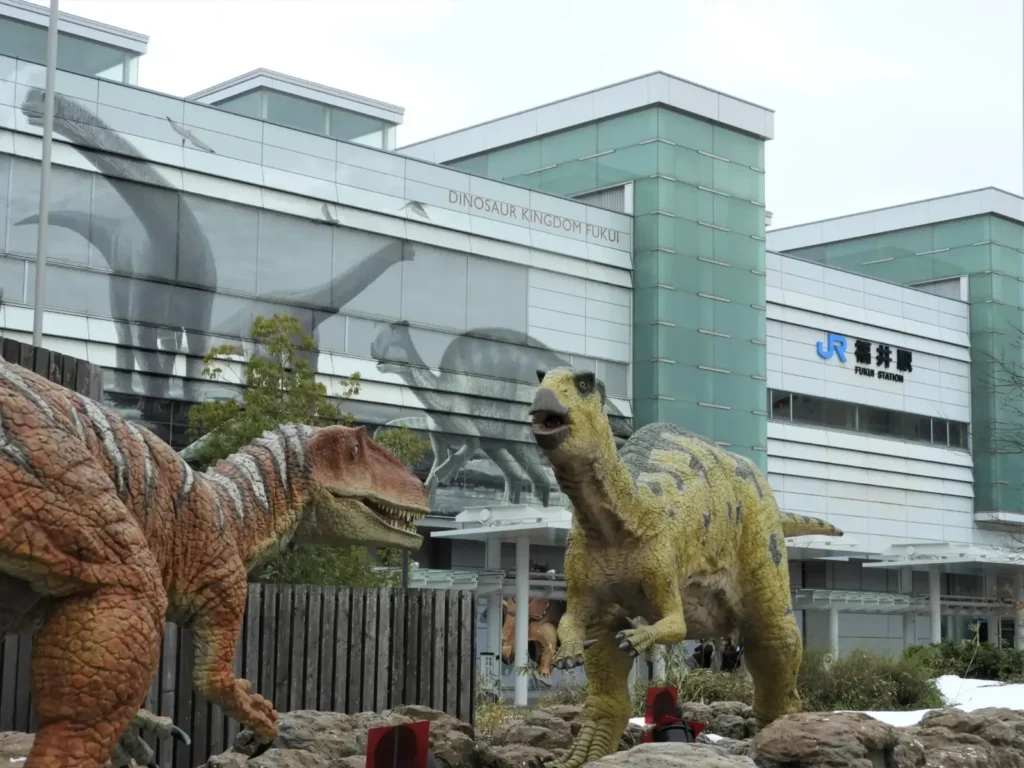
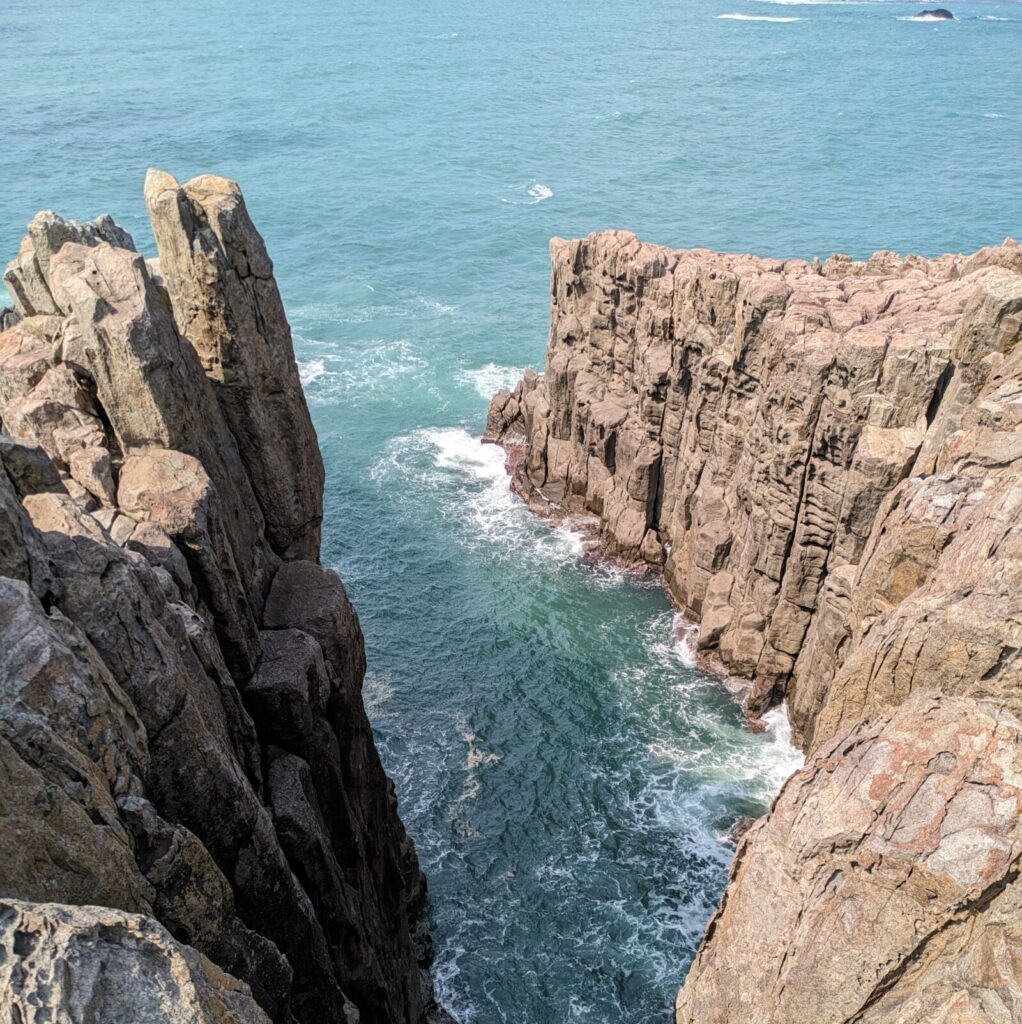
Dragonite's name in Japanese, Kairyuu, references dinosaurs and makes it a perfect pairing for Fukui. Dinosaurs are everywhere in Fukui - five types of dino fossils were uncovered in Fukui and the region is one of the world leaders in palaeontology at the Fukui Prefectural Dinosaur Museum. Other than dinosaurs, Fukui has a vibrant fishing industry, particularly giant snow crabs. It also produces 90% of all bifocal lenses made in Japan. It's also known for its variety of nature from basalt cliffs and sapphire waters to mountain peaks and misty mornings creating a Castle in the Sky.
If you're planning a trip to Fukui, be sure to check out our "Things to Do in Fukui" guide! It'll get you started with everything you need to plan your trip to Dinosaur City! If you're taking the train from Kyoto or Osaka, be sure to read our page on Tsuruga Station to make your transfer as smooth as possible! The prefecture has many great shrines and temples, so you might want to start collecting goshuin stamps. If so, be sure to read our list of the Best Goshuin Near Fukui.
- 1 - Fukui Station
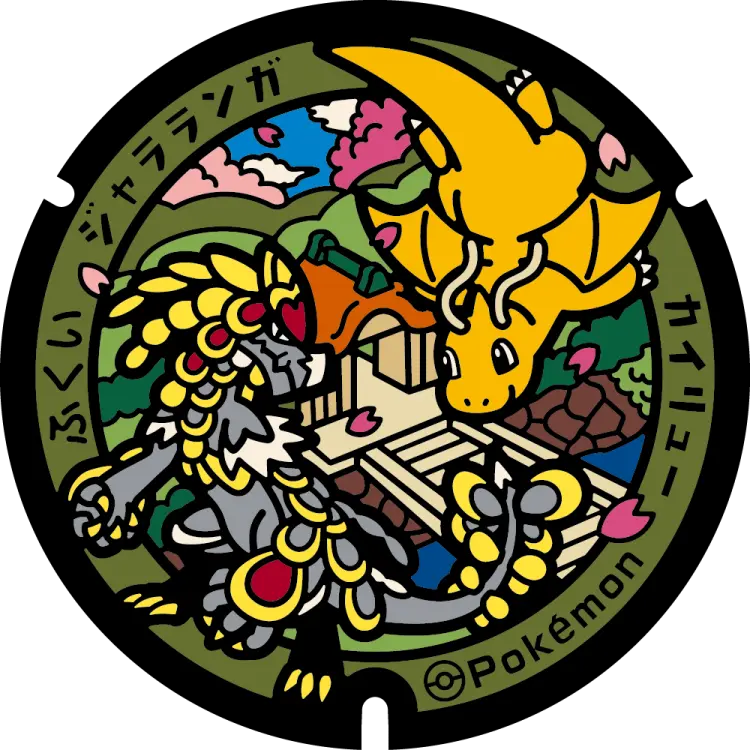
Our first PokeLid is just outside Fukui Station's East Exit. This shows Dragonite and Kommo-o. Kommo-o is a newer Pokemon and its tail is said to be a reference to staves used by monks, referencing Fukui's Eiheiji Temple (more later).
In the background, we can see a gate with a bridge stretching over water. This is the restored Orouka Bridge which leads into Fukui Castle. This historic entrance to the now-destroyed castle was rebuilt in 2008 to commemorate the 400th anniversary of the castle. The castle was built by the son of the Shogun as a strategically-important place to defend Kyoto from attack.
- 2 - Awara
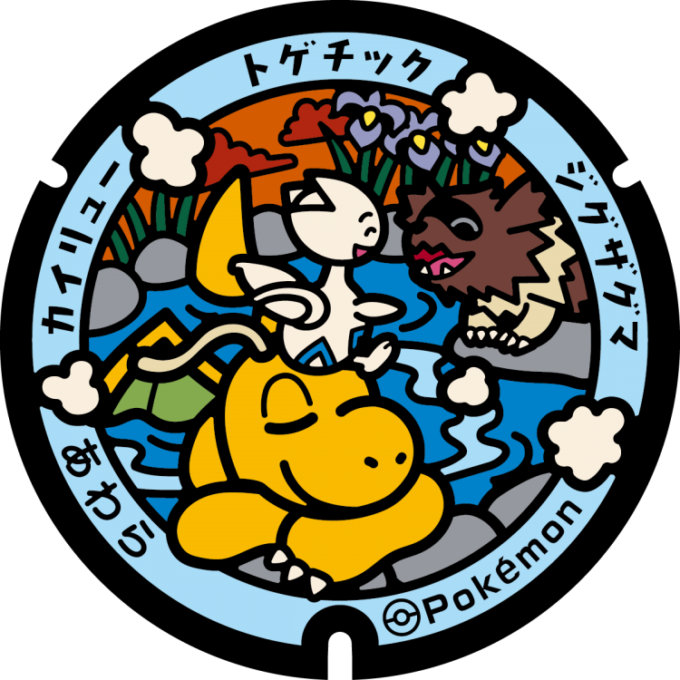
Awara Onsen town has one of the best PokeLids in the prefecture, featuring Dragonite, Togetic and Zigzagoon enjoying a relaxing bath in the hot springs. Togetic is an egg so, obviously, can't enter the water, so it's enjoying playing with Zigzagoon instead.
Awara is a region famed across Japan for its high-quality hot springs. Each inn in Awara has its own hot spring, so the water is said to have different qualities in each place. Dragonite seems pleased with its choice!
- 3 - Sakai
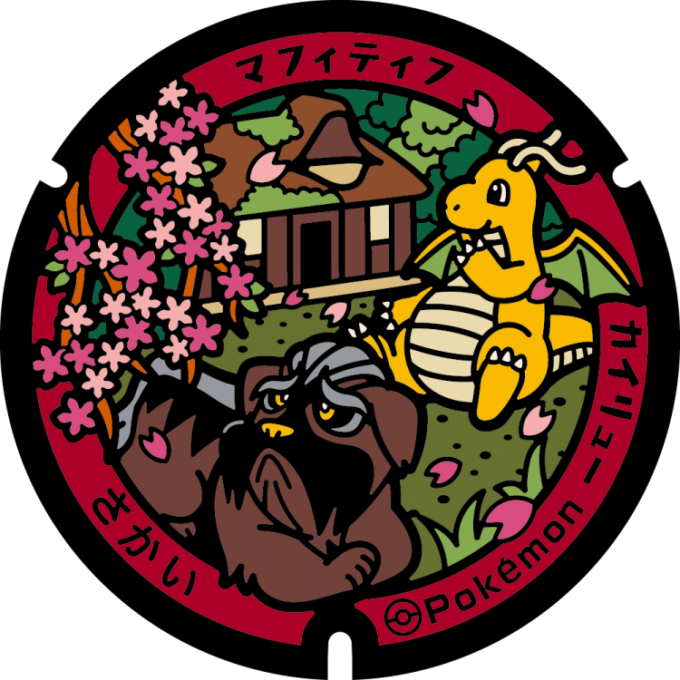
Here in Sakai City we see Dragonite and Mabostiff relaxing under the blooming flowers. Mabostiff is based on a livestock guardian dog, particularly the Spanish Mastiff. The breed is known to be particularly friendly, here referencing that Fukui is often listed among the friendliest places to visit in Japan (perhaps because so few tourists spend much time there).
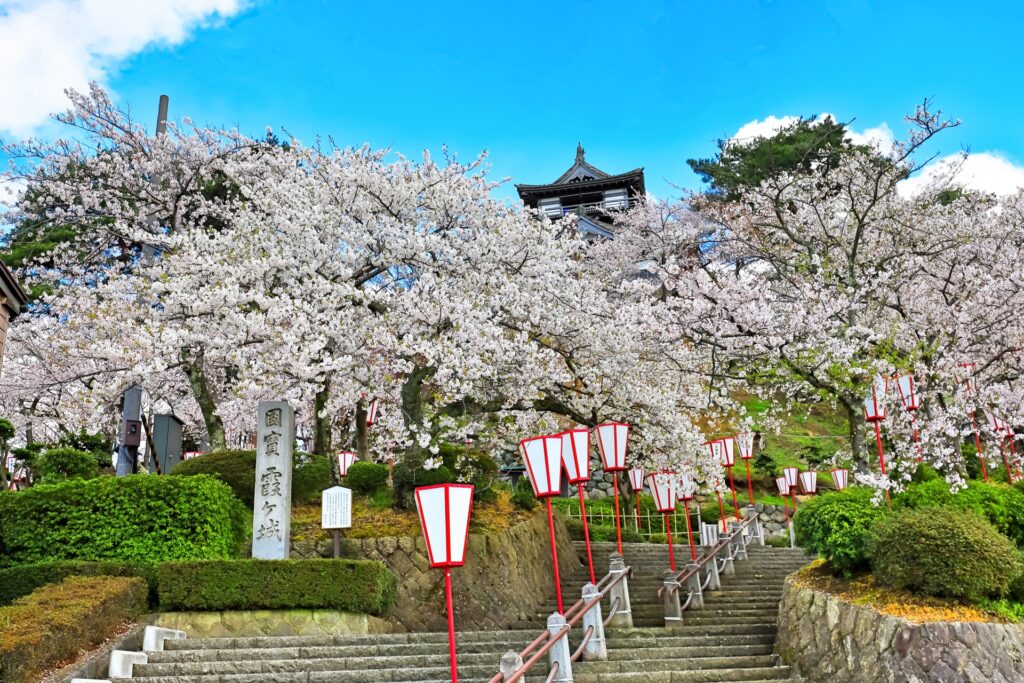
Sakai City in northern Fukui is home to a good few of Fukui's most famous attractions. First, Takidanji Temple can be seen in the background of the PokeLid here. It is also near to Fukui's most famous natural wonder, the Tojinbo Cliffs. The historical Mikuni Port and Maruoka Castle, which is one of the last 12 remaining original castles in Japan, are also within the city limits.
- 4 - Eiheiji Town
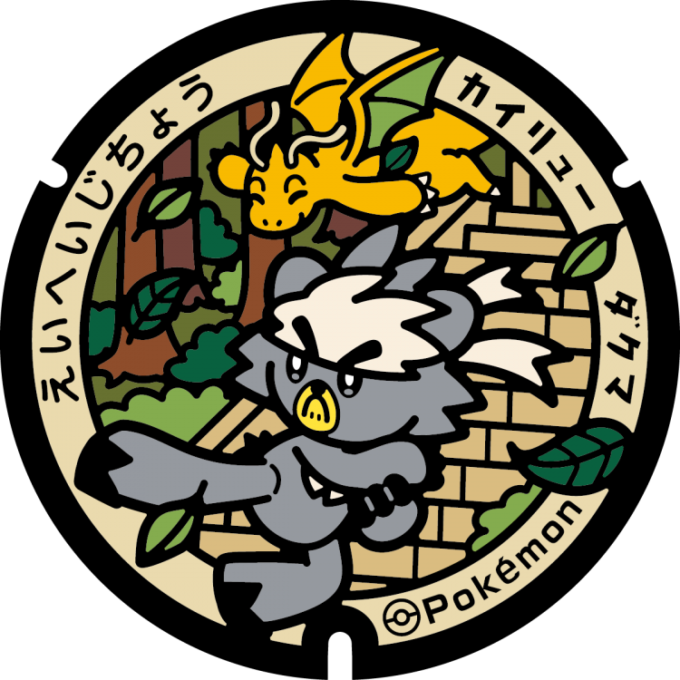
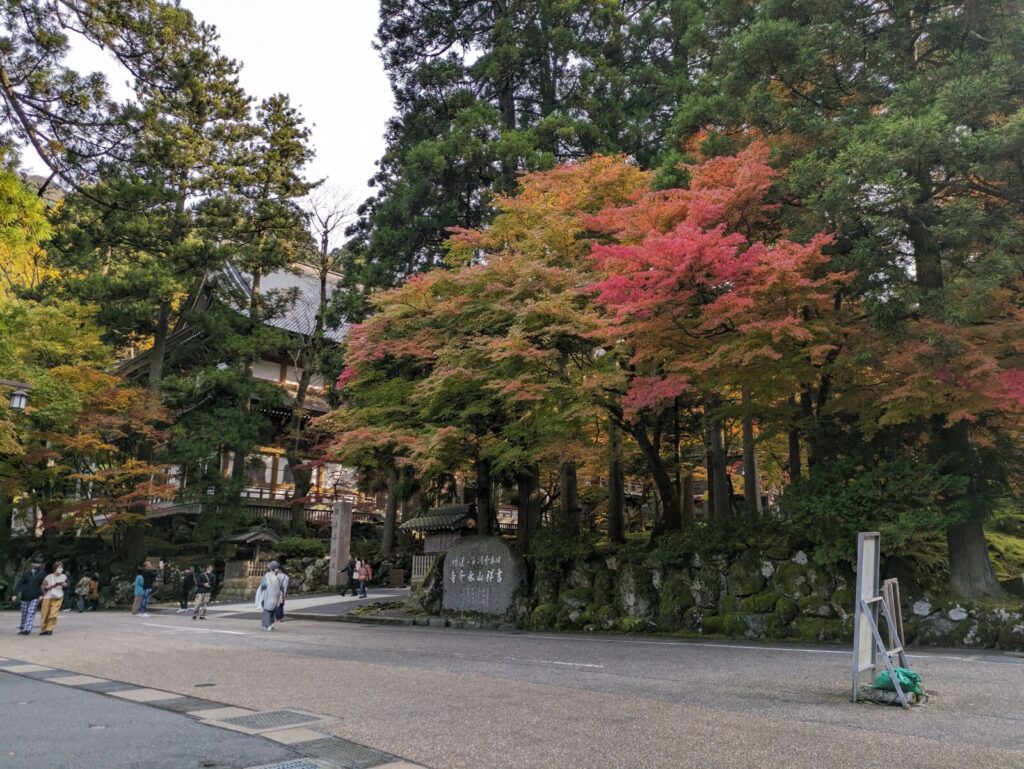
Eiheji Town's PokeLid shows Dragonite and Kubfu on the steps of Eiheiji Temple, with Kubfu practicing a flying kick. Kubfu is based on a bear, which are extremely common in Fukui's vast countryside.
The steps in the background are from Eiheiji Temple. The temple is one of Fukui's most iconic attractions. It was founded more than 700 years ago and now serves as one of the head temples of Soto Zen Buddhism. Practitioners from around the world come to Eiheiji to do zazen, a form of silent seated meditation. We can also see some of the cedar trees for which Eiheiji is also well-known. Some of them near the temple are 400 - 500 years old.
- 5 - Katsuyama
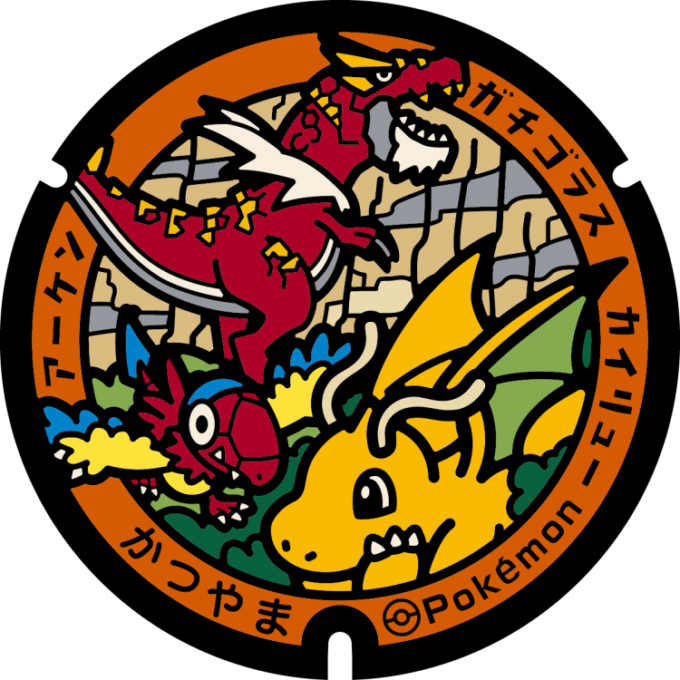
Katsuyama's PokeLid was the first installed in Fukui, just outside of Katsuyama Station. It shows Dragonite and Archen sitting while Tyrantrum roars in the background. Archen and Tyrantrum are both fossil Pokemon, which is referring to the Fukui Prefectural Dinosaur Museum.
Tyrantrum is based on the Tryannosaurus Rex. A life-size animatronic of a T-Rex welcomes people into the Dinosaur Museum. His manners are much better than Tyrantrum's seem to be! Be sure to say hello and let him know he's doing a good job, as he's working on his English.
- 6 - Ono
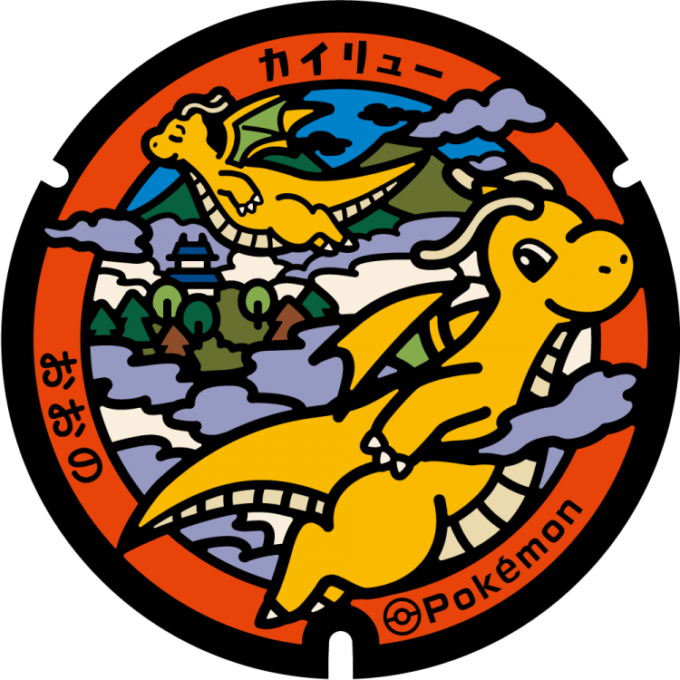
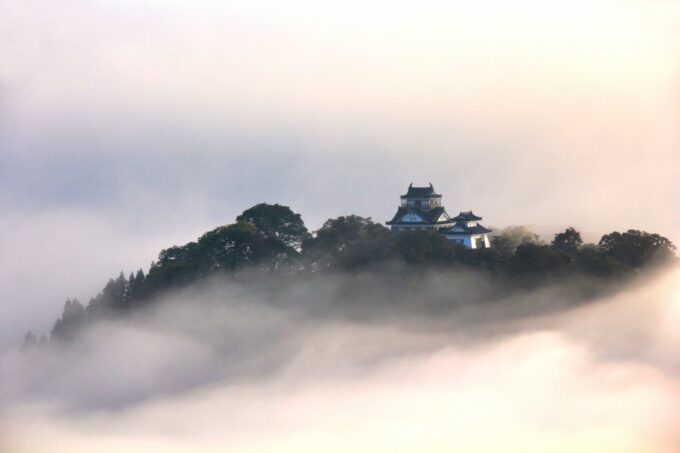
Ono has one of Fukui's best PokeLids, featuring two Dragonite soaring above the clouds. In the background we can see the famous Ono Castle in the Sky. Ono Castle is in the perfect condition for mist from the mountains to come down the valley and cover the whole town, leaving just the castle poking out from the clouds. The sight is visible from a nearby mountainside, but takes a lot of preparation and a good bit of luck to get to see it!
Ono sits in a valley near the Hakusan National Park, giving the town plenty of rich greenery perfect for hiking through. There are waterfalls, springs, mysterious ponds, and rich culinary traditions. Ono is also well-known for its sake breweries, because good water makes good sake!
- 7 - Ikeda
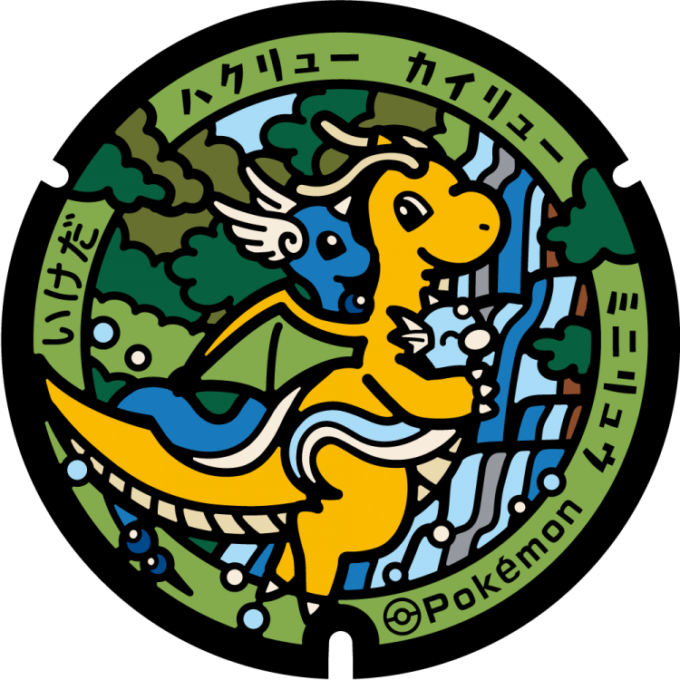
This manhole cover for the small town of Ikeda features all three of the Dragonite evolution line. Dragonite carries Dratini and is giving Dragonair a piggyback as it flies up the Ryuuso waterfall. The falls once had a pool so deep that the bottom was hidden, although only a shallow one can be seen today. Local legends say that a dragon lived there and would ascend the falls to reach the heavens.
Ryuuso falls is one of the top 100 waterfalls in Japan and the only waterfall in Fukui to be on the list. The falls have a height of 60m and an impressive width of 20m. In summer and fall, it is one of the best sightseeing spots in Fukui. The vibrant greenery of the summer and the array of yellows and reds of autumn leaves are fantastic contrasts to the dark grey rockface and shimmery white water of the falls. Unfortunately, getting here via public transport is extremely difficult. If you're planning to visit the PokeLid and the Ryuuso Falls, you should consider renting a car or chartering a bus to get there.
- 8 - Sabae
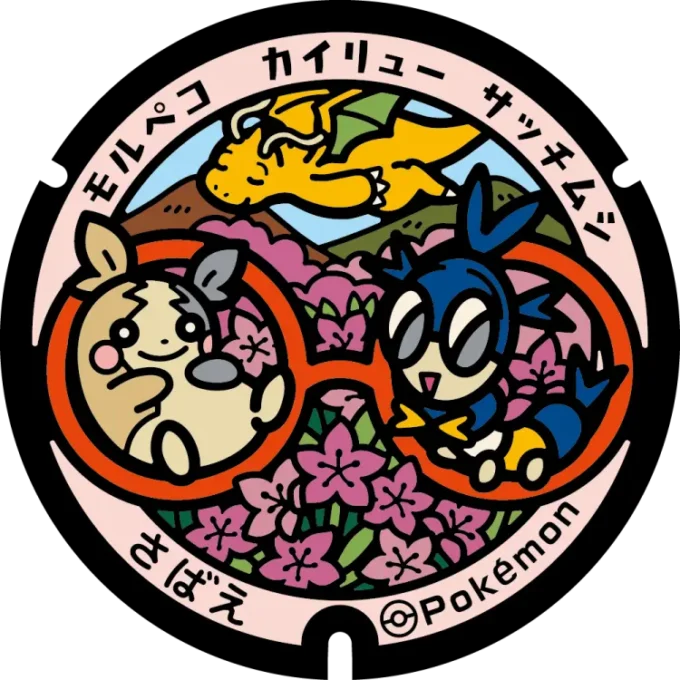
In Sabae, we find a PokeLid featuring Dragonite in the upper center, Morpeko on the left and Blipbug on the right. Morpeko and Blipbug are sitting in a pair of spectacles, referencing Sabae's status as the leading manufacturer of glasses' lenses in Japan. In fact, around 90% of all eyeglass lenses are made here. Frames and textiles, too, are made in abundance.
In the background, we can see some of the Hakusan mountains, visible from Sabae and fields of flowers. Sabae has one of the world's largest azalea festivals, with more than 50,000 azaleas on display, with many different varieties which have different colours. Azaleas have appeared in Japanese poetry since before the 700s - you might be inspired to write one or two yourself (just remember to wear your glasses if you need them)!
- 9 Echizen Town
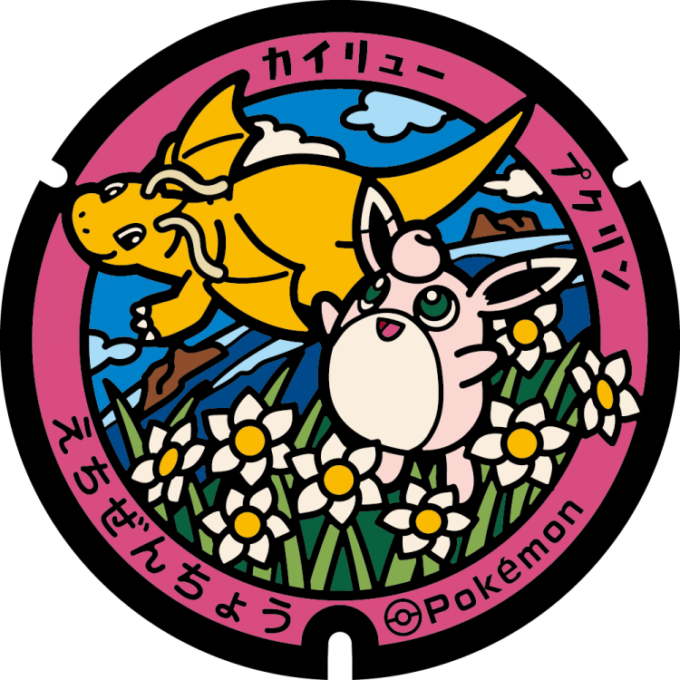
Echizen Town's PokeLid depicts Dragonite and Wigglytuff in a field of daffodils near the sea. The PokeLid itself is located in Echizen Town's craft village. This town was once a bustling hub of craftsmen, making pottery, lacquerware, paper, steelworks, and bamboo art. Centuries ago, war displaced many of the craftsmen and the continued financial decline of Fukui led them to pursuing their trade elsewhere. Many stayed, though, and their descendants still work in this town with some using techniques dating back more than 1000 years.
The coastal park depicted in the PokeLid is Echizen Daffodil Park. From December until February, tens of thousands of daffodils spring to life. The bloom is so important to the people of the town that a festival celebrating the daffodils is held in mid-January. If you're visiting out of season, the Daffodil Dome showcases varieties of daffodils all year round.
- 10 - Echizen City
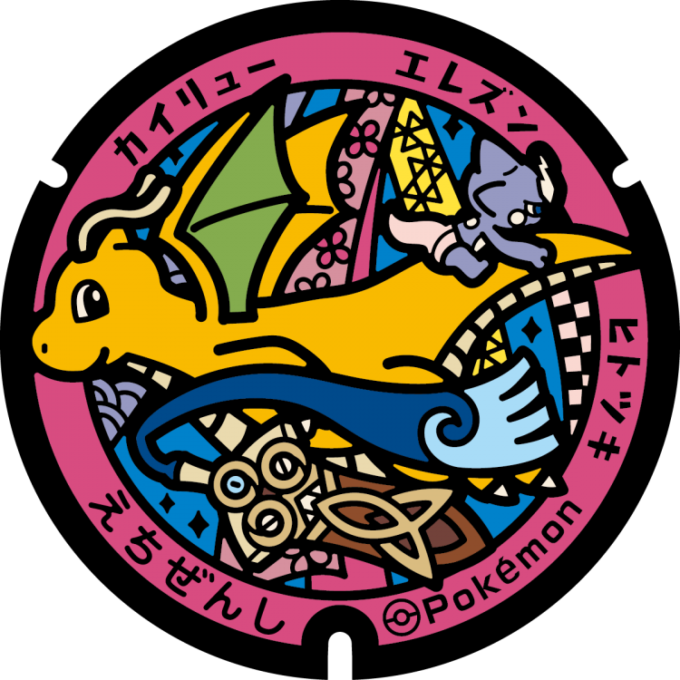
In Echizen City we can find this manhole cover, which shows Dragonite and Honedge, with a little Toxel clinging for dear life onto Dragonite's tail. The background of this PokeLid references the washi, traditional papermaking, industry of Echizen. The paper is easily dyed into vibrant colours and can be decorated with dried flowers. The craft has flourished here for more than 1,500 years.
Honedge is a reference to the Echizen steelwork crafts. Until the end of the Edo Period (1603-1868), Echizen was one of the premier places to forge swords. The region was praised for the sharpness and design of the swords. They don't make swords very often these days, but they do make exquisite kitchen knives.
- 11 - Minami Echizen Town
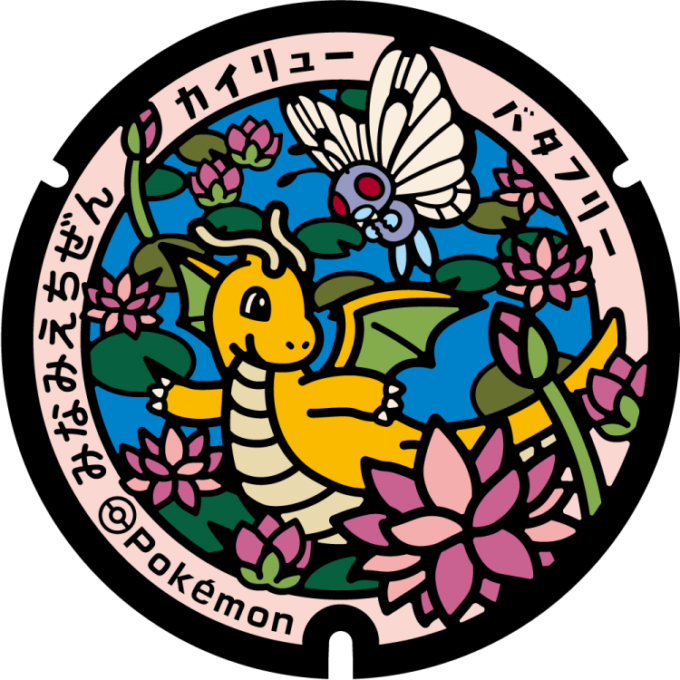
Our final PokeLid of Northern Fukui shows Dragonite and Butterfree playing in a lotus pond. Minami Echizen is one of the leading producers of lotus flowers in Japan. Its chief attraction, Lotus Park, reaches peak bloom in the summer. The park showcases different lotus flowers collected from more than a dozen countries around the world.
The Lotus Park is also home to some unique biodiversity, represented by Butterfree on the PokeLid. If you're iffy about the bugs, don't worry as they mostly stay out on the pond! From the walkways, you can get great pictures relatively undisturbed.
South Fukui Manhole Covers
- 1 - Tsuruga
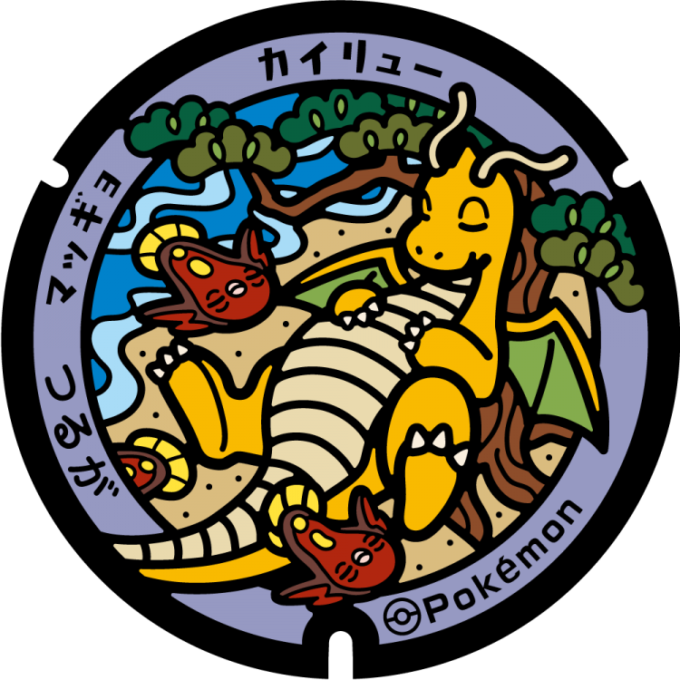
From Tsuruga, we enter a region of Japan famous for its pristine beaches, reflected in many of the PokeLids. This one shows Dragonite and Stunfisk relaxing on the beach.
Tsuruga has long been an important hub. It connects not just other parts of Japan to the areas along the northwest coast, but has been used for centuries as one of the main routes into Japan from the mainland. Tsuruga Port is a natural harbour and it has a vibrant fishing industry. On its other three sides are mountains, so Tsuruga has a great blend of mountain produce to balance the seafood.
- 2 - Mihama
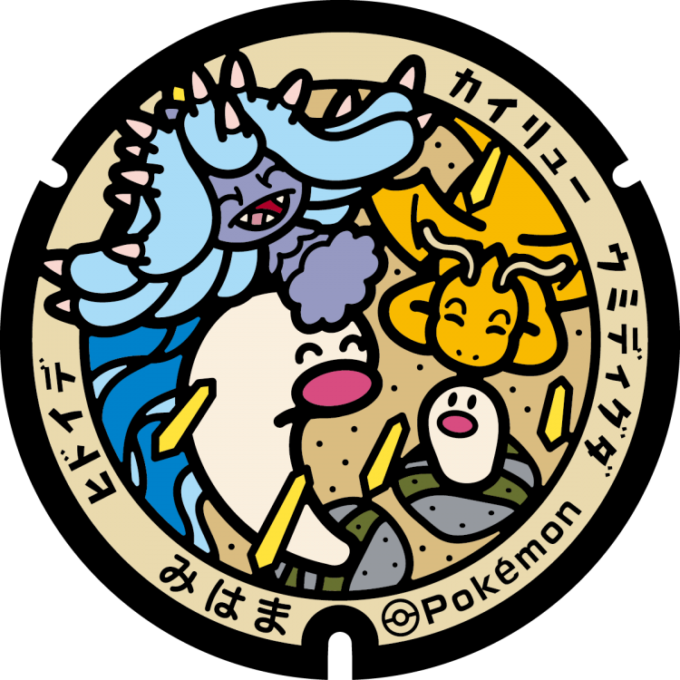
Mihama is a small municipality just to the southwest of Tsuruga. The subtropical climate really starts to be felt from here, so Dragonite has joined Wiglett and Mareanie for a fun day at the beach. Wiglett (a regional cousin of Diglett in the games). Wiglett is based on garden eels, which can be found in the waters near Mihama - although much farther out and deeper than you'd be able to swim!
Mihama is a stone's throw away from one of the best sights of Fukui, north or south, Mikata Five Lakes. Although it's a trek to get to the top of the mountain, the scenery of the Five Lakes from the viewpoint is like nothing else you'll ever see. Several of the lakes have completely unique biodomes as they don't connect to the ocean or other bodies of water, so there's something for the geography heads to sink their teeth into!
- 3 - Wakasa
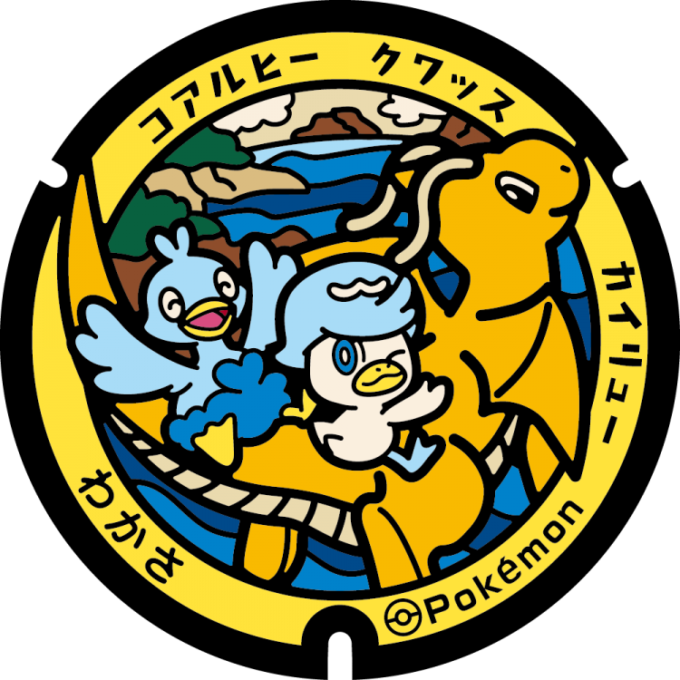
The traditional village of Wakasa is one of the smallest areas on this list. Their PokeLid features Dragonite soaring over the Mikata Five Lakes with Quaxley and Ducklett on its back. Unsurprisingly, ducks can often be found in the rivers and ponds near Wakasa.
Wakasa was once part of the vitally important Saba Kaido (Mackerel Highway) bringing in seafood from the coast to the then-capital Kyoto. This area starts to feel like a strange hybrid between Fukui and the Kansai region, where people are known to be a little more blunt but genuine and warm.
- 4 - Obama
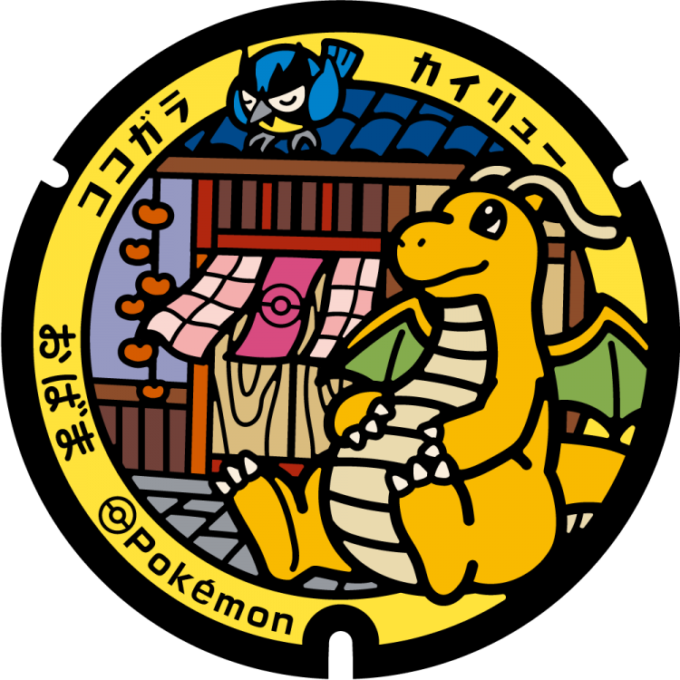
Obama, which means "Little Beach" in Japanese, was not named for the former-U.S. President but does have a hilariously terrible statue of the man. Thankfully, its PokeLid is much nicer, featuring Dragonite with a full stomach and Rookidee chirping from the rooftop.
Obama has several such historically-styled streets. The fishing village has been used since the Jomon Period (14,000 - 300 BCE) and was once the main source of seafood for the capital, which moved frequently within what is now the Kyoto, Nara and Osaka area.
- 5 - Oi
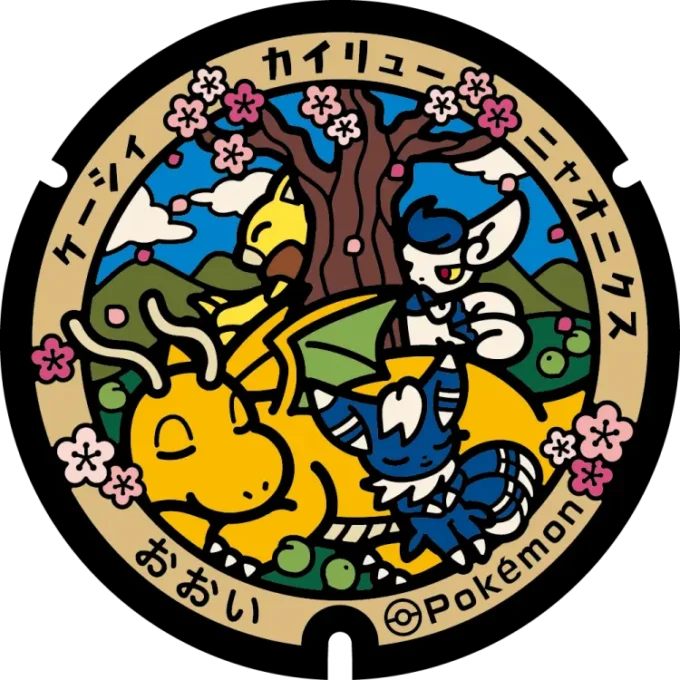
In this PokeLid in Oi (pronounced Oh-ee), we can find a peaceful scene of Dragonite napping under a giant tree with two Meowstic and an Abra nearby. Oi is just a short train ride away from Obama, but 90% of the town is surrounded by forests and mountains, so there are plenty of massive trees where you can nap in the shade, too!
Oi is where many of Fukui's arable farming is done. Varieties of mushrooms, wild yams and plums (called ume) are in abundance. In the fishing waters are sea bream and Fukui salmon. For those looking to get a unique and peaceful Japan experience, consider spending a night in Oi!
- 6 - Takahama
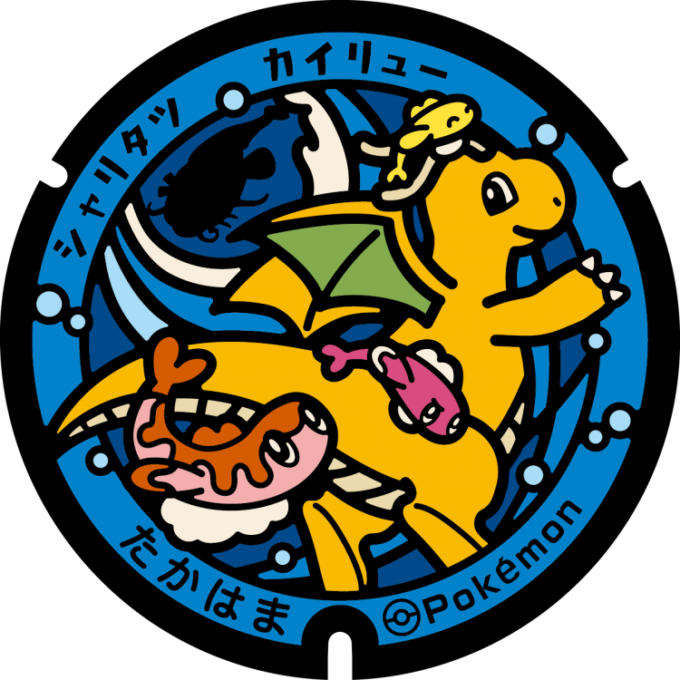
Our final PokeLid is in Takahama, right on the border with Kyoto Prefecture. It shows Dragonite and Tatsugiri. In the background, we can see the silhouette of a Whiscash in the deep ocean. Tatsugiri resembles nigiri-type sushi, again reflecting the rich seafood industry of Fukui. It also alludes to Takahama's history of being the start of the Tango Kaido Road, the historic trading route along the coast and deep into the Kansai region.
Takahama has the proud claim to fame of having eight beaches with some of the clearest water in Japan. It may be well out of the way from some of the stops on your trip, but Takahama is absolutely worth the detour for a day at the beach!
Frequently Asked Questions (FAQ)
Can I see all the Hokuriku PokeLids in a day?
It might be possible if you have rented a car and are only driving to each one to take a picture, but it would be a long and hard day. If you are on a time crunch and want to see them all, we recommend at least taking two days - one to see all the ones in Fukui, then another to see Kanazawa and Toyama.
However, all of the PokeLids are in unique and charming areas, so it's worth spending a few days exploring the region and fitting in a few PokeLids along the way.
Why is Dragonite on all of the Fukui PokeLids?
Dragonite is Fukui's Prefectural Pokemon. Dragonite's Japanese name references dinosaurs, which Fukui is famous for. Fans of Dragonite are sure to be happy with all of the merchandise available!
Why don't Ishikawa and Toyama have Prefectural Pokemon?
Maybe it will happen one day! Not every prefecture has one. For reference, the local representatives are:
- Hokkaido - Vulpix
- Iwate - Geodude
- Miyagi - Lapras
- Fukushima - Chansey
- Mie -Oshawott
- Tottori - Sandshrew
- Kagawa - Slowpoke
- Kochi -Quagsire
- Nagasaki - Ampharos
- Miyazaki - Exeggutor
- Okinawa - Growlithe
We'd certainly like to see Ishikawa and Toyama Prefectures also get their own. Time will tell!
Are there PokeLids in every prefecture?
No, not every prefecture has PokeLids. Currently, Yamanashi, Nagano, Gunma, Hiroshima, Kumamoto and Oita do not have any.
Of those that do have PokeLids, some prefectures have only one or two.
I'd like to take a tour to see the PokeLids, can you help?
While Snow Monkey Resorts does not currently offer tours specifically to see the PokeLids, a number of our tours do pass by some of them.
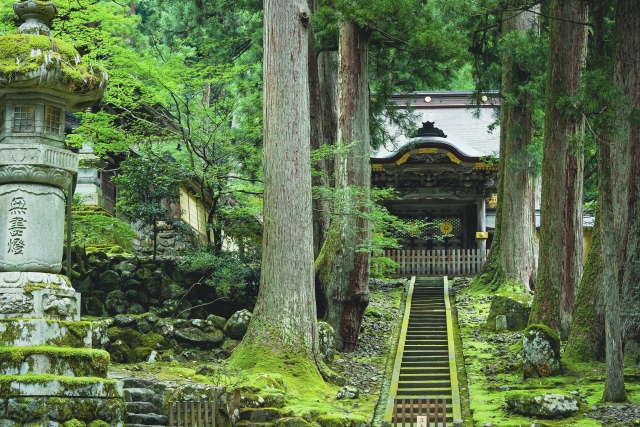
Our Eiheiji Temple and Fukui City Castle Town will take us past the one near Fukui Station on our way to the castle and another temple which was once part of the Fukui Palace. In the afternoon, we'll head to Eiheiji Temple and take in the mountain air. Sadly, the Eiheiji Town PokeLid is too far from the temple to get there.
In Toyama, we take in the sights of Toyama Castle Ruins Park on our Stunning Streetscapes, Beautiful Views and Local History tour. On this day tour, we'll head around all the most prominent places in the city. You'll also have time to hunt down the PokeLid near the castle.
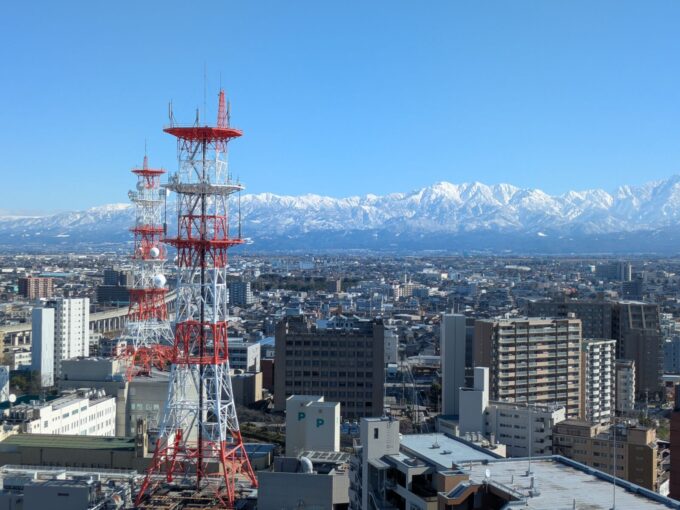
Finally, while it isn't included on our itinerary for any Kanazawa tours, you may be interested in a private tour around the city. Our Private Explore Gold Leaf, Sushi Delights and Choose Your Own Adventure tour is completely curated to you! Tell us what you're interested in and we'll make sure it happens to the best of our ability.
Recommended