




A Goshuin Hunter's Guide to Fukui
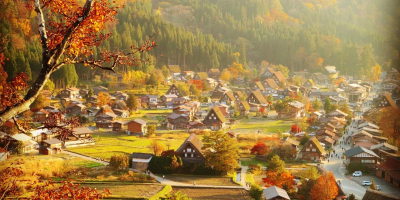
People in Fukui would be the first ones to say that it's one of the most-overlooked places in Japan. Almost 400 years ago, it was one of the most powerful and strategic areas in the country but, since the Edo Period (1603 - 1868), it has faced a steady decline into obscurity. This was doubled during the Second World War, when much of the newly-industrialised city was destroyed in bombings. It got even worse for the city from there, though, as much of what was left was destroyed in a massive earthquake in 1948.
But the people of Fukui didn't lose heart and kept rebuilding. For that reason, the symbols of Fukui are the phoenix and the dragon. Today, Fukui is a hidden treasure of Japan. Ever year, more and more people are discovering its legendary beaches, serene temples, taste its delicious food, and take in its rich abundance of history. They are also charmed by the amount of dinosaur-related iconography around the city - referencing Fukui's world-leading dinosaur museum and the seven dinosaurs with names relating to the city. If you are interested in a visit to this wonderful city, be sure to check out our "Things to Do in Fukui" page for more information!
Ruled by the family of the Tokugawa Shogunate, the Matsudaira Clan, Fukui's lords sponsored a swath of shrines and temples to show off their wealth. This makes Fukui a bountiful area for goshuin hunters looking to fill a few pages in their books. It is also a great place to start your goshuin journey as it sets a high bar for shrines and temples you'll visit in the future. Collected in this list below are our recommendations as the best goshuin near Fukui!
What are Goshuin?
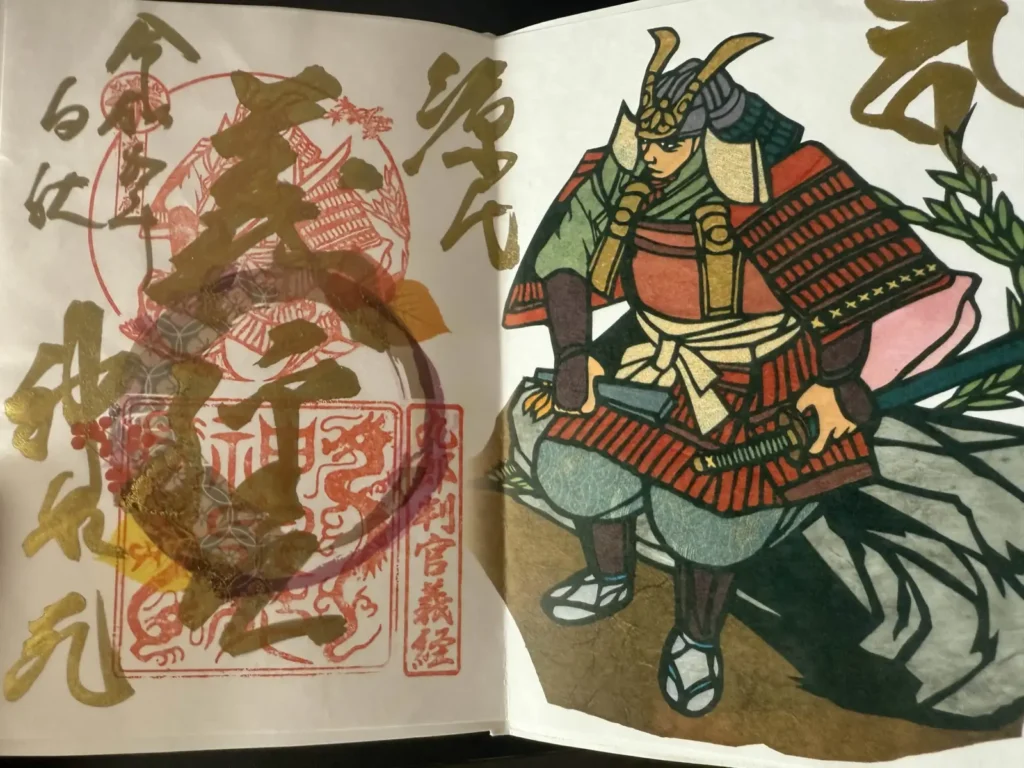
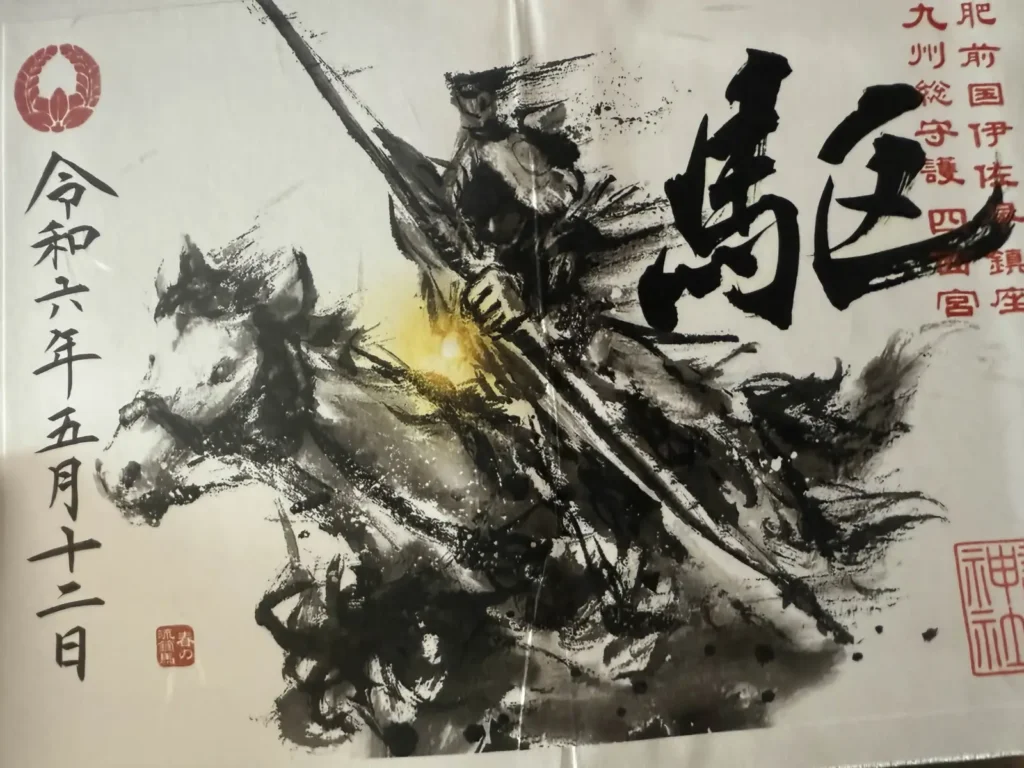
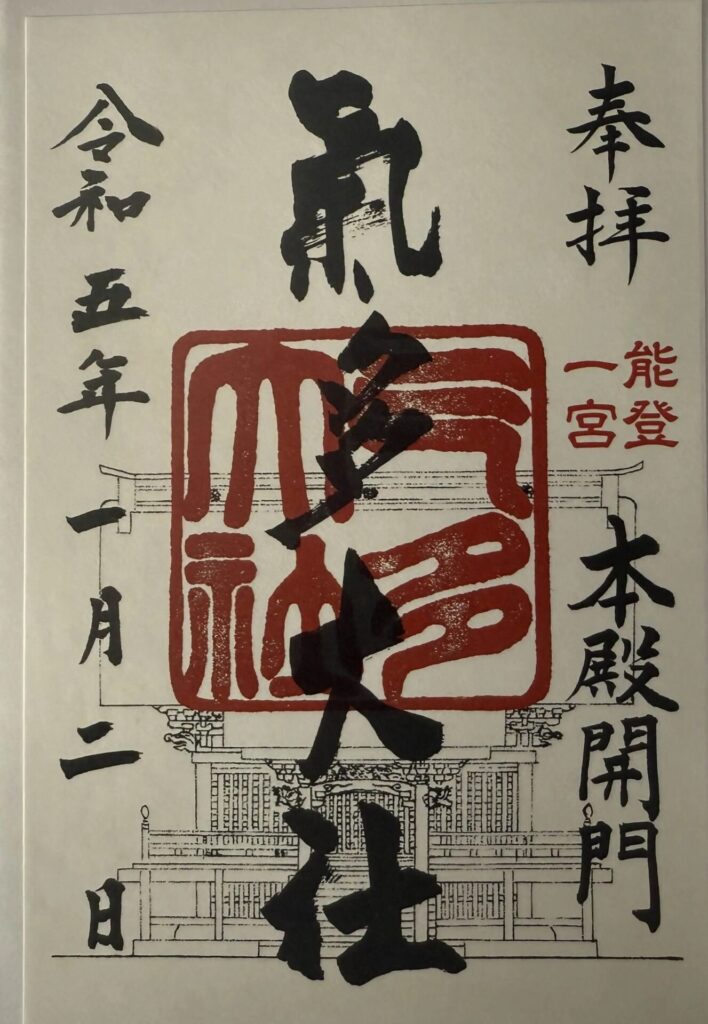
Goshuin (literally meaning "Red Stamp Seal") are unique stamps, often handwritten, that can be bought at most shrines and temples across Japan. Originally, goshuin were used as proof that the owner had been a pious person in their life - travelling to enough shrines or temples to fill the whole book with stamps. Goshuin as a practice largely fell out of favour after the Meiji Restoration in 1868, but regained popularity in the post-war era. Now, goshuin are much more "touristy" and often feature colourful, bright designs and intricate artistry.
Buying and filling a goshuin book is a wonderful way to memorialise your time in Japan. Each is a representation of a place you visited. Goshuin books are also very small and lightweight, so they're easy to fit into carry-on luggage, or even your backpack.
What do all the symbols mean?
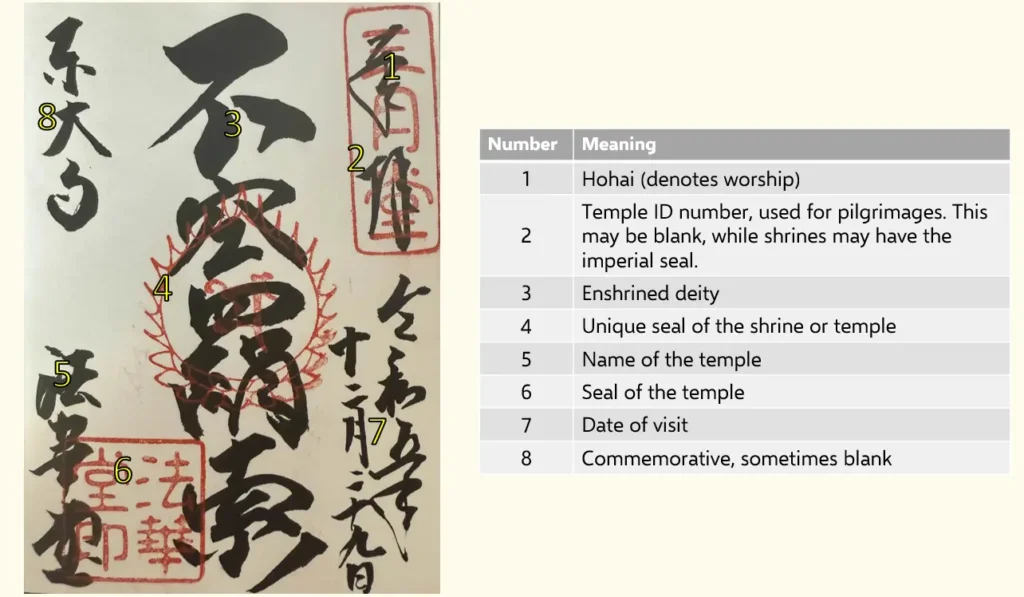
While many goshuin are different, depending on whether it's a Shinto shrine or a Buddhist temple, what sect they belong to, and even if it's a seasonal stamp, generally the meaning of each part of the page is something like this.
Goshuin Etiquette
Like many things in Japan, there's a certain way that things should be done while you go about on your goshuin. Thankfully, all of the rules are pretty simple to follow. Here are all the essential things to keep in mind:
- Don't use your goshuin book for anything other than goshuin (Blank books can be bought for personal use).
- Pay respects before collecting your goshuin
- Don't take pictures or videos of the staff putting the seal on your book.
- Remember some shrines will only stamp shrine books, and some temples will only stamp temple books.
- Be mindful of others around you, as shrines and temples are quiet places.
1 - Eiheiji Temple

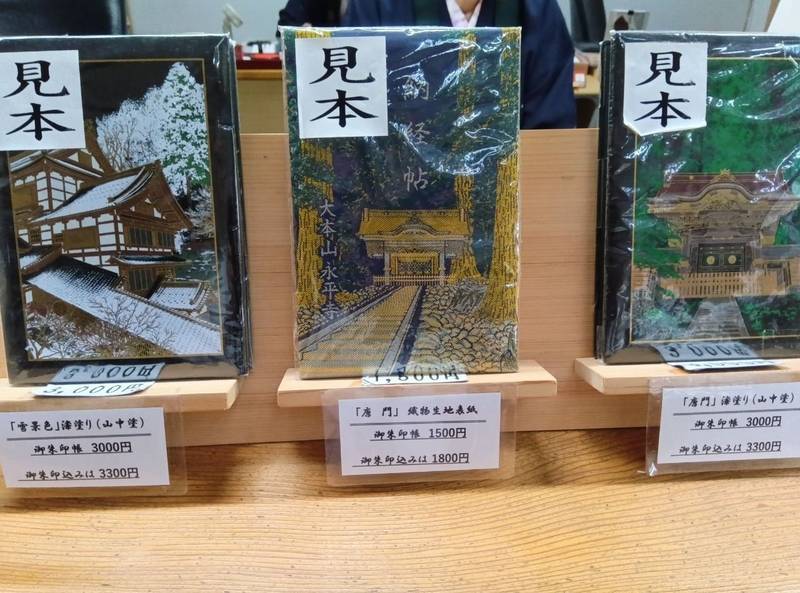
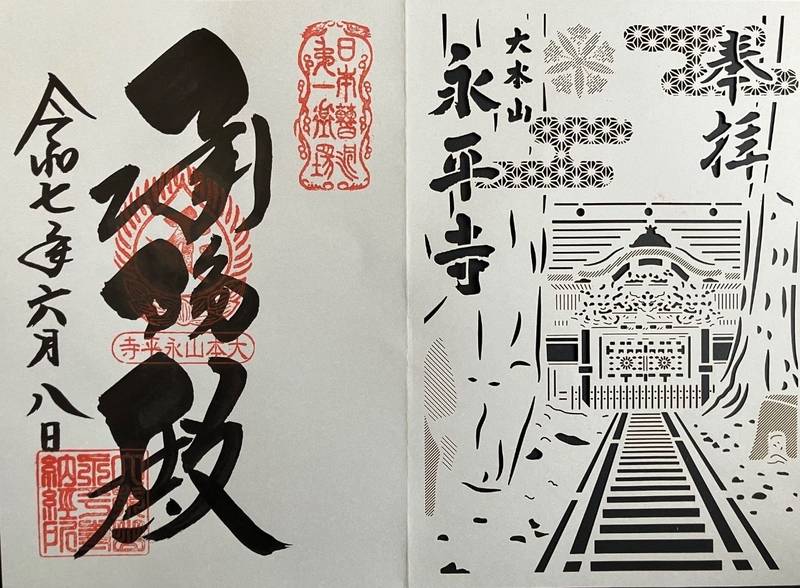
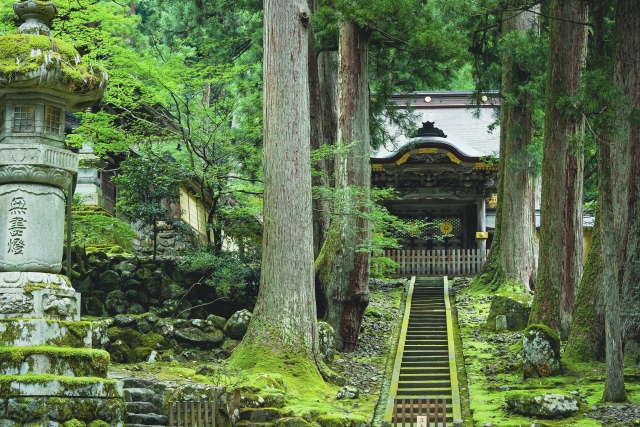
Eiheiji Temple is, without a doubt, Fukui's absolute must-see for goshuin collectors. This temple has a history stretching back 700 years and is one of the head temples of Soto Zen Buddhism. It acts as the main training temple for young monks of the sect in the modern era, where they sit for hours in zazen, a silent meditation aimed at reaching enlightenment.
The temple was built on the mountainside; its shape representing various parts of the body with the buildings relating to the body part's use. Walking through the halls of Eiheiji is truly something out of this world. The view from the top, looking out at the cedar and maple trees lining the valley, is a phenomenal sight all year round. The temple also has a number of lavish rooms and decorations that call back to its history and status.
If you're interested in visiting Eiheiji, why not check out our Eiheiji Temple and Fukui City Castle Town tour? Running all year round, this is the best tour available to get you to Fukui's best attractions! We also pass by a few of the places on this list, so there's plenty of chances to get add some goshuin to your collection!
1-Day Tour from Kanazawa or Fukui: Eiheiji Temple and Fukui City Castle Town
This tour through the city of Fukui takes you down city streets then into the mountains to get a taste of true zen. It can be joined from either Kanazawa or Fukui, where we'll start the day walking from Fukui Station to Fukui Castle Ruins, learning about the history and resilience of people of Fukui. Next, we'll travel to the only remaining part of Fukui Palace, repurposed more than 160 years ago into a temple. In the afternoon, we visit Eiheiji Temple and get a guided tour of the temple.
Highlights:
- Enjoy a guided tour through Eiheiji Temple, one of the best temples in Japan.
- Walk through the historic city streets of Fukui, seeing both the castle ruins and a beautiful shrine with more than 250,000 handmade origami cranes!
- See the only remaining part of Fukui Palace, repurposed into a temple, and sit in the study where the local lord welcomed the Shogun himself!
2 - Keya Kurotatsu Shrine
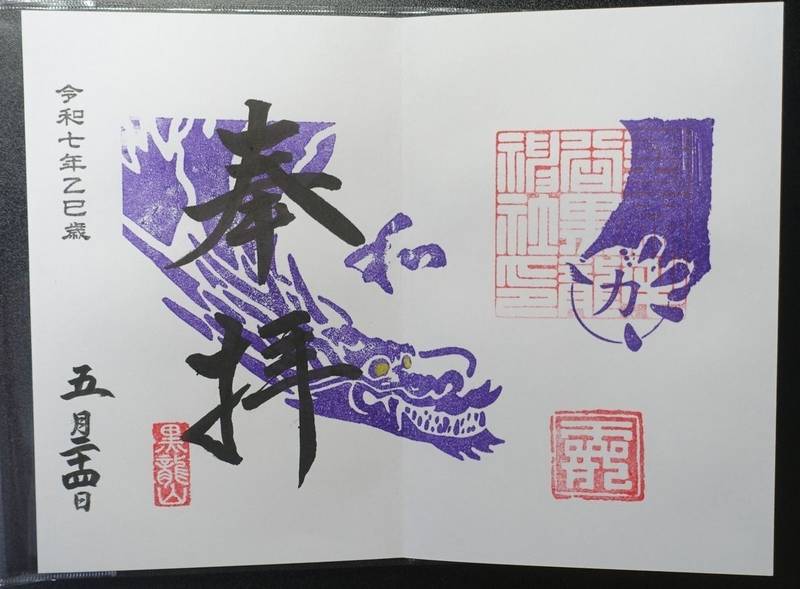
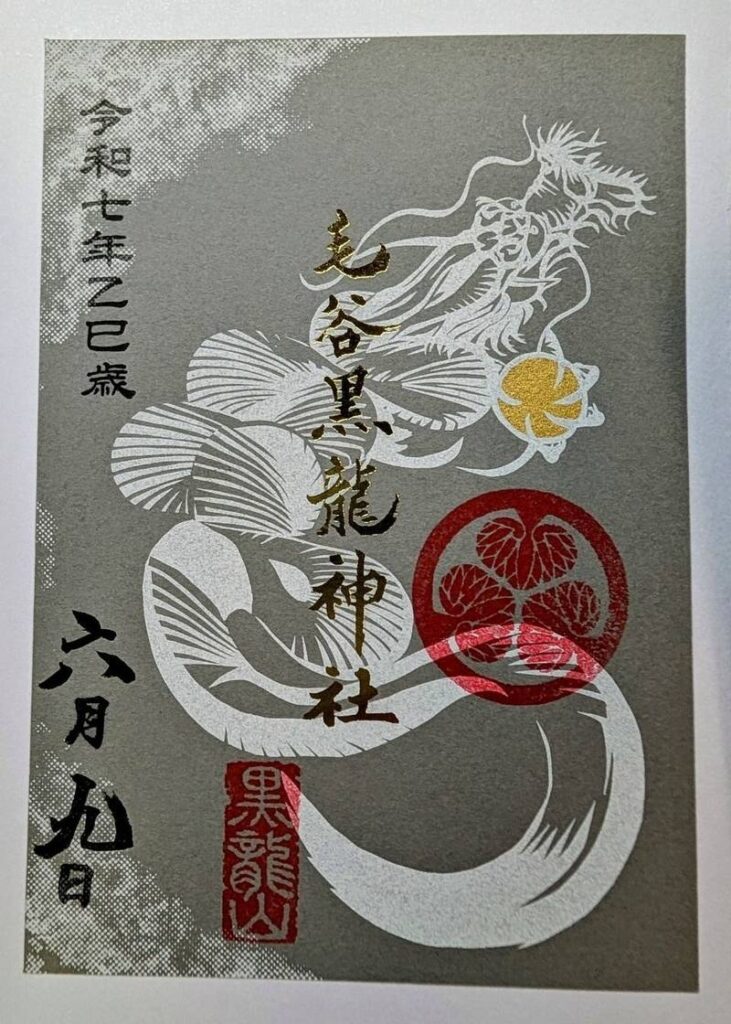
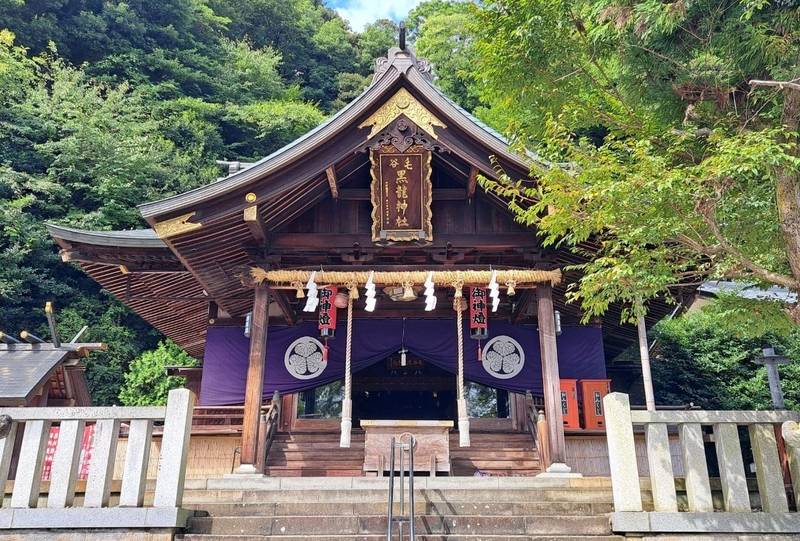
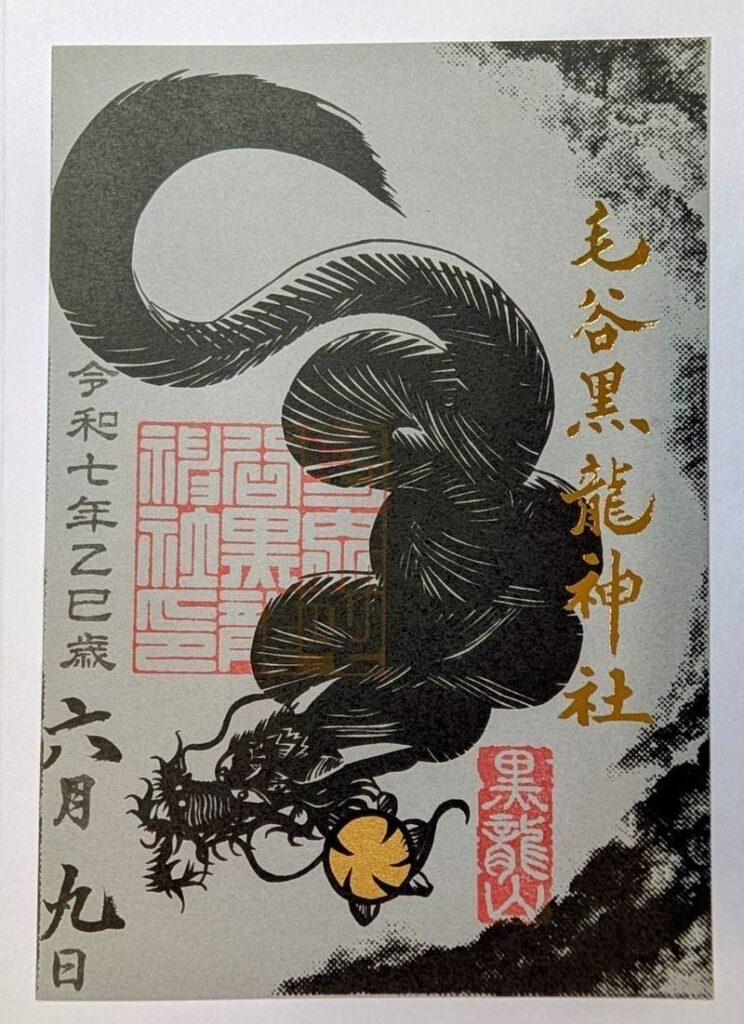
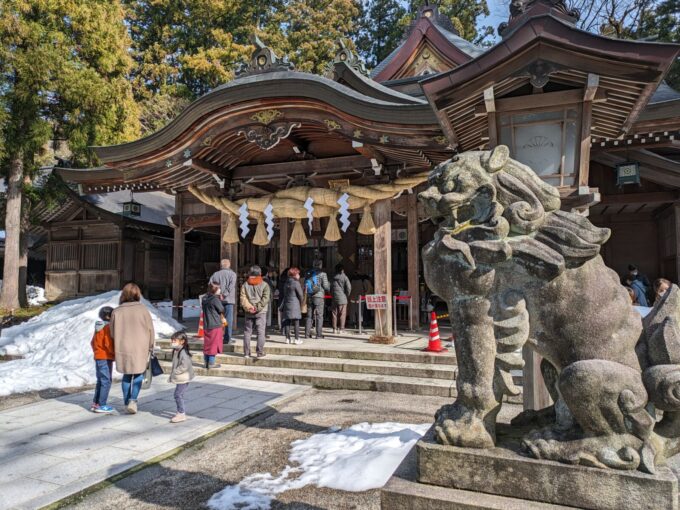
This shrine is a true hidden gem in Fukui. Its name literally means "The Black Dragon Shrine" and it is one of the great protector shrines in Japan. Legends say it was build to defend Japan from the north and tame the great spirit of the Kuzuryuu River (itself meaning "The River of the Nine-Headed Dragon") more than 1000 years ago.
For visitors who have been to or are planning to visit the famous Itsukushima Shrine in Hiroshima, Keya Kurotatsu is a must-visit. Itsukushima Shrine itself is another of the four protector shrines (representing West). The other two are Kashima Jingu in Ibaraki Prefecture (East) and Kumano Shrine in Wakayama Prefecture (South).
The goshuin available here at Keya Kurotatsu Shrine usually depict the great black dragon in some form or another, and often feature the Japanese character for power (力), as the dragon was said to share its power to protect Japan.
3 - Sakae no Yashiro Shrine
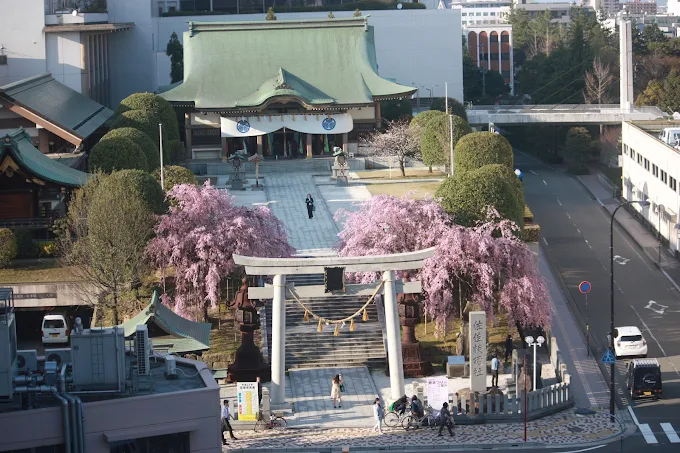
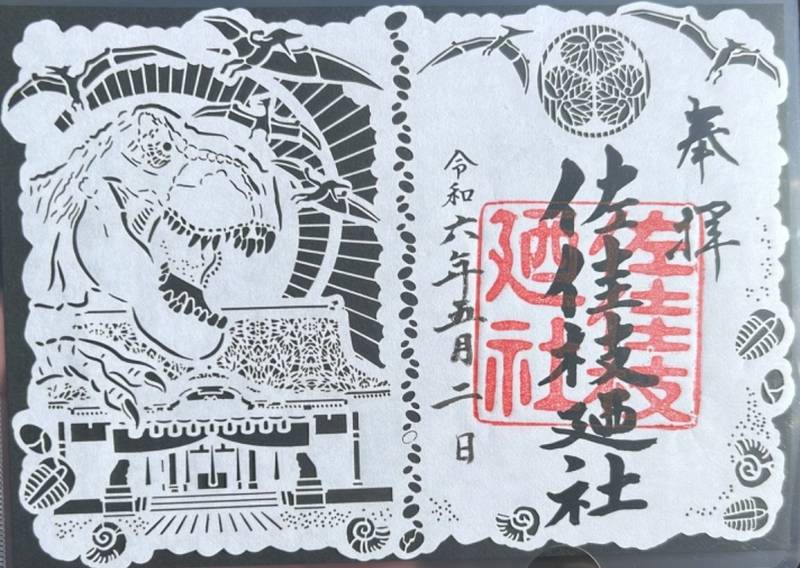
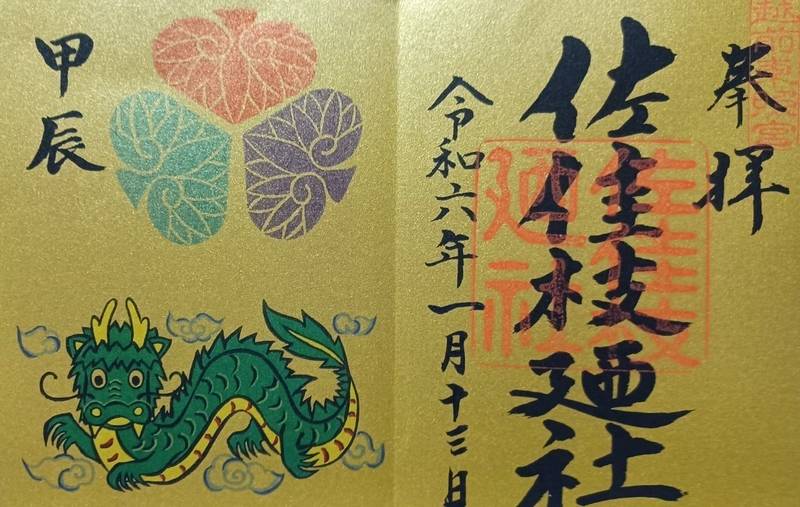
Sakae no Yashiro Shrine sits right beside Fukui Castle and has a history going back to the 700s. Although it was originally in a different place, it was moved to its current location by one of the lords of Fukui because of the love he had for his mother, who is enshrined there.
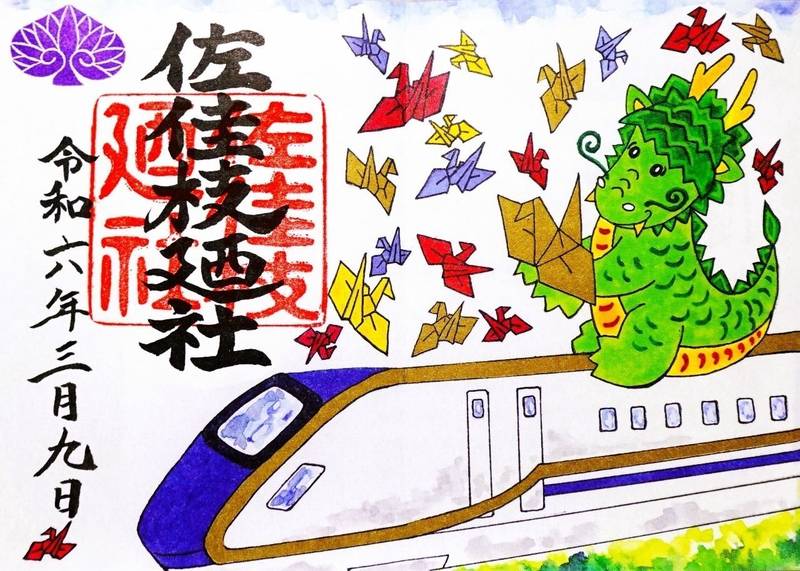
The shrine is famous for its 250,000 handmade origami cranes in a rainbow of colours. These were made during the COVID-19 pandemic to wish for good health for the world. As it is one of the main shrines of Fukui, its goshuin feature bright and colourful depictions of dragons, dinosaurs and phoenix. Shown on the farthest left in the selection above is a goshuin commemorating the opening of the Hokuriku Shinkansen extension. For visitors to Fukui, this is a great and easy stop to pick up what will undoubtedly become one of your favourite goshuin!
4 - Fukui Shrine
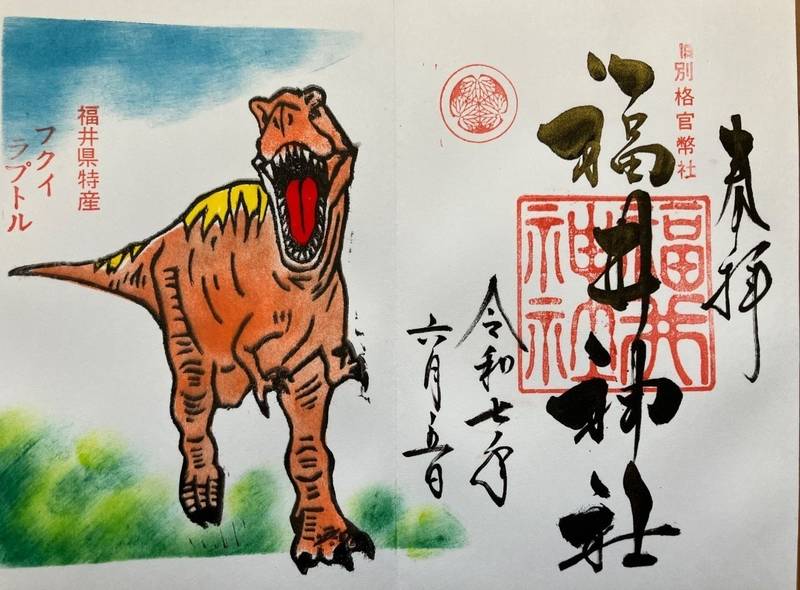
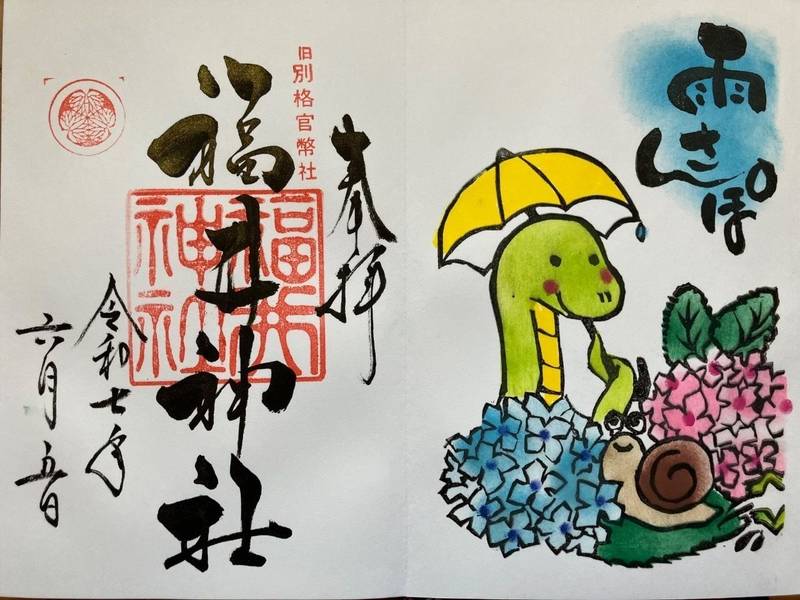
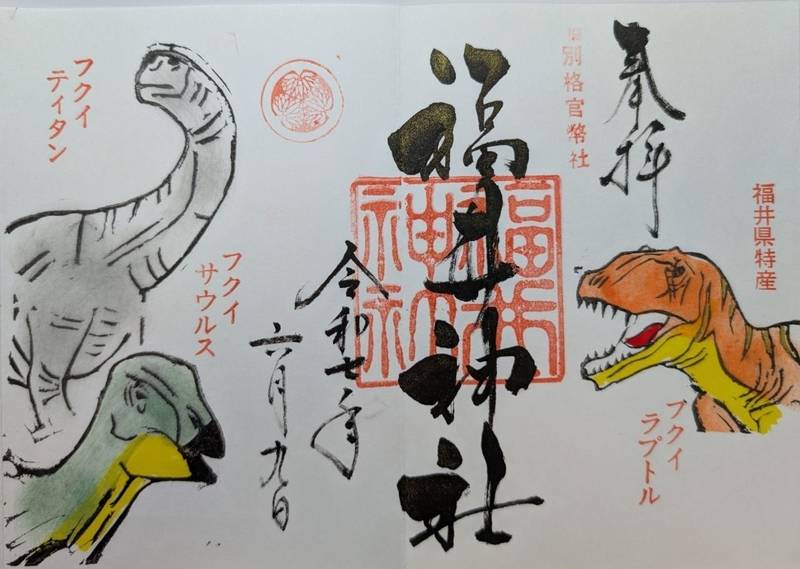
Like many things across the prefecture, Fukui Shrine is said to have been much more beautiful at its founding in 1943. The building was made entirely of cypress and enshrined the 16th lord of Fukui who was renowned for his virtue and wisdom. It only stood for two years, though, and was destroyed in air raids.
The reconstruction of the main shrine was finished in 1957, but work on the auxiliary buildings took another three decades. The result echoes some of the post-war depression that was common across Japan at the time. However, the shrine offers beautiful and colourful goshuin that are sure to spark joy. They often depict different dinosaurs or animals of the Chinese Zodiac (middle). If it is quiet, these may be hand drawn but are most often given to be glued in.
5 - Takidanji Temple
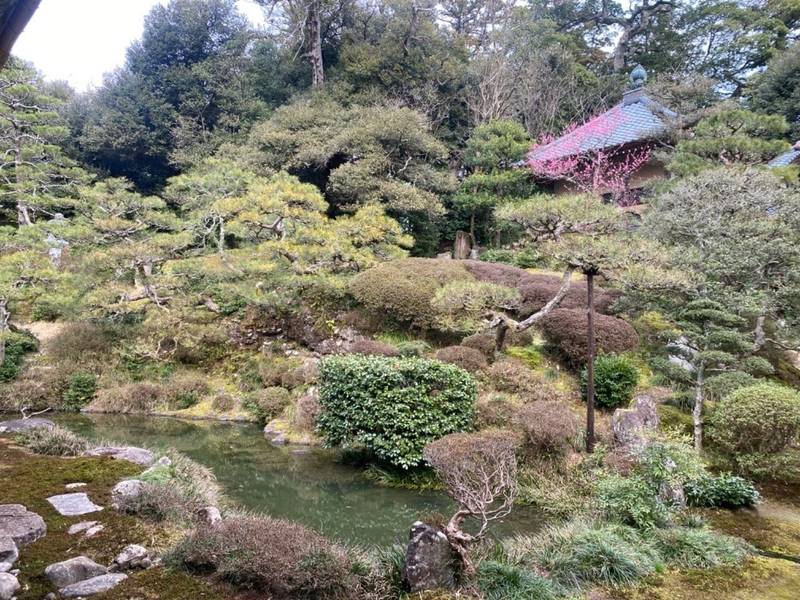
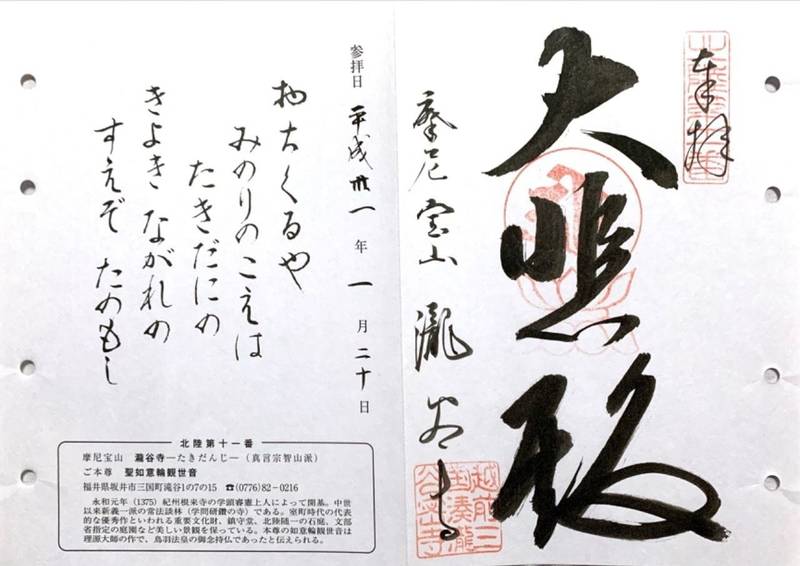
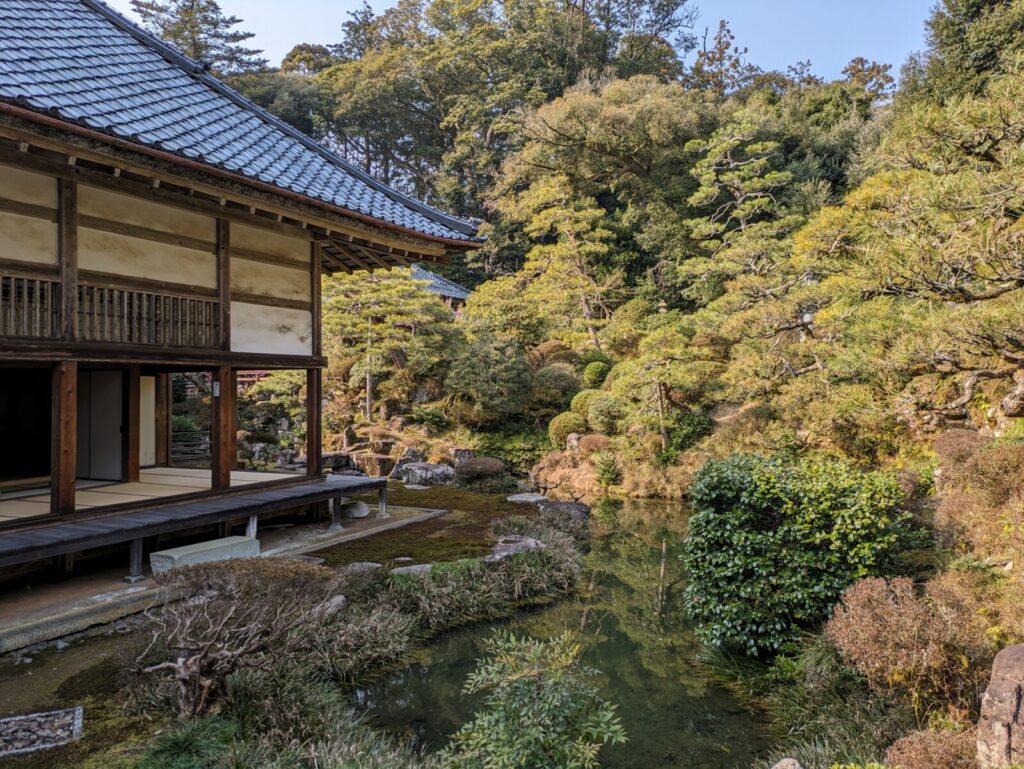
Takidanji Temple, located north of Fukui in Mikuni City, is famous for its beautiful garden. The temple was originally built in 1375 and many of its buildings have stood the test of time, hosting designated national treasures, important cultural properties, and prefectural cultural heritage. The place oozes history. Even for those who visit Mikuni, Takidanji Temple is easy to miss, so walking through feels special. The goshuin here is simple, like many temples, but features beautifully-written calligraphy.
Interested in a visit to Takidanji Temple? Then check out our Fukui's Stunning Cliffs, Spiritual Island and Historical Port tour, which includes a guided section through Takidanji Temple! This tour runs all year round and can be joined from Kanazawa Station or Fukui Station!
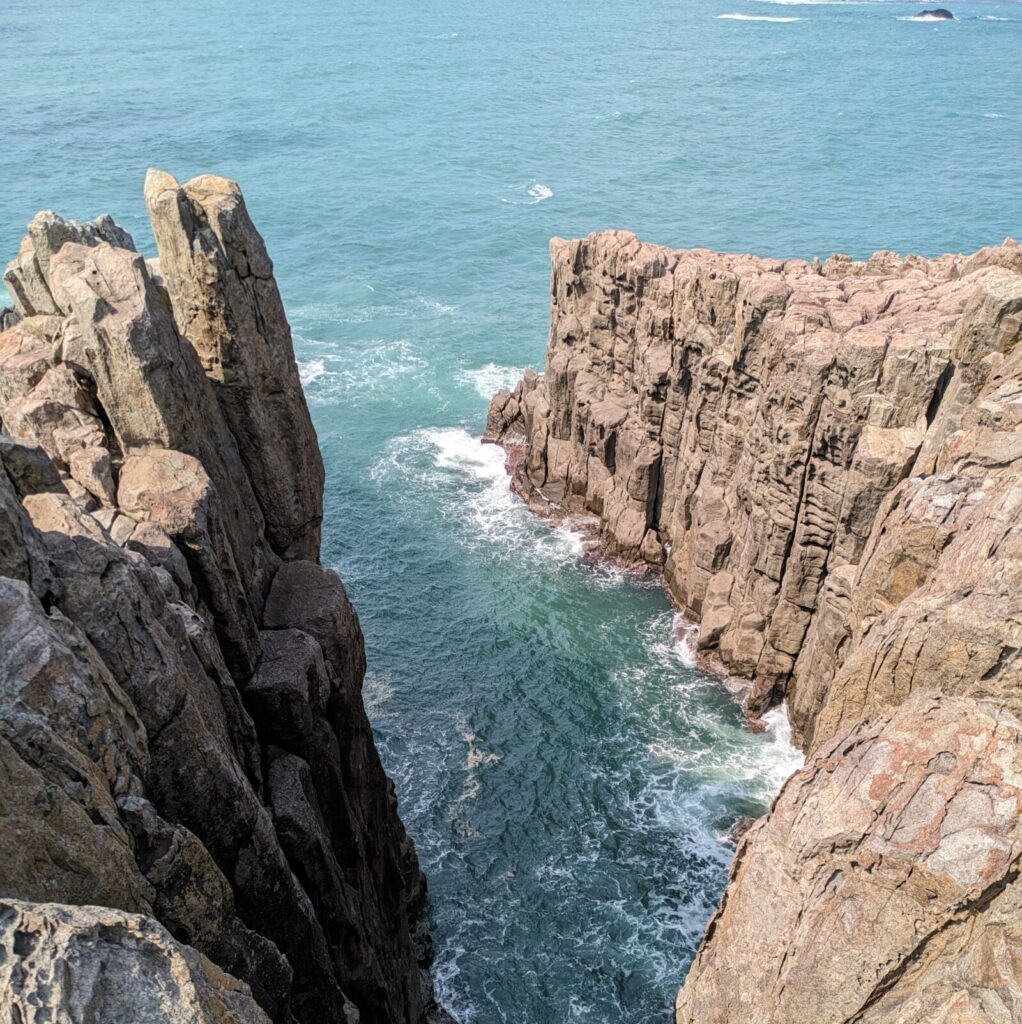
TOJINBO CLIFFS / all year round

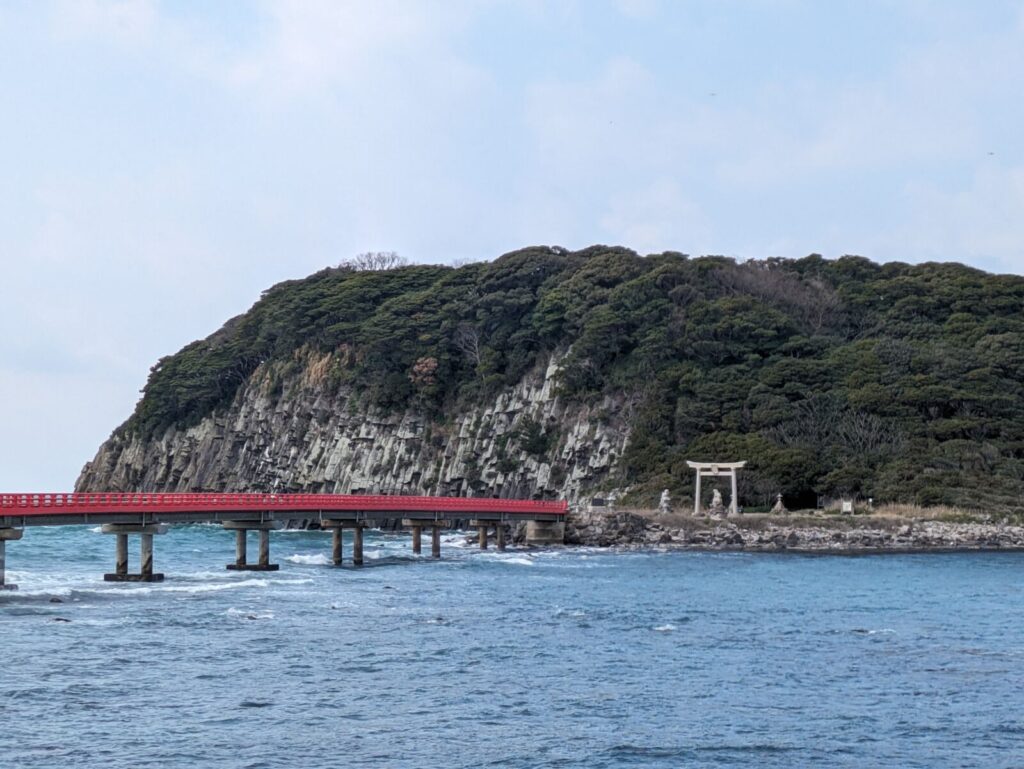
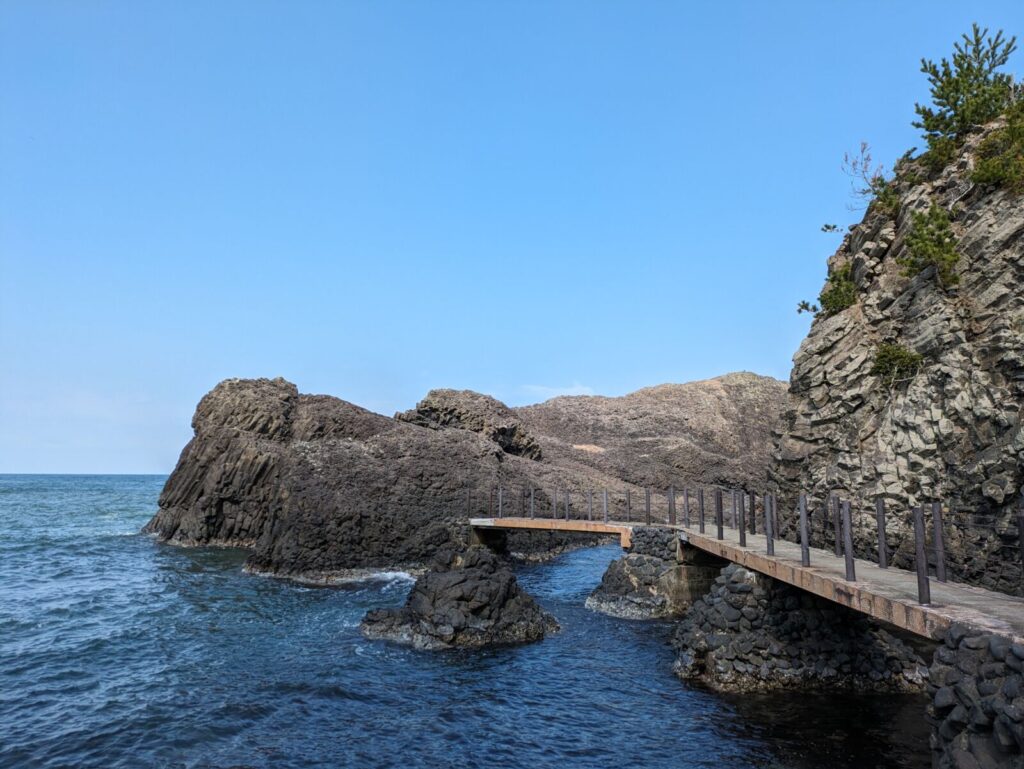
The coast of the Sea of Japan offers incredible variety, from golden beaches to dramatic, rugged cliffs. The Tojinbo area in northwest Fukui is famous for its striking rock formations, sheer cliffs, and a sacred island. This tour allows you to fully explore the region, including a visit to the historic Mikuni Port, once a thriving hub of trade. Stroll along the coastline, discover an uninhabited island, admire the towering cliffs, and visit temples or shrines designated as National Heritage Sites. Immerse yourself in the stunning beauty and rich history of this coastal treasure that began millions of years ago and continues to this day.
6 - Asuwa Shrine
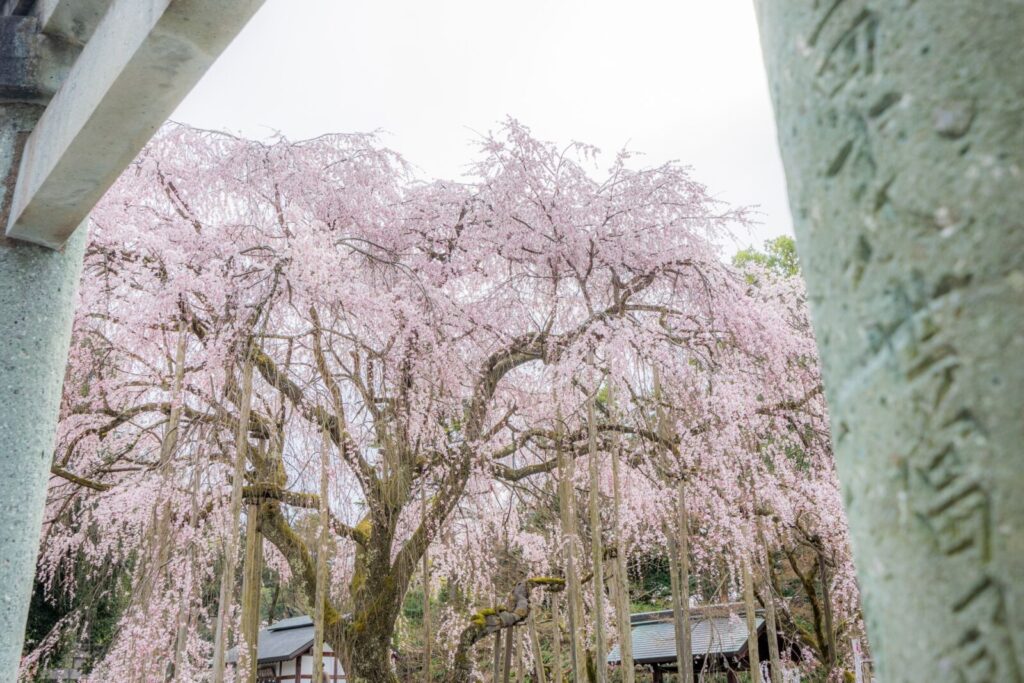
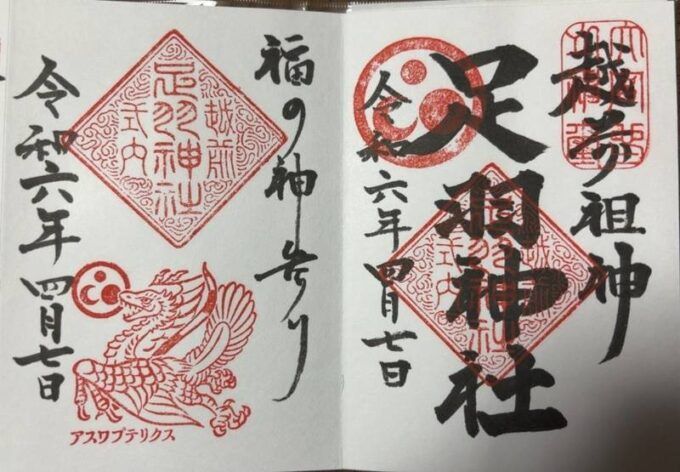
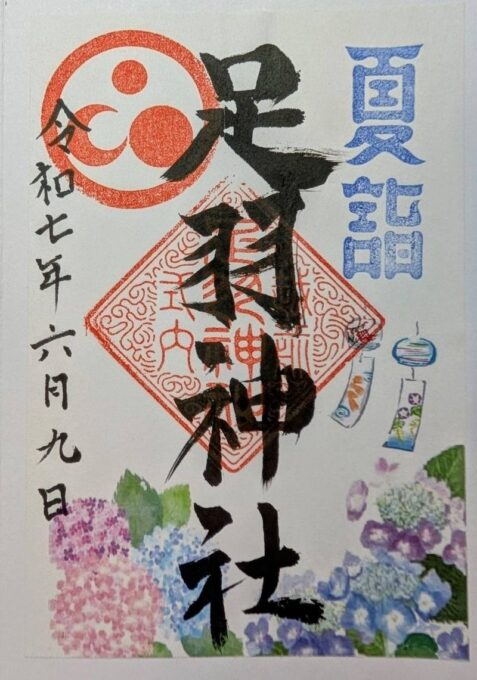
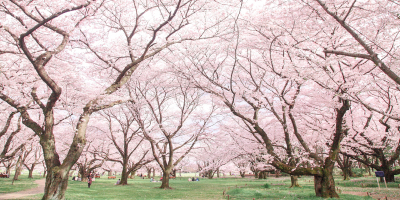
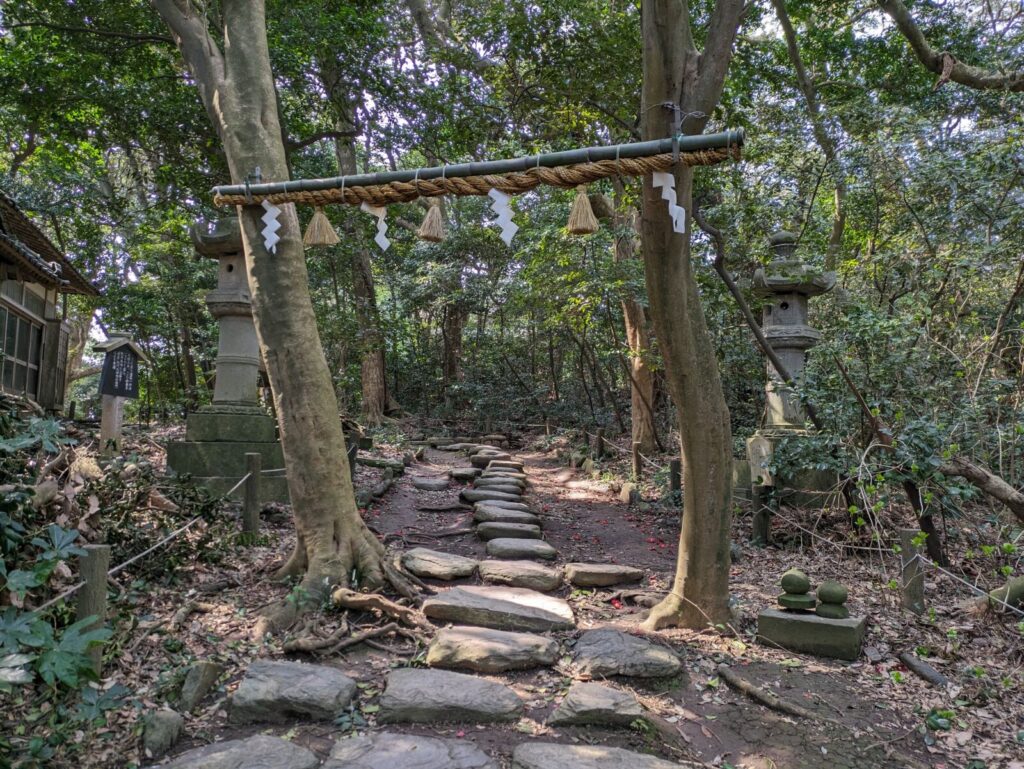
One of the highest-ranked shrines in Fukui, Asuwa Shrine was founded more than 1500 years ago, enshrining the deities for contraception, smooth childbirth and protection against evil. It is much more famous for its breath-taking weeping cherry blossom tree, though. The tree is more than 400 years old and drapes beautifully over the centre area of the shrine.
The goshuin here at the shrine are usually simple but elegant, featuring the Fukui phoenix or delicate drawings of the flowers in bloom.
7 - Hakusan Heisenji Shrine
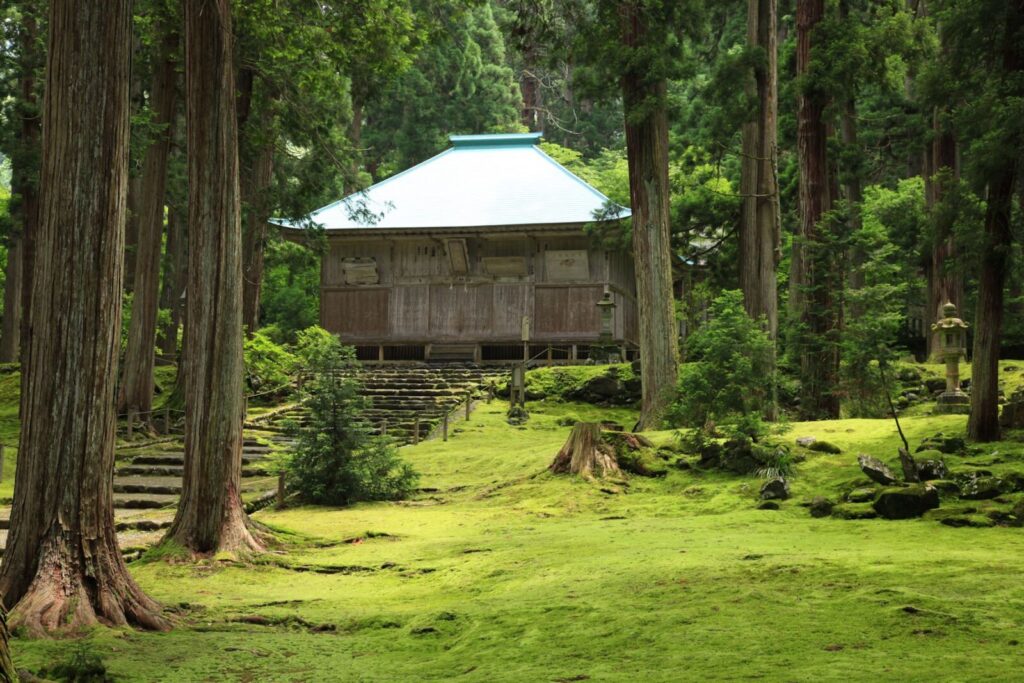
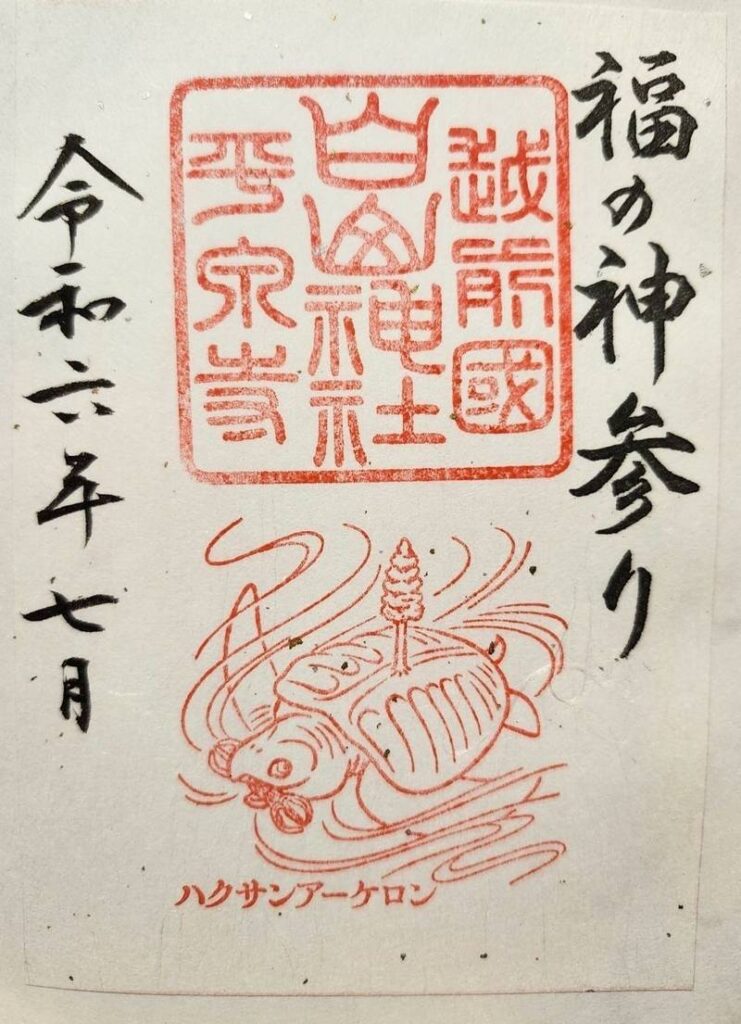
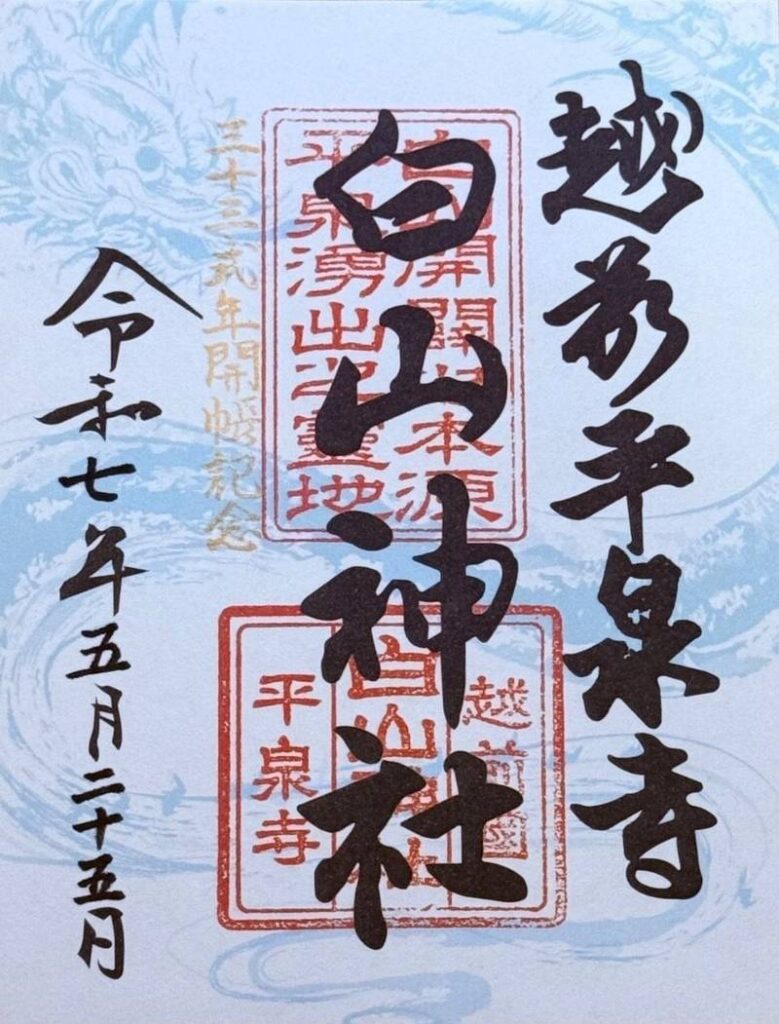
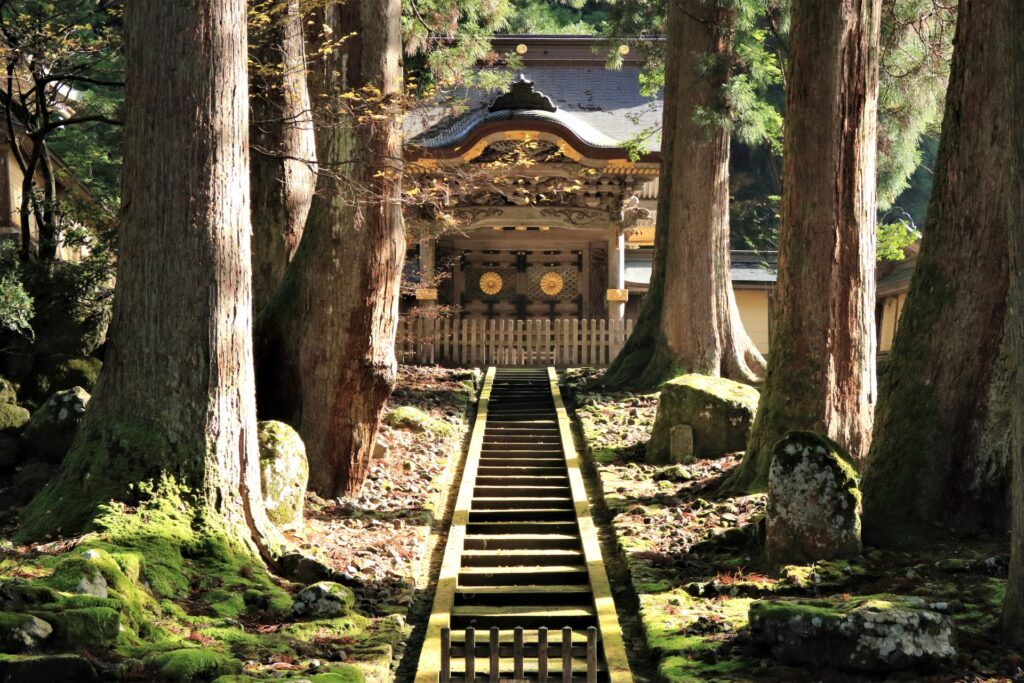
Hakusan Heisenji Shrine is another of Fukui's best sights. It is known for its well-tended mossy grounds. The shrine, once a temple, was first built in 717. Its paths and trails covered with moss and lined with massive cedar trees on both sides. Even the shrine's main hall is encircled by moss.
The shrine was first built for monks to have a road to use for a pilgrimage up the sacred mountain Hakusan. That path still exists today, although open only to monks making the pilgrimage. The shrine reached its peak in the 1500s when it was the largest religious settlement in Japan with a population of 8,000. It was completely destroyed by the militant Buddhist sect Ikko-Ikki and has, ever since, been a place of quiet natural religious wonder.
Frequently Asked Questions (FAQ)
How much do goshuin usually cost?
The seals themselves usually cost between JPY 300 and 1000, although some more intricate seals can cost more. Books are usually anywhere from JPY 1000 to JPY 5000, depending on the quality and materials used to make them.
Can I get multiple goshuin from one temple?
Of course! If the seal is handwritten, however, you should only get one. The others you can get the paper version and glue them in later.
My book opens like an accordion, why is that?
The accordion-style binding allows multiple pages to be viewed at once. When goshuin were collected as part of a pilgrimage, it also meant that the dates could be easily inspected and compared.
Should I fill both sides?
You can, but you don't have to. Traditionally, the paper was much thinner so the ink could bleed through.
Are goshuin the same as the train station stamps?
No! If you are getting goshuin stamps in your book, please do not put station stamps in there as well. If you'd like to collect station stamps, get a separate book (a goshuin book is fine so long as it does not have a stamp. You can buy a blank book from most shrines or temples) and use that to collect your station stamps.
Do I need to be religious to collect goshuin?
Not at all. While goshuin were traditionally (and sometimes still are) done as a pilgrimage, their association has moved much more strongly towards tourism. It is still respectful to pay respects at the shrine or temple, however.