




In the quiet town of Arimatsu, nestled along the old Tokaido Road in eastern Nagoya, a centuries-old textile tradition lives on: Arimatsu Shibori.
Revered for its intricate detail and extraordinary diversity of techniques, Arimatsu Shibori is not merely a craft, it is a historic treasure passed down for over 400 years.
What is Arimatsu Shibori?
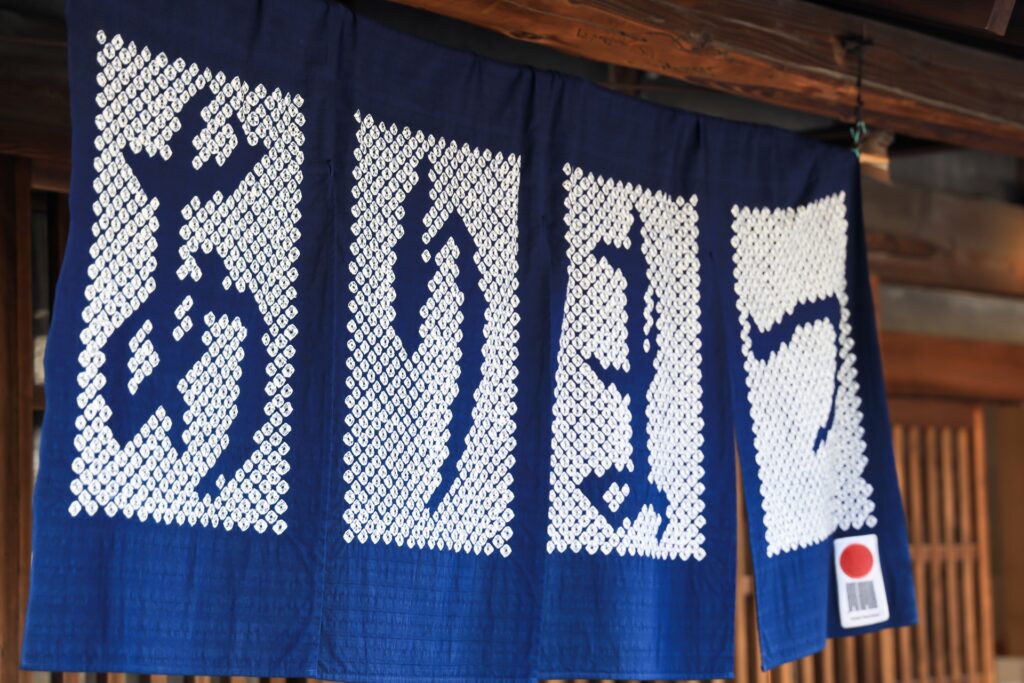
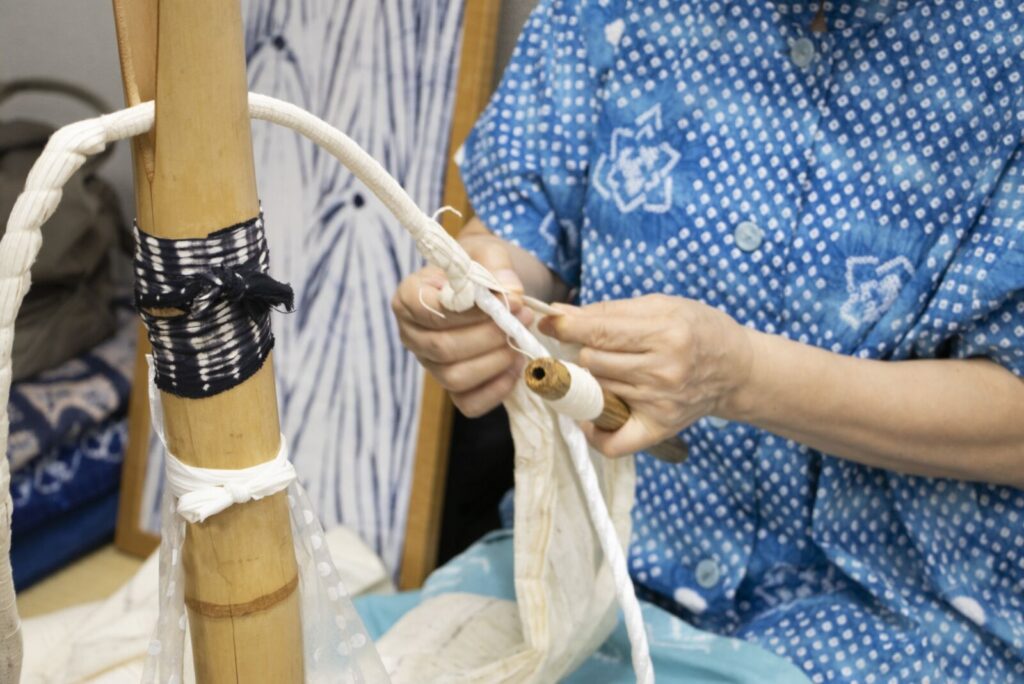
Unlike many modern tie-dyed fabrics, Arimatsu Shibori is entirely handmade, relying on an elaborate, multi-stage process where each step is executed with painstaking care. What sets Arimatsu apart is its tying techniques: the region boasts over 100 tying methods, more than anywhere else in the world. Today, approximately 70 techniques are still practiced, ranging from traditional binding and folding to precision stitchwork and tool-assisted manipulation.
Each pattern begins with a carefully designed motif, which is engraved on stencil paper and transferred onto fabric using a brush and blue ink derived from the tsuyukusa flower. Once the design is set, the cloth is distributed to households or specialists for the tying stage, which can take anywhere from four to ten months depending on the pattern’s complexity.
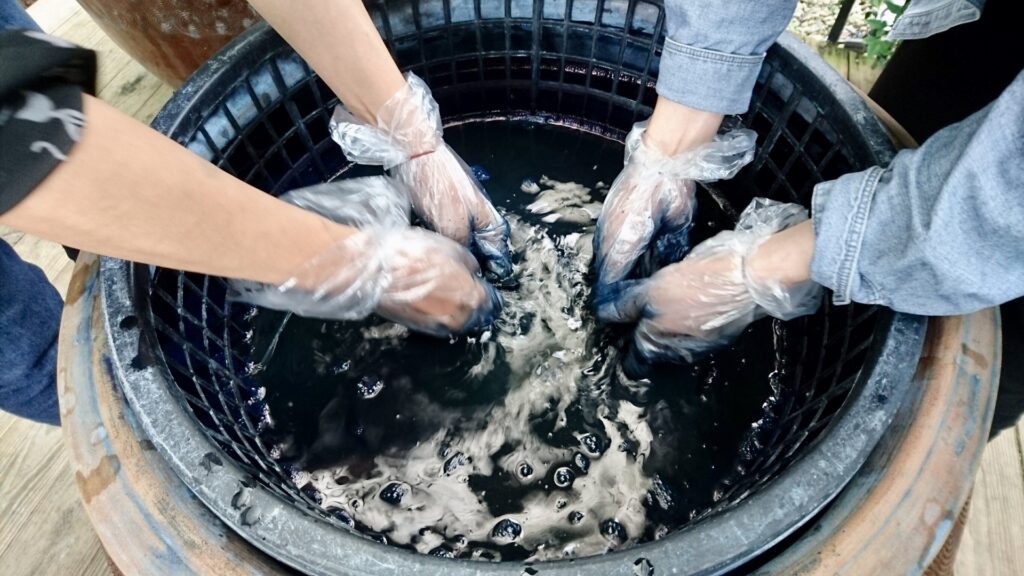
Following this, the cloth is dyed (often indigo, though over time vibrant reds, purples, and other hues have been introduced) before the final and delicate untangling process, which itself requires trained hands to preserve the fabric's integrity and reveal the design in full.
Signature Techniques and Patterns
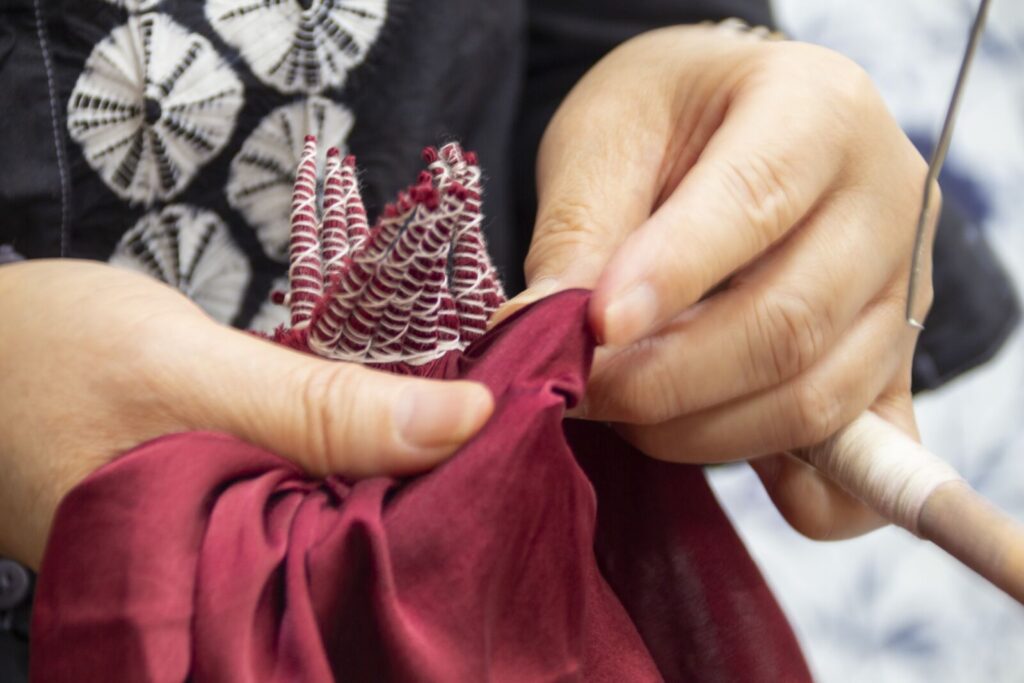
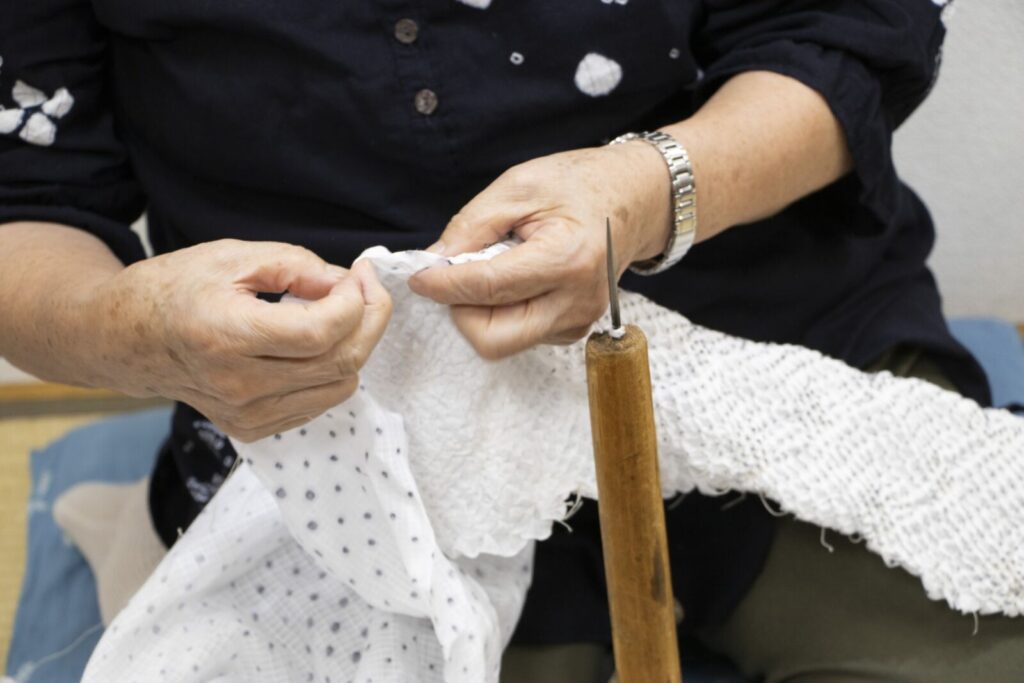
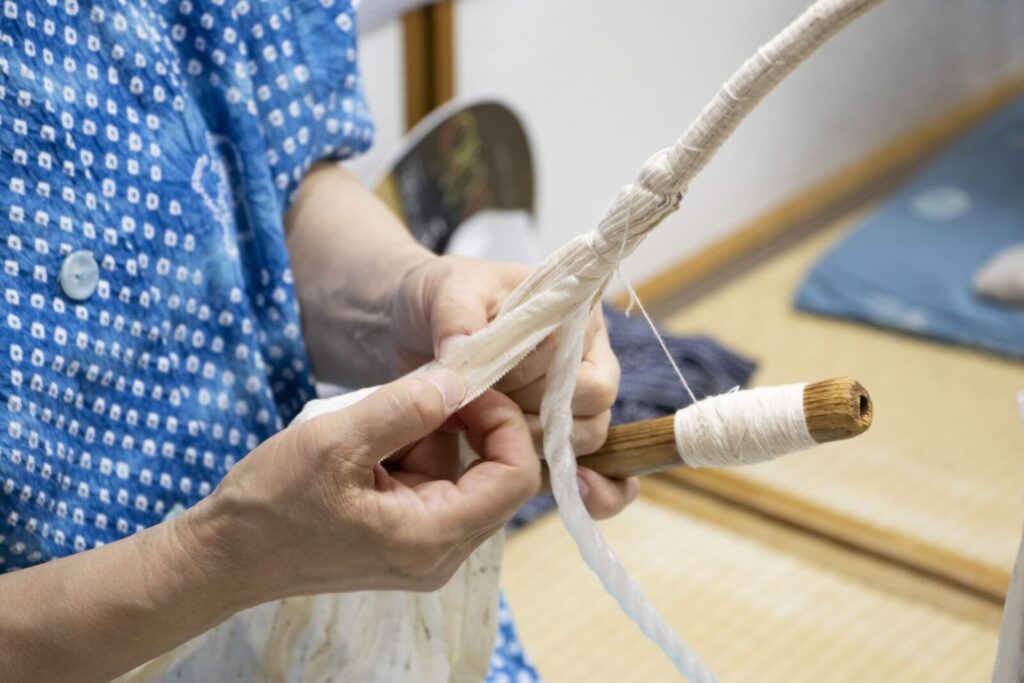
Among the many tying methods developed in Arimatsu, a few exemplify the region’s craftsmanship:
- Tegumo (Spider Web Shibori): A defining early pattern, used on tenugui (hand towels) sold to travelers. The cloth is hooked and folded, then bound tightly into a radiating motif resembling a spider’s web.
- Karamatsunui: A concentric sunburst design achieved by intricate stitched gathers in staggered rows.
- Hitomekanoko: One of the finest stitch-resist methods, producing miniature motifs like birds and flowers; renowned for its delicacy and uniformity.
- Kikaigumo: A mechanized refinement of Tegumo that produces smaller, denser spiderweb-like designs using electric tools.
- Yokomiura: Uses a tying stand with a hook to create horizontal binding with precise, looped knots.
- Makiage: Combines stitched outlines with tight binding around specific shapes, allowing for crisp figure-based motifs.
- Midori & Kumoiriyanagi: Both involve pleating and rotational binding for creating fine, vertical broken lines or swirling cloud-like effects.
Each method reflects not only an aesthetic choice but also the artisan’s skill level, as certain techniques require years, even decades, to master. Some methods have even been lost to time, known only by name and legacy, as they were practiced by a single master whose knowledge was not passed down.
Protecting the Craft
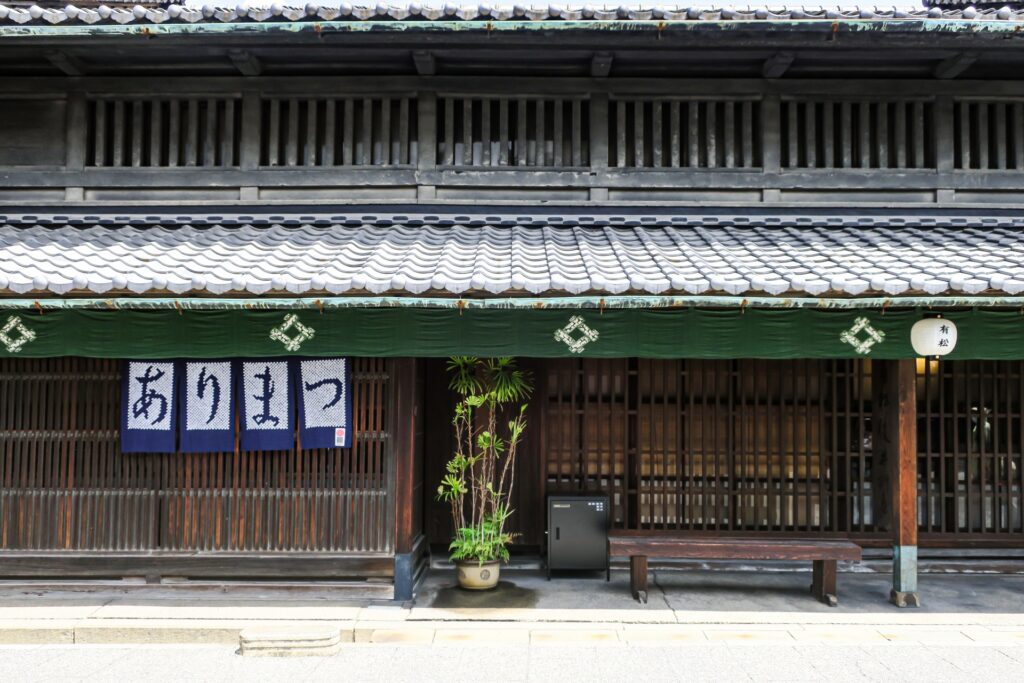
As demand for Arimatsu Shibori rose during the Edo period, imitators from surrounding towns attempted to replicate the work, often at lower quality. Fearing reputational damage, the people of Arimatsu successfully petitioned the Owari Domain in 1781 for a monopoly on Shibori production, a rare legal protection that secured the town’s place as Japan’s exclusive source for authentic Shibori for decades.
Though that monopoly was dissolved in the Meiji era with the rise of free-market laws, Arimatsu artisans adapted by registering patents for individual techniques and expanding into new markets using modern tools. By the early 20th century, nearly 70% of Arimatsu's population—about 310 families—were engaged in Shibori production. The town reached its peak during this era, gaining international acclaim. Despite facing major challenges in the post-WWII era, especially from mass-produced imports and changing clothing trends, Arimatsu Shibori endures.
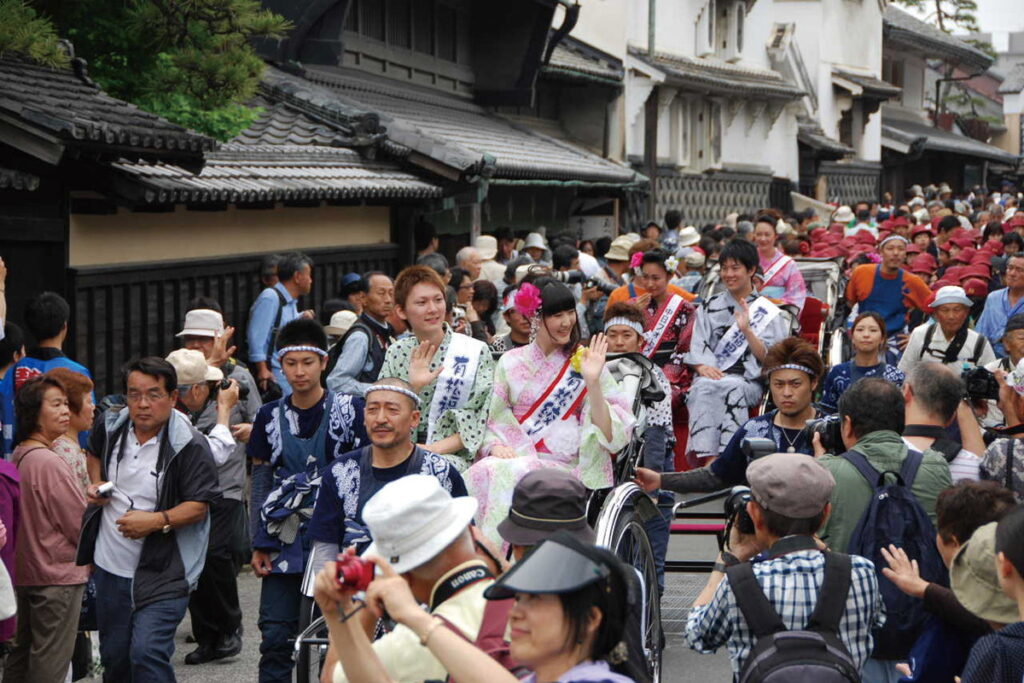
Today, visitors to the town can walk through Edo-period streets lined with family-run studios, visit the Arimatsu Shibori Museum, and watch master artisans at work using the same methods that once captivated samurai and merchants traveling the old road to Edo.
Recommended Tour: Snow Monkey Resort's 1-Day Tour from Nagoya: Crafting Traditions in Tokoname and Arimatsu offers a unique blend of history, artistry, and local charm, as you are led by an experienced, English speaking guide through two towns famous for their artistic traditions.