








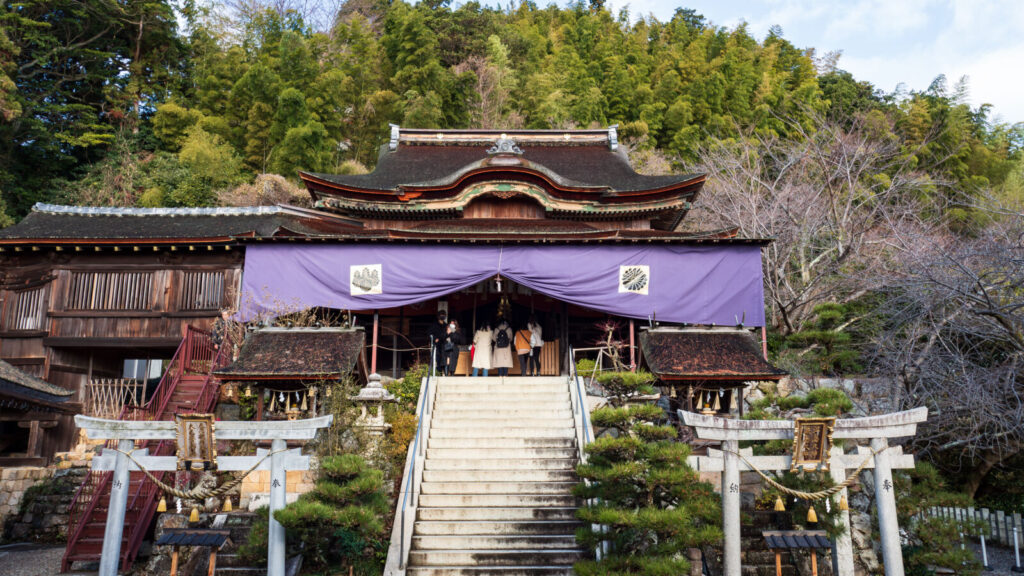
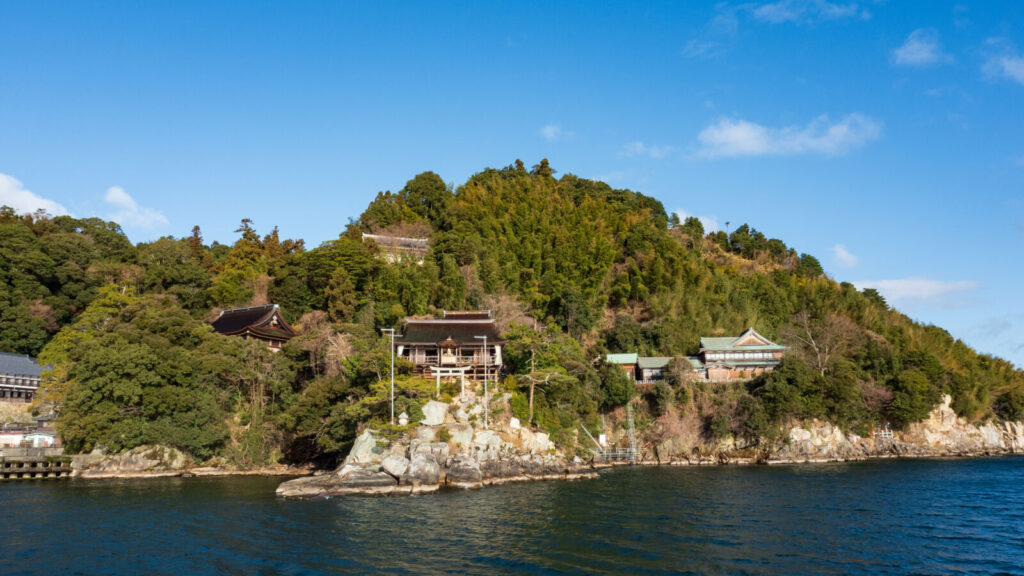
Located on the southern side of Chikubushima, Tsukubusuma Shrine is one of the most important Shinto shrines on Lake Biwa and one of the spiritual highlights of any visit to the island. Surrounded by the waters of Japan's largest freshwater lake, the shrine has been a place of worship for centuries and remains deeply connected to the island's sacred traditions.
Known for its dramatic lakefront setting, historic architecture, and famous kawarake-nage clay-disc throwing ritual, Tsukubusuma Shrine offers visitors a unique opportunity to experience both the natural beauty and spiritual heritage of Chikubu Island.
The History of Tsukubusuma Shrine
Tsukubusuma Shrine has stood at the heart of Chikubushima's spiritual traditions for centuries. Long before Buddhism arrived in Japan, the island was regarded as a sacred place where divine powers resided within the natural landscape of Lake Biwa. Over time, the shrine became closely associated with Benzaiten and the worship traditions that shaped Chikubushima's identity.
Today, the shrine enshrines several important deities including Ichikishimahime-no-Mikoto, who is identified with Benzaiten, as well as Ugafukujin, Ryujin (the Dragon God), and Azaihime-no-Mikoto, a local guardian deity associated with the waters of Lake Biwa and the historic Azai clan.
The shrine seen today owes much of its appearance to the Toyotomi family. In the early seventeenth century, Toyotomi Hideyori ordered the relocation of an important structure from Fushimi Momoyama Castle to Chikubushima. Construction was overseen by Katagiri Katsumoto, one of the Toyotomi clan's most trusted retainers. The resulting shrine building survives today as one of the island's greatest treasures and has been designated a National Treasure.
What to See at Tsukubusuma Shrine
Main Hall (National Treasure)
The highlight of Tsukubusuma Shrine is its magnificent Main Hall, designated as a National Treasure. The building is believed to have originated as part of Fushimi Momoyama Castle, the grand residence constructed by Toyotomi Hideyoshi during the late sixteenth century.
Although the interior is not generally open to the public, the hall remains one of the finest surviving examples of Momoyama-period architecture. Its elegant proportions, decorative details, and historical connections make it one of the most significant structures on Chikubushima.
Historical records state that the interior once featured lavish sliding-door paintings and ceiling artwork attributed to Kano Mitsunobu, a leading painter of the Kano School. Together with its decorative gold fittings and lacquerwork, the building reflected the wealth and artistic sophistication of the Momoyama era.
The Worship Hall and Kawarake-Nage
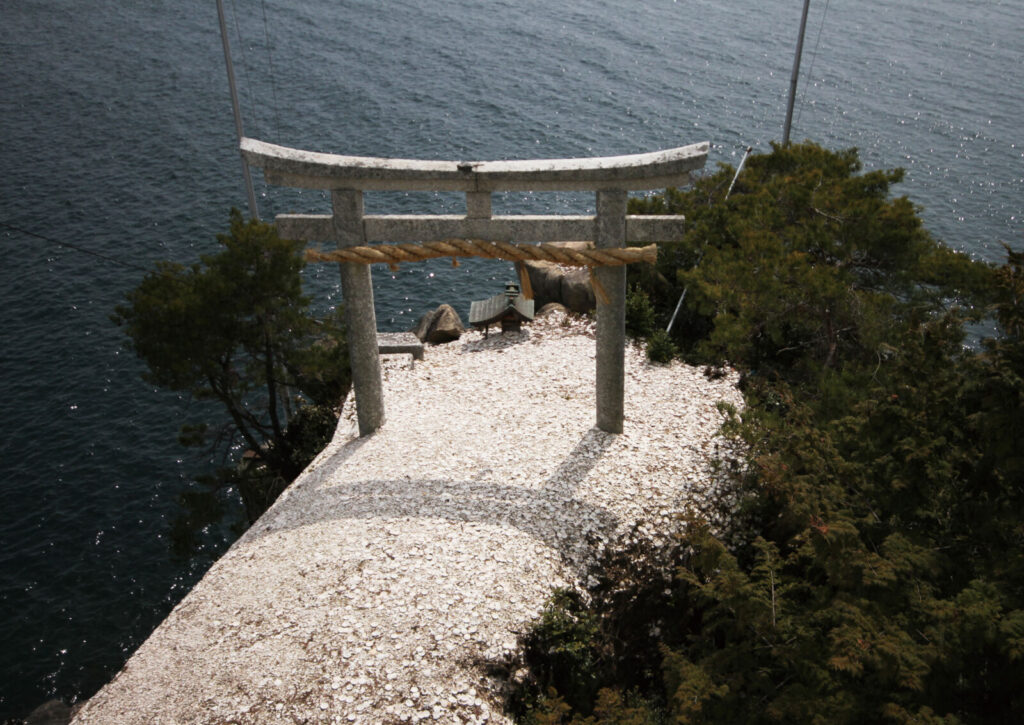
One of the shrine's most popular traditions is kawarake-nage, the ritual of throwing small clay discs toward a torii gate standing over the waters of Lake Biwa below.
Visitors write wishes on the discs before attempting to throw them through the gate. Successfully passing a disc through the torii is said to bring good fortune and help wishes come true. The ritual is mentioned in historical accounts and remains one of Chikubushima's most memorable experiences.
The Torii Gate Over Lake Biwa
Standing dramatically above the lake, the shrine's torii gate has become one of the most iconic views on Chikubushima. Beyond its scenic beauty, the gate symbolizes the boundary between the sacred and everyday worlds and reflects the island's long-standing connection to both nature worship and the waters of Lake Biwa.
Jogyoden Hall
Located behind the Main Hall, the Jogyoden Hall is often overlooked by visitors. Constructed in 1997 under the supervision of architectural historian Professor Nobuo Ito, it serves as a space for religious retreats, training, and cultural activities. Depending on the season, tea ceremonies and special events may also be held here.
The Boat Corridor (Funa-rō)
Connecting Tsukubusuma Shrine with nearby Hōgon-ji Temple, the Boat Corridor is one of Chikubushima's most distinctive architectural features. According to tradition, it was constructed using materials from Toyotomi Hideyoshi's vessel Nihon-maru. Built dramatically against the island's rocky cliffs, it symbolizes the historic connection between Shinto and Buddhism that existed on Chikubushima for centuries.
Scenic Views of Lake Biwa
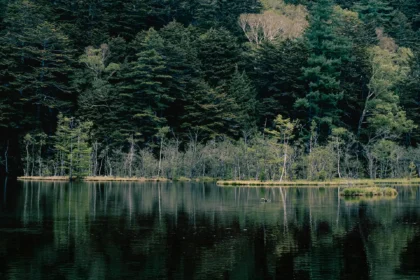
The shrine's location provides some of the best viewpoints on Chikubushima. From the shrine grounds, visitors can enjoy panoramic views across northern Lake Biwa and gain a greater appreciation for why this small island became such an important place of worship.
How to Visit Tsukubusuma Shrine
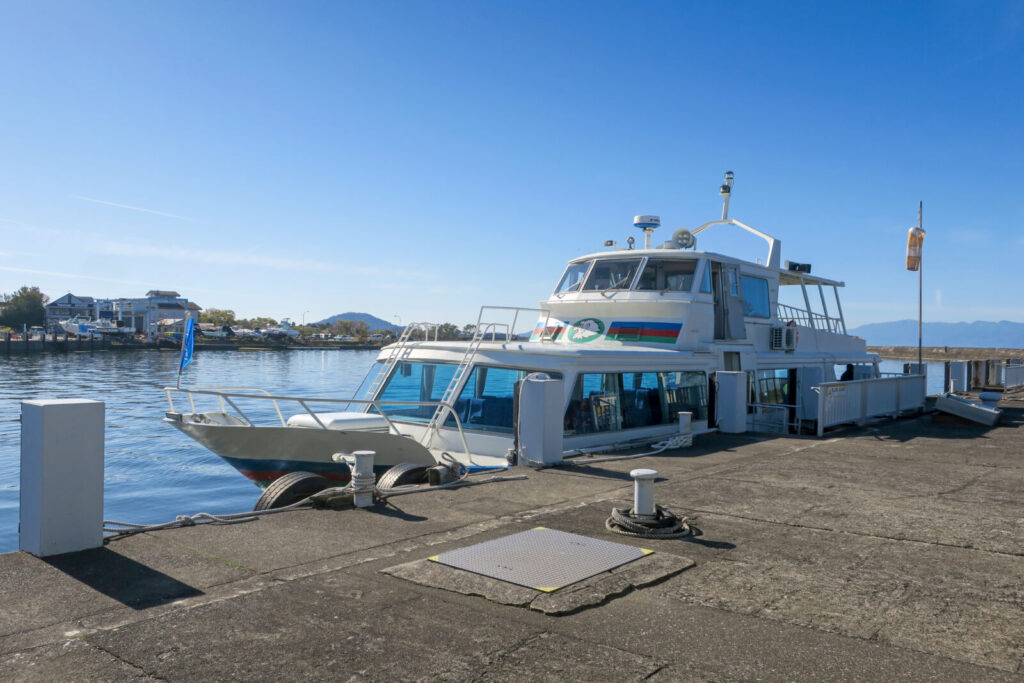
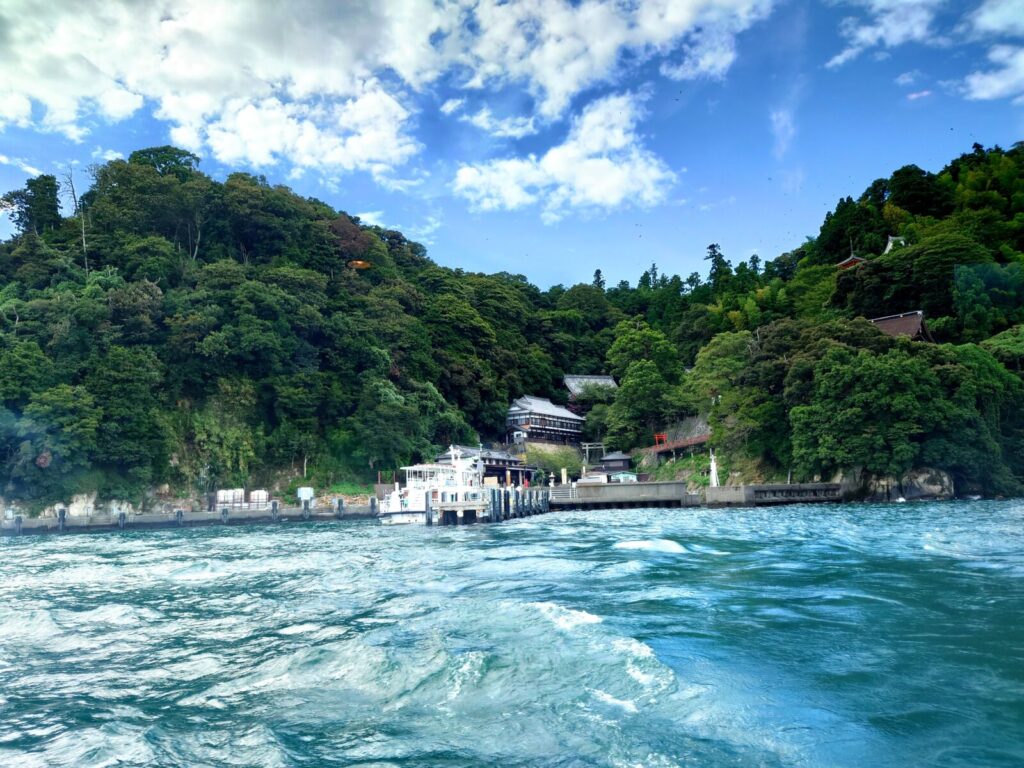
Tsukubusuma Shrine is located on Chikubushima and can only be reached by ferry. Most visitors arrive from Nagahama Port or Imazu Port before exploring the island on foot.
The shrine is typically visited together with nearby Hōgon-ji Temple, the Karamon Gate, and the Boat Corridor. For detailed information on ferry routes, schedules, and travel planning, please see our Chikubu Island Cruise Guide.
Join Our Chikubu Island & Hikone Castle Tour
Want to experience Tsukubusuma Shrine without worrying about ferry schedules, train connections, or admission tickets?
Our 1-Day Tour from Kyoto: Lake Biwa Cruise, Chikubu Island & Hikone Samurai Castle includes transportation, ferry tickets, admission fees, and an English-speaking guide. Explore the sacred island of Chikubushima before continuing to historic Nagahama and Hikone Castle, one of Japan's twelve original castles.
Frequently Asked Questions
What is Tsukubusuma Shrine famous for?
The shrine is best known for its dramatic lakefront location, the torii gate standing over Lake Biwa, and the popular kawarake-nage clay-disc throwing ritual.
What is kawarake-nage?
Kawarake-nage is a traditional activity in which visitors throw small clay discs toward the shrine's torii gate over Lake Biwa while making a wish. Successfully passing a disc through the gate is said to bring good fortune.
Is Tsukubusuma Shrine connected to Hōgon-ji Temple?
Yes. The shrine and temple have been closely connected for centuries and are linked by the historic Boat Corridor on Chikubushima.
Can I collect a goshuin at Tsukubusuma Shrine?
Yes. Visitors can receive a goshuin from the shrine during normal operating hours.
How do I get to Tsukubusuma Shrine?
The shrine is located on Chikubushima and can only be reached by ferry from ports around Lake Biwa, including Nagahama and Imazu.