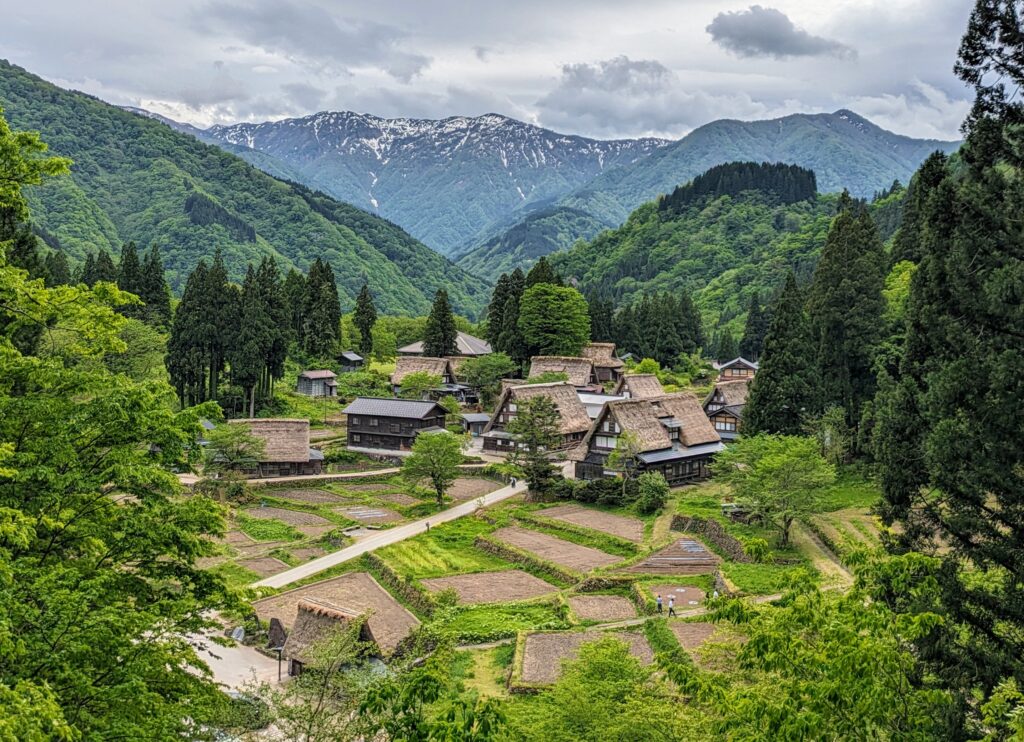
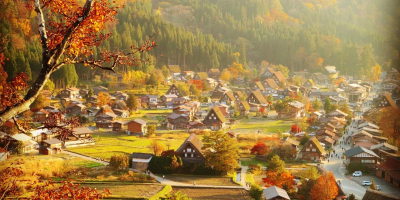





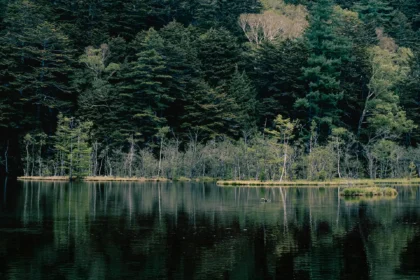

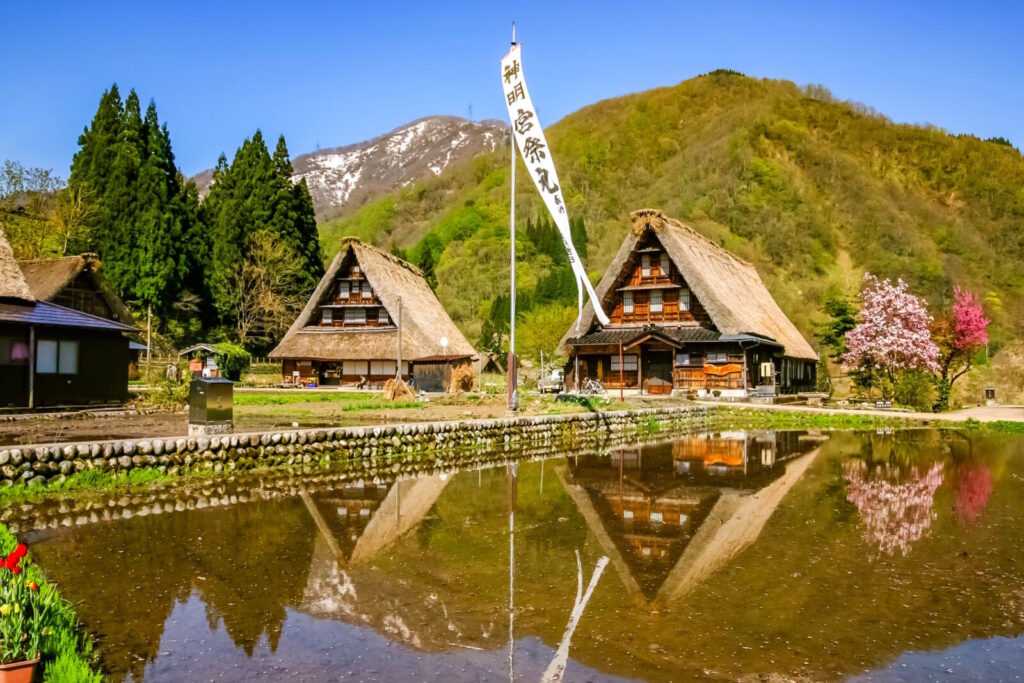
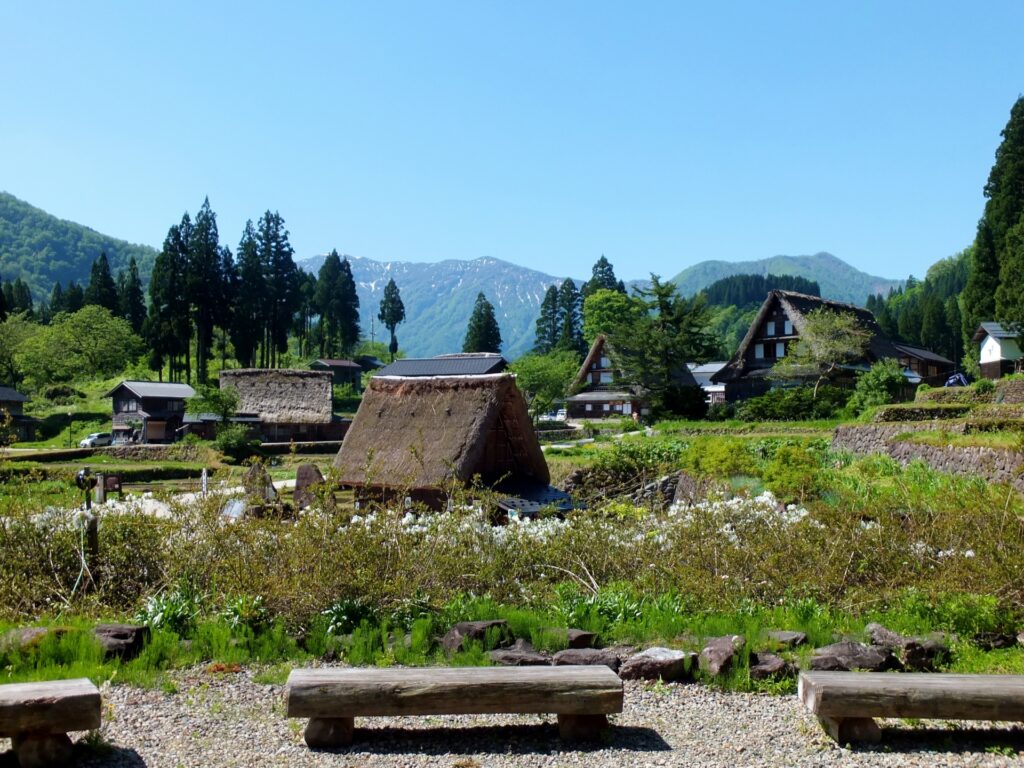
Suganuma Village is a UNESCO World Heritage site celebrated for its traditional gassho-zukuri farmhouses, which were expertly crafted to withstand the region's harsh, snowy winters. Gunpowder making has a long history as a traditional industry in the Gokayama region, and visitors can learn more about it in one of the houses that is also a museum. There is much explore in this quiet but beautiful region.
A Short History
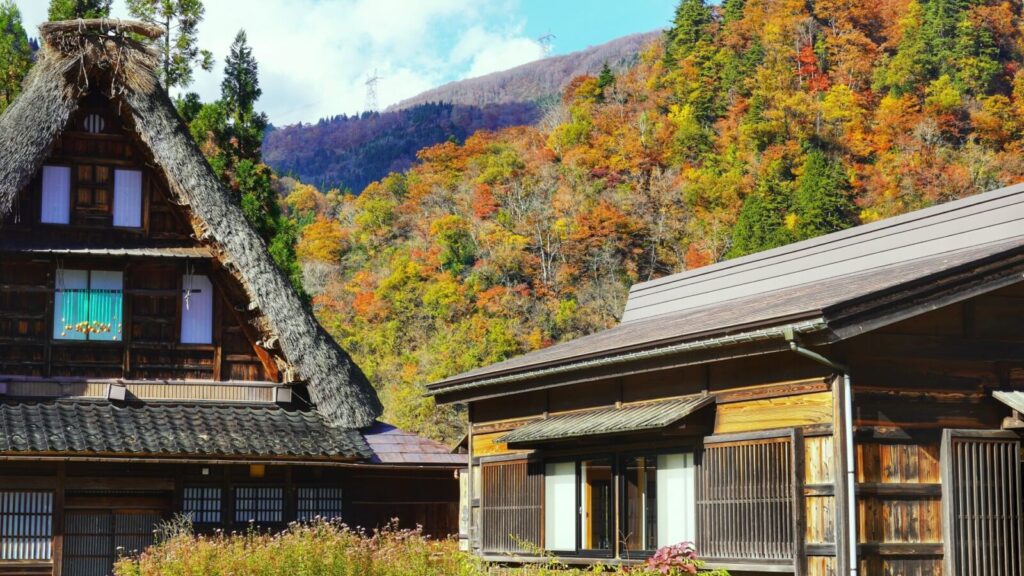
Suganuma is a UNESCO World Heritage village in the Gokayama region, recognized for its exceptional cluster of traditional gassho-zukuri farmhouses. Historically, the villagers developed a unique economic system where the large, steep roofs of their houses were utilized for raising silkworms and cultivating ingredients for gunpowder production. This ingenious use of space allowed the community to thrive in the remote, snowy mountains, and today the village offers a glimpse into this preserved way of life.
Interesting Sites Around the Town
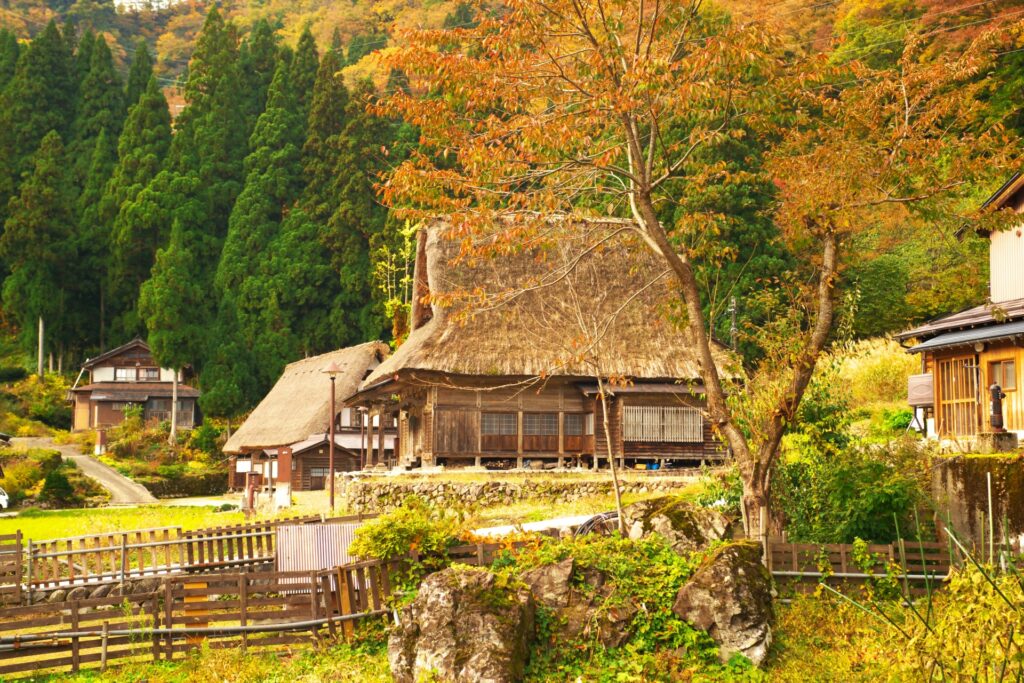
Within Suganuma village, visitors can explore a cluster of nine traditional gassho-zukuri houses, some of which are still private residences. The Minzoku-kan (Folk Museum) offers a fascinating look into the villagers' traditional lifestyle, showcasing tools and everyday artifacts. Additionally, the Ensho-no-Yakata (Gunpowder Museum) provides a deeper understanding of the unique historical industry of gunpowder making that was vital to the village's economy.
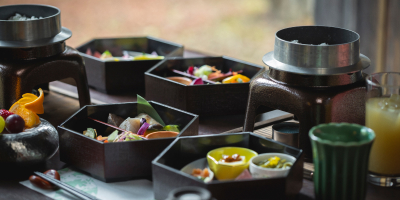
While you won't find many large restaurants in the small, traditional hamlet of Suganuma, there are a few local eateries that serve regional cuisine. These spots, such as the Gokayama Gorobei Restaurant and Yohachi, allow you to enjoy meals featuring local specialties like river fish, soba noodles, and wild mountain vegetables.
Visiting Ainokura
Ainokura is most commonly reached by a combination of public buses or by car. From major nearby stations like Kanazawa Station, Takaoka Station or Shin-Takaoka Station, you can take a bus that connects to the local "World Heritage Bus" line, which stops at the "Suganuma" bus stop, a short walk from the village. Alternatively, driving offers the most flexibility and takes about an hour from Kanazawa and 40 minutes from Takaoka.
Frequently Asked Questions (FAQ)
What is Suganuma most famous for?
Suganuma is most famous for its remarkable collection of traditional gassho-zukuri farmhouses, which are part of a UNESCO World Heritage Site. The village's unique history also includes the traditional production of gunpowder in the upper floors of these steep-roofed homes.
When is the best time to visit Suganuma?
The best time to visit Suganuma is in late spring, autumn, and winter, as each season offers a unique atmosphere. While spring and autumn showcase vibrant greenery and fall colors, a visit during the winter can be particularly magical, as the village is often blanketed in heavy, pristine snow.
Can I buy traditional crafts or souvenirs in Suganuma?
Gokayama Washi Paper: Handmade local paper.
Kiriko Instrument: Local instrument used in festivals.
How do I get to Suganuma?
From major cities like Tokyo, Kyoto, Kanazawa or Toyama, take the Hokuriku Shinkansen to Shin-Takaoka Station. From Shin-Takaoka Station, hop on a World Heritage bus. The buses ran fairly regularly from Kanazawa and Shin-Takaoka Stations but make sure to check ahead time.
How long should I plan to be in Suganuma for?
Depending on if you explore all the thatched-roof houses, stores and view points, 30 minutes to an hour. There are other UNESCO World Heritage Site Villages in the region so hop on the bus and explore them all!