
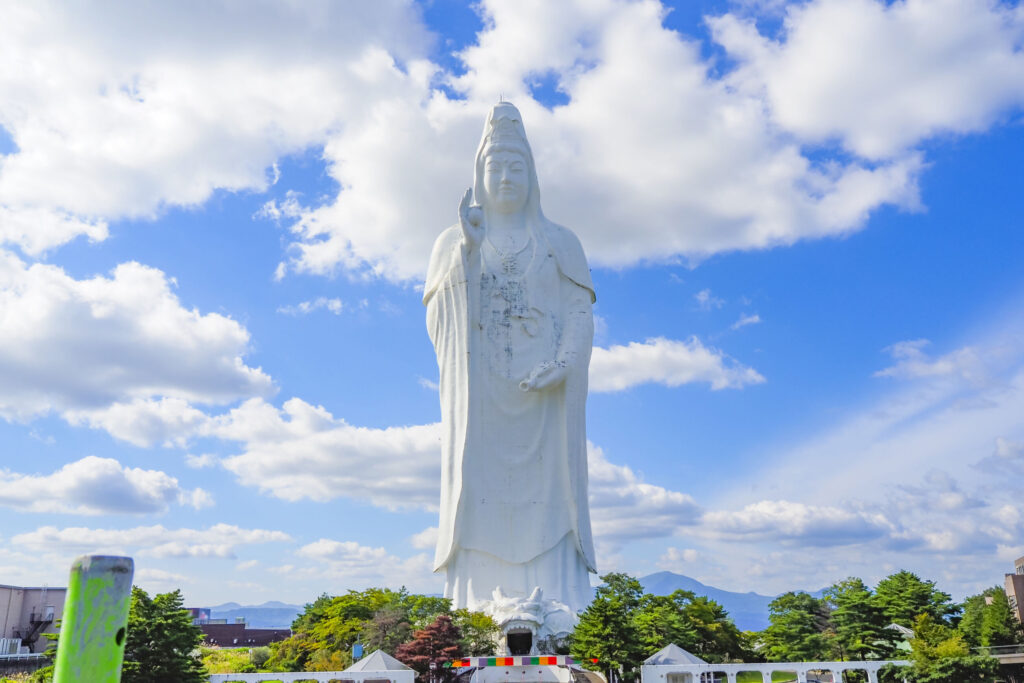
The Sendai Daikannon Statue (White-Robed Colossus) is an impressively large Buddhist statue located just a 40 minute bus ride from Sendai Station. Although it isn’t the only of its kind, it happens to be the largest standing statue of a bodhisattva in Japan!
This article will tell you a little bit about the statue itself, a common conflation, and other useful information for what you can expect during a visit.
Where is the Sendai Daikannon Statue?
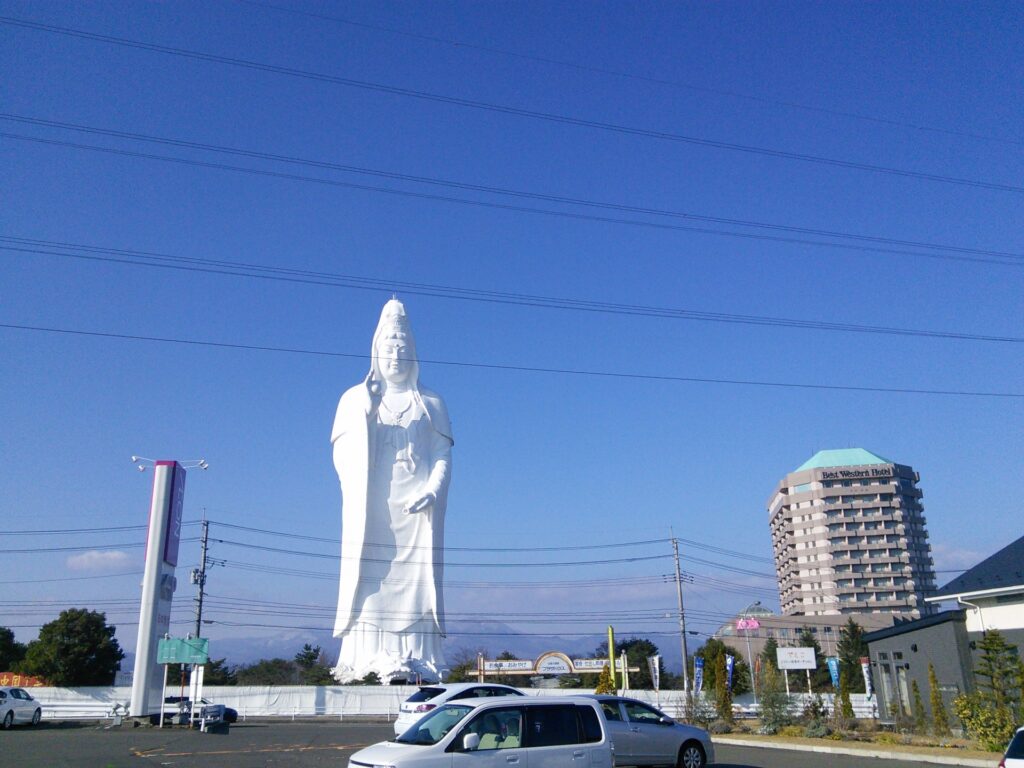
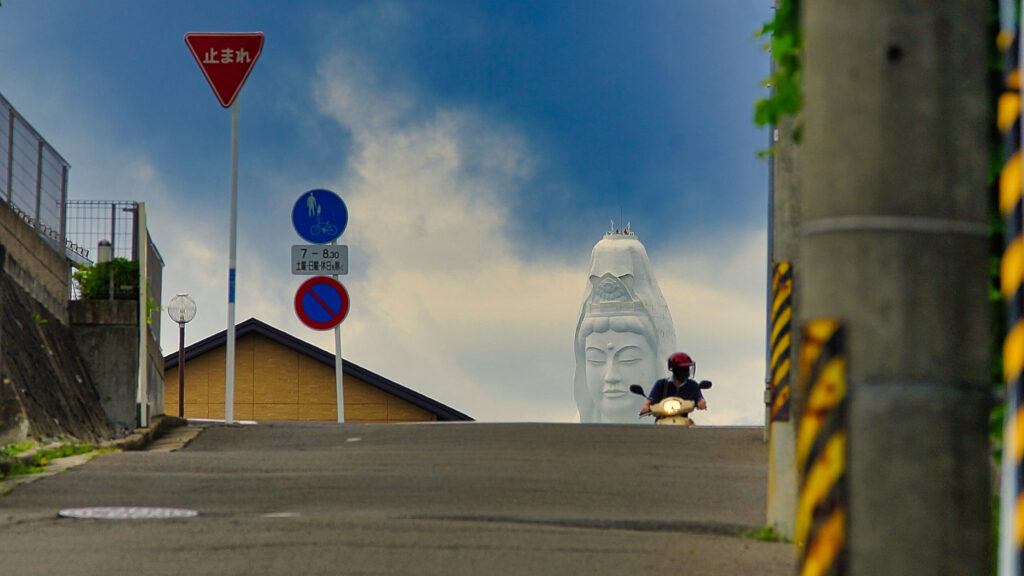
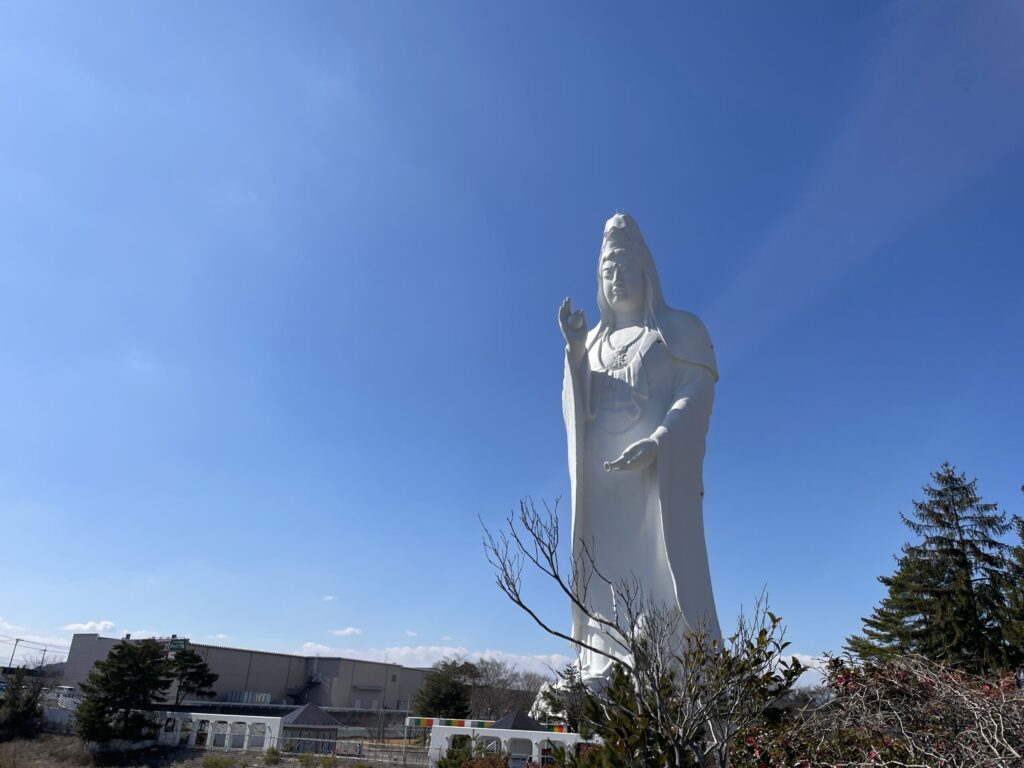
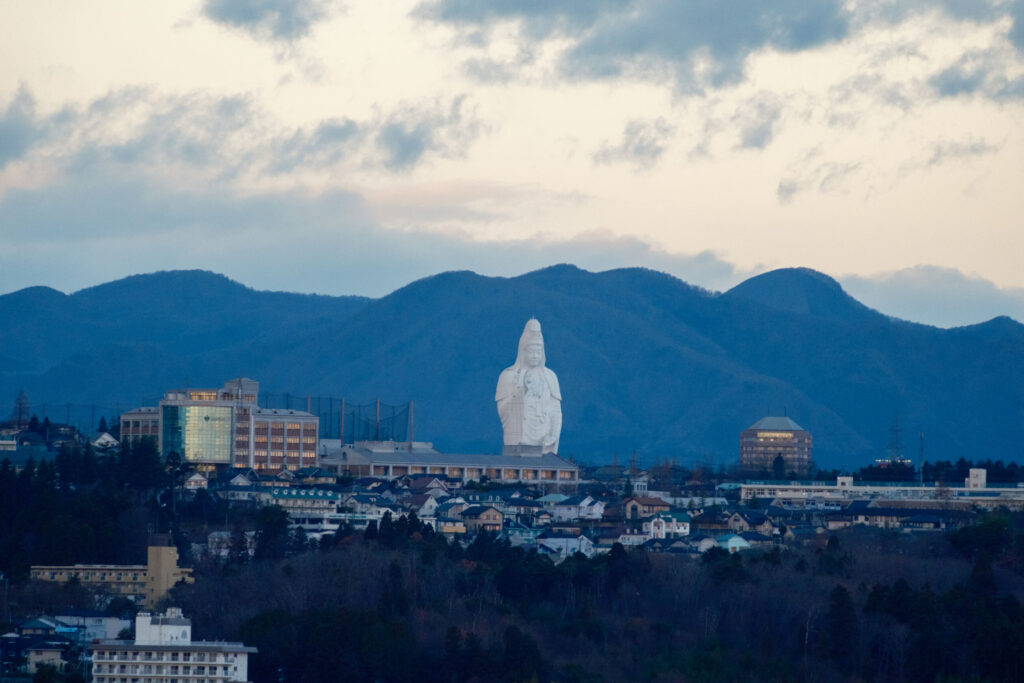
The Sendai Daikannon Statue is located in a residential and shopping area in the Izumi Ward northwest of Sendai Station. The statue itself is right next to the Sendai Hills Hotel along with the hotel’s golf course. Across the street from the statue is a shopping area that includes an Aeon Mall and a Super 2nd Street which is a second-hand store that also happens to be a “Japan Tax-Free shop.”
You can access the statue easily by car or take the bus from Sendai Station and alight at the Sendai Daikannon-mae bus stop.
A Brief History
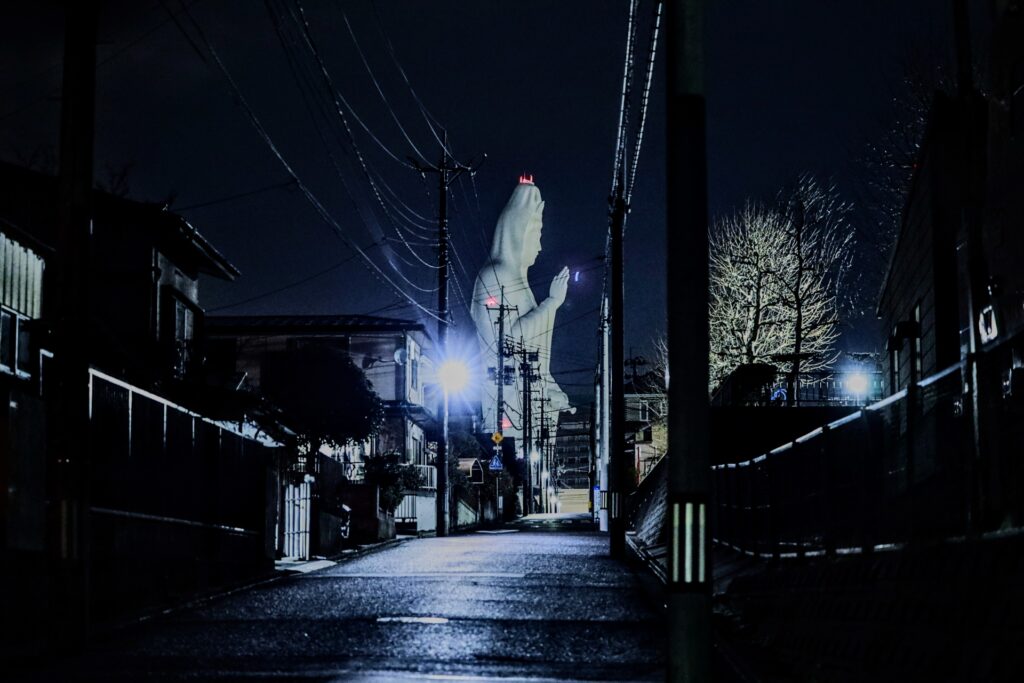
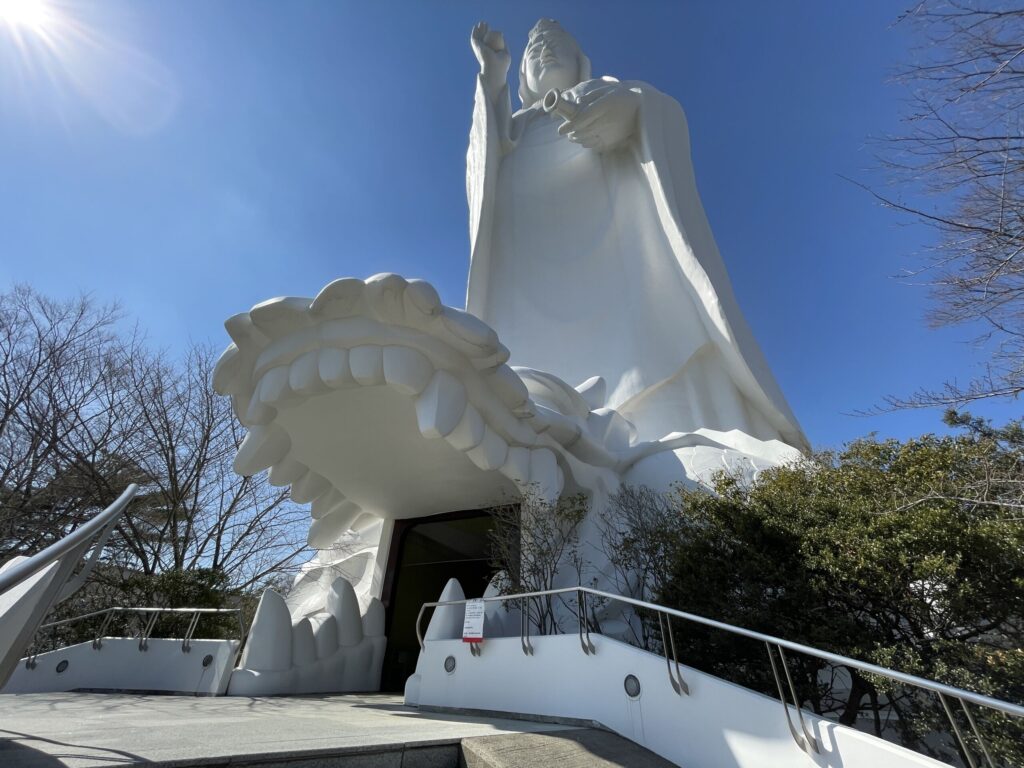
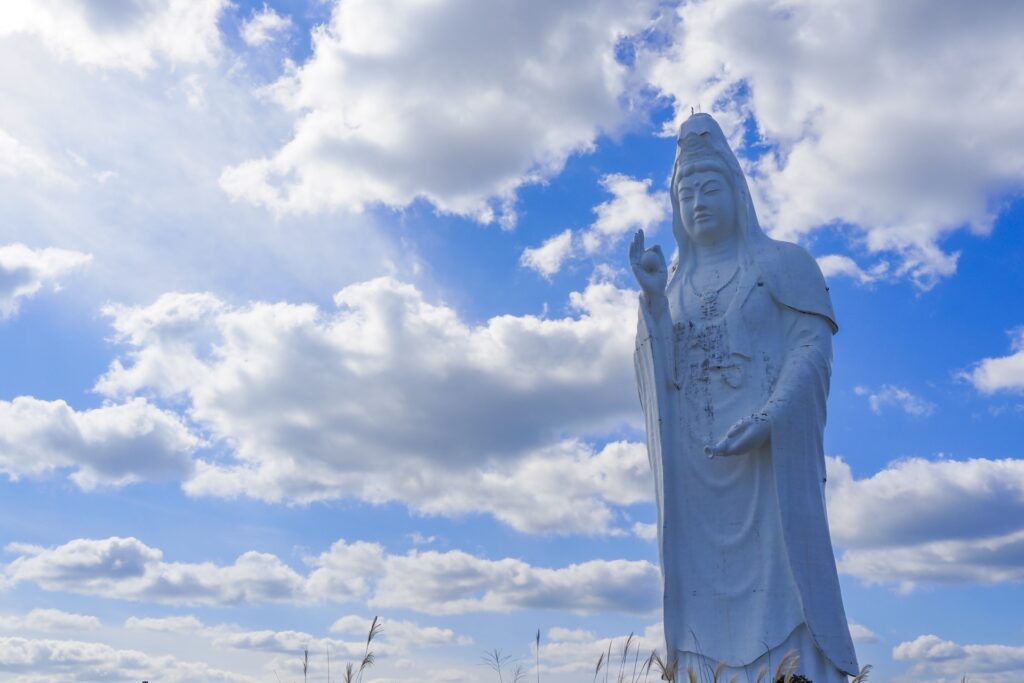
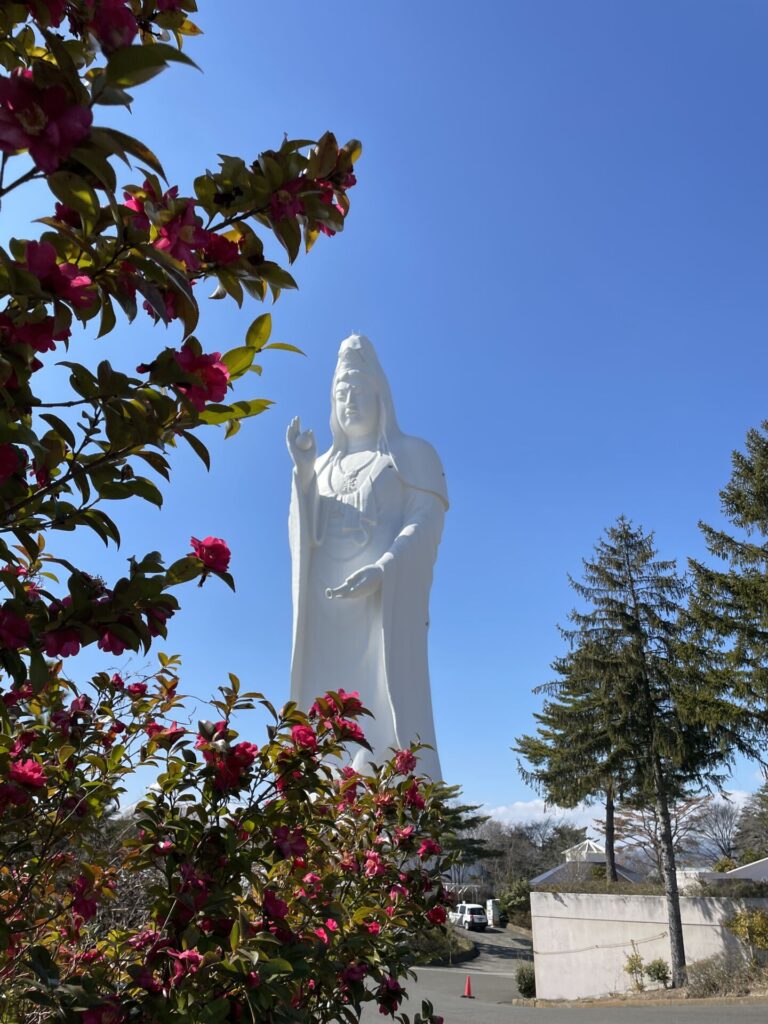
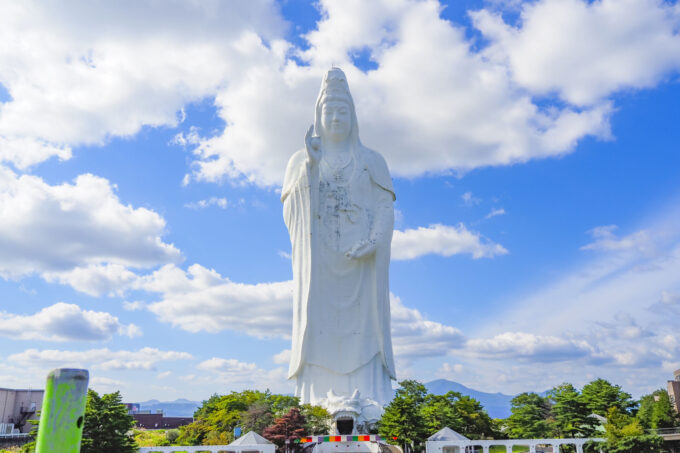
Officially titled Sendai Tendou Byakue Daikannon (仙台天道白衣大観音), this impressive statue reaches 100 meters (330 feet) into the sky. When it was first built it was actually the tallest statue in all of Japan, but was soon surpassed by the Ushiku Daibutsu built in 1993. Regardless of where it falls on the list of world's tallest statues, the Sendai Daikannon Statue is a view you ought not to miss!
- Built in 1991 to commemorate the 100th anniversary of Sendai’s municipal government.
- There is a “dragon mouth entrance” at the base, symbolizing the path to success and good luck.
- Inside you can witness the 33 Kannon Manifestations statues that are an important part of sacred Japanese Buddhist pilgrimage.
- You can go all the way up to the 12th floor and see a panoramic view of the city.
- The Daikanmitsuji Temple located directly behind the statue houses the Godai-son; the Five Great Deities that ward off misfortune
Recommend Tour: Snow Monkey Resort’s Half-Day Tour in Sendai: Kitayama Gozan & Sendai Daikannon Statue – Day of Zen is the perfect way to learn more about the importance of Zen Buddhism and its impact on much of Japanese culture and history. This tour will take you on a walk through important Zen temples, including a gorgeous stroll through a traditional Japanese garden, and finish with a trip to the Daikannon Statue.
Daibutsu vs. Daikannon
What is a butsu?
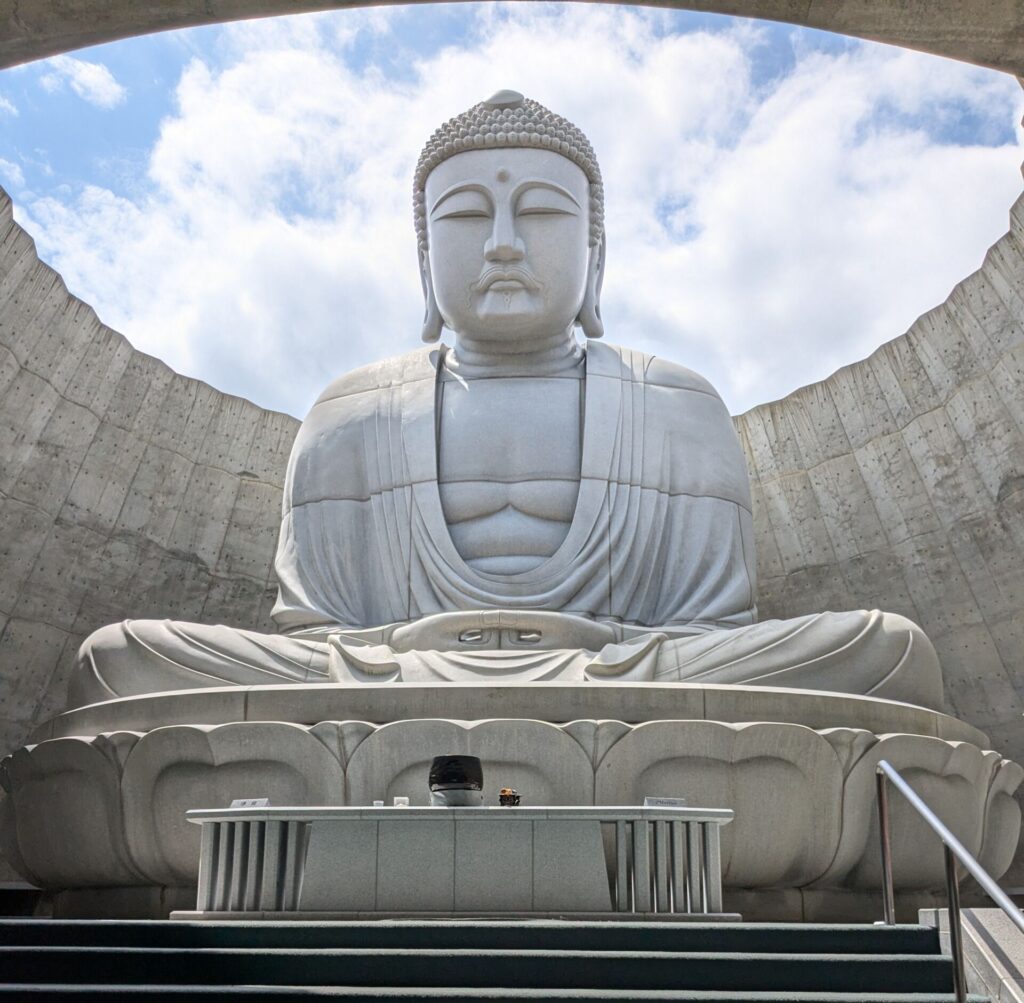
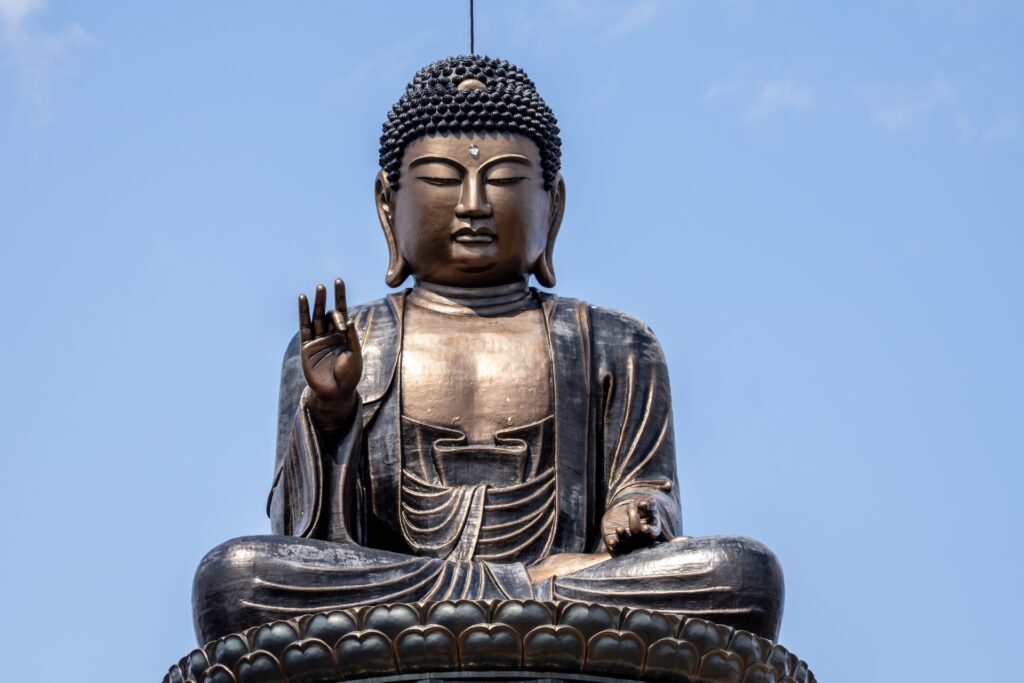
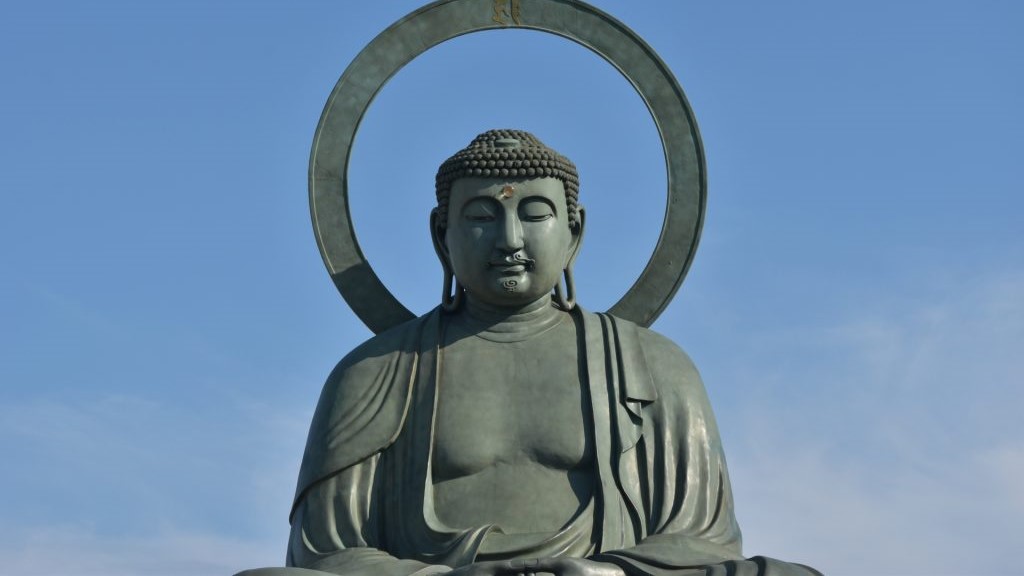
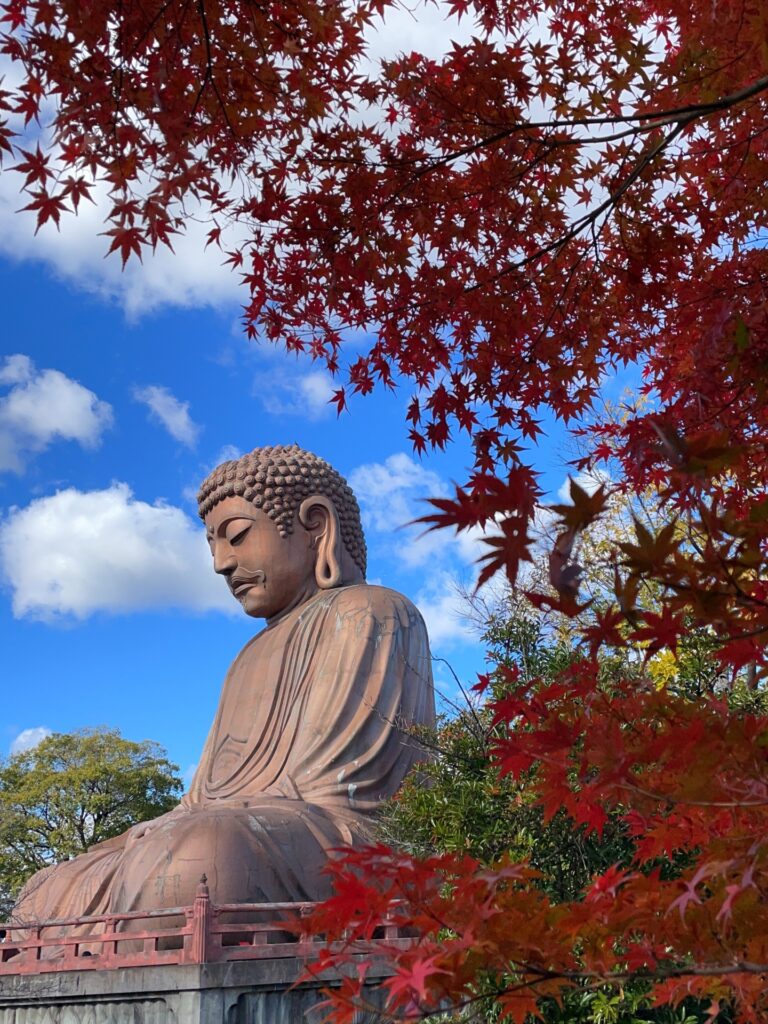
Typically the suffix butsu often refers to the Amida Butsu, the Japanese term for Amitābha Buddha from Indian Buddhist scripture. The term butsu (仏) on its own is the Japanese term for Buddha, the awakened or enlightened one.
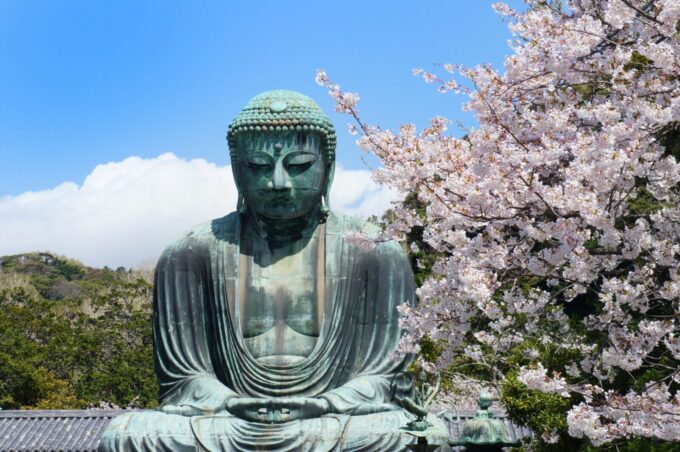
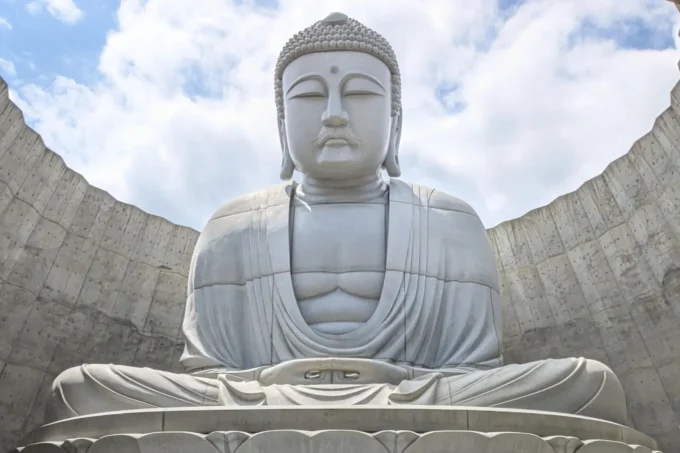
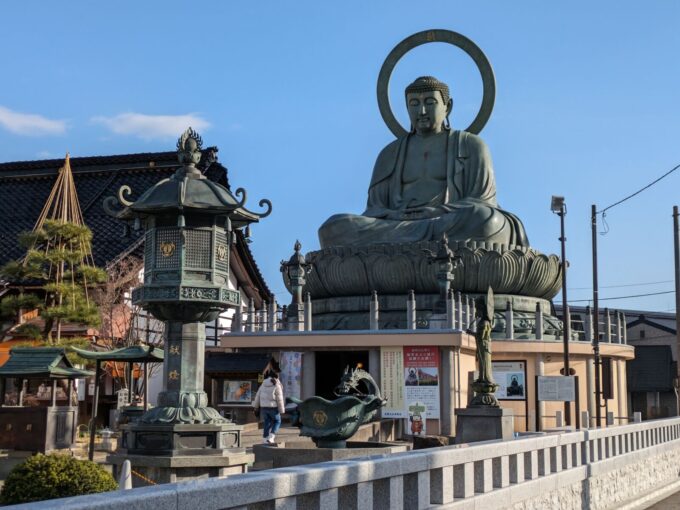
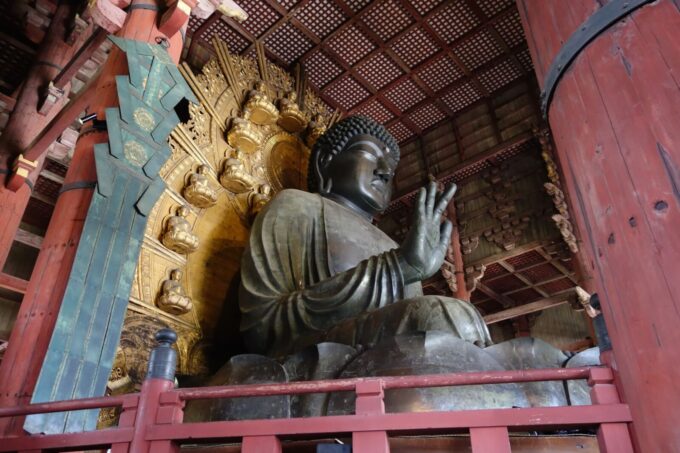
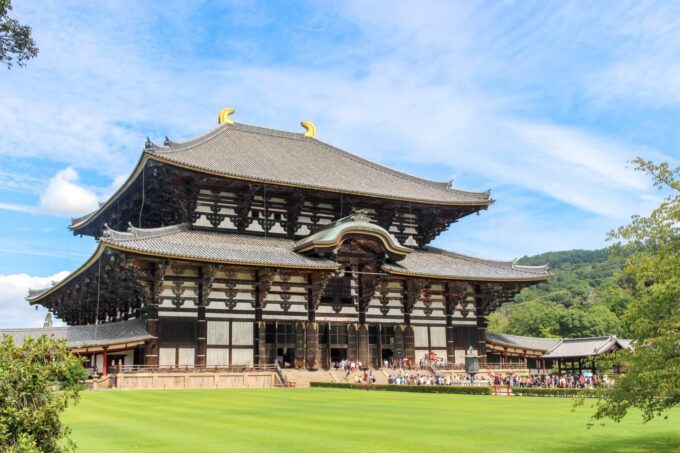
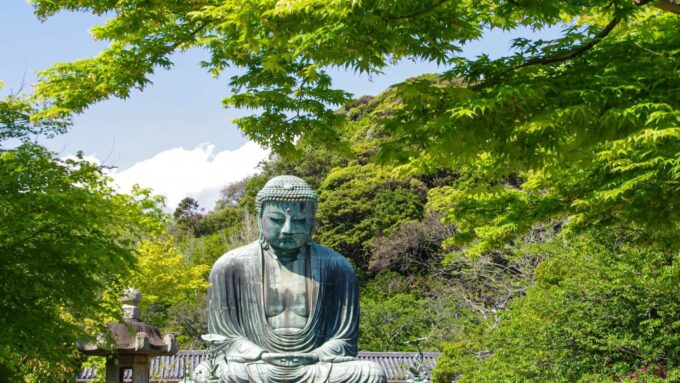
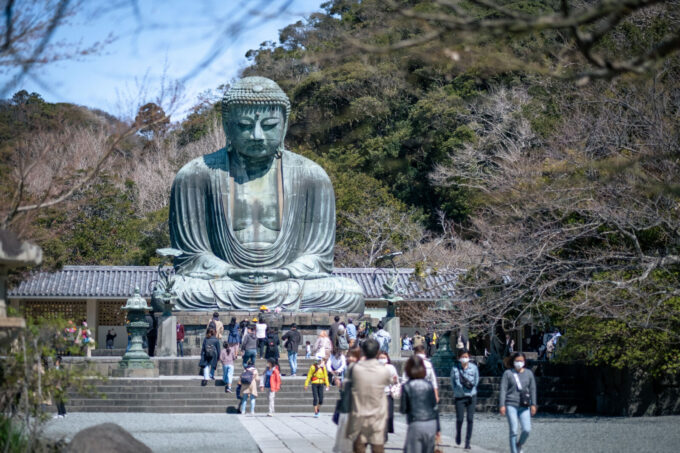
Daibutsu is the general term in Japanese for large statues of Buddha and depict many different manifestations of Buddha including Amida Buddha and Vairocana among others. They are often depicted sitting or lounging. You can find many different variations of Daibutsu statues all around Japan including: the Ushiku Daibutsu in Ibaraki, the Kamakura Daibutsu (Great Buddha), The Great Buddha of Nara, the Hill of the Buddha, and even some lesser known hidden gems such as the Ayashi Daibutsu at Bukkokuji Temple in Sendai.
Recommended Tour: Snow Monkey Resort’s 1 Day Trip to Kamakura and Enoshima : Shrines, Seaside, Temples and Tea offers a great opportunity to get a first-hand view of the Great Buddha of Kamakura and even venture inside of it. Highlights include feeding Japanese koi in a lovely garden, a traditional matcha with sweets experience, and a panoramic view of the Sea of Japan from the Enoshima Island observatory.
What is a kannon?
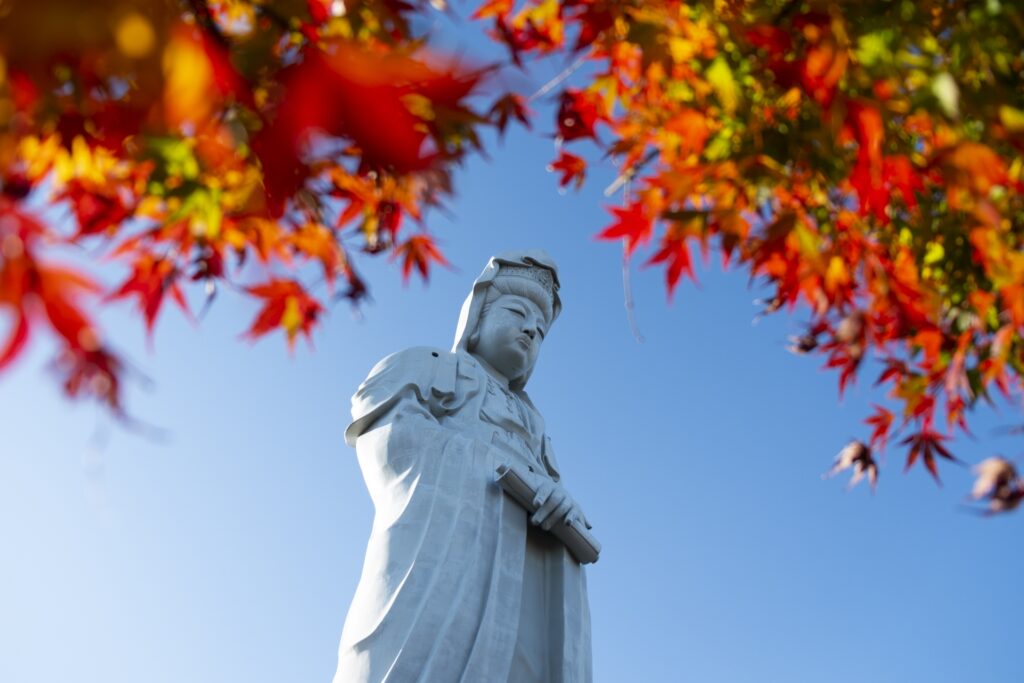
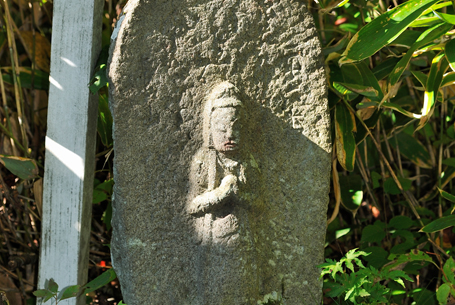
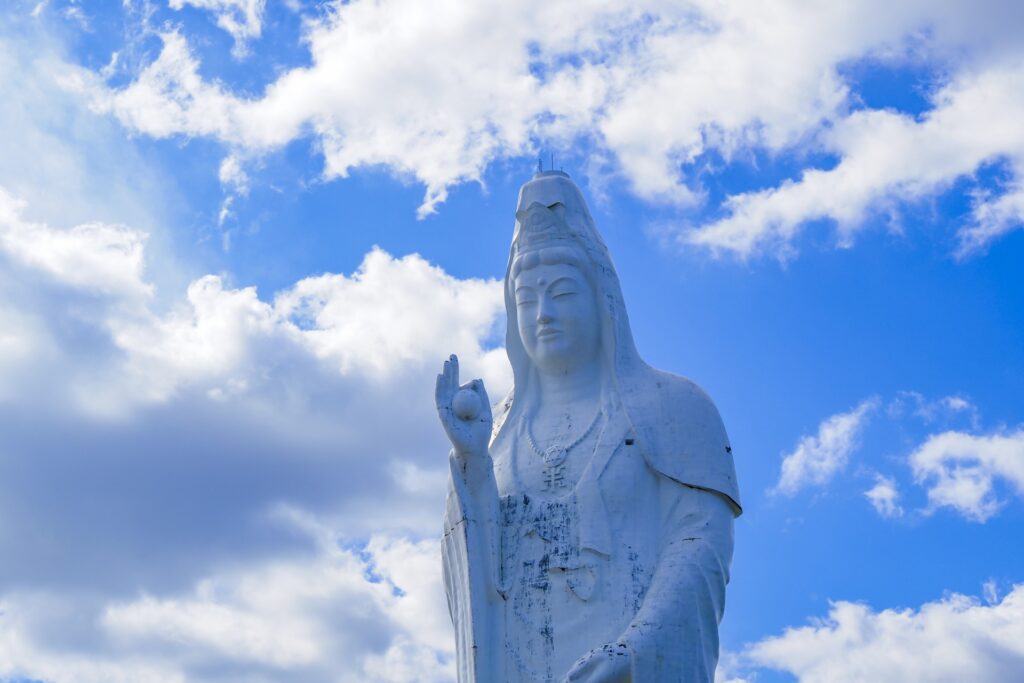
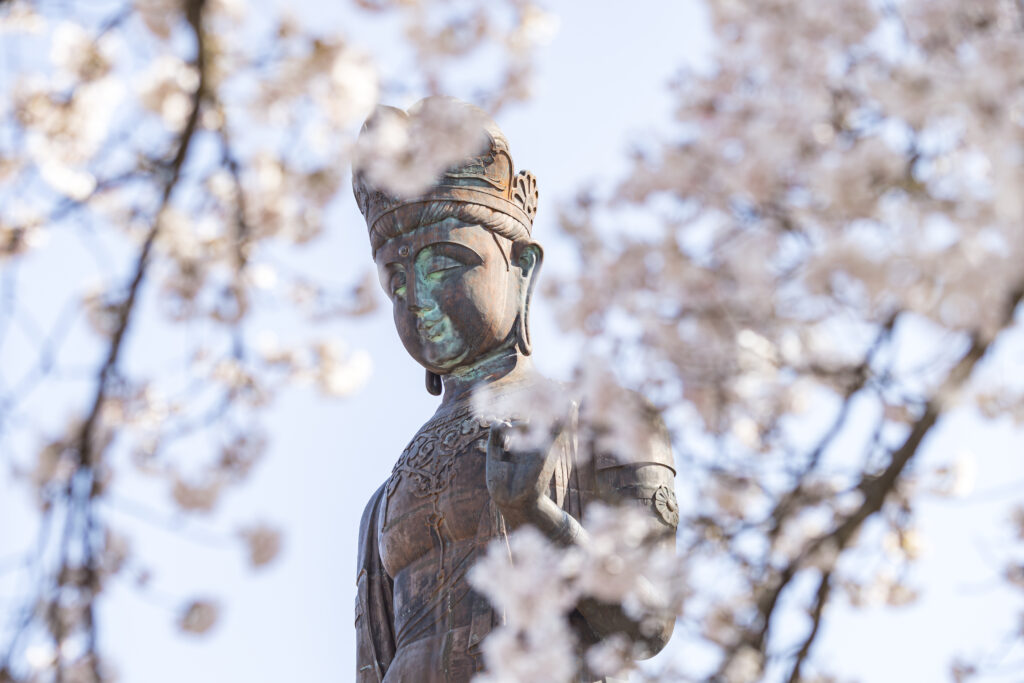
Kannon is a Japanese term typically referring to the Bodhisattva, or a practitioner who is qualified to attain enlightenment but chooses to remain in this world to save others. This is also generally known as the Goddess of Mercy. Much like the different variations of Buddha depictions, kannon also takes many different forms within Japanese iconography.
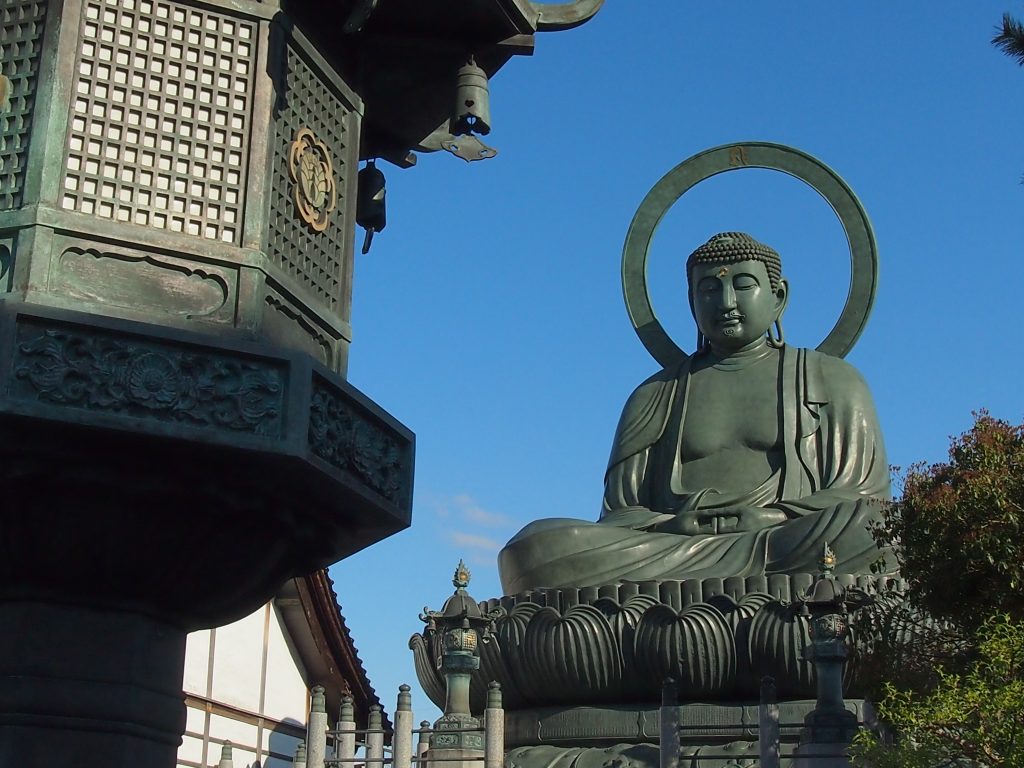
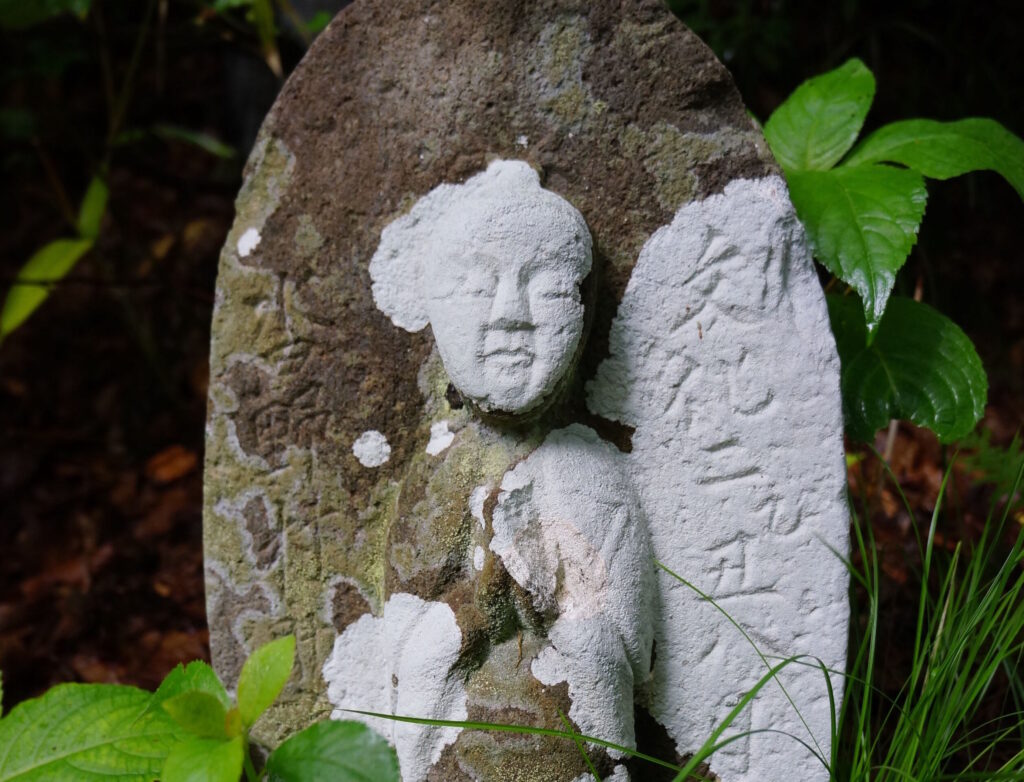
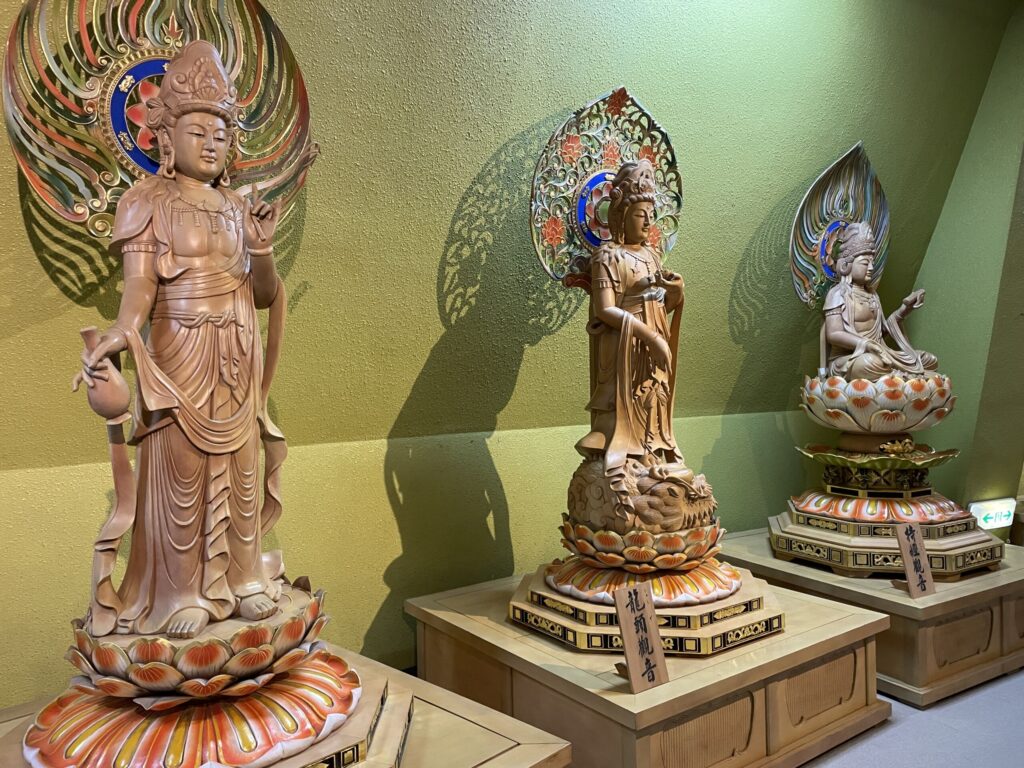
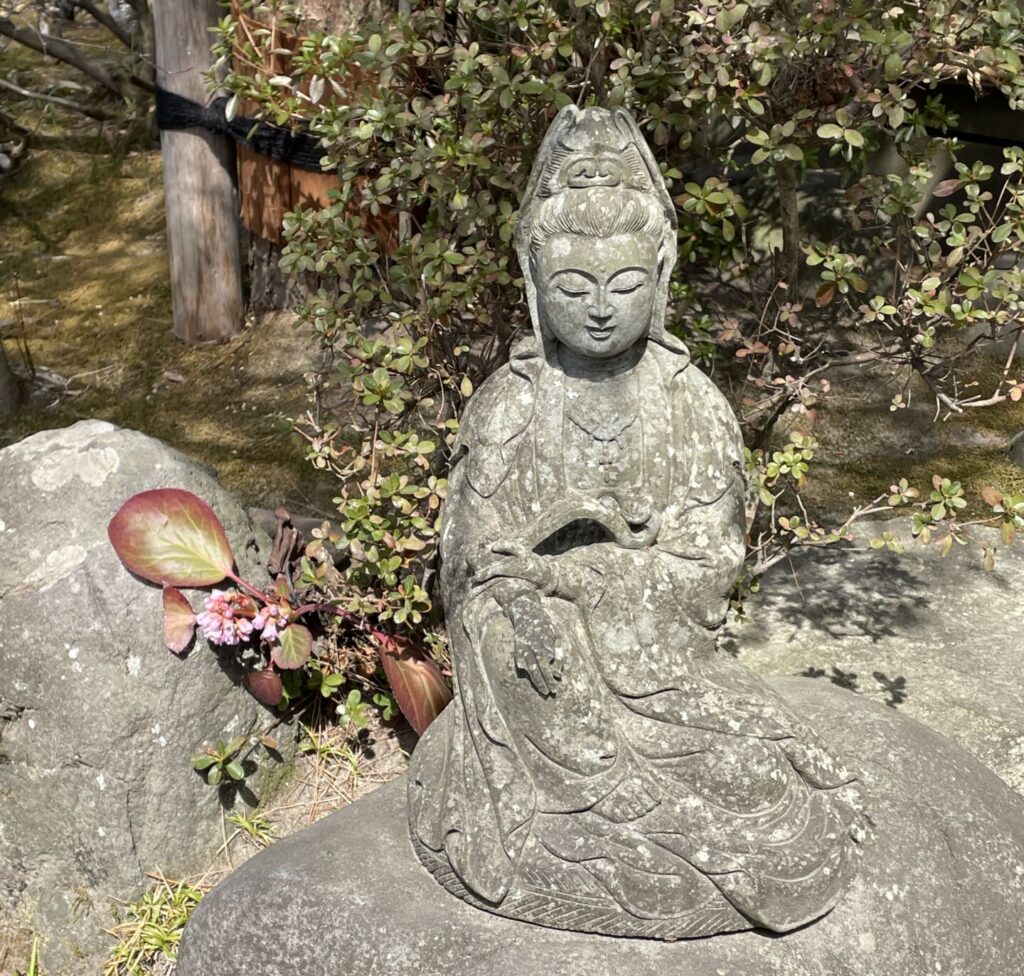
Daikannon similarly refers to large statues of the Goddess of Mercy throughout Japan. Most often these statues depict Byakue Kannon, the female (or genderless) form of the white-robed goddess of compassion and mercy originating from Chinese Buddhism (known in Chinese as Guanyin). You can find daikannon statues in Sendai as well as at Gunma’s Takasaki Byakue Daikannon, Nagano's World Peace Kannon, and Shizuoka's Usami Kannon. Smaller statues including carved stones and other forms of kannon can also be found at almost every Buddhist temple in Japan.
Recommended Tour: Snow Monkey Resort’s 1-Day Tour from Sendai: Sendai Daikannon Statue and Yamadera Temple – Spiritual Pilgrimages of Tohoku offers you a chance to witness the natural beauty of Yamadera while also giving you an opportunity to visit another one of Tohoku’s impressive spiritual sites, the Daikannon Statue. This tour goes into great detail about the history of Zen Buddhism and the importance it plays at both of these locations.
The 12 Divine Generals
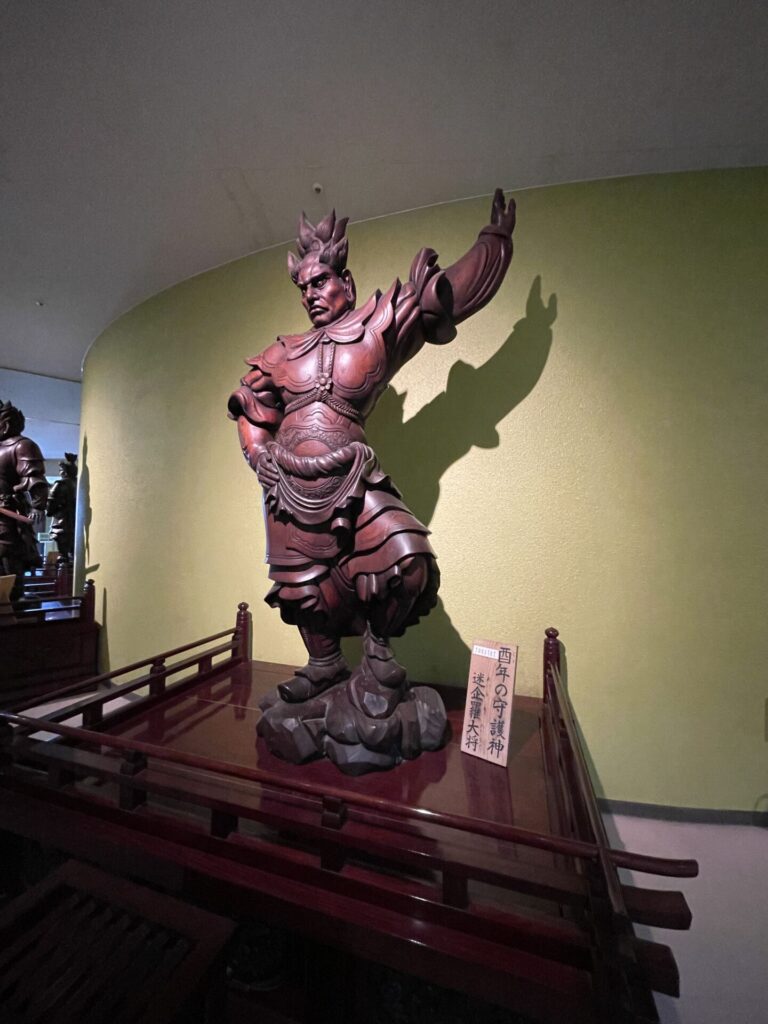
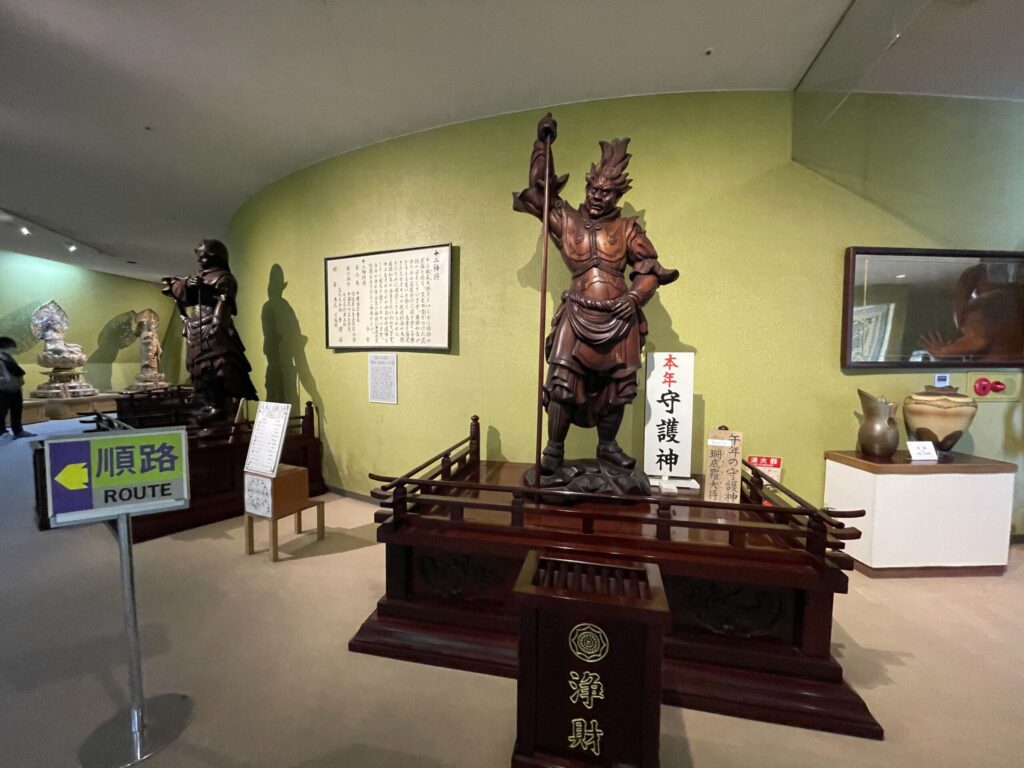
Directly inside the “womb” of Sendai Daikannon Statue is an open-plan room that houses many different religious figures to observe. This includes the 12 Divine Generals. These are dark red in color, beastly looking creatures are clad in armor and wielding weapons. Don’t be alarmed though, these generals are said to be the incarnations of the Medicine Buddha and the vows made to grant relief from illness, ward off misfortune, as well as granting basic needs like food and clothing.
108 Kannon Statue Pilgrimage
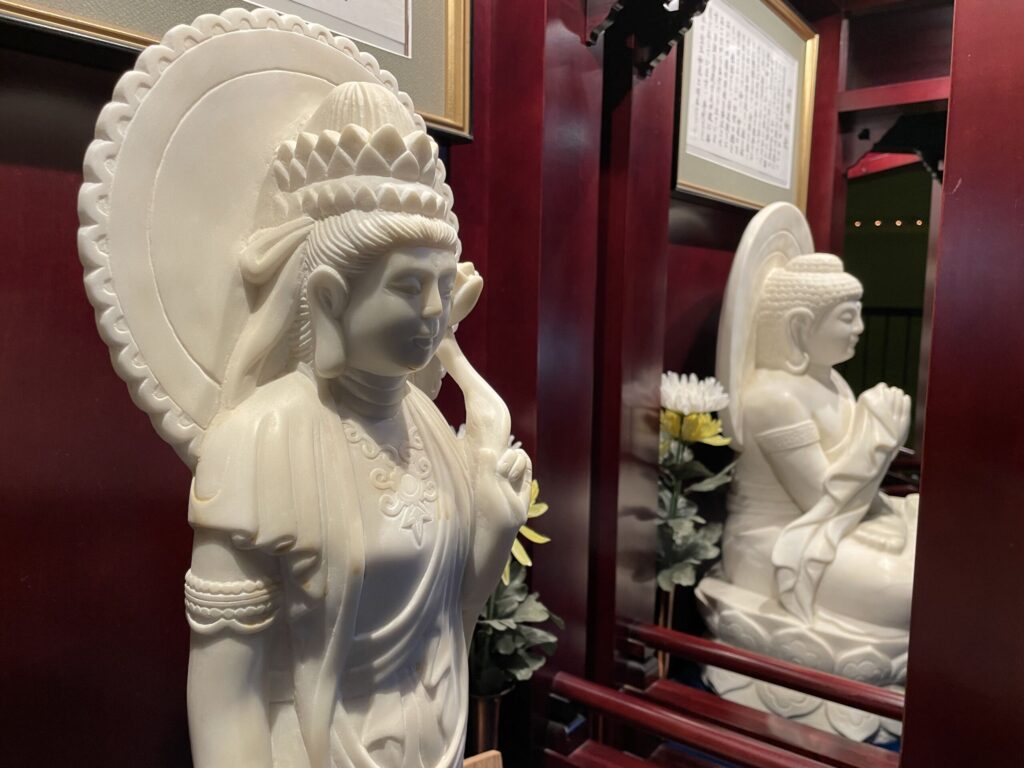
As long as humans live in this world, they are accompanied by worldly desires, and it is said that there are 108 of them. This is the basis for the 108 white statues of kannon (Hykuhachi Tainaibutsu) located throughout each of the 12 floors inside the Sendai Daikannon Statue. It is said that should you take the time to stop at each statue, pray, and reflect, you can offer up those corrupting worldly desires and be that much closer to reaching satori, enlightenment.
Frequently Asked Questions (FAQ)
Is it difficult to climb?
No. There is an elevator within the statue that takes you up to the 12th floor and you are encouraged to walk down the steps within.
How do I get to Sendai Daikannon Statue?
From Tokyo:
Take the Tohoku Shinkansen from Tokyo Station and get off at Sendai Station. From Sendai Station, follow the signs out the west exit and Daikannon signs near the bus terminal.
Purchasing a JR Pass or JR East Pass is great for those planning on traveling long distances or using the shinkansen many times throughout their trip.
From Sendai Station:
Exit from the west exit and follow the signs toward the bus terminal. Take either the X910/ S940 bound for Sanezawa Branch, 815 bound for Nishi-Nakayama, or 825 bound for Nishi-Nakayama. Ride for about 40 minutes and get off at the Sendai Daikannon-mae stop.
Is it accessible by train?
There are no trains that can take you directly to the Sendai Daikannon Statue. The closest station is Kitayama Station. From Sendai Station take the Senzan Line train bound for Ayashi or Yamagata and alight at Kitayama Station. Then there is an additional 50 minute walk to the statue.
Is there food sold here or nearby?
There aren’t any food or concessions at the Sendai Daikannon Statue location, but as it is located in a residential area restaurants aren’t too far away.
Is the temple wheelchair accessible?
Yes. There is a ramp entering the statue and an elevator within the statue for wheelchair users or visitors with limited mobility.
Additional Tips
- Respect the rituals: Although it is a popular tourist destination, it is first and foremost a place of worship. Please be respectful and mindful of the space. Even if you are just observing, take a moment to bow and cleanse your hands at the temizuya (purification basin) and be sure to keep noise at a respectable level when inside.
- Prepare for a chilly interior: Although a welcomed relief from the hot summer air, the inside of the statue can be quite chilly at all times of the year. Make sure to pack extra layers.