


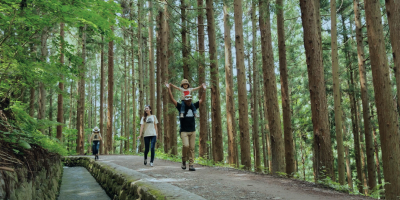

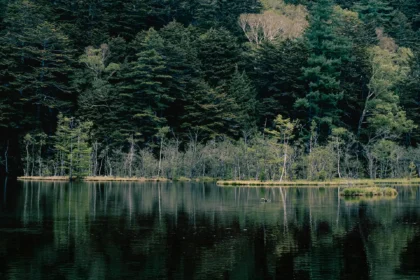

Hidden in the forested hills southeast of Kyoto lies one of the city’s most mysterious and little-visited shrines: Oiwa Shrine.
Tucked into the wooded slopes near Fushimi Inari Taisha, this secluded shrine feels worlds away from Kyoto’s busy sightseeing districts. Moss-covered torii gates, weathered stone lanterns, and quiet mountain trails create an atmosphere that feels almost frozen in time.
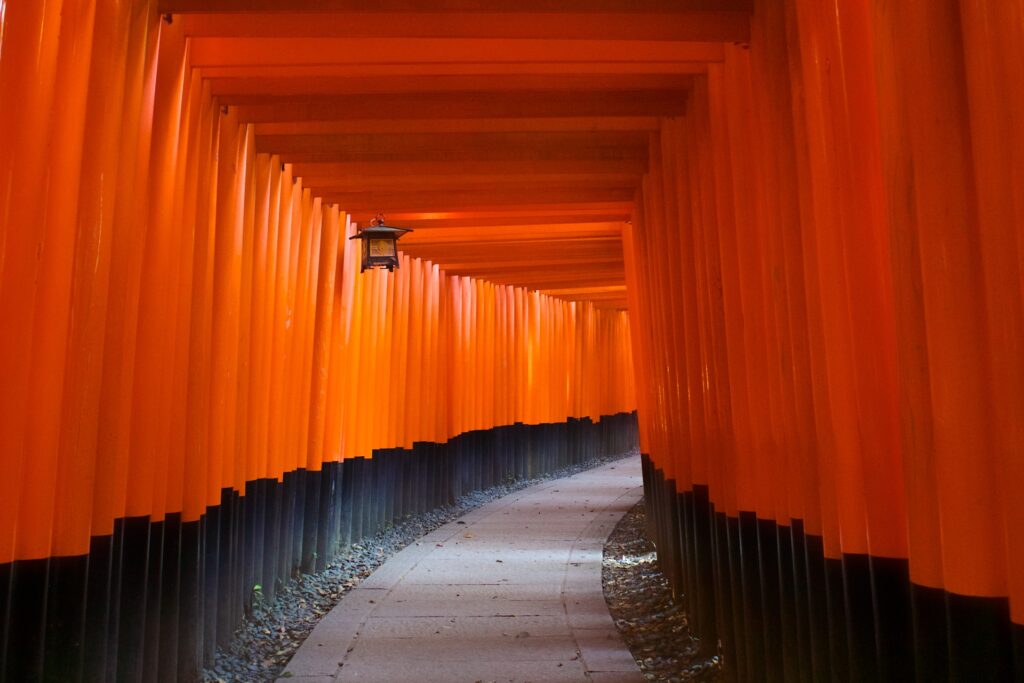
While most visitors explore the famous tunnels of vermilion gates at Fushimi Inari, few venture deeper into the surrounding forest to discover places like Oiwa Shrine. Those who do are rewarded with a rare glimpse of an older and more mysterious side of Kyoto’s spiritual landscape.
Today, Oiwa Shrine is known for its haunting beauty, deep connections to ancient nature worship, and its reputation as a powerful place for prayer and reflection.
History of Oiwa Shrine
Ōiwa Shrine (大岩神社) is one of Kyoto’s most mysterious hidden shrines.
The origins of Oiwa Shrine are not fully documented, but the shrine has likely been worshipped since ancient times.
The shrine grounds extend across the slopes of Mount Oiwa, a small mountain rising to 184 meters on the border between Kyoto’s Fushimi and Yamashina wards. Several shrine structures and sacred mounds are scattered across the hillside from the mid-slope to near the summit.
Historically the shrine was also known as “Oiwa Daimyojin,” a title often given to powerful local deities.
The shrine likely developed during the Azuchi-Momoyama to Edo period, though earlier spiritual activity may have existed here long before formal shrine buildings were constructed.
During the late Edo period and early Meiji period, a series of fires destroyed many shrine buildings and historical documents. Because of this, much of the shrine’s early history was lost.
After reconstruction, the shrine continued to attract visitors seeking healing from serious illnesses.
Today, some of the remaining shrine structures are in a state of disrepair due to fallen trees and typhoon damage. However, this has also created the quiet, mysterious atmosphere that visitors experience today.
Sacred Rocks and Ancient Shinto
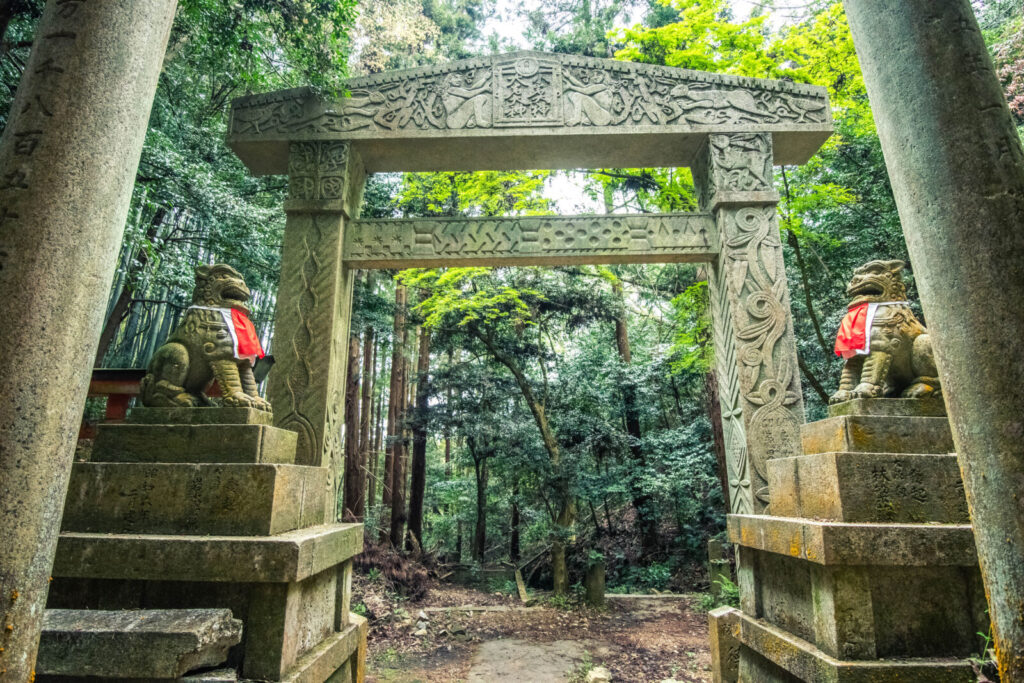
Unlike many shrines that enshrine well-known deities, Oiwa Shrine centers its worship on two sacred stones located near the summit:
• Oiwa (Great Rock – male deity)
• Koiwa (Small Rock – female deity)
These stones are believed to house the kami known as Oiwa-no-kami and Koiwa-no-kami.
This reflects one of the oldest traditions in Shinto — the belief that spirits inhabit natural objects such as rocks, mountains, trees, and waterfalls.
Long before shrines were built, sacred places in nature were worshipped directly. These objects were known as goshintai, physical vessels where the kami reside.
Oiwa Shrine preserves this extremely ancient style of worship.
For visitors, this is a rare chance to see a shrine where the focus is not a building or statue, but a sacred feature of the natural landscape itself.
A Shrine of Healing
For centuries, Oiwa Shrine developed a reputation as a place of healing.
In particular, the shrine was known as a place where people prayed for recovery from:
• tuberculosis
• illnesses of the upper body
• mental illness and nervous disorders
During the late 19th and early 20th centuries, tuberculosis was one of the deadliest diseases in Japan. Many people suffering from the illness traveled to this quiet mountain shrine seeking divine help.
Those who believed their prayers had been answered would return to dedicate small votive plaques in gratitude.
Because of this reputation, Oiwa Shrine became known locally as a “god of incurable diseases.”
The Artist Who Helped the Shrine
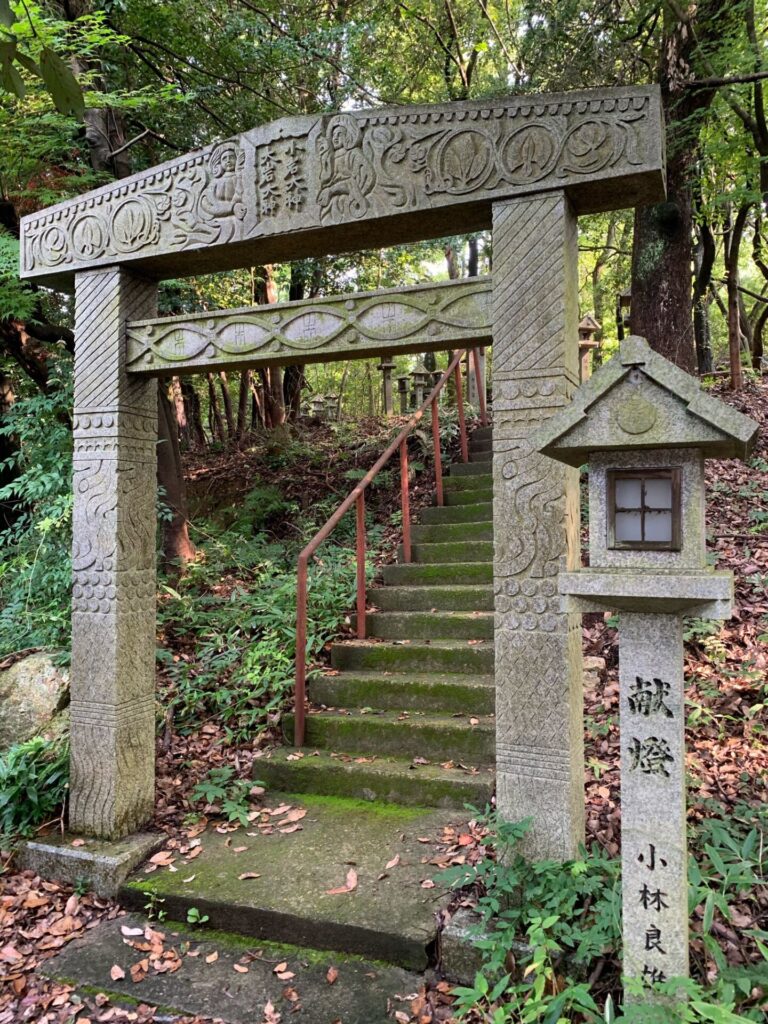
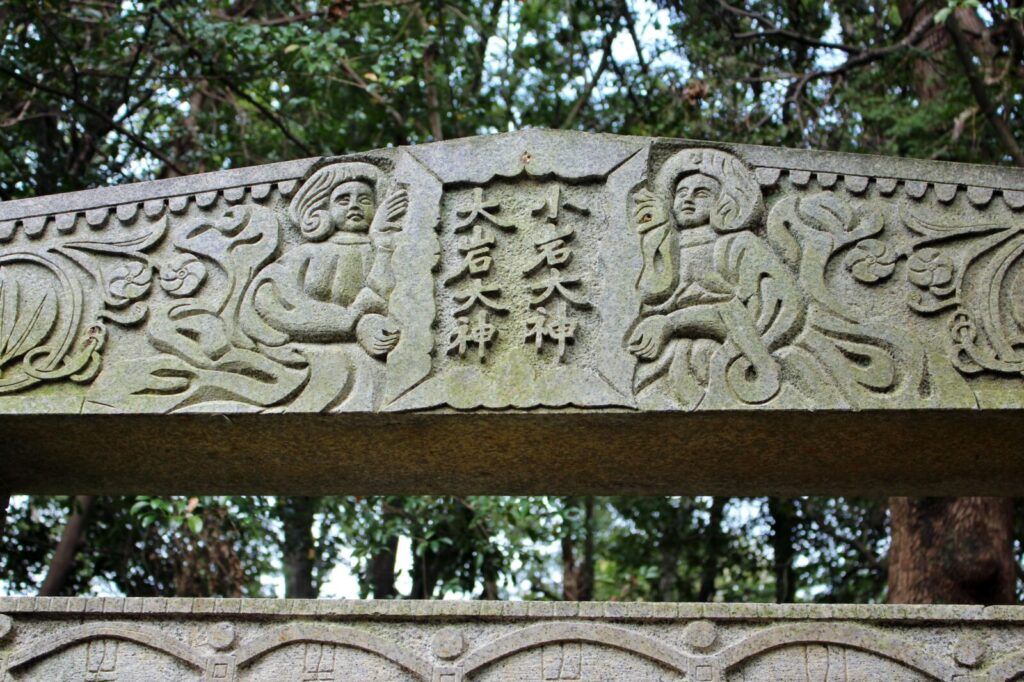
In the modern period, the shrine received a notable contribution from the Kyoto painter Domoto Insho.
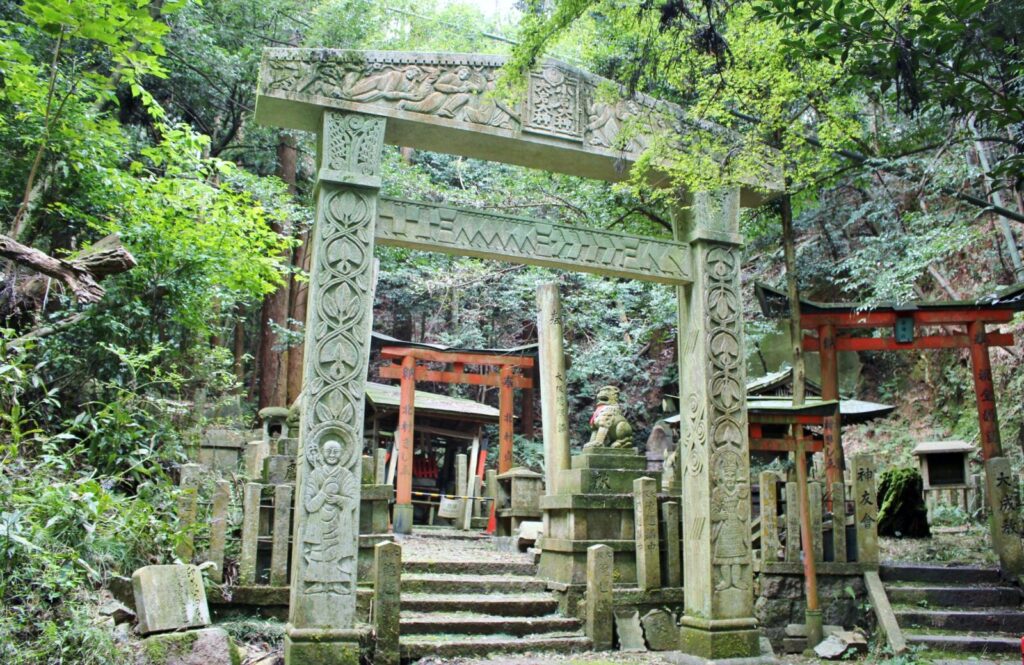
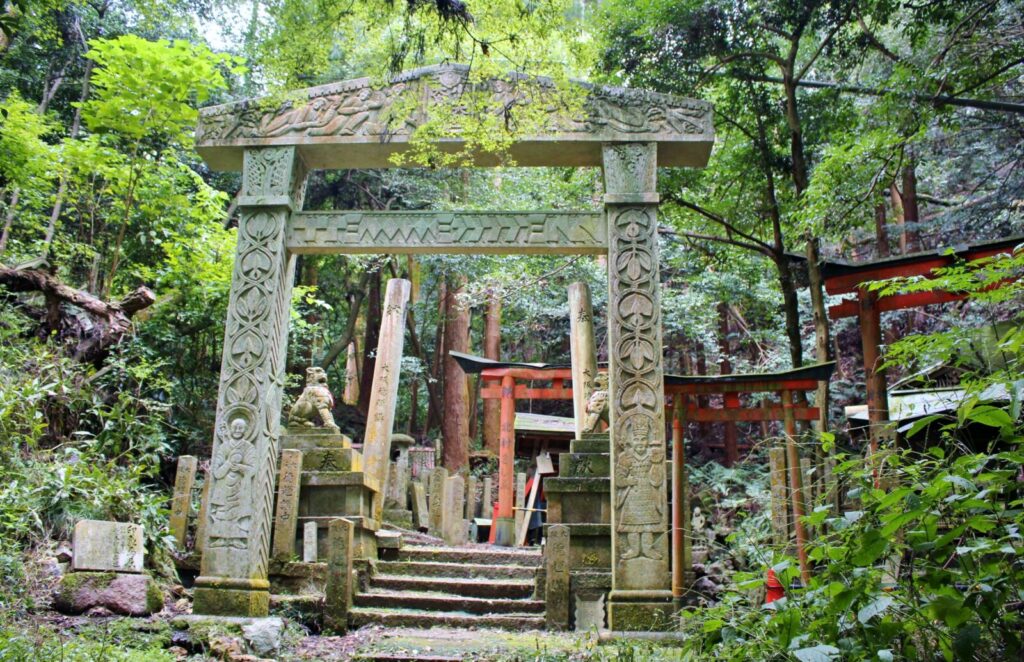
Insho and his mother were devoted followers of the shrine. After recovering from illness, they donated two distinctive stone torii gates in 1962 as a sign of gratitude.
These torii gates are unusual.
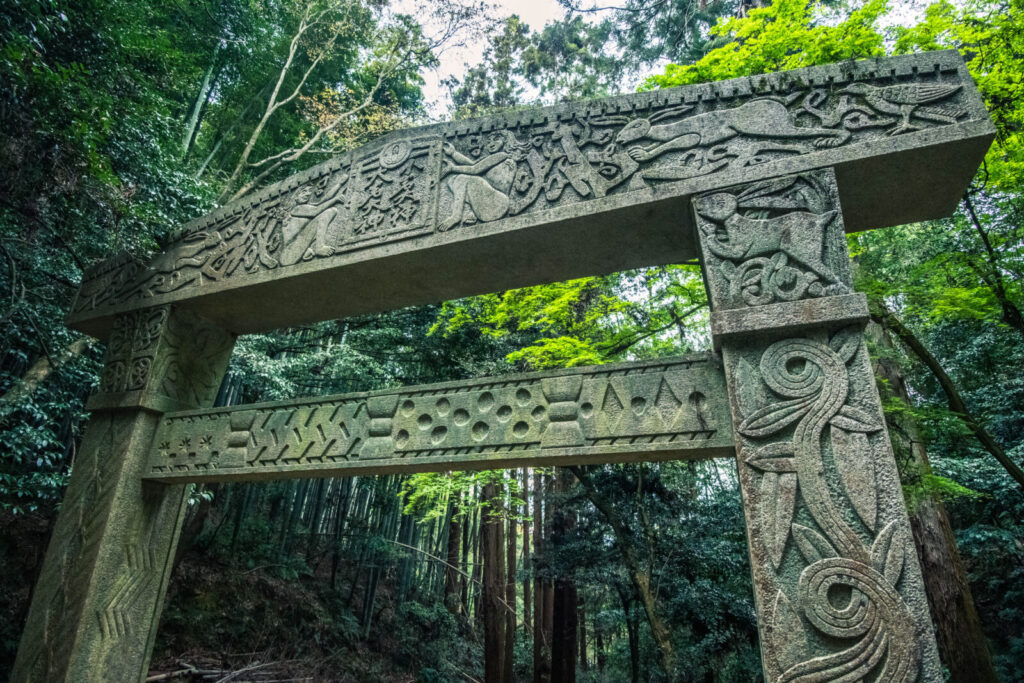
Rather than simple pillars, the square stone columns are carved with relief images including:
• Jizo figures
• warriors
• goddesses
• rabbits and other animals
• abstract patterns
One torii stands near the base of the stone steps, while the other stands closer to the upper shrine area.
They remain one of the most recognizable artistic features of Oiwa Shrine.
Oiwa Shrine Today
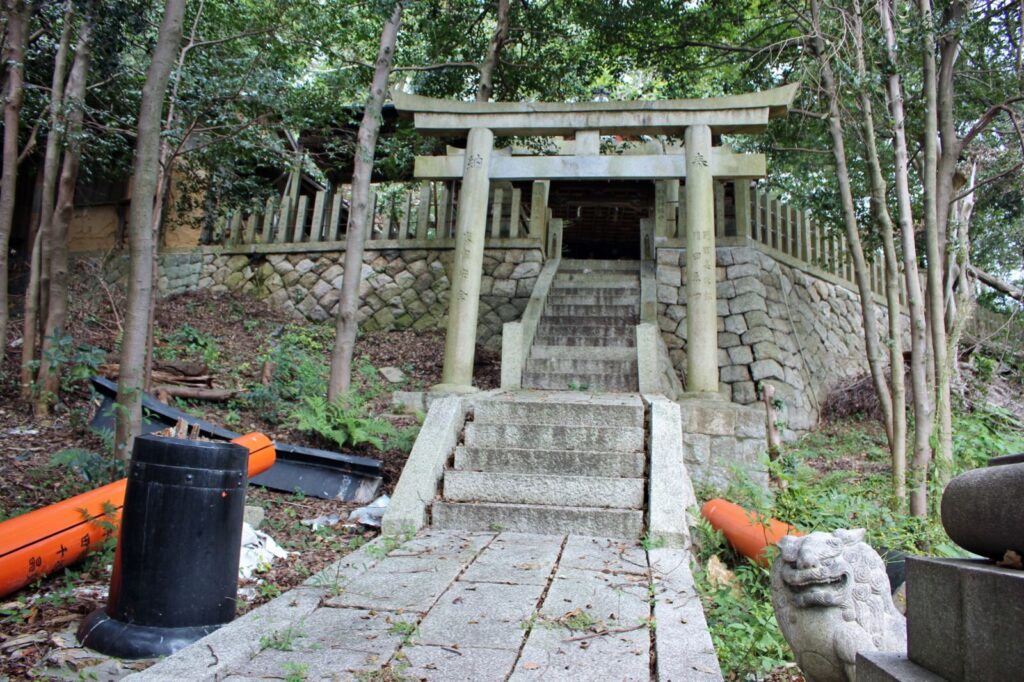
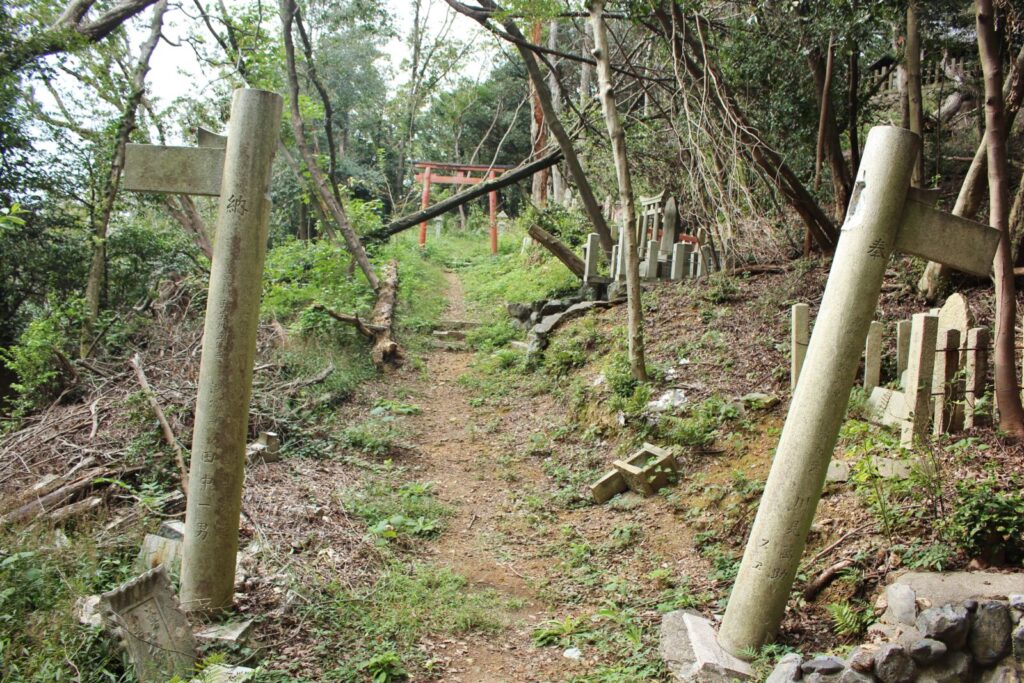
In recent years, Oiwa Shrine has taken on a very different character.
Without full-time caretakers, nature has slowly begun reclaiming the shrine grounds. Fallen trees and storms have damaged several structures, and parts of the shrine complex now appear abandoned.
Today visitors may find:
• moss-covered torii gates
• weathered stone lanterns
• abandoned shrine buildings
• forest paths rarely visited by tourists
Rather than diminishing the shrine’s atmosphere, this has created one of the most mysterious and atmospheric sacred sites in Kyoto.
Many visitors describe Oiwa Shrine as feeling almost like stepping into another world.
How to Reach Oiwa Shrine
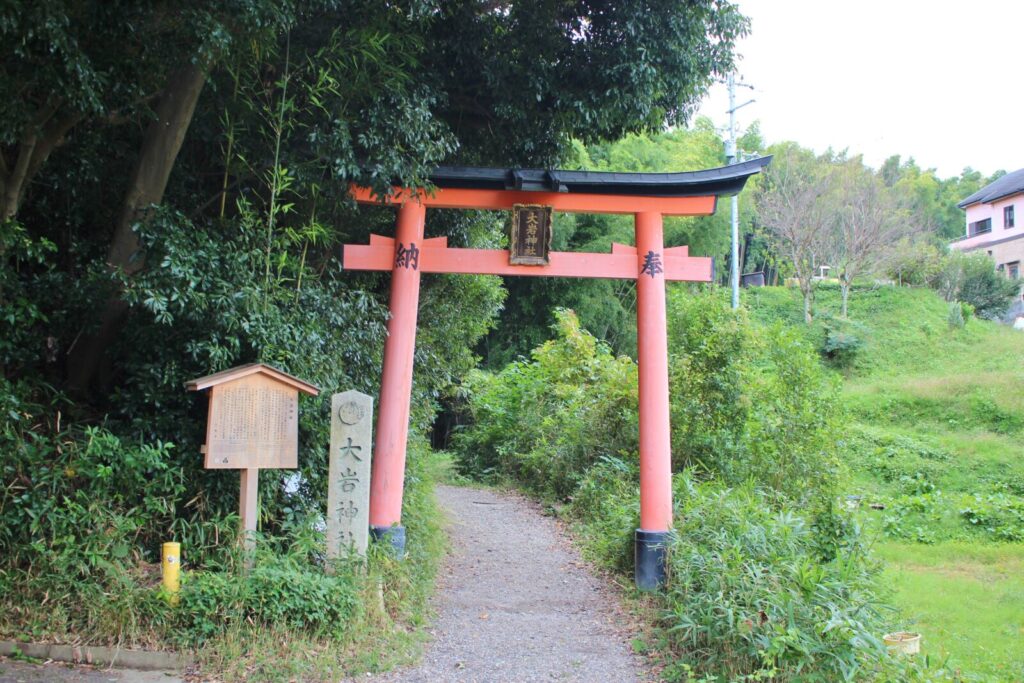
Step-by-Step Directions
- Travel to Fujinomori Station or JR Fujinomori Station.
- From the station, walk south toward the quiet residential streets of Fukakusa.
- Follow Google Maps toward Oiwa Shrine (大岩神社).
- You'll pass by a Lawson convenience store, which is a great place to get snacks and drinks
- A red torii gate marks the entrance into a mountain path.
- Continue climbing until the stone steps and torii gates of the shrine appear.
Travel Time
Approximate travel time from Kyoto Station:
- Train: 8–12 minutes
- Walking to trailhead: 15–20 minutes
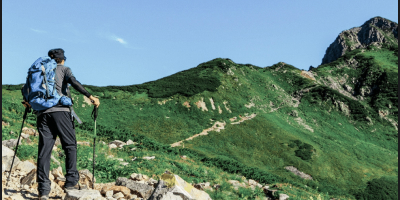
- Hiking to shrine: 30–40 minutes
- Photos and lunch 30 minutes
Total journey: about 60–80 minutes
Why Visit Oiwa Shrine?
Visitors who make the journey to Oiwa Shrine discover something increasingly rare in Kyoto: silence.
While the city’s most famous shrines attract millions of visitors every year, Oiwa remains hidden in the forest.
It offers travelers the chance to experience:
• ancient Shinto traditions
• hidden mountain trails
• mysterious shrine ruins
• a peaceful side of Kyoto few people see
Join Our tour of Oiwa Shrine
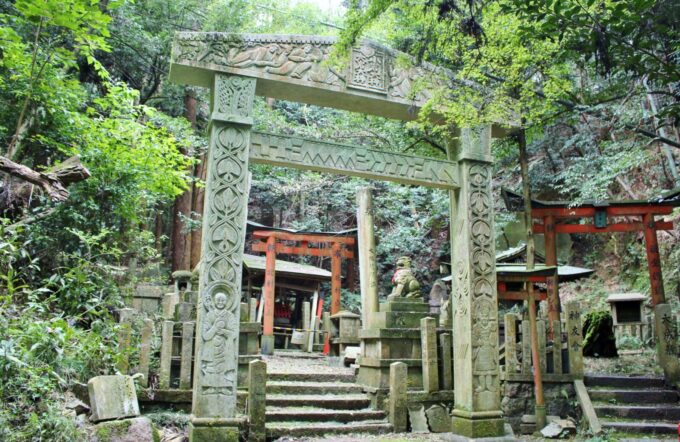
Ōiwa Shrine is one of the highlights of our Hidden Shrines & Southern Kyoto Tour, a journey into a side of Kyoto most visitors never see.
Rather than focusing only on famous landmarks, this tour explores the quiet cultural landscapes of southern Kyoto — where local shrines, forgotten castles, and imperial history are hidden among residential neighborhoods and forested hills.
During the tour we visit:
• Fujinomori Shrine – an ancient shrine associated with samurai and victory in battle
• Ōiwa Shrine – a mysterious mountain shrine known for sacred rocks and healing prayers
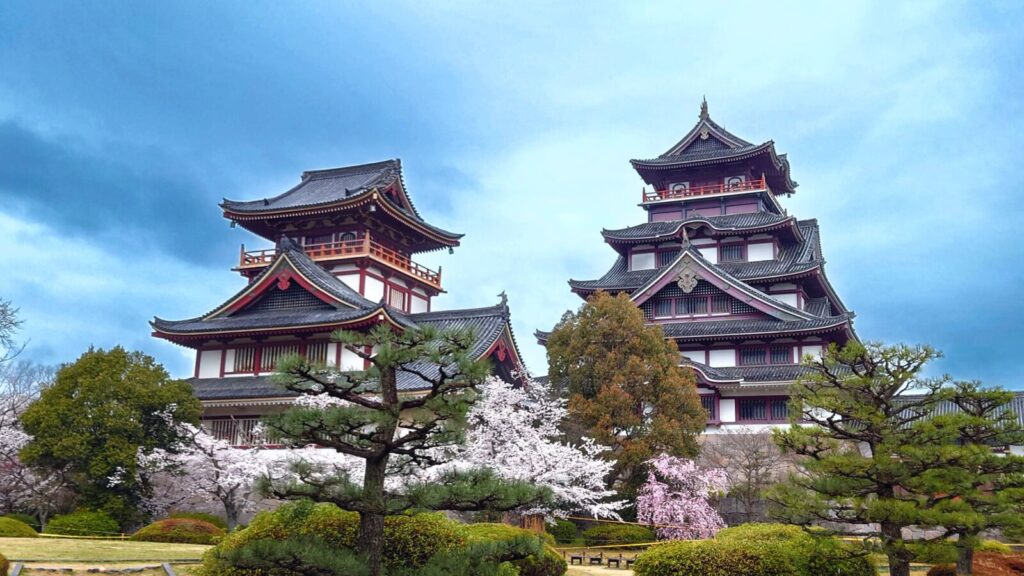
• Fushimi-Momoyama Castle – a reconstructed castle connected to the dramatic final years of Toyotomi Hideyoshi
• The grand stairway and mausoleum of Emperor Meiji
• Gokonomiya Shrine, famous for its pure spring water and connection to Kyoto’s sake culture
• The lively shopping street of Otesuji Shopping Street
The tour blends hidden history, nature walks, and cultural stories that most visitors never encounter while exploring Kyoto on their own.
Tips for Visitors
• Wear proper walking shoes
• Bring water in summer
• Trails may be muddy after rain
• Respect the shrine grounds
Although quiet and partially abandoned, it remains a sacred place.
The trail to Ōiwa Shrine begins in a quiet residential area of southern Kyoto. Unlike many famous shrines in the city, there is no large entrance gate or busy shopping street marking the start of the path.
Most visitors approach the shrine from the Fukakusa neighborhood, where small streets gradually lead toward the forested slopes of Mt. Oiwa.
Why the Shrine Was Built Here
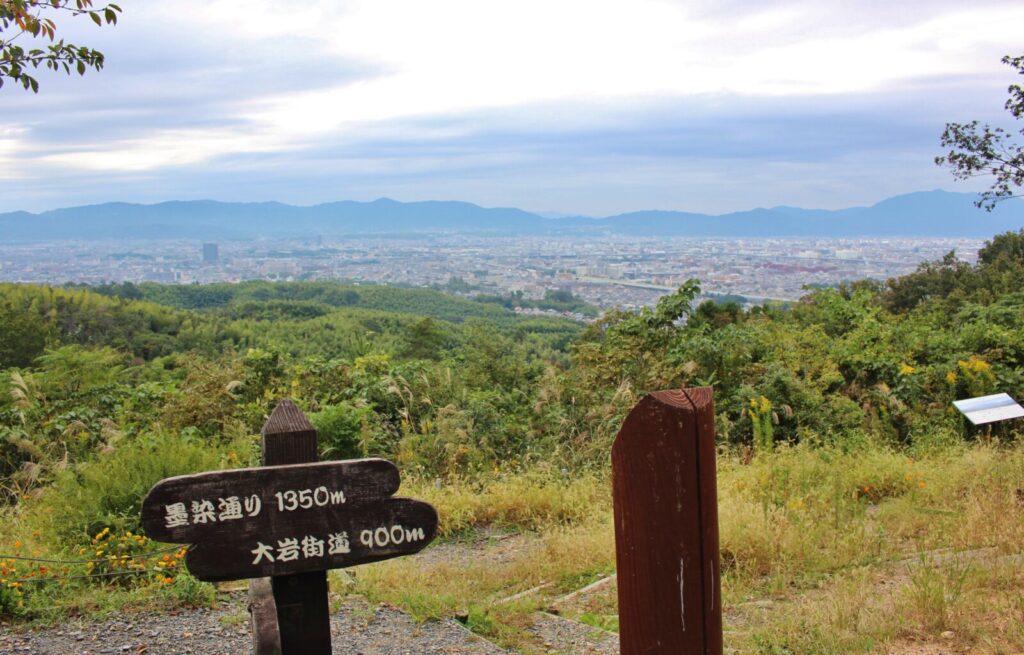
Ōiwa Shrine sits along the low mountain ridge separating the Fushimi Basin from the Yamashina Basin.
These hills were historically important because they sit above one of Kyoto’s most famous natural resources: high-quality underground water.
The Fushimi area at the base of these mountains is famous for its clear spring water, which has supported sake brewing for centuries. Even today the district is home to many historic breweries, including those that produce some of Kyoto’s most famous sake.
Sacred sites were often established near natural water sources, mountain springs, or geological formations believed to house spiritual power.
Ōiwa Shrine’s sacred rocks and hillside location likely reflect this older relationship between mountains, water, and spiritual protection over the surrounding region.
Planning Your Kyoto Trip?
If you’re still shaping your itinerary, start with our 7-Day Kansai Japan Highlights Itinerary, which combines Kyoto, Osaka, and Nara into a balanced first visit. For inspiration and practical tips, see our 40 Things to Do in Kyoto, Nara, and Osaka, including seasonal ideas and neighborhood recommendations.
Looking to go deeper? Our Best Tours in Kyoto page highlights cultural experiences that go beyond the usual sights. If you’re deciding where to base yourself, our guide on staying in Osaka or Kyoto breaks down the pros and cons of each.
For themed travel, don’t miss our Essential Guide to Geisha in Kyoto, or explore Kansai’s brewing heritage with our Top 10 Sake Breweries to Visit in Kansai. Or the Top 10 Things to Do In Fushimi that aren't the Shrine. Finally, for help making restaurant reservations in Kyoto, check out our Guide on Making Reservations in Kyoto
Frequently Asked Questions
Is Oiwa Shrine haunted?
No. While the atmosphere may feel mysterious due to the quiet forest setting and aging structures, it remains a traditional Shinto shrine.
Is the hike difficult?
The hike is moderate but manageable for most visitors with basic fitness.
Can I visit it with Fushimi Inari?
Yes. Many visitors combine the two locations as part of a longer mountain walk.
Is it crowded?
No. Even though it is close to one of Kyoto’s most famous shrines, Oiwa Shrine is usually very quiet.