











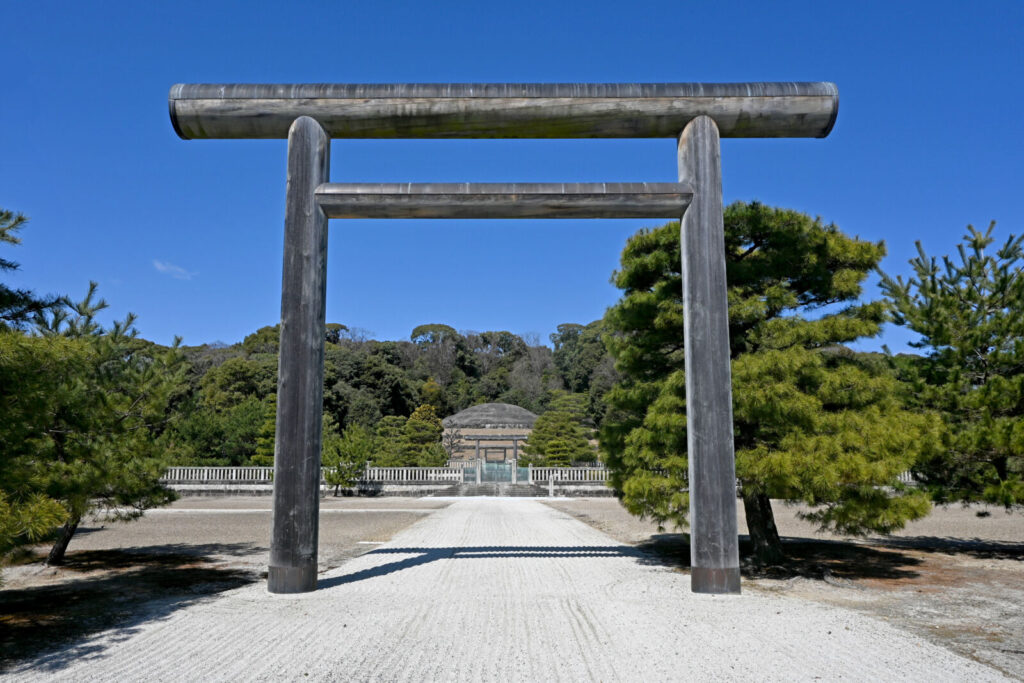
Hidden among the wooded hills of southern Kyoto, the Mausoleum of Emperor Meiji offers a very different experience from the city's famous temples and shrines. Reached by a dramatic flight of 230 stone steps, the mausoleum sits on Momoyama Hill, a historically important area once occupied by Fushimi Castle.
The peaceful setting and enormous staircase make this one of the more unusual historical sites to visit in Fushimi.
The 230-Step Grand Staircase
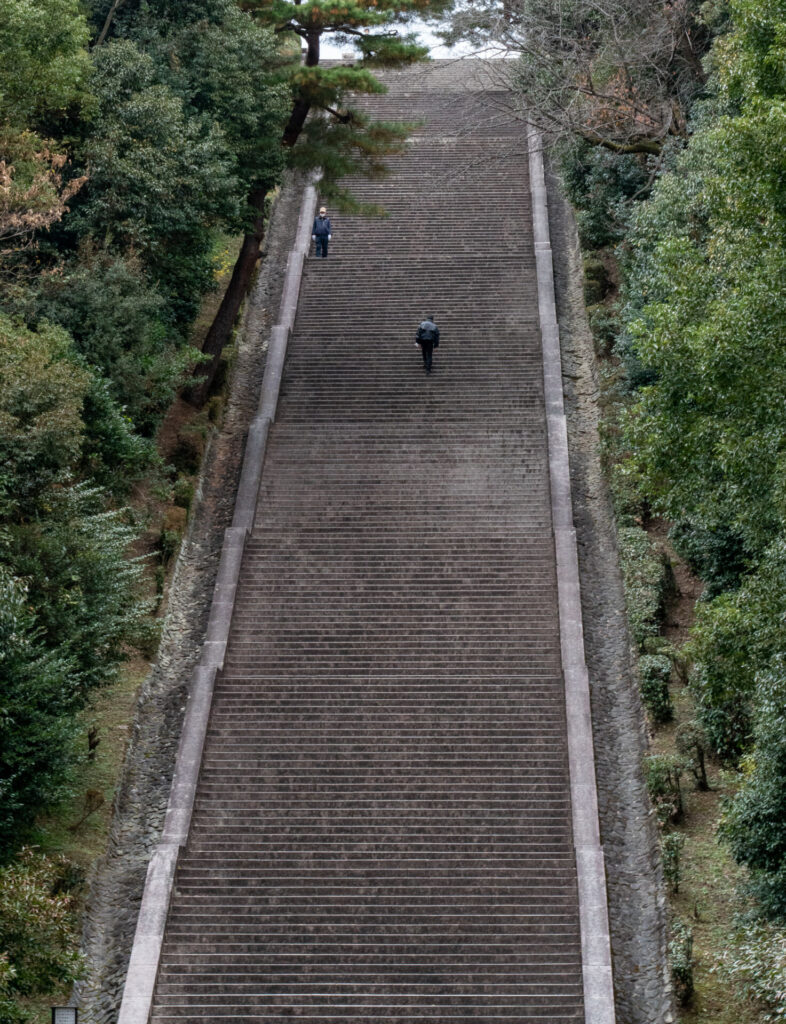
The approach to the mausoleum is dominated by a broad staircase of 230 stone steps. At the top, the trees open out around the entrance to the mausoleum, creating a striking contrast between the steep climb and the quiet space beyond.
The staircase has also become a familiar local landmark, with residents using the steps and surrounding paths for walking and exercise.
For visitors, the climb is a small challenge — but it is also part of what makes the site memorable.
The Mausoleum of Emperor Meiji
Emperor Meiji was Japan's 122nd emperor and ruled during one of the most transformative periods in Japanese history. His reign saw Japan move from the final years of the shogunate into a modern state, with enormous changes in government, industry, education and society.
Following his death in 1912, the emperor was buried here at Fushimi Momoyama. The Imperial Household Agency officially identifies the tomb as Fushimi Momoyama-ryō, and it remains an active imperial mausoleum.
The tomb itself has a distinctive upper-round, lower-square design and is approached through a series of gates and quiet gravel-covered grounds.
From Fushimi Castle to the Meiji Era
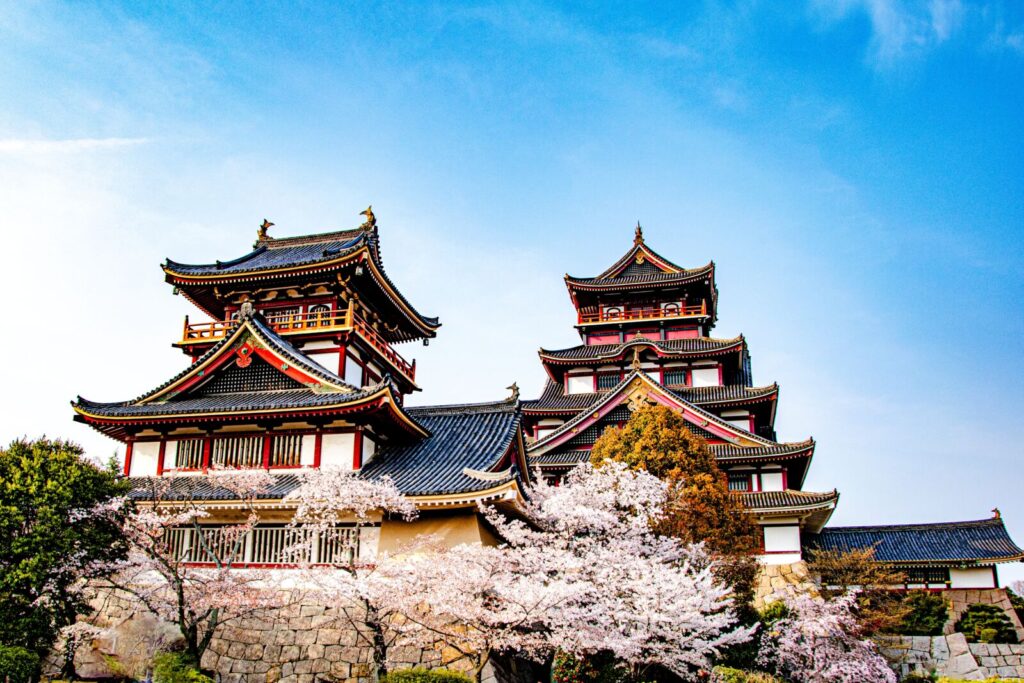
The location has an even older story. The mausoleum stands on the site associated with Fushimi Castle, the great castle built by Toyotomi Hideyoshi at the end of the sixteenth century.
This means that a short walk through the area connects two dramatically different periods of Japanese history: the age of samurai rule and the transformation of Japan under Emperor Meiji.
Visit the Meiji Emperor's Mausoleum on Our Southern Kyoto Tour
The Mausoleum of Emperor Meiji and its grand staircase are one of the stops on our Hidden Shrines & Warrior Paths of Kyoto Tour.
Rather than focusing only on the city's famous landmarks, the tour follows the historic landscapes of southern Kyoto, connecting ancient shrines, sacred mountains, samurai history, imperial history, and the sake culture of Fushimi.
During the tour we visit:
• Fujinomori Shrine – an ancient shrine associated with samurai, victory, and horses
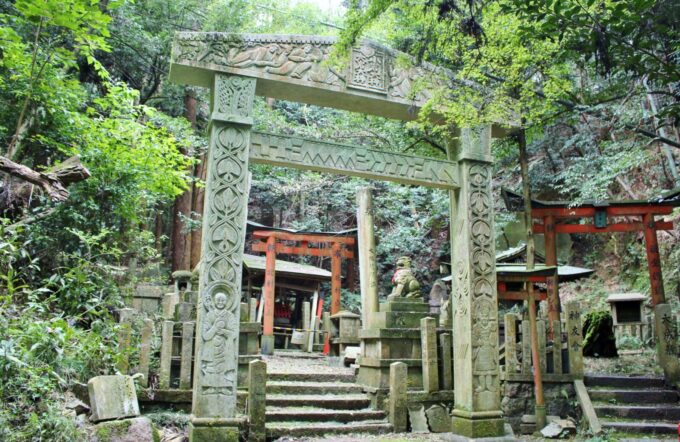
• Ōiwa Shrine – a mysterious mountain shrine known for sacred rocks and healing prayers
• Fushimi-Momoyama Castle – a reconstructed castle connected with the dramatic final years of Toyotomi Hideyoshi
• The grand stairway and mausoleum of Emperor Meiji
• Gokonomiya Shrine – famous for its sacred spring and connection with Fushimi's sake culture
• The lively shopping street of Otesuji Shopping Street
Visiting the Mausoleum
The mausoleum is generally open for respectful public visits throughout the year, with official visiting hours normally 8:30 AM–5:00 PM. The JR Momoyama and Keihan Momoyama Minamiguchi stations are both approximately a 20-minute walk away.
Please remember that this is an imperial mausoleum and a place of respect. Visitors should follow the posted rules and remain outside restricted areas.
Planning Your Kyoto Trip?
If you’re still shaping your itinerary, start with our 7-Day Kansai Japan Highlights Itinerary, which combines Kyoto, Osaka, and Nara into a balanced first visit. For inspiration and practical tips, see our 40 Things to Do in Kyoto, Nara, and Osaka, including seasonal ideas and neighborhood recommendations.
Looking to go deeper? Our Best Tours in Kyoto page highlights cultural experiences that go beyond the usual sights. For more ideas in the area, explore our Top 10 Things to Do in Fushimi That Aren't the Shrine.
For travelers interested in Japanese brewing culture, see our Top 10 Sake Breweries to Visit in Kansai.If you're exploring Kyoto beyond the major tourist sites, our guides can help you discover more of the city's history and hidden places:
Frequently Asked Questions
How many steps are there to the Meiji Emperor's mausoleum?
The main staircase leading to the mausoleum has 230 stone steps.
Where is Emperor Meiji buried?
Emperor Meiji is buried at Fushimi Momoyama-ryō in southern Kyoto.
Is the Meiji Emperor's mausoleum open to visitors?
Yes. The mausoleum can generally be visited throughout the year during designated hours, although visitors cannot enter the restricted areas surrounding the tomb.
Is the staircase difficult?
The 230 steps are steep and can be tiring, particularly in hot weather. However, the staircase is broad and there is no need to rush the climb.