
For both first-time visitors and seasoned travellers, using public transport in Japan is a daunting task. Thankfully, the country's reputation for stellar bus and train systems is well earned. Public transport is generally very punctual, affordable and well maintained. A large part of this ease of use is the Travel IC Card - most commonly known as the Suica (sold by JR East) and the ICOCA (sold by JR West) cards - which allow people to simply tap their card as they get on and off the varying modes of transport.
Most buses in Kanazawa, however, are not integrated to the Suica/ ICOCA system which, along with a few other factors, makes using the public transport around the city a jarring change from how many travellers learn to get around.
This guide will take you through everything that you need to know about using the buses around Kanazawa. Where to start, how to pay, and the important routes you'll need to know - you'll be an expert in no time.
Why Can't I Use My Suica Card?
The buses around Kanazawa, run by Hokuriku Tetsudou, are gradually rolling out machines that take IC Card (like Suica and ICOCA cards) payments, but the process is slow. As tourism began to pick up in Kanazawa after the Shinkansen extension to the city in 2015, the local government opted instead to trial a payment system that would accept both IC cards and credit card. These machines allow people to pay using their home country's currency which is then transferred into yen.
This process was originally incompatible with the way transactions on IC cards are done, so the local government made their own IC cards - ICA - which are only of use in and around Kanazawa.
Today, though, both contactless payment and IC cards are accepted on several routes. Particularly the Loop Bus and the Sightseeing Bus.
How to Use Kanazawa's Buses
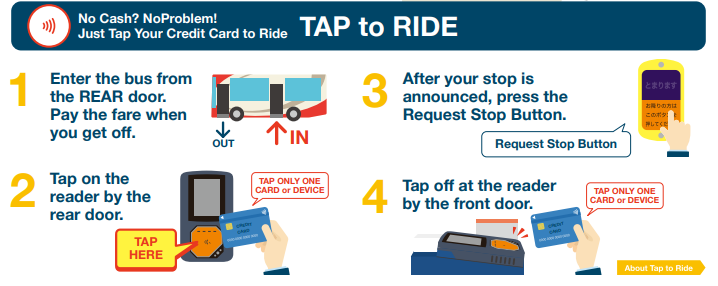
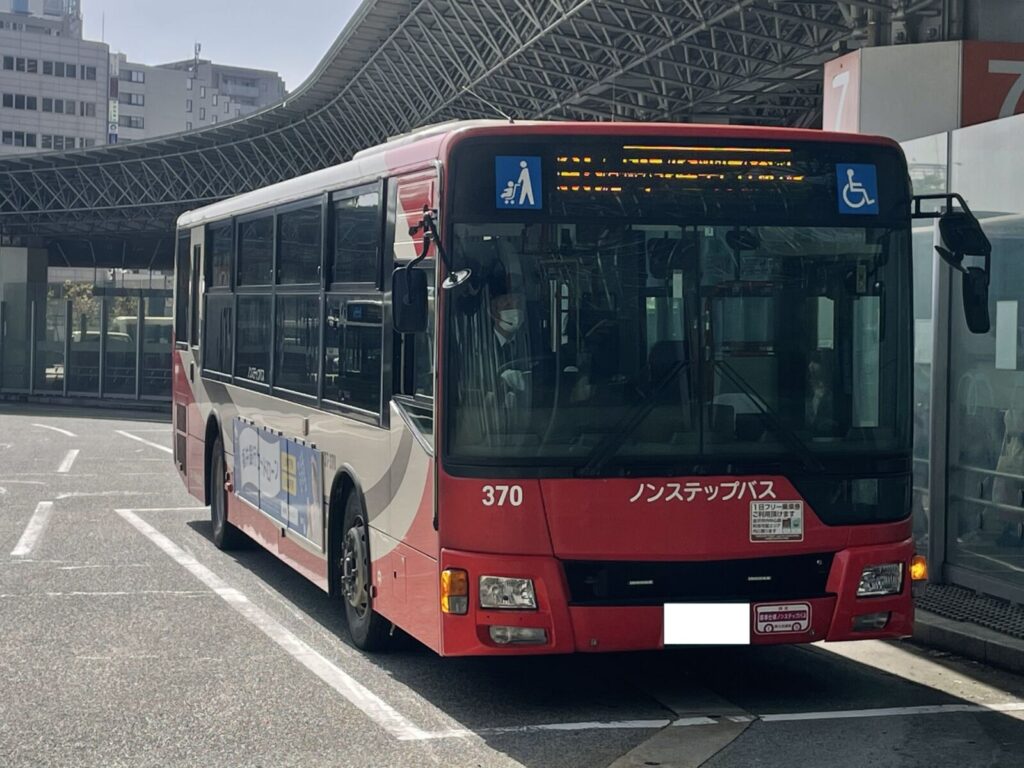
Like most buses in Japan, there are two sets of doors: one at the front and one around the middle of the bus. The door in the middle is where you get on. If you're using your card, tap it on the machine and you'll hear a short jingle. At this point, no transaction has taken place - the machine is storing the stop number your card was scanned at.
When you're ready to get off, press one of the buttons on the wall or railings. Remain seated until the bus comes to a complete stop, then make your way to the front of the bus. There, you can tap your card again. You'll hear the same jingle as before which signals the payment has been completed.
Due to a global increase in credit card fraud, take care while using any cards - as repeated small transactions can trigger a bank's anti-fraud systems.
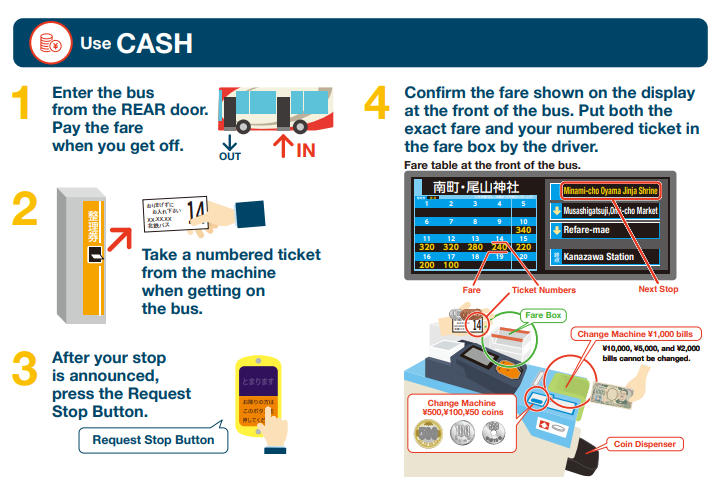
If paying by cash, you will see a box on one side of the door when you get on the bus. It prints small tickets with a number on it. This number is the ticket zone. Prices are calculated by how many "zones" you travel through. Near the driver's seat, a screen shows a table with a bunch of numbers on it. When you get off the bus, look for the number on the screen that matches your ticket. The larger number in that box indicates how much you should pay.
If you don't have exact change, there is an area by the driver where you can exchange 1000 yen notes or break down coins into smaller denominations. Put both the exact change and the ticket into the machine before you exit the vehicle from the front door.
In Summary:
- Get on the bus via the door in the middle of the vehicle.
- For contactless, tap your card. For cash, take a small ticket from the machine.
- Wait until your bus stop is next and press the button.
- Once the bus has stopped, exit from the door at the front.
- Before you leave, tap your card again or put the exact amount of cash in the box along with the ticket.
Bus Ettiquette

Almost all of the buses in Kanazawa are used by commuters going to and from work and so may be quite busy, especially at peak times in the morning and evening. Here are some general travel rules that are observed by bus passengers:
Take off your backpack - Holding your backpack in front of you, or even wearing it on your front, is seen as good manners as it prevents anybody from getting "stuck" or being hit by the bag as the bus moves.
If in doubt, wait it out - If you have large suitcases, questions for the driver, or need change from the machine, it's polite to wait until other passengers have left the vehicle. This prevents a huge line of people waiting impatiently behind you.
Avoid phone calls - People are very quick to cast disapproving glares whenever somebody starts a phone call.
Give up priority seats - Common good manners around the world, giving up a priority seat to somebody with mobility issues or an elder is an easy way to give a good impression for all foreigners visiting Kanazawa.
The Kanazawa Loop Bus
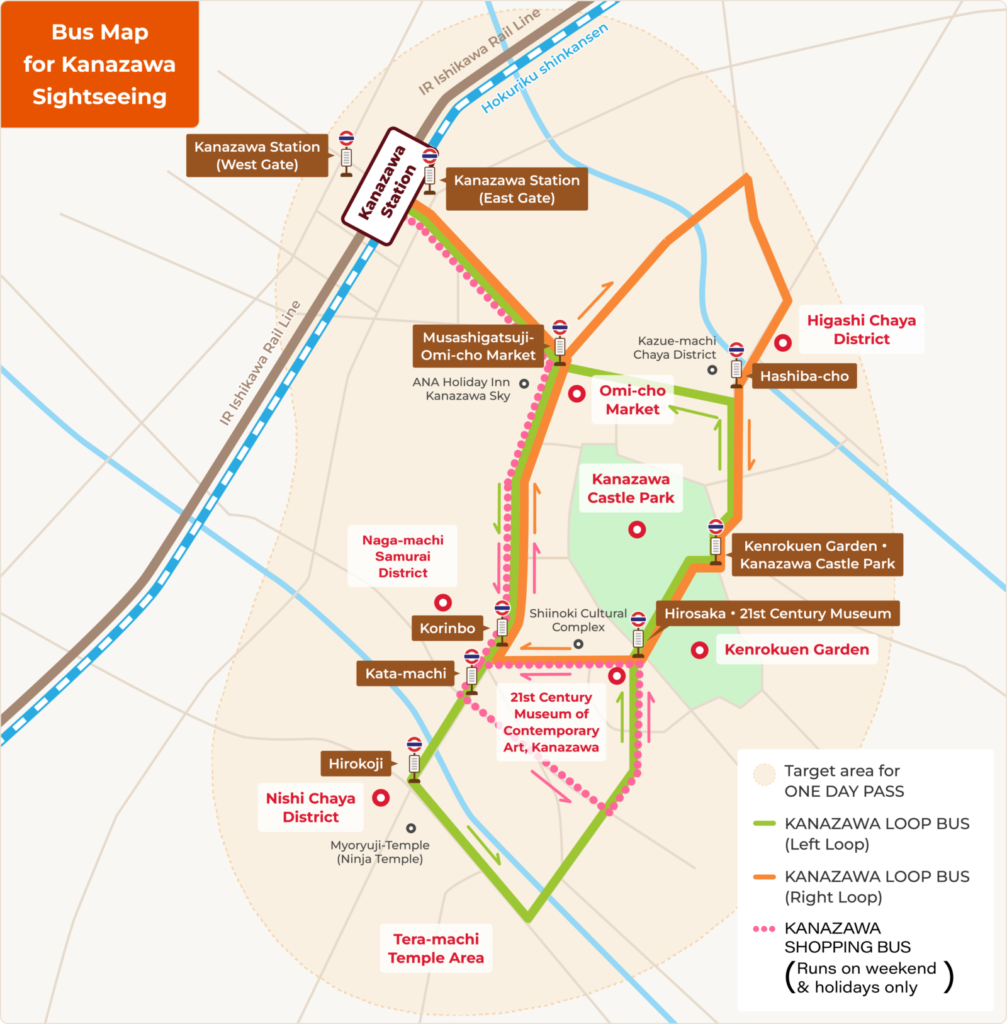
The Kanazawa Loop Bus is a pair of bus routes that run a ring around virtually all of the main sightseeing spots in the city. It sounds simple, but the way the way the loop buses are run in Kanazawa can often cause confusion.
First, there are two routes for the loop buses - the Left Loop (LL) and the Right Loop (RL). The two coincide at many points but it's important to remember that they do deviate. Both buses leave from the same area at the bus terminal at Kanazawa Station.
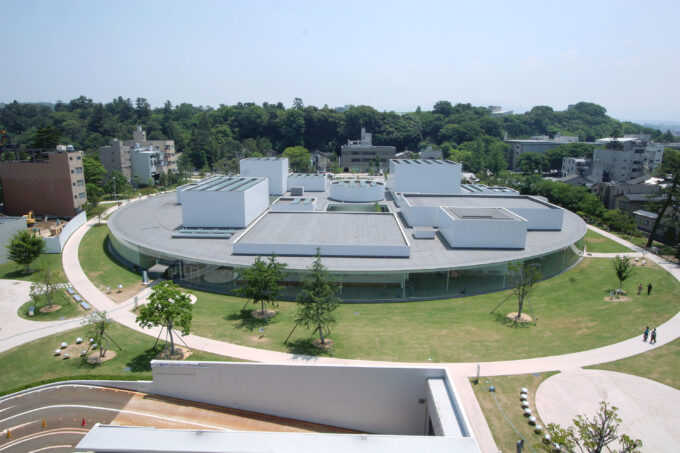
The Left Loop, shown in green above, takes people from the Kanazawa Station to Omicho Fish Market, the Korinbo Shopping District, the Katamachi bar district, past the Nishi Chaya Tea District, and through the Tera-machi Temple Area towards the 21st Century Museum of Contemporary Art and Kenrokuen Garden before turning back towards the station.
The Right Loop, shown in orange above, turns left at Omicho Market, there are stops at the Higashi Chaya Tea District, Kenrokuen Garden, 21st Century Museum of Modern Art, Korinbo Shopping District, and Omicho Market before terminating at Kanazawa Station.
Perhaps most importantly, the Loop Bus does not continuously loop around the city. It starts and ends at Kanazawa Station. Therefore, if you are riding the left loop and get off at Kenrokuen Garden, then want to ride around to Oyama Shrine, you need to get off at the Station then get back on the next Left Loop bus (although, you can get off at Omicho Market, or do a 10-minute walk through the castle grounds to the shrine).
Do I need to ride the loop bus?
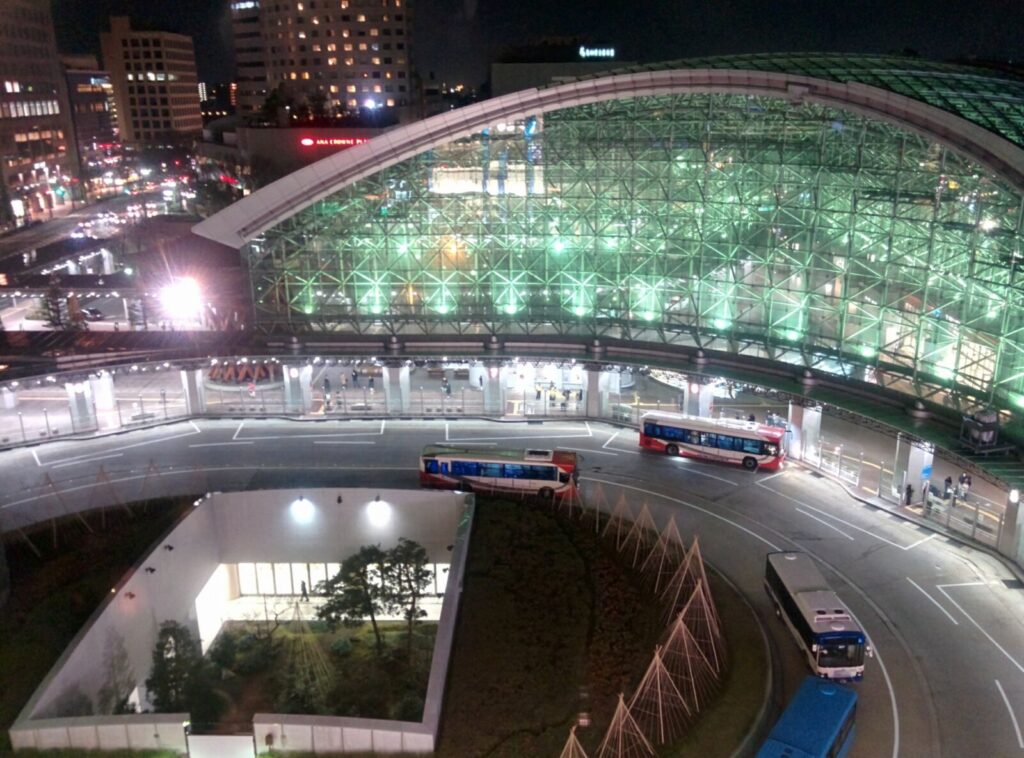
Not at all! The Loop Bus is simply the easiest route that goes to each destination. From the Bus Terminal at the East Exit of Kanazawa Station are several platforms for buses, almost all of which pass through some point of interest.
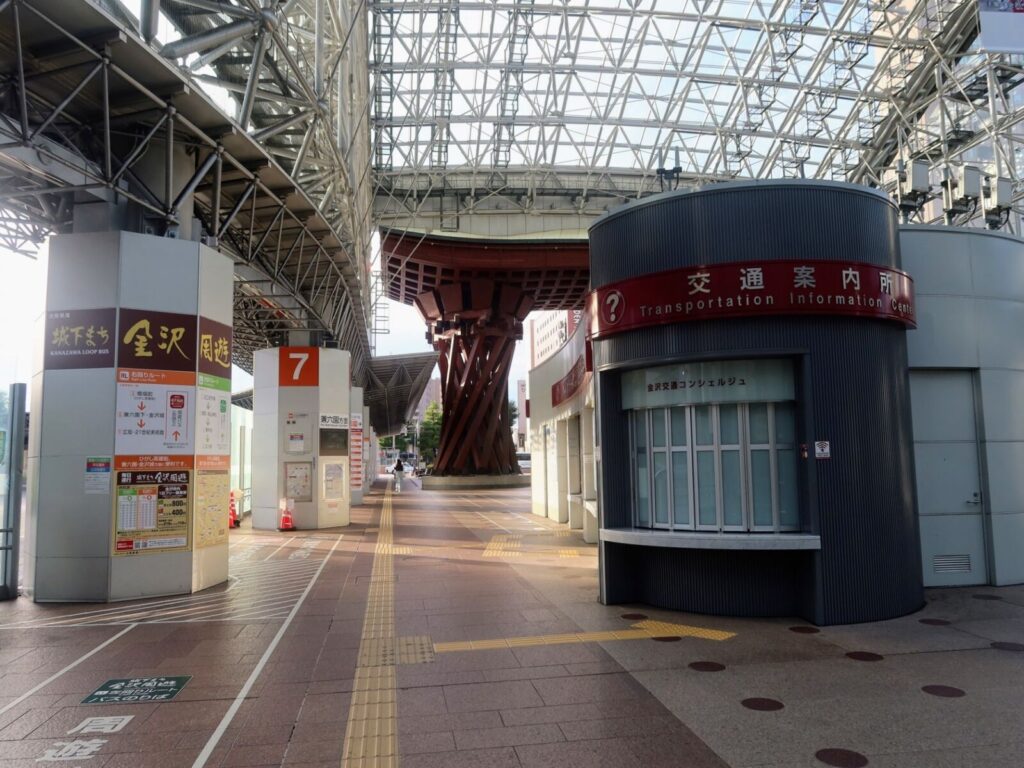
If you're struggling and need assistance, head towards the Transportation Information Centre. You can find it just outside of Kanazawa Station's East Exit. It's shown in the picture below:
Frequently Asked Questions (FAQ)
Can I use my Suica Card on Kanazawa buses?
For the most part, no. However, the Loop Bus that operates around the main tourist sites of the city does allow Suica cards and ICOCA cards.
Are there Day Tickets for getting around the city?
Yes. They can be purchased from the Transportation Information Centre. An adult ticket costs 800 yen and 400 yen for children. If interested, check with your hotel as many across the city are licensed to sell the day tickets.
Purchasing a day ticket also gives discounts to 27 museums across the city, including the Prefectural Museum of Art, Kurando Terashima's House, Seisonkaku Villa, Shima Geisha House and the 21st Century Museum of Contemporary Art.
How do I pay on a Kanazawa bus?
You pay as you get off the bus. If using contactless card, tap your card to the machine as you get on the bus, then tap again when you get off.