


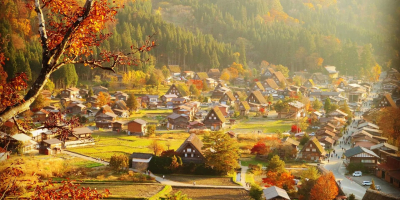
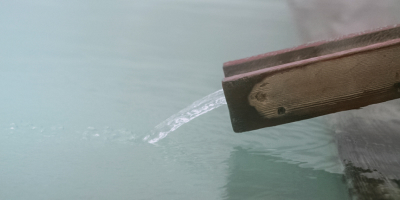
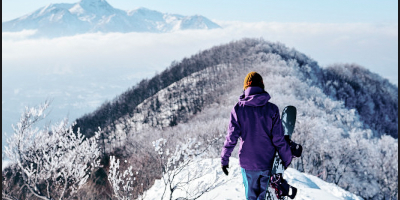
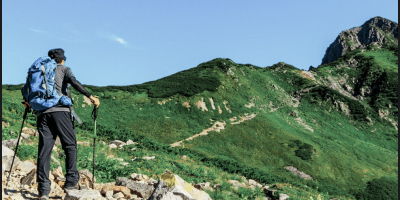

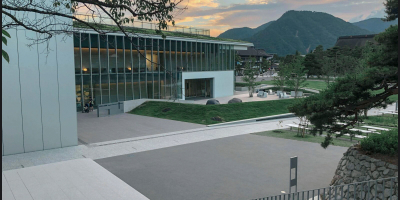
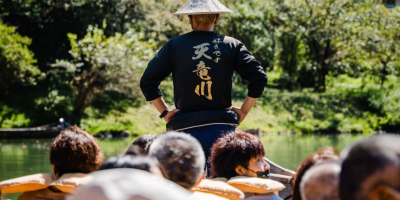
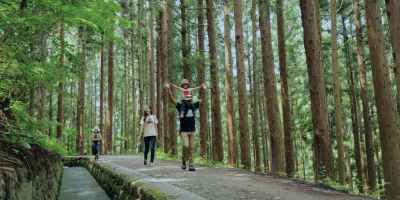

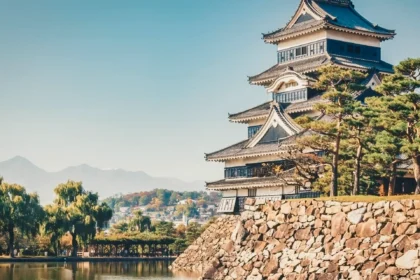

Located less than 30 minutes from Matsumoto by train, Azumino offers visitors a quieter experience of rural Nagano. The area is known for its clear spring water, wasabi farms, local soba, museums, cycling routes and views of the Northern Japan Alps.
Azumino lies between Matsumoto and Hakuba, making it a convenient stop for travellers exploring the region. However, its countryside, food, art and outdoor activities also make it worth visiting as a destination in its own right.
On this page, you will find the best things to do in Azumino, along with information about where to stay, how to get there and tours available in the surrounding region.

Based in Nagano and operating all year round, we are the region’s No.1 tour and charter operator. Our group tours run throughout the year while we can also arrange private tours and charters to any destinations in the region. As a registered travel agent, we can package transport, accommodation and more together so you save and get the most out of your time in Azumino and beyond – scroll to the bottom for details.
Where Is Azumino?
Azumino lies around 230KM / 3.5-hours from Tokyo and only 12KM / 25-minutes from Matsumoto. Most visitors moving to and from the area do so via Hotaka Station, a convenient stop on the Oito Line running from Matsumoto to Hakuba and onto Itoigawa in Niigata. Lying in close proximity to the North Alps, the farmlands of Azumino are fed by the mineral-rich waters of rivers and streams descending from the mountains above while an increasing number of museums, galleries and restauranst are opening in the area. For visitors looking to totally relax and unwind, the hot spring area of Hotaka Onsen-kyo offers a good range of guestshouses while visitors looking to ascend into the mountains can do so on the trails of the North Alps.
20 Things to Do in Azumino

Azumino is a tranquil rural enclave sitting just to the north of Matsumoto and in the shadow of the North Alps. A place of farmlands and pristine waterways, Azumino is known for its abundant produce including some of Japan's best 'wasabi', 'soba', fruit and vegetables. Providing easy access to the hiking trails of the North Alps and ski resorts of Hakuba Valley, Azumino is a great option for visitors looking to go a little slower and enjoy the best of rural Japan. Here's our suggestion of the best things to do while there:
1 / Daio Wasabi Farm / All Year Round

Japanese food is one of the most enjoyable and seductive reasons to visit the country. Offering an array of cuisine and tastes, one constant across the wide spectrum of Japan's celebrated food culture is 'wasabi'. Known in the West for its nasal-clearing heat, real wasabi is a much more subtle and highly versatile taste than many people realize. Azumino's Daio Wasabi Farm is one of Japan's largest producer of wasabi and in itself, a beautiful destination well-worth visiting.

Wasabi requires large amounts of clear water to grow and the streams and pools that flow across the farm create a picturesque and idyllic setting in which to wander.

New Tour
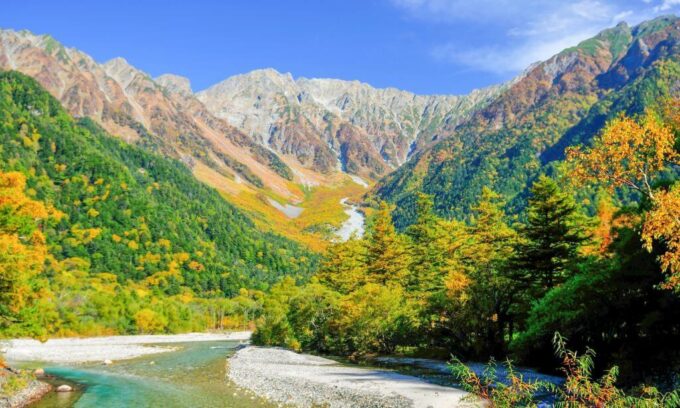
[START FROM NAGANO/MATSUMOTO] Private Wasabi-Picking Experience & Kamikochi
- Spots:
- MatsumotoKamikochi
- Pick-up:
- Nagano CityMatsumoto
- Drop-off:
- Nagano CityMatsumoto
Daio Shrine and wooden water wheels on the Tade and Yorozui Rivers – the setting for Kurosawa Akira’s 1989 film ‘Dreams’ – only add to that atmosphere. While at the farm you can delight in the varied uses of wasabi including both wasabi ice cream and wasabi beer.
2 / Enjoy Azumino Soba / All Year Round

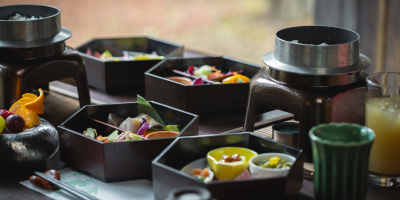
'Soba' or buckwheat noodles are a staple of Japanese cuisine and one best enjoyed in the very place it's grown. Azumino is known for the quality of its soba which is imbued with a clean and fresh taste thanks to the purity of the water feeding the local farms. Many restaurants in the area specialise in soba including at Daio Wasabi Farm and dotted throughout the area. old soba served with wasabi is the regional speciality. Stop in at any restaurant you choose. Most are great and you'll receive a warm welcome!
3 / Daisekkei Sake Brewery / All Year Round

Established in 1898, Daisekkei Sake Brewery utilizes the pure and mineral rich waters from the heavy snow of Azumino and the surrounding mountains to produce some of the region’s best ‘sake’. Known as ‘nihonshu’ in Japanese, sake is Japan’s national drink and highly complex world which takes a lifetime to master. Daisekkei is a great venue to dip your toes into this rich and warming world, offering tours of the brewery including the production process, and welcoming front bar and store where you can sample and buy, their very best nihonshu!
4 / Soak in a Hot Spring at Hotaka Onsen-kyo / All Year Round

Azumino is home to numerous 'onsen' (natural hot springs) in which you can unwind and soak in the full atmosphere of the region. Playing a central role in Japanese society, time at an onsen is intended to relieve the stress and worry of daily life, recuperate from injury and relieve pain, and perhaps most importantly, spend time with family and friends as you chat quietly and informally. Situated within 20 to 25 by bicycle from Hotaka Station, Hotaka Onsen-kyo is Azumino's main onsen village and home to many private 'ryokans' (traditional guesthouses) with their own hot springs and public onsens including free 'ashi-yu' or foot onsens.

Requiring to you strip down and enter the water without any clothing, the first onsen experience can be a little intimidating for international visitors, but just ask those who live here! You will quickly lose that inhibition as you discover just why soaking in an onsen is a national past-time; and there is no better place to do so than the beautiful surroundings of Azumino and its majestic mountain vistas. For more information, see 'Where to Stay When Visiting Azumino' below.
5 / Follow the Azumino Art Line / All Year Round

The Azumino Art Line connects 17 museums and galleries spread across approximately 50 kilometres from Azumino City to Hakuba Village. The route combines art, mountain scenery and the rural landscapes found along the eastern foothills of the Northern Japan Alps.
Notable stops include the Rokuzan Art Museum, dedicated primarily to the work of sculptor Morie Ogiwara, and the Azumino Chihiro Art Museum, which exhibits illustrations by Chihiro Iwasaki and other picture-book artists. Collections across the Art Line range from sculpture and traditional Japanese art to contemporary works and children’s book illustrations.

The museums are distributed across a wide area, so visitors should select a few locations rather than attempt to see the entire route in one day. Opening days, hours and seasonal closures vary between facilities, making it important to check each museum’s current information before travelling.
6 / Chihiro Art Museum Azumino / March to November

The Chihiro Art Museum Azumino celebrates the life and work of Chihiro Iwasaki, a Japanese artist best known for her watercolour illustrations of children. The museum also presents works by picture-book artists from Japan and around the world through regularly changing exhibitions.
Facilities include a picture-book library, children’s play area, museum shop and café overlooking the surrounding park. Beside the museum, Totto-chan Square features restored train carriages inspired by the school described in Totto-chan: The Little Girl at the Window.
The museum is not open all year and normally closes during winter. Exhibitions, opening dates and closed days vary, so visitors should check the museum’s official website before travelling.
7 / Azumino Tensan Centre / All Year Round

Azumino’s pristine natural environment provides the perfect environment for wild silkworms to thrive. In the late-18th century, the residents of Azumino began collecting the eggs and established a local silk production industry. The Azumino Tensan Center opened in 1978 in order to revive the wild silkworm industry, which had struggled in recent years. The center introduces visitors to the ecology, history, and workings of wild silk production including a weaving studio providing demonstrations and museum shop wear silk products can be purchased.
8 / Toko-ji Temple and Its Giant Geta / All Year Round

Toko-ji is an interesting, very local little temple located about 10 minutes walk from Hotaka Station. Located between the station and Daio Wasabi Farm, the temple is a quick and interesting stop as you move between the two destinations. Any visitor to the temple will notice the huge red ‘geta’ (wooden sandals) positioned within the temple grounds and feel the compulsion to climb onto them. Known as ‘Niyosama’s geta’, climbing onto and wearing the sandals is said to bring the person great luck. We can’t guarantee that it works but it can’t hurt to try!
9 / Cycling in Azumino / April to November

There's no better way to experience the rural atmosphere, sights and sounds of Azumino than cycling through the landscape of rice fields and farms all set against the stunning backdrop of the Northern Alps. With rental road and mountain bicycles available outside Hotaka Station (including e-bikes for an even more leisurely time), cycling through Azumino promises to be the highlight of any visit. Suggested cycling routes allow you to explore the area to your own speed and will lead you past countless rice fields, farms, and orchards and onto wineries, temples, museums, eateries, and well-earned 'onsen' (hot springs) and combine with unique experiences such as 'wasabi-picking from a local farm.
10 / Fruit Picking in Azumino / April to November

Blessed with an ideal climate for growing countless varieties of fruit and vegetables, Nagano is most famous for its apples and grapes, both of which grow to impressive size and deliciously flavorful in the higher elevation of Azumino's orchards. Growing many varieties of apples including well-loved Fuji and San Fuji types, the pronounced temperature difference between day and night promotes the growth of delicious apples which you can pick and enjoy for yourself and several of the region's many orchards. This leisurely activity is suitable for all ages and is particularly popular with families, whose children relish the rare chance to be among orchards and choosing their own delicious apples directly from the tree.
11 / Rafting and SUP at Daio Wasabi Farm / April to October

Fed by the Tade and Yorozui Rivers, one of the farm's most striking elements is the endless pure water that follows through the streams and feed the expansive beds of wasabi. The clarity of water delights and imbues the farm with an atmosphere of vitality and tranquility as it trickles and follows past the senses. The calming experience of the water is perhaps best enjoyed while floating on it yourself, which can be done with a guided boat ride or self-propelled SUP (Stand-up Paddling) over the rivers and past the farm's iconic water wheels. The clarity of the water below will amaze and as you gaze deep into shimmering streams, any worry and stress is quickly forgotten... For more information, see our 'Rafting in Azumino' page.
12 / Mountain Stream Climbing / Best from July to September

Situated in the shadows of Japan’s Northern Alps, the lush farms of Azumino are nourished by the streams and rivers that flow from the mountains to the plain below. In recent years, exploring and “climbing” mountain streams , also called "canyoning" has become a popular activity in the region, suitable for guests of all ages and great fun! Led by an English-speaking guide who will provide safety gear including a helmet and life jackets to all guests, you’ll be led up the Nakabusa River as you jump, dive, swim and float your way along the beautiful waters of Azumino. For more information, see our 'Japan Adventure Travel: Canoeing, Kayaking, Rafting, Canyoning & SUP' page.
13 / Hiking in the Northern Japan Alps / Best from July to October

The Hida Mountains of Nagano are more commonly referred to as the 'North Alps', the third of three extensive mountain ranges that cut across Nagano and collectively form the Japanese Alps. Home to the majority of Japan's highest mountain peaks, this dramatic alpine landscape offers some of Japan' best hiking and mountaineering routes, with numerous trails catering for all levels of fitness and expertise. One of the most popular routes is the 'Panorama Ginza', known for its breath-taking vistas including Mount Yarigatake (3180m) among other famous peaks, as it walks the ridge line. This well-trodden trail is serviced by a network of mountain huts, making it an ideal place to discover the mountainous heart of Japan and some of the most dramatic landscapes that the country has to offer. For more information, see our 'Japan Adventure Travel: Hiking, Trekking, Mountaineering, Caving & Climbing' page.
14 / Walk the Former Shinonoi Line Railway Trail / Best from April to November

Known locally as the Haisenjiki, this walking trail follows part of the former Shinonoi Line through the forested hills around Akashina. The original railway opened in 1902 and carried passengers and freight between Matsumoto and Nagano until this section was replaced by a new route in 1988.
Today, approximately six kilometres of the former track bed form a walking trail featuring red-brick tunnels, old railway signals and other remnants of the railway. Key sights include the preserved Shikkaku Tunnel and the former site of Ushiozawa Signal Station.
The route is relatively gentle, but parts are unpaved and some tunnels are dark. Visitors should wear suitable footwear and carry a torch.
15 / Cherry Blossoms on Mount Hikarujō / Late March to April

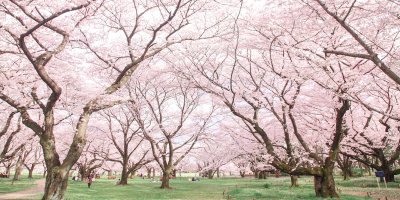
There is no more quintessential Japanese past-time in spring that 'hanami' or flower viewing. Blooming each year around April to May, Azumino's glorious 'sakura' (cherry blossom trees) transform the landscape into a softly contrasting mosaic of white and soft pink and these beautiful, fragile flowers make their yearly appearance before falling from the trees to carpet the ground below. One of the best locations to view the blossoms while Azumino is walking one of the altnerate Mount Hikarujo trails, which run below a canopy of blossom trees all the way to the mountains peak at 912 meters. Once there you are afforded views of the landscape below before meandering back down and again into the quiet beauty of these most Japanese of flowers.
16 / Sunrise from Mount Nagamine / All Year Round

Mount Nagamine is a scenic viewpoint overlooking the Azumino countryside and the Northern Japan Alps. From its summit, visitors can enjoy panoramic views across the Azumino and Matsumoto plains towards peaks including Mount Jōnen.
The viewpoint is particularly impressive around sunrise, when the morning light gradually illuminates the snow-covered peaks of the Northern Alps. Clear winter mornings can provide especially striking views, although snow and ice may affect access.
Mount Nagamine can be reached by hiking through the surrounding woodland, while a seasonal road also provides access closer to the summit. Visitors should check current road and trail conditions before travelling, particularly during winter.
17 / Azumino Fireworks Festival / 14 August

Summer is a time for festivals in Japan and especially fireworks displays! Known as 'hanabi' in Japanese, the huge fireworks displays taking place across the country through the hot and humid months of summer draw massive crowds as family and friends come together in the cooler evenings to gaze up in wonderment to dazzling displays of light and color above. Held on August 14th each year, the Azumino Fireworks Festival is the second largest fireworks event in Nagano - after Suwa's grand fireworks display each August - and takes place on the banks of the Saigawa River - a grand event on the Azumino calendar!
18 / Azumino O-Fune Festival / 26 to 27 September

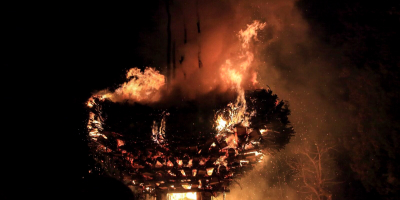
Held annually at Hotaka Shrine on 26 and 27 September, the O-Fune Festival is one of Azumino’s most important traditional celebrations. The evening festival takes place on 26 September, followed by the main festival and float procession on 27 September.
Large boat-shaped floats decorated with historical figures are pulled through the surrounding neighbourhoods towards Hotaka Shrine. The celebration reaches its climax when the large floats collide inside the shrine grounds.
The boats reflect the maritime origins of the Azumi people, who are believed to have travelled inland before settling in the region. The festival offers visitors an opportunity to experience this local history alongside traditional music, costumes and the lively atmosphere of a community celebration.
19 / Enjoy a Winter Illumination / November to January

Each winter, the Horigane and Hotaka area of Alps Azumino National Government Park is transformed by an extensive illumination display. Colourful lights, themed installations and illuminated woodland paths create a lively contrast with Azumino’s quiet winter landscape.
The event generally runs from November until January, with the lights switched on after sunset. Exact dates, opening nights, illumination hours and displays change each year, and normal park admission charges apply.
Winter evenings in Azumino can be extremely cold, so visitors should wear warm clothing and suitable footwear. Check the park’s official website for the current year’s schedule before visiting.
20 / Hotaka Shrine Kamiakari Festival / Early December

Held in early December, the Azumino Kamiakari Festival fills the grounds of Hotaka Shrine with the warm light of more than 2,000 bamboo lanterns. The illuminated pathways and shrine buildings create a peaceful atmosphere during Azumino’s early winter.
The lantern display is accompanied by live performances and food stalls on selected evenings. Hotaka Shrine is approximately five minutes on foot from Hotaka Station, making the event relatively easy to reach by train.
Exact dates, times and activities can change each year, so visitors should check the latest festival information before travelling.
Where to Stay When Visiting Azumino

If you're headed to Azumino, we recommend heading to Hotaka Onsen-kyo to enjoy a hot spring in the shadow of the North Alps, or for visitors heading there as a day-trip, Matsumoto is a convenient base from where to enjoy the area. But let's start with:
HOTAKA ONSEN-KYO

Located around 10-minutes drive from Hotaka Station, Hotaka Onsen-kyo is the main accommodation area in Azumino. As a traditional ‘onsen’ (hot spring) area, accommodation in this area is mostly limited to traditional guesthouses with their own hot springs. There are some excellent options in the area, including high-end ‘ryokan’ (guesthouses), most of which are within easy reach of the station. Guests who choose to stay in Hotaka Onsen-kyo can unwind and indulge in the comfort of a traditional guesthouse in the shadows of the North Alps - a memorable experience for any visitor to Japan. For accommodation listings, see our ‘Hotaka Onsen-kyo’ hotel page.
MATSUMOTO

Located around 25 minutes from Hotaka Station by train, Matsumoto is the largest nearby city and a convenient base for visiting Azumino as a day trip. Most accommodation is concentrated around Matsumoto Station and the city centre, providing easy access to trains on the Oito Line.
The city offers a broad selection of business hotels, guesthouses and higher-end accommodation, along with more restaurants and evening dining options than Azumino. Many hotels are also within walking distance of attractions including Matsumoto Castle and Nawate Street.
For accommodation options, see our Matsumoto Area hotel listings.
Popular
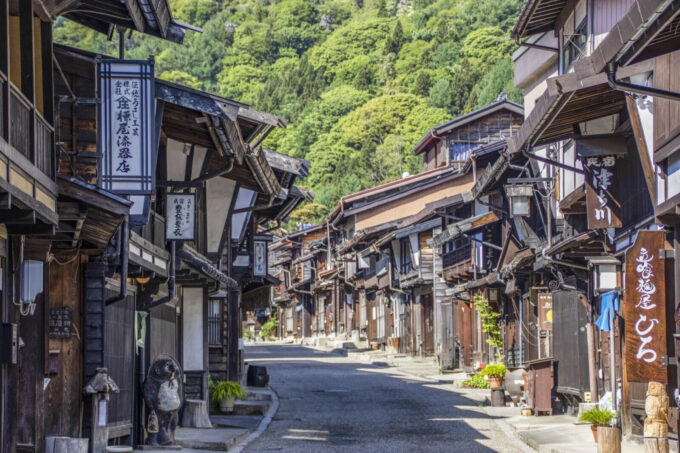
1-Day Tour from Nagano and Matsumoto: Experience Matsumoto Castle and Narai-juku
- Spots:
- NaganoMatsumotoKiso Valley
- Pick-up:
- Nagano CityMatsumoto
- Drop-off:
- Nagano CityMatsumoto
Getting to and Around Azumino

Most visitors travelling by train reach Azumino via Hotaka Station, approximately 30 minutes from Matsumoto on the Oito Line. The line continues north towards Hakuba and Minami-Otari, but passengers travelling farther towards Itoigawa may need to change trains.
For visitors arriving from Tokyo, Nagoya or other major cities, Matsumoto is the most convenient transfer point. See our How to Get to Matsumoto guide for the main regional routes.
Azumino’s attractions are spread across a wide rural area. Rental bicycles are a convenient option around Hotaka during the warmer months, while taxis and seasonal sightseeing buses connect selected attractions. Travellers relying on public transport should check schedules carefully because local services can be limited.
See our guide to Getting Around Azumino for further information about bicycle rental, buses and taxis.
Tours and Charters Near Azumino
Azumino’s attractions are spread across a wide rural area, making a private tour or charter a convenient option for visitors who do not want to rely on limited local transport. The following tour directly visits Azumino and combines the region with Kamikochi.
Private Wasabi-Picking Experience and Kamikochi
Looking for a deeper experience of Azumino? This private tour begins with a guided visit to Daio Wasabi Farm and an opportunity to select fresh wasabi directly from the riverbed at a neighbouring farm. After lunch, travel into the Northern Japan Alps for a guided walk through Kamikochi from Taisho Pond to Kappa Bridge.
Highlights:
- Begin and finish in either Nagano or Matsumoto.
- Explore Daio Wasabi Farm with an English-speaking guide.
- Enter a neighbouring wasabi field and select fresh wasabi from the riverbed.
- Walk approximately 2.7 kilometres from Taisho Pond to Kappa Bridge.
New Tour
[START FROM NAGANO/MATSUMOTO] Private Wasabi-Picking Experience & Kamikochi
- Spots:
- MatsumotoKamikochi
- Pick-up:
- Nagano CityMatsumoto
- Drop-off:
- Nagano CityMatsumoto
1-Day Tour from Nagano and Matsumoto: Kamikochi and Matsumoto Castle
Staying in Azumino and looking to explore the surrounding region? This full-day tour combines historic Matsumoto Castle with the alpine scenery of Kamikochi. Guests staying in Azumino can travel by train to the Matsumoto meeting point before joining the tour.
Highlights:
- Visit Matsumoto Castle, one of Japan’s few remaining original castles.
- Explore the historic streets surrounding the castle.
- Walk from Taisho Pond to Kappa Bridge with an English-speaking guide.
- Enjoy free time beside the Azusa River in central Kamikochi.
- Avoid arranging the separate trains and buses normally required to reach Kamikochi.
Best Selling
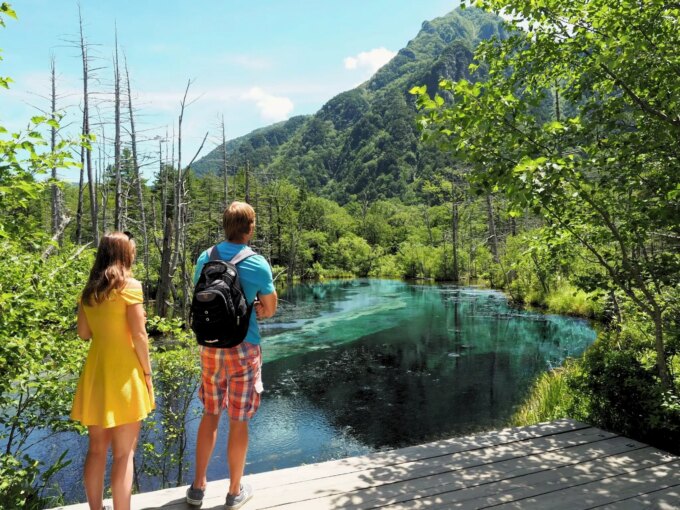
1-Day Tour from Nagano and Matsumoto: Kamikochi & Matsumoto Castle
- Spots:
- NaganoMatsumotoKamikochi
- Pick-up:
- Nagano CityMatsumoto
- Drop-off:
- Nagano CityMatsumoto
Private Charters to Azumino
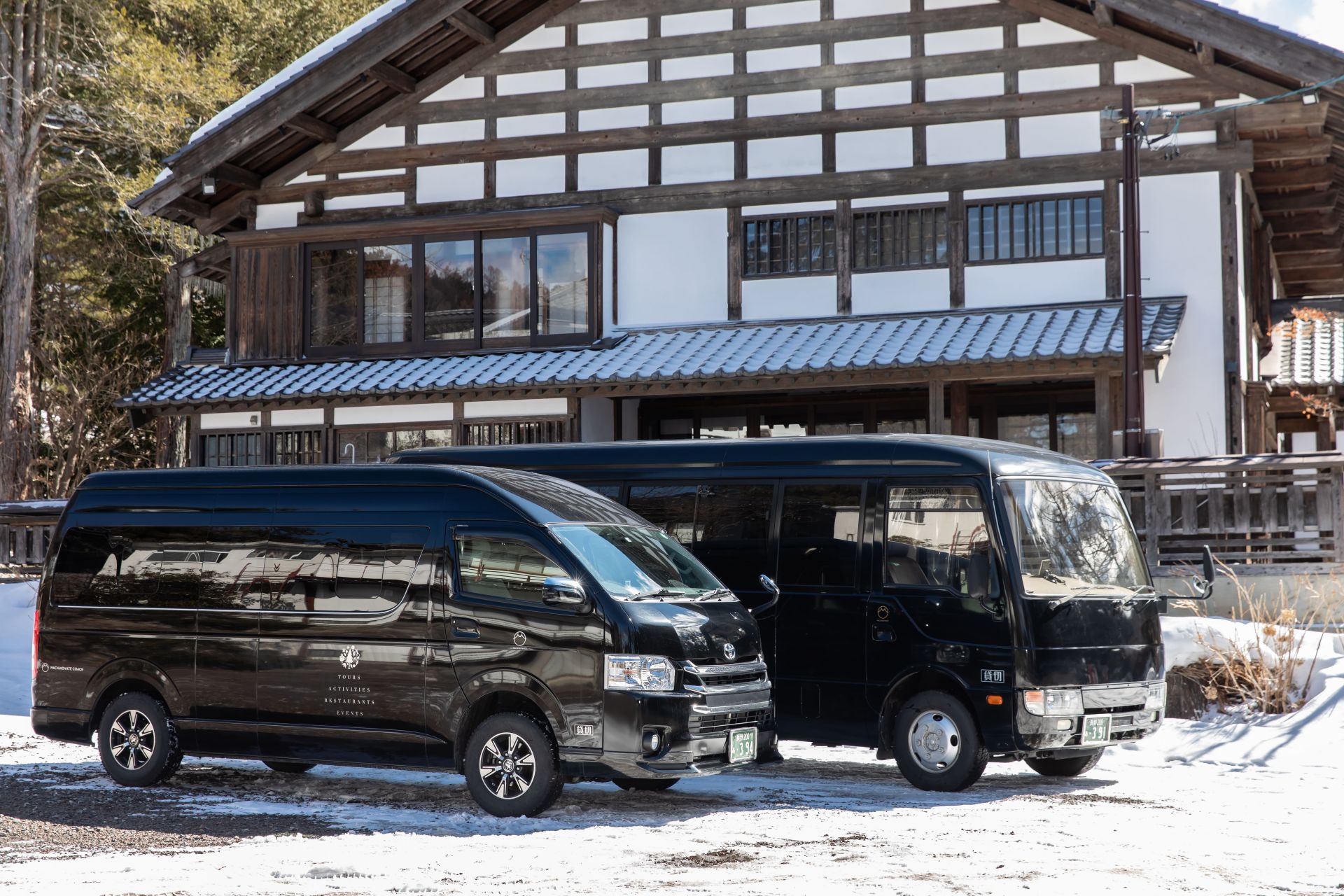
Private charters provide direct transport to Azumino without a fixed guided itinerary. They are suitable for families, private groups and travellers who want to visit several widely separated attractions without depending on local trains, buses or taxis.
Highlights:
- Arrange pick-up from your hotel, station or another suitable location.
- Travel directly to Azumino in a private, licensed vehicle.
- Visit attractions such as Daio Wasabi Farm, Hotaka Shrine, local museums and Hotaka Onsen-kyo.
- Store your luggage safely in the vehicle during the journey.
- Choose how long you would like to spend at each destination.
- Combine Azumino with Matsumoto, Hakuba or another nearby area.
Private charters include a professional driver but not a tour guide. Visitors who would like guided explanations and support throughout the day should contact us about arranging a private tour.
Frequently Asked Questions
Is Azumino worth visiting?
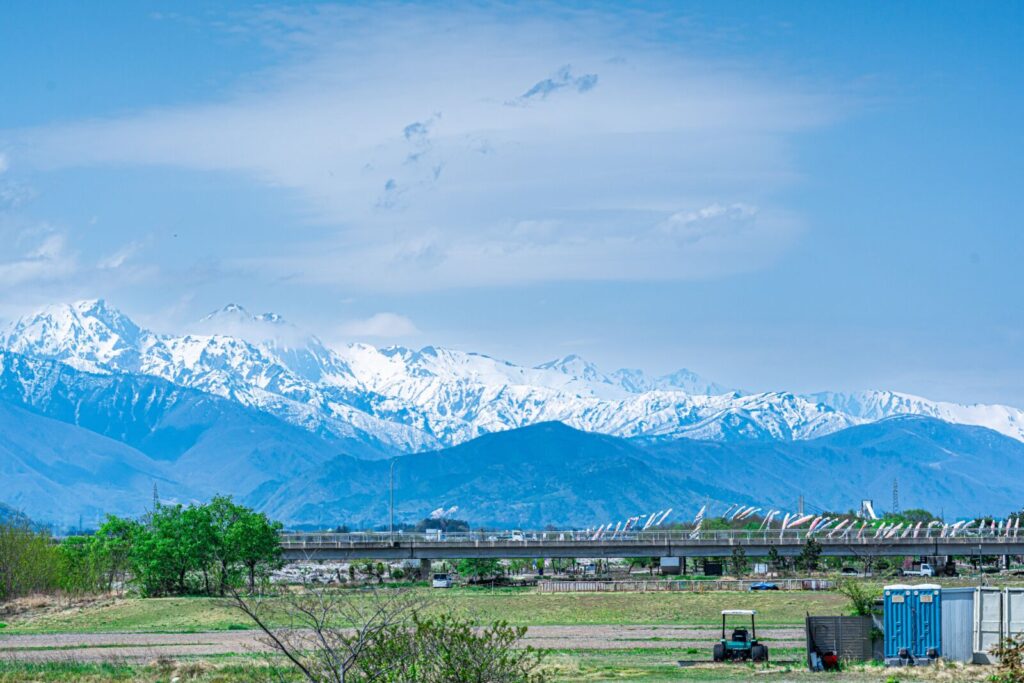
Yes. Azumino is a good destination for travellers interested in rural scenery, wasabi farms, museums, cycling, local food and views of the Northern Japan Alps. It is quieter than nearby Matsumoto and can be visited as either a day trip or an overnight stay.
How do I get to Azumino from Matsumoto?
Take the Oito Line from Matsumoto Station to Hotaka Station. The journey normally takes approximately 30 minutes, although travel times vary by service.
How long should I spend in Azumino?
Allow at least half a day to visit Daio Wasabi Farm and explore the area around Hotaka. A full day is better if you also want to cycle, visit museums or enjoy an onsen. Staying overnight provides more time to explore the wider countryside.
Can I explore Azumino without a car?
Yes, but attractions are spread across a wide area and local public transport is limited. Rental bicycles are convenient during the warmer months, while taxis and seasonal sightseeing buses reach selected attractions. See our guide to Getting Around Azumino for further information.
When is the best time to visit Azumino?
Azumino can be visited throughout the year, but spring to autumn offers the widest selection of outdoor activities. Spring brings cherry blossoms, summer is suitable for water activities, and autumn offers colourful foliage. Winter is quieter and provides clear views of the snow-covered Northern Alps, although some attractions and transport services operate seasonally.
Is Daio Wasabi Farm free to enter?
General admission to Daio Wasabi Farm is free. Food, activities and special experiences carry separate charges. Opening hours can change seasonally, so check current information before visiting.