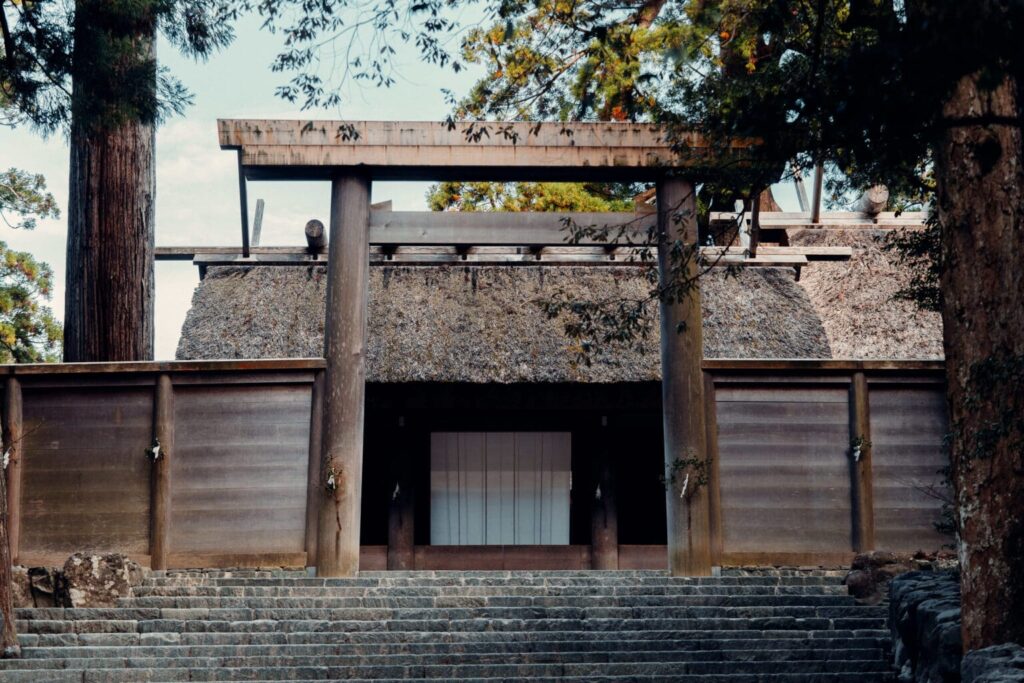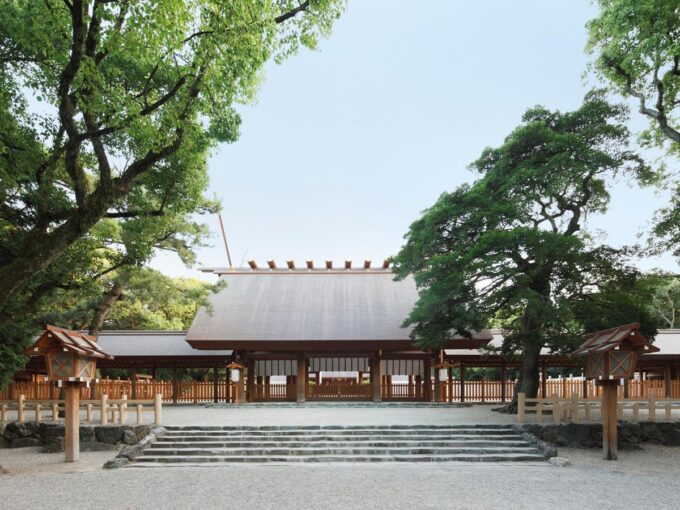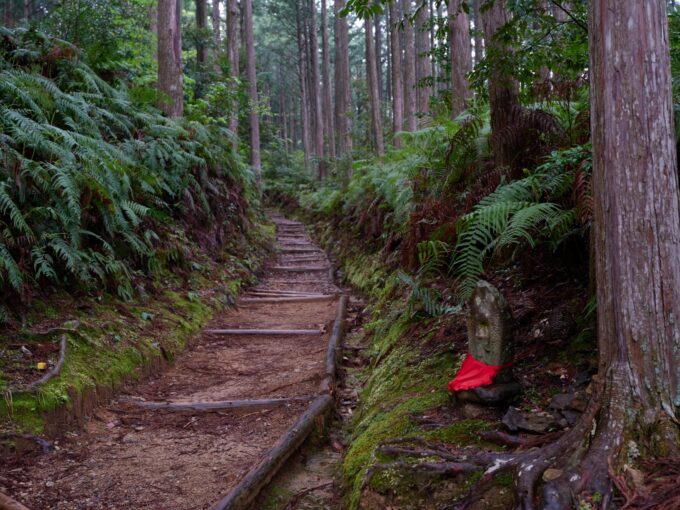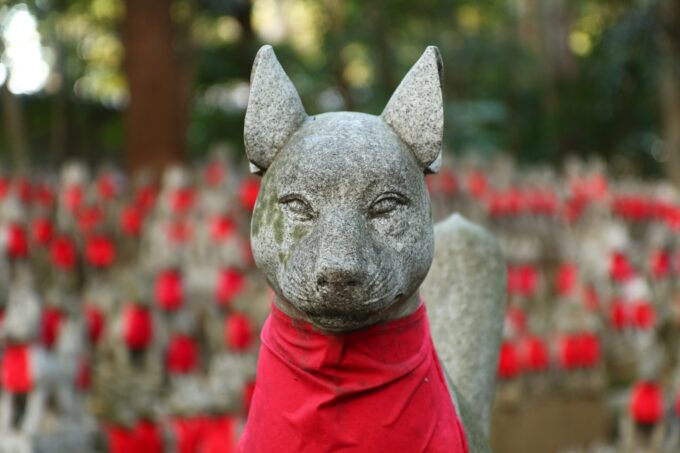







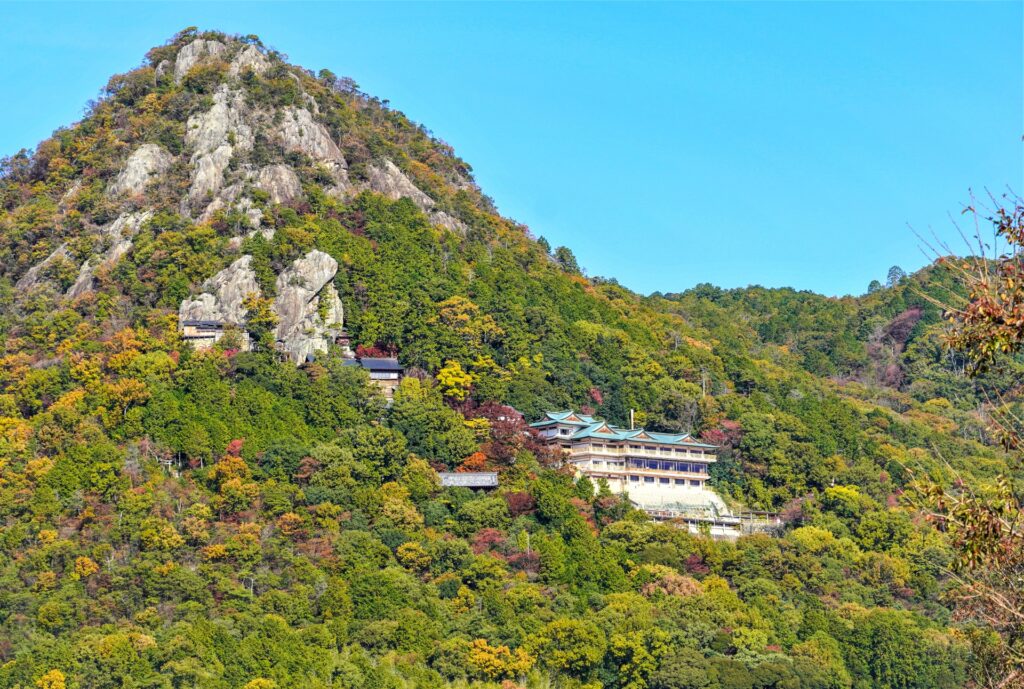
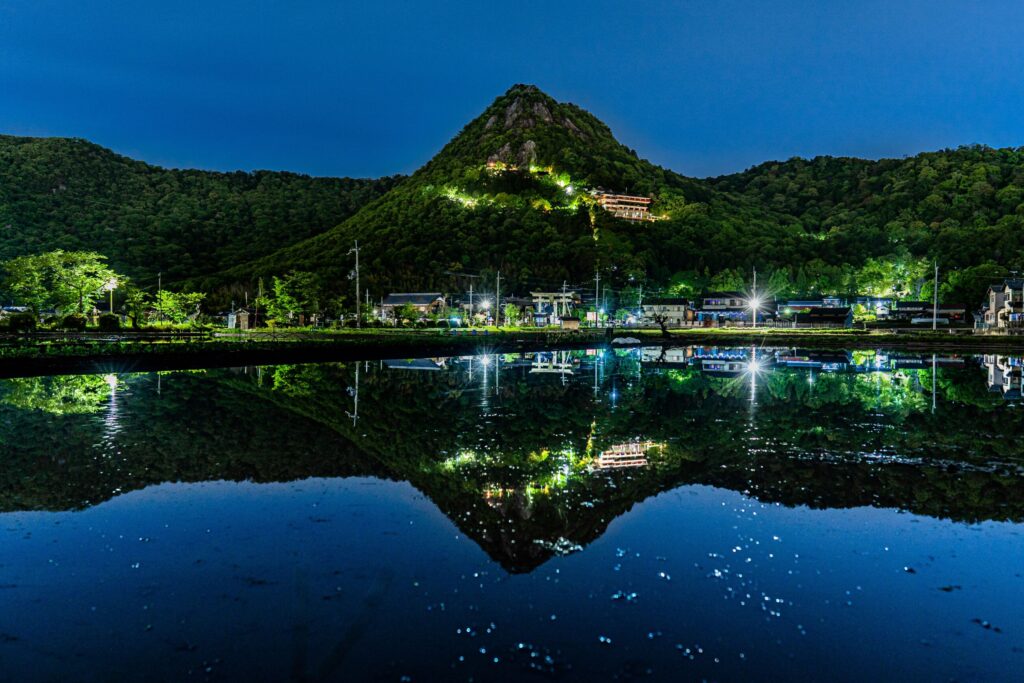
Tarobo-Aga Shrine, officially known as Aga Shrine and affectionately called “Tarobo-gu” by locals, is one of Shiga Prefecture’s most intriguing sacred sites.
Set on the mountainside of 350-meter Mt. Akagami, the shrine combines dramatic volcanic rock formations, ancient mountain worship, Shinto-Buddhist history, and legends involving figures such as Prince Shotoku, Saicho, and Minamoto no Yoshitsune.
The shrine is associated with victory as its principal deity, Masaka Akatsukachihayahiame no Oshihomimi no Mikoto, the first son of Amaterasu Omikami, is revered as a deity of victory, good fortune, and prosperity. Today, professional athletes, business leaders, and other visitors come to pray for success.
A Brief History of Tarobo-Aga Shrine
The origins of Aga Shrine are said to reach back approximately 1,400 years, although the precise beginning is considered too ancient to determine with certainty.
It is believed that the shrine was built by Prince Shotoku, who is said to have visited the area around the early seventh century. According to legend, he sensed a sacred presence emanating from Mt. Akagami and established a place of worship on the mountain. The deity enshrined was Masaka Akatsukachihayahiame no Oshihomimi no Mikoto, the first son of Amaterasu Omikami.
The mountain itself also became an object of worship and is regarded as sacred, with the exposed rocks and mountain formations forming an essential part of the religious landscape.
The shrine's history later became intertwined with Buddhism. Saicho, founder of the Tendai school of Buddhism, is said to have been deeply impressed by the sacred mountain. In 799, according to tradition, he established Jogan-ji Temple, enshrining the Buddha Yakushi Nyorai (with the help of a Japanese mythical creature called a tengu).
Over subsequent centuries, shrines, temples, monks' quarters, and religious buildings developed across the mountain. At its height, the complex is said to have included more than 50 religious buildings.
However, the government's policy of separating Shinto and Buddhism in the Meiji era led to the formal division of Aga Shrine and Jogan-ji Temple. The name “Tarobo-gu” was also officially restricted for a period, and the shrine's formal name became Aga Shrine. Yet the older name survived in local usage, and Tarobogu remains the name by which many people know the site today.
Recommended Tour: Snow Monkey Resort's 1-Day Tour from Nagoya: Shadows of a Shogun — Sekigahara Battlefield & Historic Castles is designed for travelers who want to understand the history and drama of Japan’s samurai past. You will explore how alliances were formed, how betrayals changed the course of history, and how power was ultimately secured.
Trace the full arc of Japan’s transformation from the warring state period to where the foundations of 260 years of Tokugawa rule were established on this one-day guided tour from Nagoya.
The Legend of Tarobo Tengu
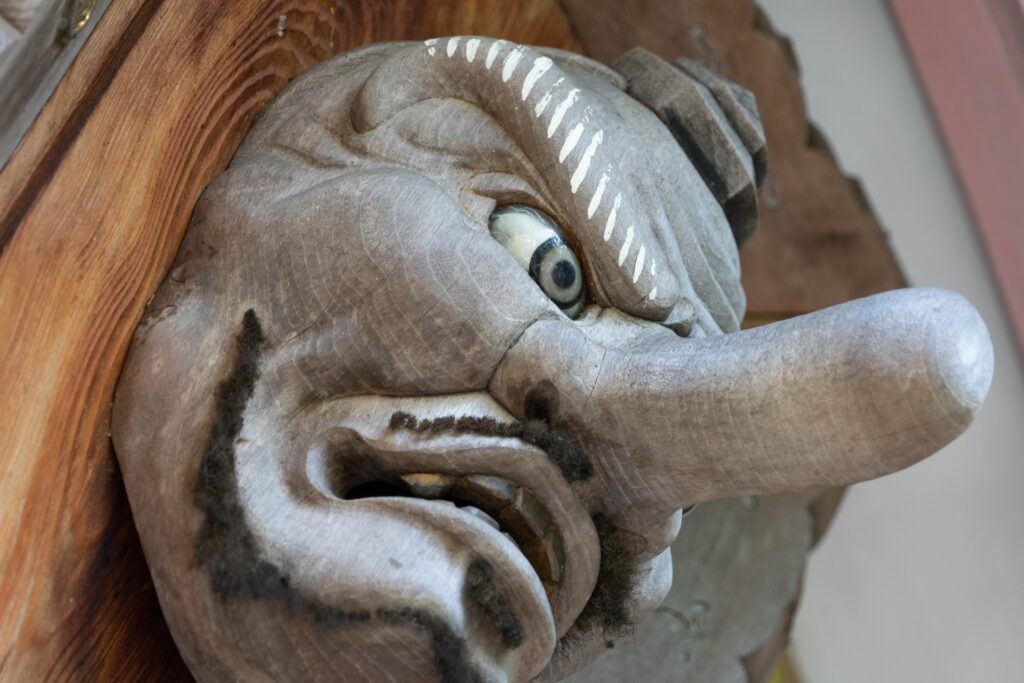
In Japanese mythology, Tengu are supernatural mountain beings with extraordinary powers which they use in the protection of sacred mountains and practitioners of mountain asceticism.
According to local legend, Tarobo was the name of a tengu who lived on Mt. Akagami.
The legend states that Tarobo Tengu appeared to Saicho while he was attempting to establish a religious presence on the mountain. The tengu helped him and subsequently became associated with the protection of the shrine and temple.
The story is one reason why visitors encounter tengu imagery throughout the grounds.
Oda Nobunaga and the Battle for Omi
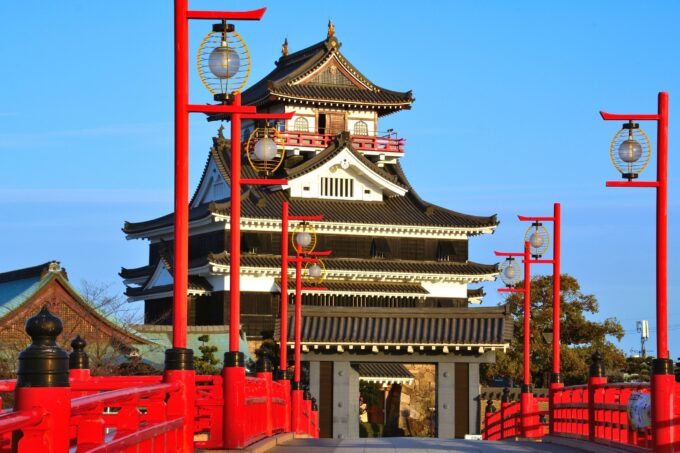
Tarobo is also related to one of the most consequential samurai war lords in Japanese history, Oda Nobunaga
Immediately beside Mt. Akagami are the ruins of Minotsukuri Castle, and on the next mountain over are the ruins of Azuchi Castle. In 1568, Oda Nobunaga entered Omi Province, marching toward Kyoto, as part of his unification campaign.
Nobunaga's forces captured Minotsukuri Castle and nearby Kannonji Castle, helping break the power of the powerful Rokkaku clan in the region.
The capture of Minotsukuri Castle was remarkably rapid. Its fall opened an important route for Nobunaga's advance and allowed him to eventually build his crown jewel, Azuchi castle, in the region.
Tarobo itself suffered during the conflict. The shrine and religious complex were burned and devastated amid the fighting.
742 Stone Steps and the Tarobo Challenge
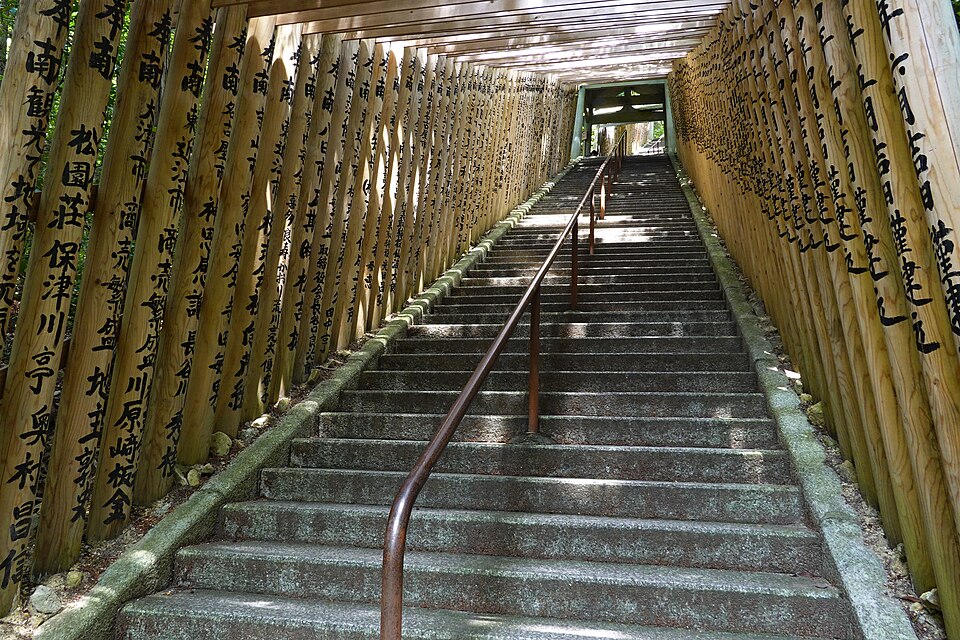
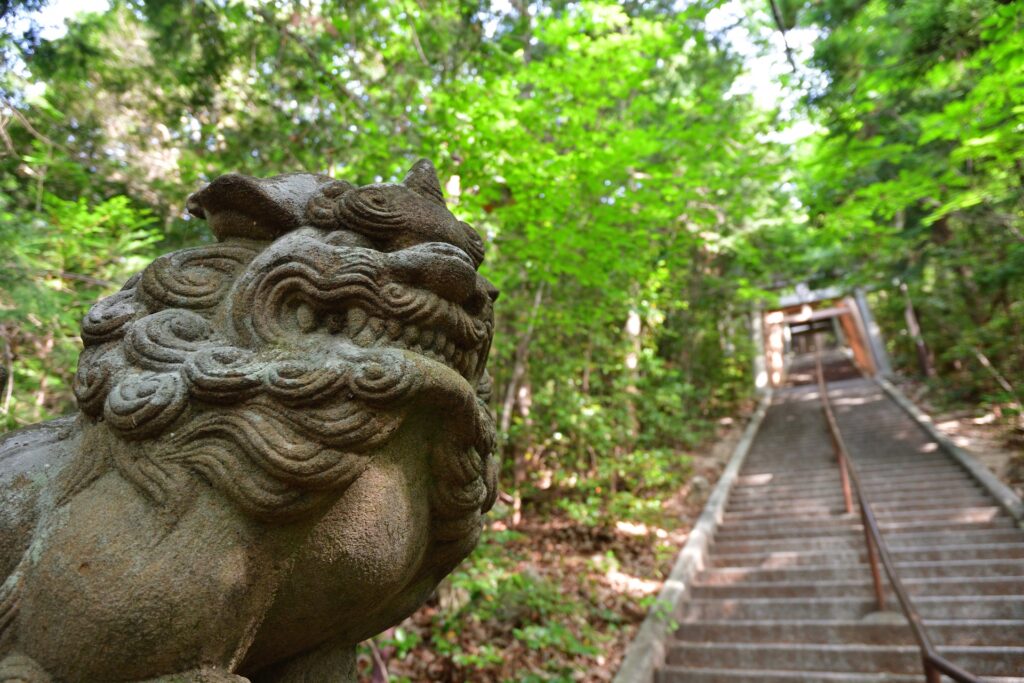
To reach the main shrine from the foot of the mountain, there are 742 stone steps. The ascent is lined with wooden torii gates. Historically there were over 1,000 gates, many of which remain today.
Thankfully, visitors can now drive part of the way up, reducing the climb to approximately 260 steps from the parking area, but historically worshippers would have made the ascent on foot.
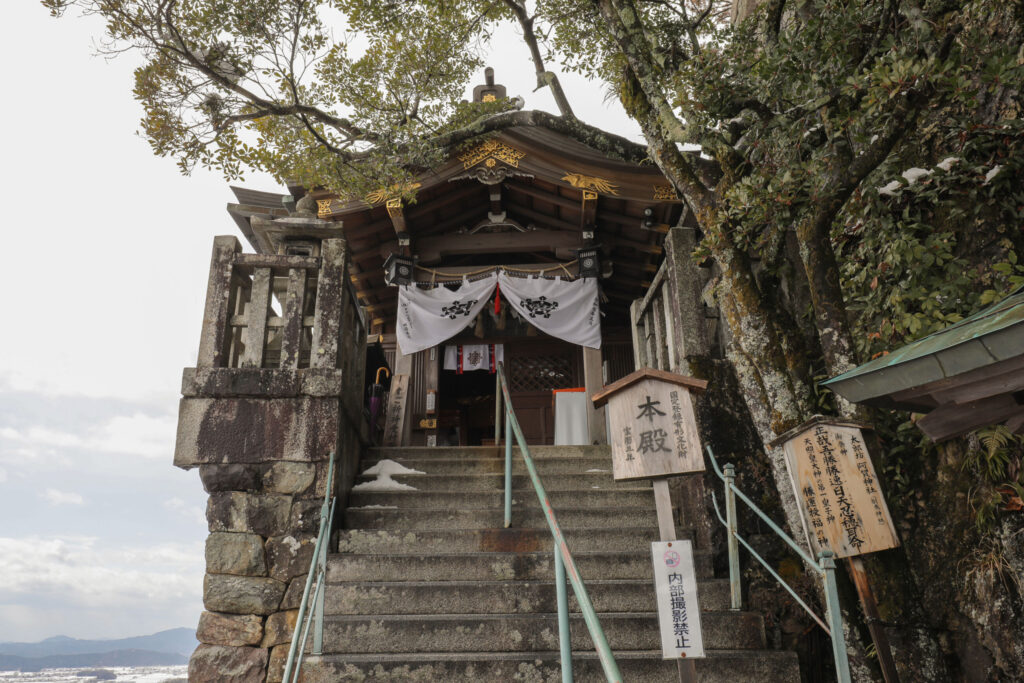
As the shrine's principal deity is associated with victory, and Tarobo's understanding of victory emphasizes overcoming oneself. So for those who wish to do so, climbing the steps takes on a symbolic dimension: each step becomes part of a personal act of determination.
This idea has been developed into the Tarobo Challenge, a time-trial race using 379 of the shrine's stone steps. Participants race toward the top under the guidance of the “god of victory,” aiming to earn the title of “Winning Man” or “Winning Woman.”
Even if you have no interest in racing, the staircase provides a useful way to understand why the shrine's religious identity has resonated with athletes and other visitors seeking success.
The Tengu’s Test Passageway
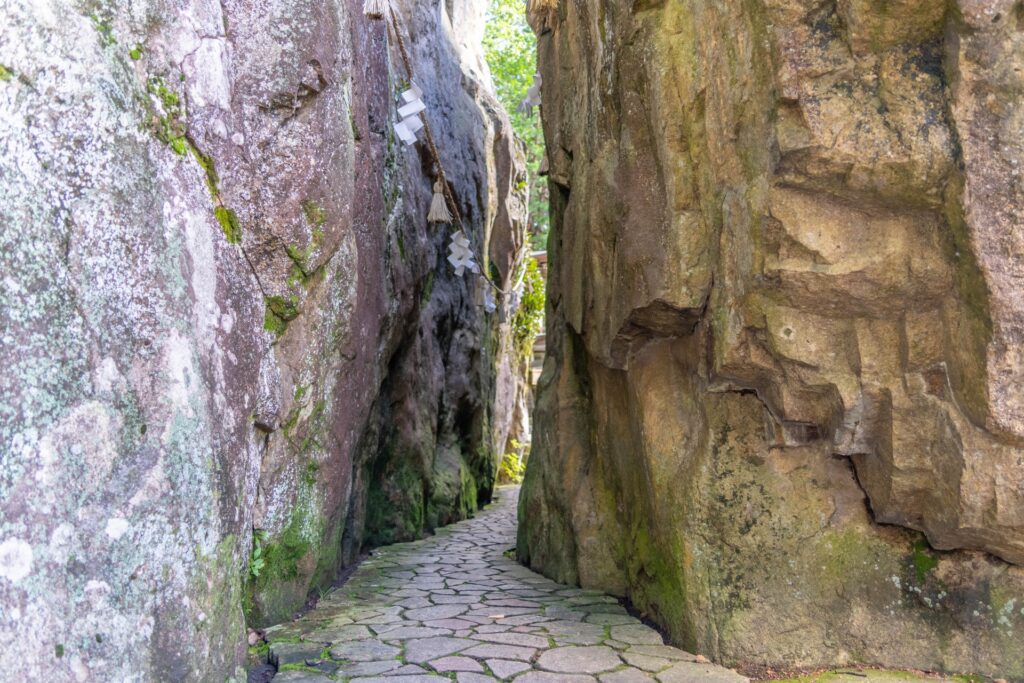
Just before the main shrine, two enormous rocks rise dramatically from the mountainside.
Known as Meotoiwa, or the “Married Couple Rocks,” the rocks are nearly 20 meters tall, while the passage between them is approximately 80 centimeters wide and extends for around 12 meters.
According to tradition, the passage was opened by divine power and it was believed that the tengu’s nest was between the rocks.
Legend says that people with dishonest or evil intentions may become trapped between the rocks, while only those with righteous hearts can pass safely through to the other side. There apparently were even books in the Edo era that warned against going near the area and many local children were told by their parents that “If you lie, you’ll get pinched between the rocks of Tarobo Shrine”!
Visiting Tarobo-Aga Shrine
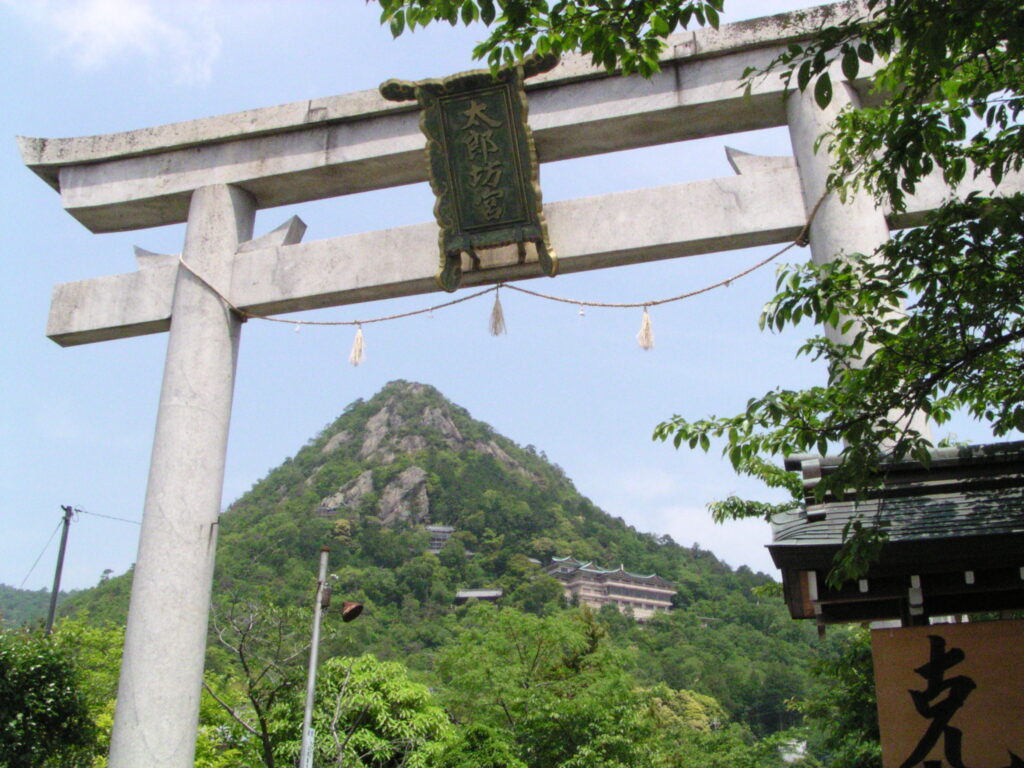
Tarobo-Aga Shrine is located in Higashiomi City, Shiga Prefecture, on the mountainside of Mt. Akagami.
The shrine can be reached by the Ohmi Railway Yokaichi Line (Manyo-Akane Line). From Tarobogu-mae Station, it is approximately a 12-minute walk, while Shin-Yokaichi Station is around an 18-minute walk away.
What to See at Tarobo-Aga Shrine
Among the most notable features are:
- Main Shrine (Honden): Rebuilt in 1753, the building is associated with the former Jogan-ji temple complex and is a registered tangible cultural property.
- Worship Hall: Constructed in 1924 and serving as an important focal point for visitors.
- Stage: Built in 1880 and subsequently renovated, this historic structure has been used for religious ceremonies.
- Worship Hall and Kagura Hall: Historic structures reflecting the shrine's long ceremonial tradition.
- Dragon Shrine: Associated with the water purification area and another expression of the site's religious traditions.
- Fudo Myoo Worship Site: A reminder of the Buddhist and Shugendo traditions historically associated with the mountain.
- Tengu and En no Gyoja Statues: Physical reminders of Tarobo's mountain-worship traditions.
- Yoshitsune's Resting Rock: A legendary connection to the warrior Minamoto no Yoshitsune.
- Meotoiwa: The dramatic paired rocks and narrow passage immediately before the main shrine.
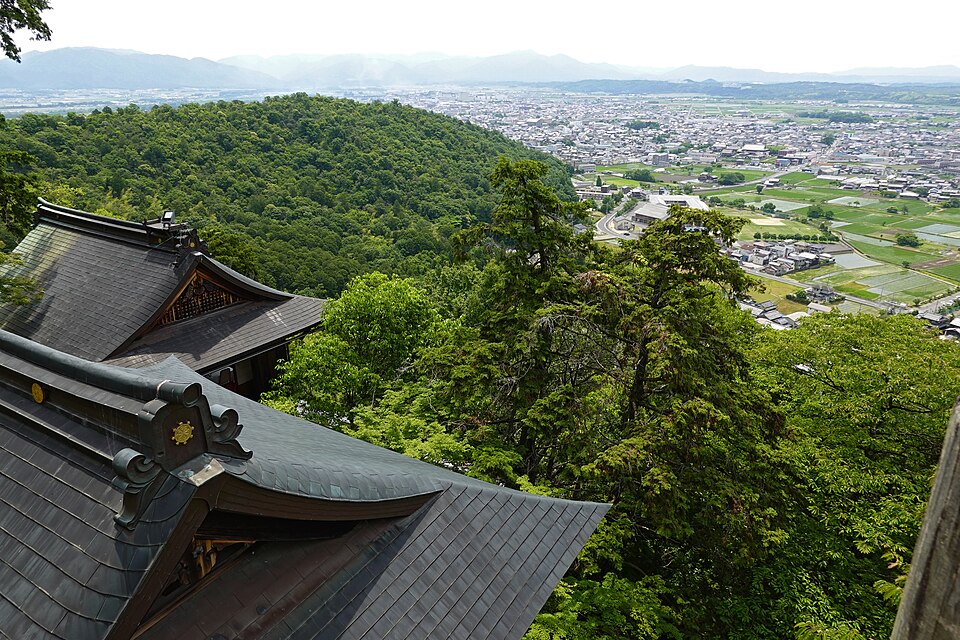
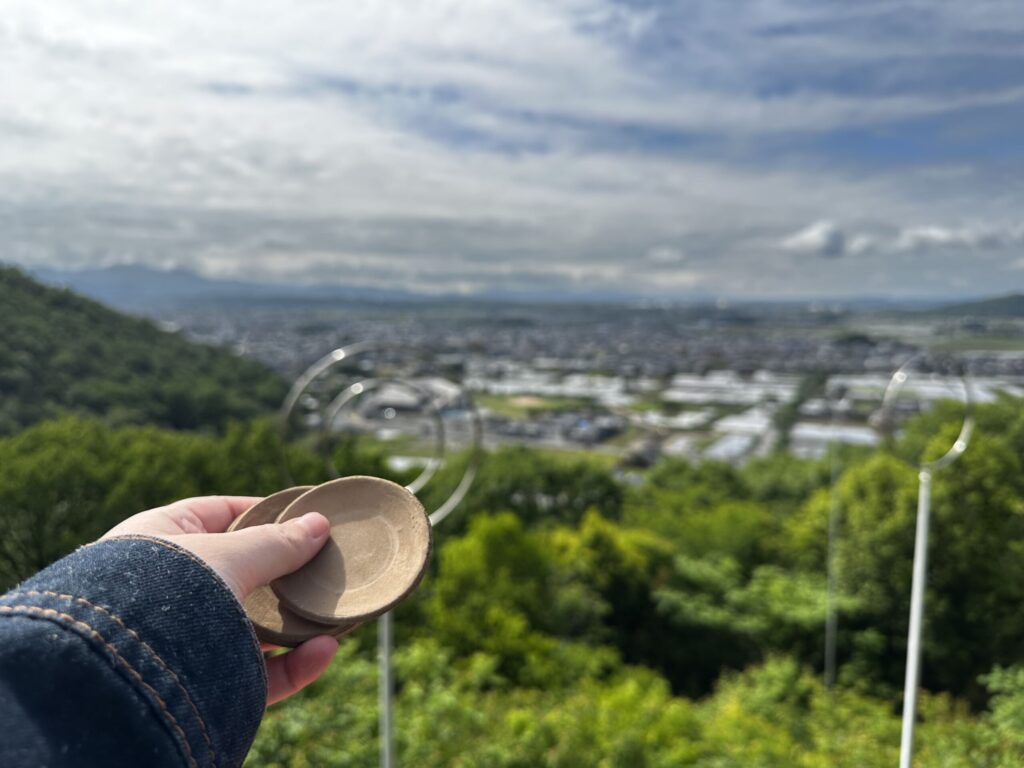
- Observation Area: Views extend across the surrounding landscape toward the Suzuka Mountains.
Making Your Own Traditional Amulet
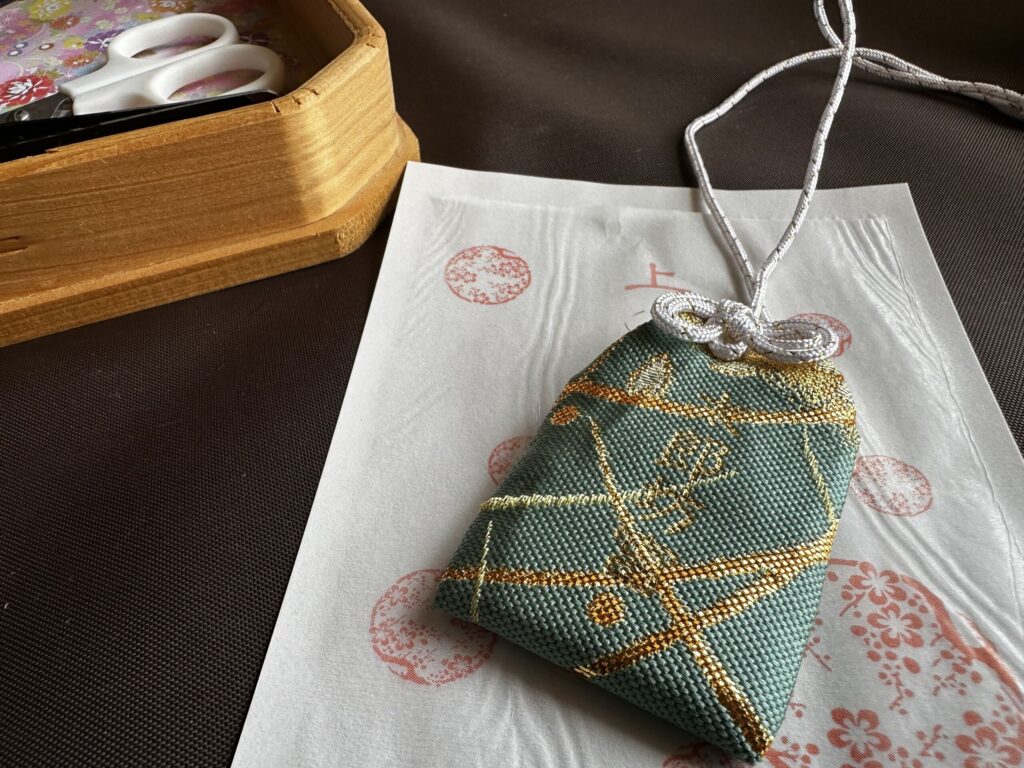
One particularly interesting cultural experience at Tarobo is the opportunity to make your own amulet/lucky charm.
Visitors can choose from approximately 150 amulet pouch designs, including fabrics and auspicious patterns sourced from different parts of Japan. After selecting a pouch and braided cord, you write your wish on purified wish paper. The spirit of the deity and your wish are then placed inside the pouch.
Touring Tarobogu with a Guide
1-Day Tour from Nagoya: Shadows of a Shogun — Sekigahara Battlefield & Historic Castles / All Year Round
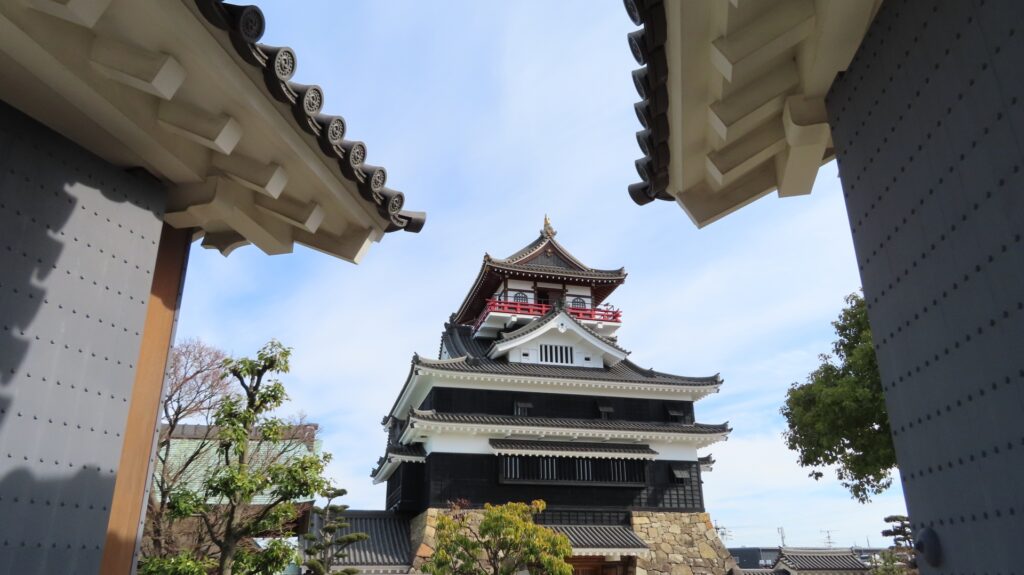
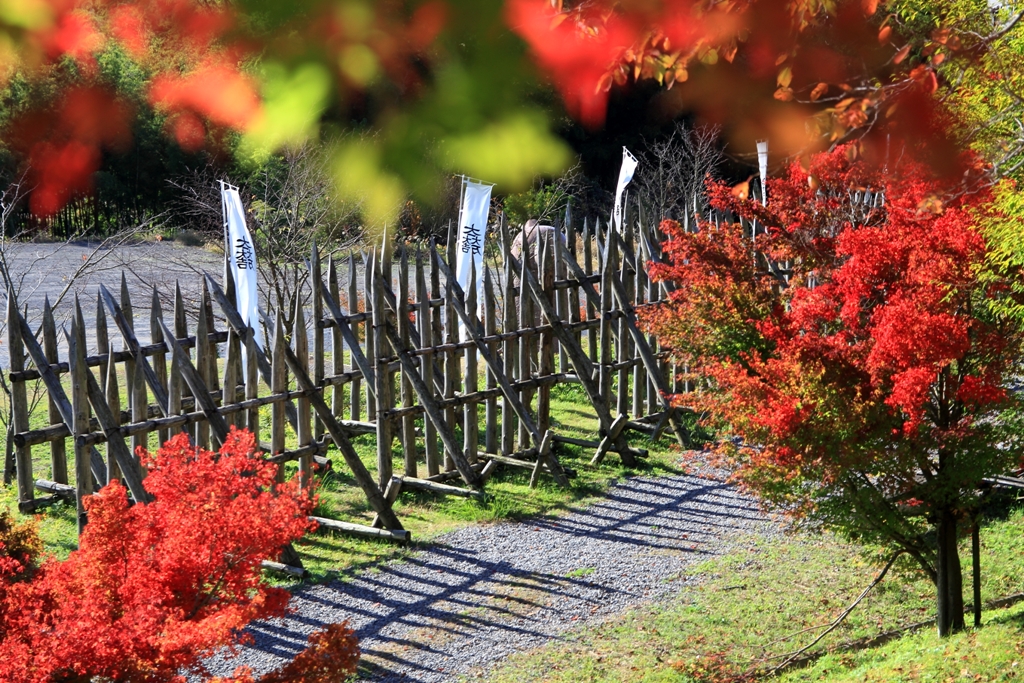
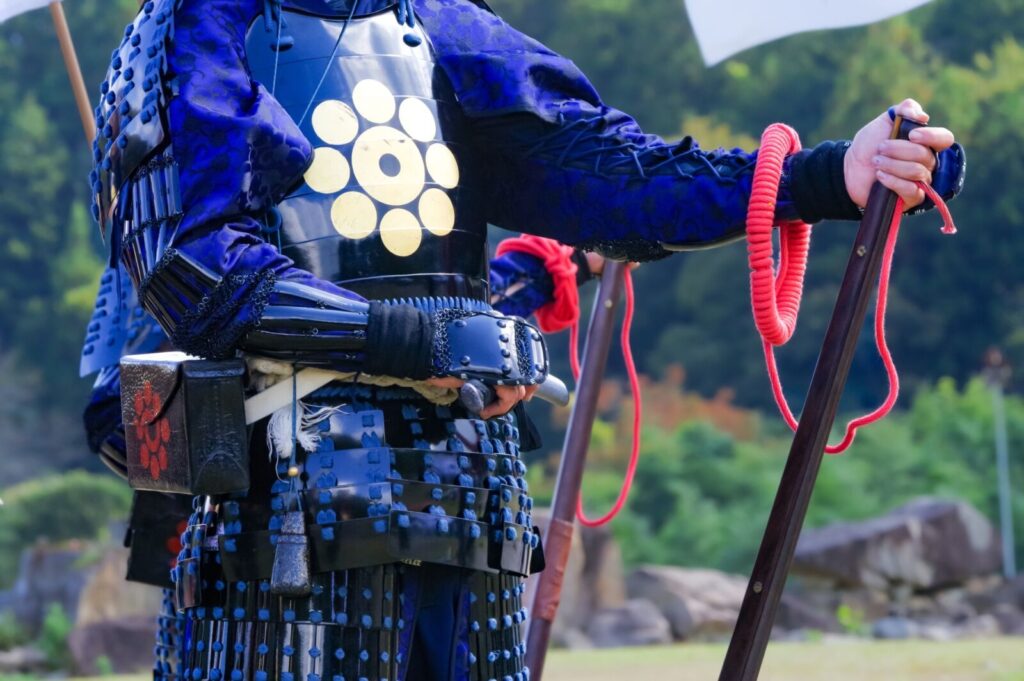
Step beyond fiction and into the real power struggle that inspired stories like Shōgun on our 1-Day Tour from Nagoya: Shadows of a Shogun — Sekigahara Battlefield & Historic Castles.
This tour is designed for travelers who want to understand the history and drama of Japan’s samurai past. You will explore how alliances were formed, how betrayals changed the course of history, and how power was ultimately secured.
Trace the full arc of Japan’s transformation from the warring state period to where the foundations of 260 years of Tokugawa rule were established on this one-day guided tour from Nagoya.
Highlights
- See the real locations of the events that inspired stories like Shōgun.
- View Sekigahara Battlefield, site of Japan’s decisive battle
- Visit Japan's Victory Shrine and make your own lucky charm
- Enjoy insights into samurai-era politics from a professional guide
- Travel comfortably in our company’s tour vehicles
Frequently Asked Questions (FAQ)
What is Tarobo-Aga Shrine famous for?
Tarobo-Aga Shrine is particularly famous for its association with victory and good fortune, as well as its dramatic mountain setting, 742 stone steps, enormous Meotoiwa rocks, and long history of Shinto, Buddhist, and Shugendo traditions.
Why is Tarobo Shrine called a shrine of victory?
The shrine enshrines Masaka Akatsukachihayahiame no Oshihomimi no Mikoto, the first son of Amaterasu Omikami. His name is traditionally interpreted in terms of triumph and brilliant victory, and he is revered as a deity who grants victory, happiness, protection, and prosperity.
The shrine's concept of victory can also be understood as overcoming oneself rather than simply defeating another person.
How many steps are there at Tarobo Shrine?
There are 742 stone steps from the trailhead to the main shrine. Visitors who drive partway up the mountain encounter approximately 260 steps from the parking area. The Tarobo Challenge uses 379 steps for its time trial.
What are the Meotoiwa rocks at Tarobu?
Meotoiwa, or the “Married Couple Rocks,” are two enormous rocks near the main shrine with a narrow passage between them. The passage is approximately 80 centimeters wide and is associated with legends about sincerity, purification, and good fortune in relationships.
Is Tarobo-Aga Shrine connected to Buddhism?
Yes. Tarobo historically developed as a site of Shinto-Buddhist syncretism. Saicho is traditionally associated with the establishment of Jogan-ji Temple on the mountain, and the wider complex once included numerous temples, shrines, and monks' quarters. The two traditions were formally separated during the Meiji period.
Who was Tarobo?
Tarobo was a legendary tengu associated with Mt. Akagami. According to local tradition, Tarobo helped Saicho establish a religious site on the mountain and subsequently became regarded as a guardian of the sacred mountain and practitioners of Shugendo.
Can I reach Tarobo Shrine without climbing all 742 steps?
Yes. Visitors can drive partway up the mountain, reducing the remaining climb to approximately 260 steps. However, walking the longer approach provides a different perspective on the historic pilgrimage route.
When is the best time to visit Tarobo-Aga Shrine?
Tarobo offers something different throughout the year.
Spring brings cherry blossoms along the approach, adding color to the ascent.
Summer transforms the mountain into a landscape of dense green vegetation, emphasizing the shrine's setting within nature.
Autumn brings vibrant foliage, making the combination of stone, forest, and monumental rocks particularly striking.
Winter can cover Mt. Akagami in snow, creating a much quieter and more austere atmosphere.
Is Tarobo-Aga Shrine suitable for travelers interested in Japanese history?
Absolutely. The shrine offers an unusually rich combination of religious, political, architectural, and natural history. Its connections to Prince Shotoku, Saicho, Oda Nobunaga, Minamoto no Yoshitsune, Shinto-Buddhist syncretism, and Shugendo make it especially rewarding for travelers who want historical context rather than a conventional sightseeing stop.
Are there any things to do at Tarobo Shrine?
Yes. Visitors can participate in an amulet-making experience inspired by the long tradition of carrying sacred objects in personal pouches. Participants select an amulet pouch and cord, write a personal wish on purified paper, and place the sacred spirit and wish inside the finished amulet.