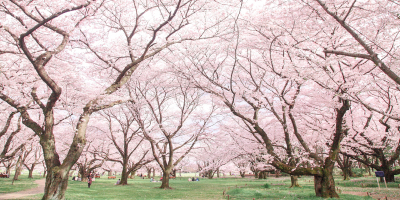

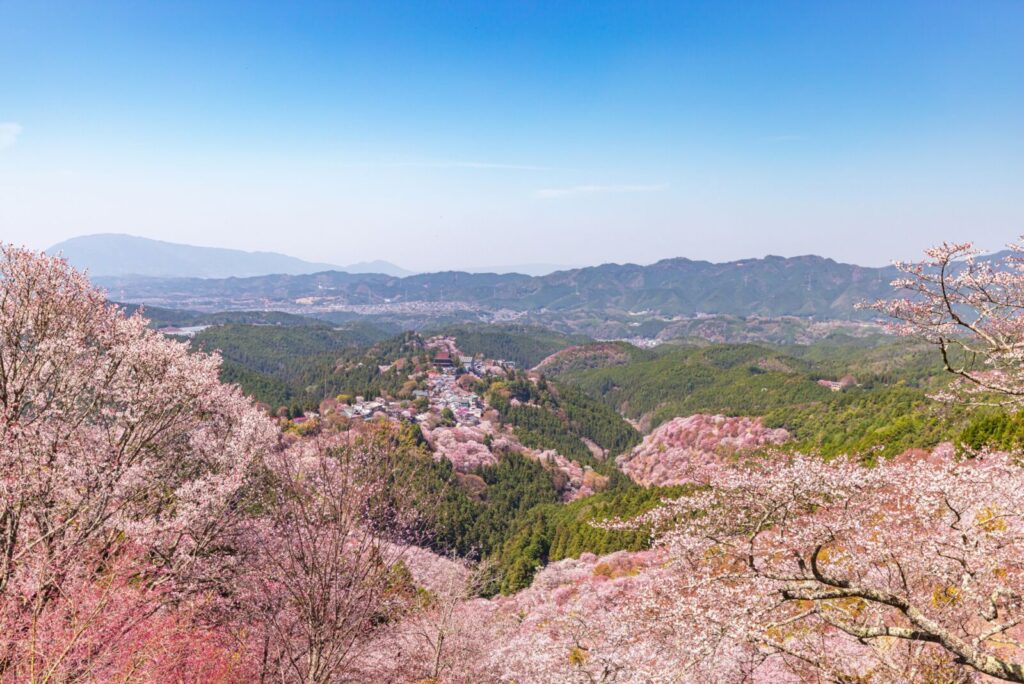
Famous as one of Japan's most legendary cherry blossom destinations, Mount Yoshino in Nara Prefecture boasts over 30,000 classic sakura trees blanketing its mountain slopes. Beyond its seasonal beauty, this sacred landscape serves as the historic heartland of Shugendo mountain asceticism and features centuries-old temples deeply intertwined with imperial history.
Where is Yoshino?
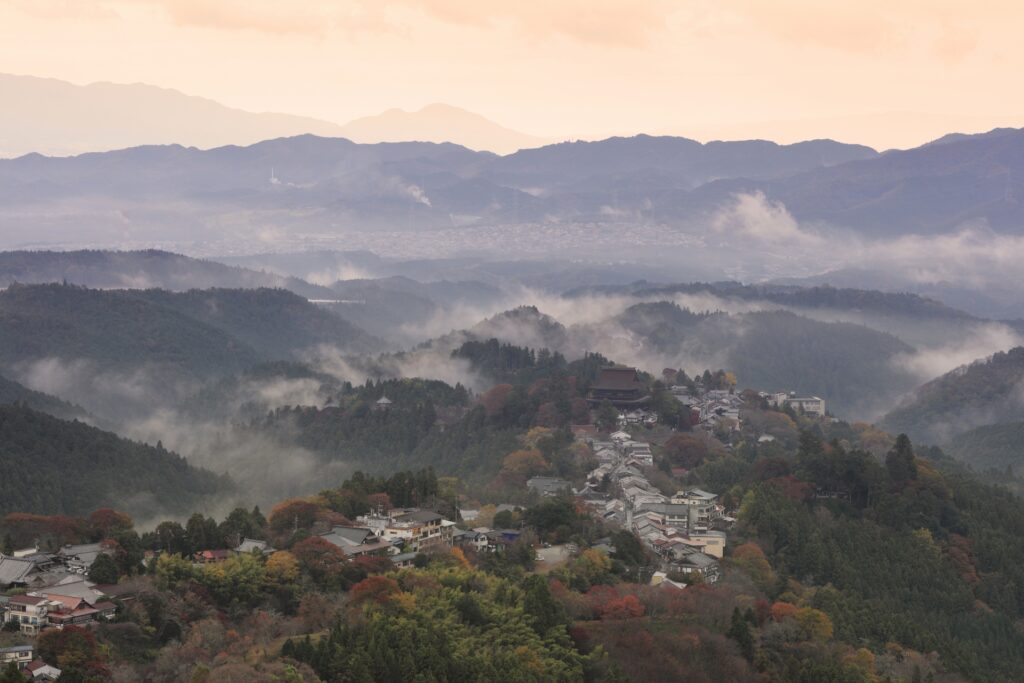
Yoshino is situated in the central, mountainous interior of Nara Prefecture, functioning as a gateway to the rugged Kii Mountain Range. The main area is accessible from Yoshino Station after a ropeway or hike up the mountain.
A Brief History
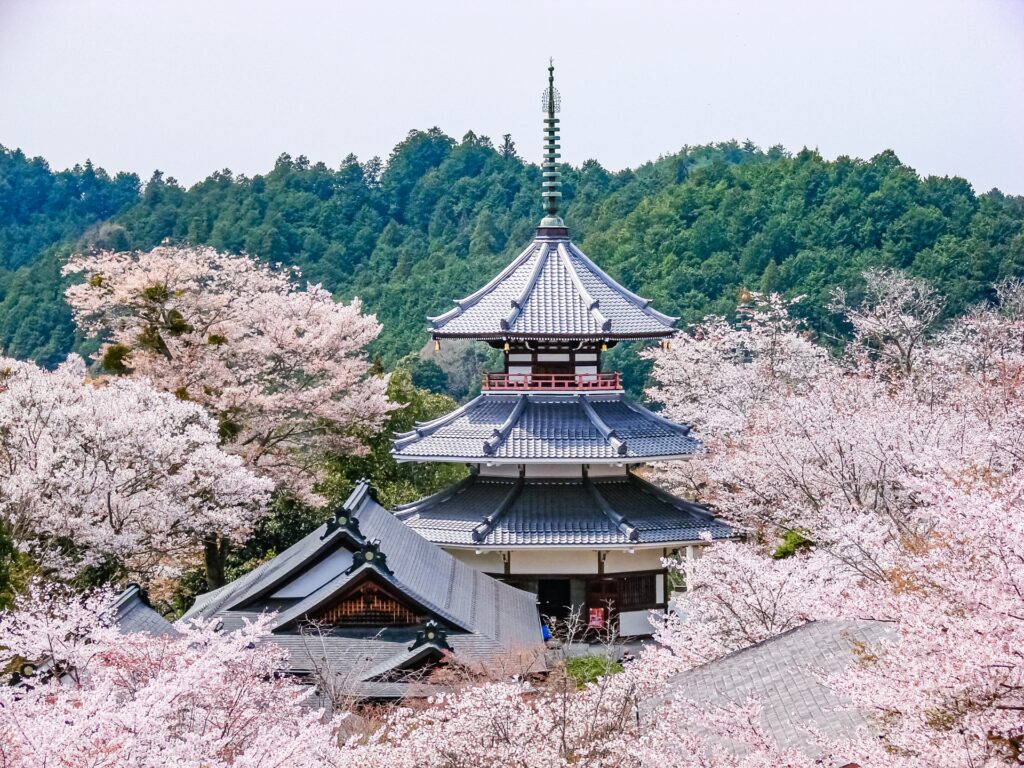
For centuries, Yoshino has served as a sacred sanctuary for Shugendo, an ancient syncretic religion combining mountain worship, Shinto, and Buddhism centered at Kinpusen-ji Temple. During the turbulent 14th century, the region briefly became the political center of Japan when Emperor Go-Daigo established the Southern Imperial Court in its misty valleys. It also holds a deeply romanticized place in Japanese classical literature, having inspired countless poets and served as a historic refuge for legendary figures like Minamoto no Yoshitsune.
Things to do in Yoshino
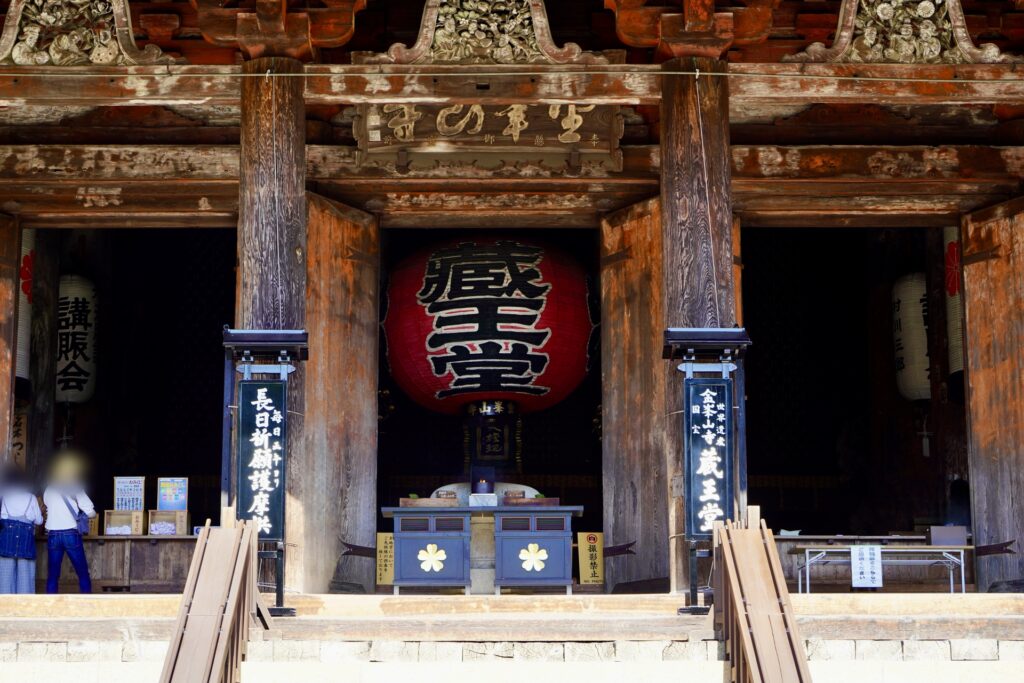
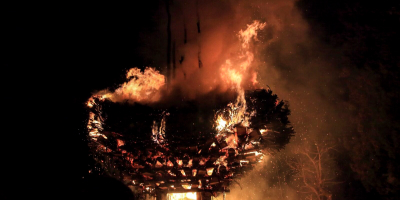
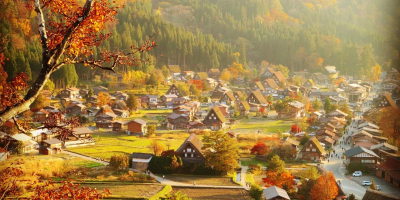
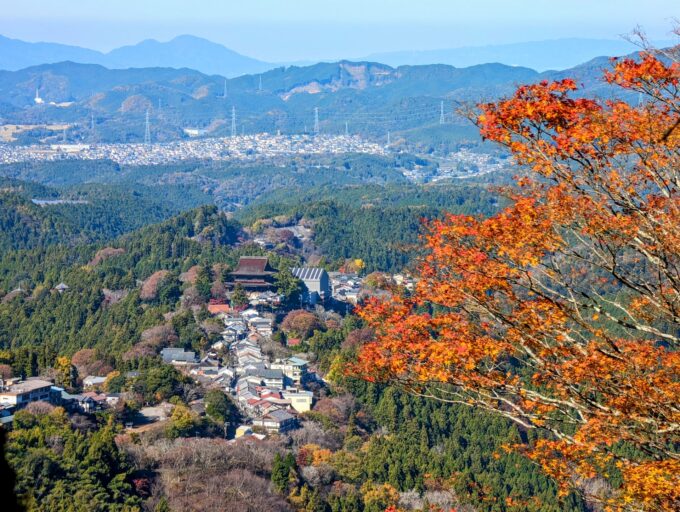
Once you are up in the main area you can walk around the scenic area of Mount Yoshino. There are many breathtaking views of cherry blossom-covered slopes in spring and maple foliage in autumn. Exploring the majestic main hall of Kinpusenji Temple provides a rare look at the towering, blue-skinned wrathful deities that anchor the sacred mountain tradition of Shugendo. Travelers can also visit historic spots like Yoshimizu Shrine to admire panoramic vistas of the valley and discover cultural treasures linked to famous emperors and samurai.
Note: The blue deities are only available to see during special openings usually for about a month in both spring and fall.
Visiting the temple
The easiest way to get to Yoshino is by train as it is close to Yoshino Station. See the FAQ below for some more information about getting to the railway.
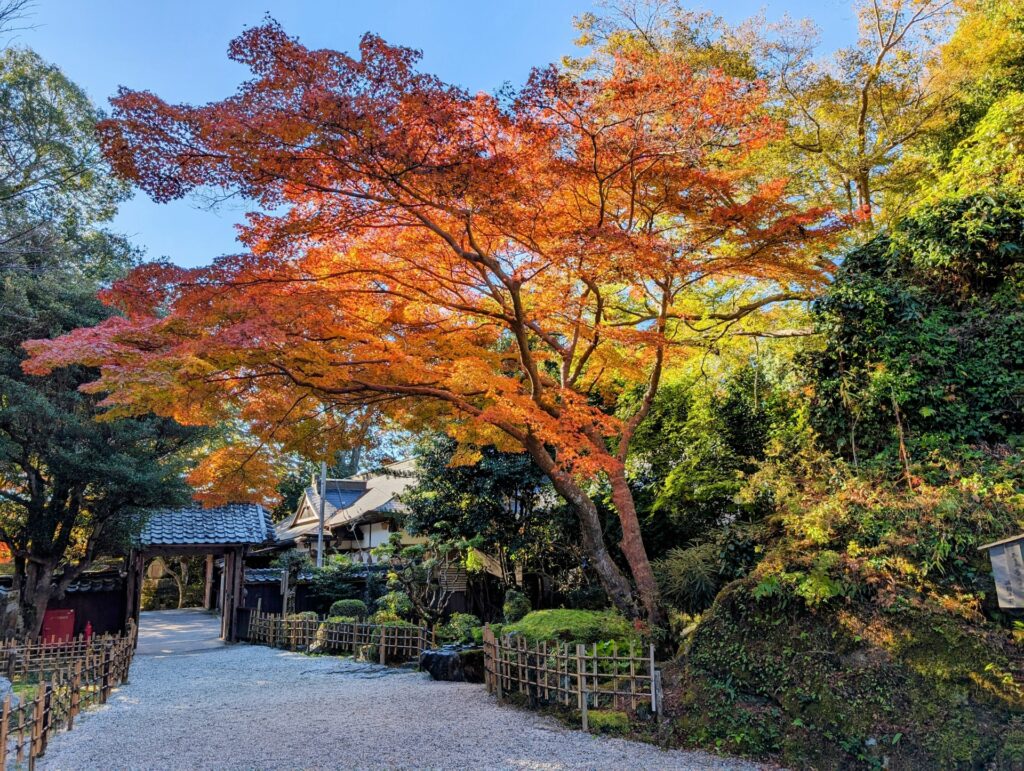
The cherry blossom season usually starting around the end of March and finishes in mid April. There are three main areas for the cherry blossoms that are at different elevations and therefore start and end at different times. The higher the elevation the later start and finish. The area is a great escape from the summer heat and is stunning in fall, too!
Another great way to travel to the temple is by a tour. We offer a day tour that leaves all the transportation to us, starting from Osaka Abenobashi Station. Tour the World Heritage temple, another world heritage shrine, explore the village and get great views of the mountain landscapes! Check it out below!
Small Group
Day Tour From Osaka: Nara-Yoshino's Mystical Mountains, Changing Seasons and Magical Past
Top Things to do in/from Osaka
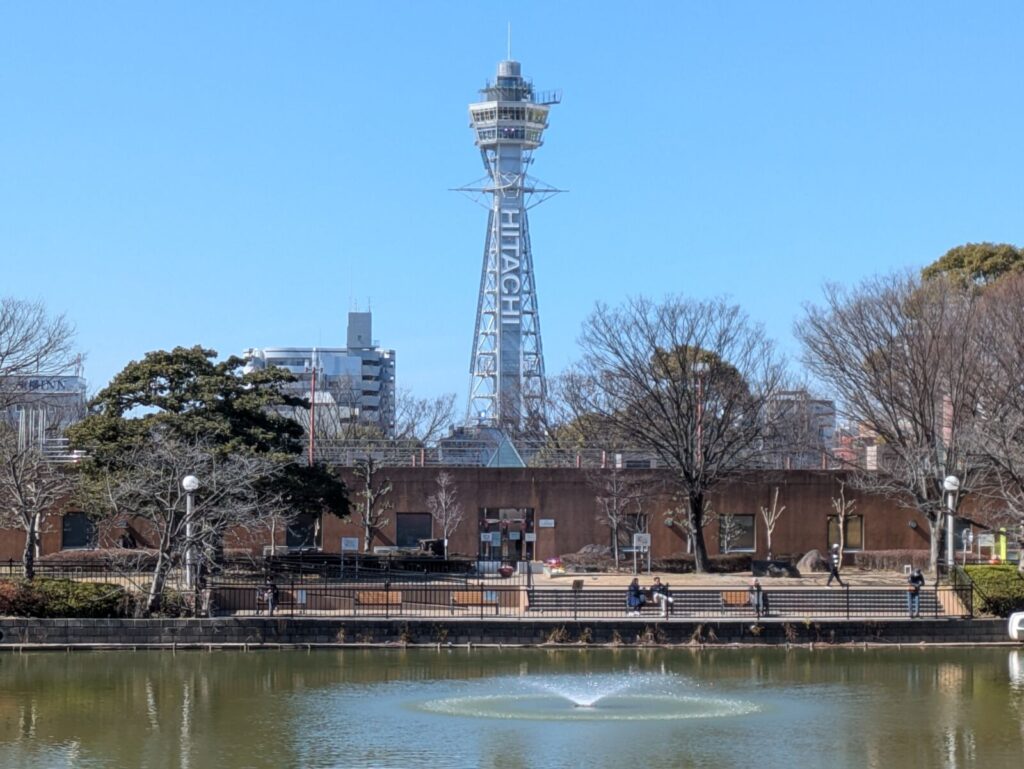
Looking for other things to do around the area? Check out our "40 Things to Do in Kyoto, Nara, Osaka & Where to Stay" for places around the entire region. For those interested in history and culture in Osaka city itself there is Osaka Castle, Sumiyoshi Taisha and Senkoji Temple. The natural beauty of the Muroji Temple in Nara is also something that can't be missed! The entire region has a many awesome sights such as the Great Buddha of Nara, Kifune Shrine in Kyoto, Arima Onsen in Kobe and Koyasan in Wakayama. So much to do, you could be here for weeks without feeling bored!
Frequently Asked Questions (FAQ)
How do you get there?
You can get there by train. Take the Kintestu Yoshino Line from Osaka Abenobashi Station until Yoshino Station. It's then a short walk to the ropeway. From the ropeway it is about a ten minute walk up a slight hill to the main temple. There are maps at the station that can help you find the way if you feel lost!
How much does it cost to get in?
There is no charge to get into the village but it is 500 yen to take the ropeway one way.
How long should I spend here?
If you explore all the part of the main area of the town it take about 4 hours. If you head for some of the more unique areas such as the amazing view of the town, you can spend 6 to 8 hours without even noticing!
Is there food sold here or near here?
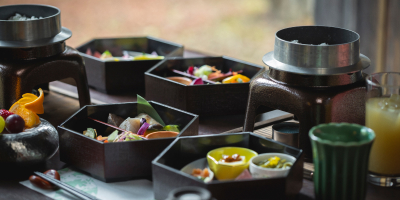
The entire area is a town with plenty of food. If you are there during a weekday or the winter the number of shops drops significantly so be prepared for that.
Is there anything to be careful of?
Everywhere is either uphill or downhill and even the "flat" areas are a bit deceptive. Once you are up past the ropeway it isn't as bad but there is still some decent hills.