










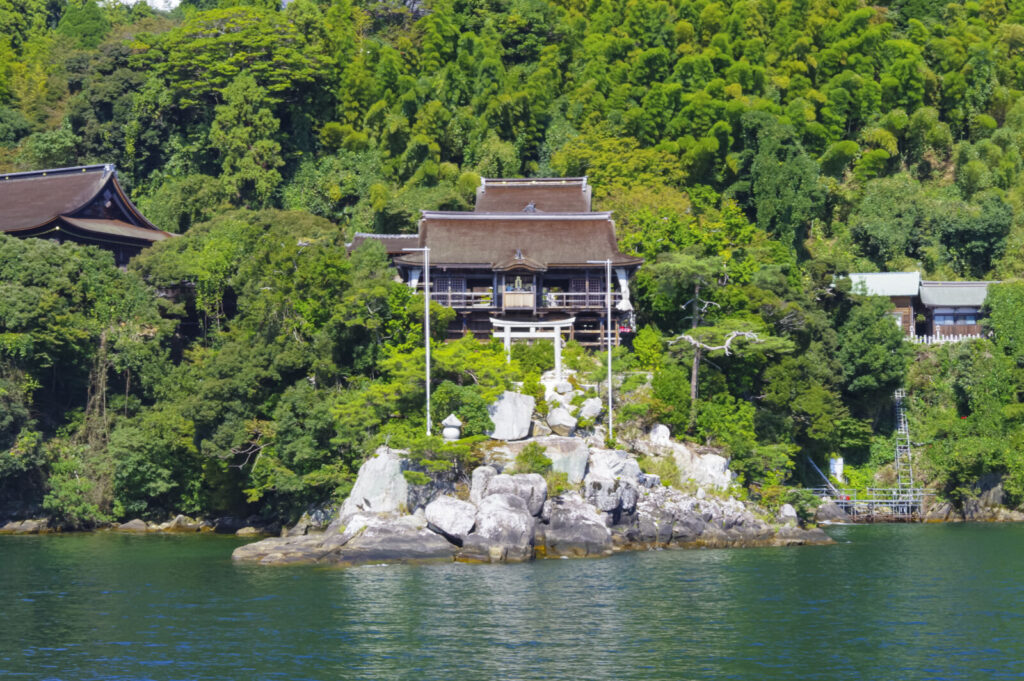
Located on the sacred island of Chikubushima in northern Lake Biwa, Hōgon-ji Temple is one of Japan's most important centers of Benzaiten worship and one of the most significant religious sites in the Kansai region. Accessible only by boat, the temple has welcomed emperors, monks, pilgrims, merchants, and samurai for more than 1,300 years.
Founded in 724, Hōgon-ji is closely associated with both Benzaiten, the goddess of wisdom, fortune, music, and water, and Kannon, the Bodhisattva of Compassion. Today, it remains an active place of worship, an important pilgrimage destination, and one of the highlights of any visit to Chikubu Island.
The History of Hōgon-ji Temple
According to temple tradition, Hōgon-ji was established in 724 during the reign of Emperor Shōmu. After receiving a divine message from Amaterasu, the Sun Goddess, the emperor issued an order for a temple to be built on Chikubushima, a small island in the middle of Lake Biwa where Benzaiten was believed to have descended to earth.
The renowned monk Gyōki was entrusted with carrying out the imperial command. Upon arriving on the island, he established a shrine, carved an image of Benzaiten himself, and enshrined it as the temple's principal deity. He later installed a life-sized image of Senju Kannon, the Thousand-Armed Kannon, establishing the foundations of the temple that visitors see today.
Over the centuries, Hōgon-ji grew into one of Japan's most important centers of Benzaiten worship. Pilgrims crossed Lake Biwa seeking blessings for wisdom, artistic talent, prosperity, safe journeys, and success in life. The temple also became the 30th temple of the famous Saigoku 33 Kannon Pilgrimage, one of Japan's oldest and most respected pilgrimage routes.
The island's reputation attracted not only pilgrims but also some of Japan's most powerful rulers. Oda Nobunaga, Toyotomi Hideyoshi, and other military leaders supported the temple and shrine complex. Following Hideyoshi's death, his son Toyotomi Hideyori continued this patronage and ordered the relocation of important structures to Chikubushima, many of which survive today.
Despite suffering damage from fires, natural disasters, and the upheavals of Japanese history, Hōgon-ji has maintained an unbroken tradition of worship for more than thirteen centuries. The temple remains one of the most important religious destinations on Lake Biwa and continues to attract pilgrims from across Japan.
What to See at Hōgon-ji Temple
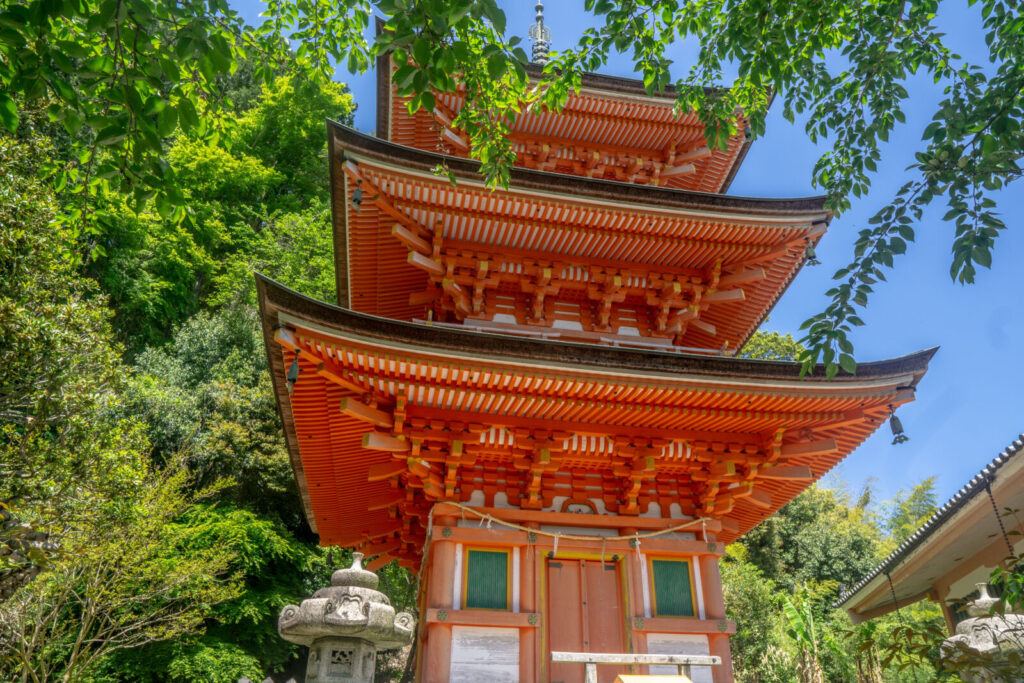
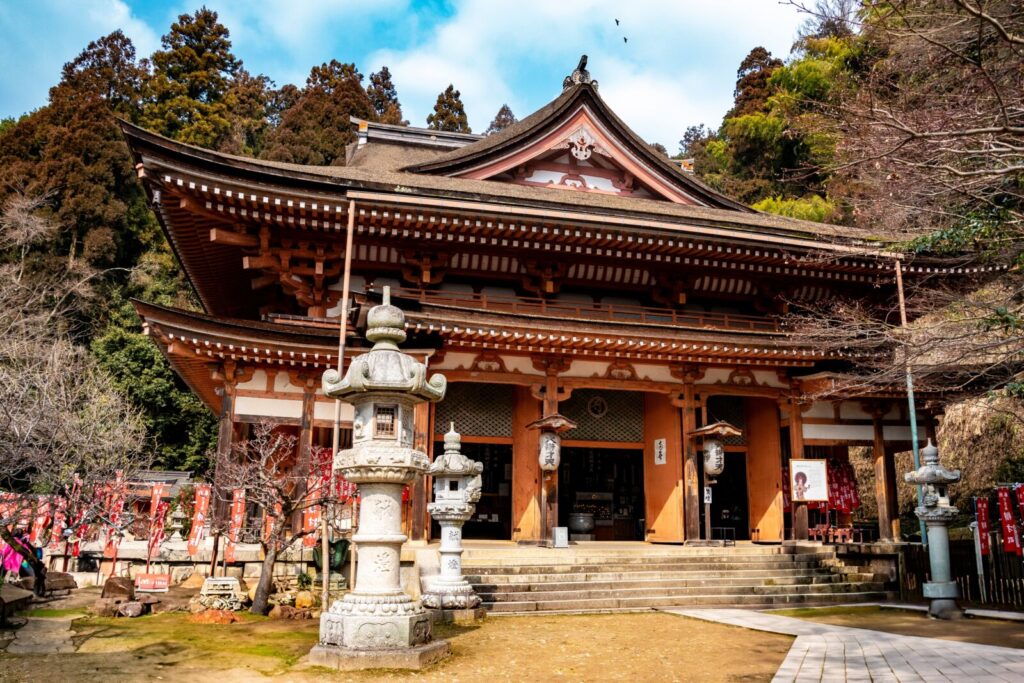
Main Hall (Benzaiten Hall)
The heart of Hōgon-ji is its Benzaiten Hall, dedicated to the goddess Benzaiten. As one of Japan's most important Benzaiten temples, the hall remains a place of active worship where visitors pray for wisdom, good fortune, artistic talent, and success.
Temple tradition holds that Chikubushima was the place where Benzaiten first arrived in Japan, contributing to the island's reputation as one of the country's most important centers of Benzaiten worship. Alongside Itsukushima in Hiroshima and Enoshima near Kamakura, Hōgon-ji is often regarded as one of Japan's most significant Benzaiten sites.
Kannon Hall (Kannon-dō)
The Kannon Hall is one of the temple's most historically important buildings and serves as the focal point for pilgrims following the Saigoku 33 Kannon Pilgrimage.
The present hall was relocated to Chikubushima in 1603 by Toyotomi Hideyori in accordance with the wishes of his father, Toyotomi Hideyoshi. It enshrines Senju Kannon, the Thousand-Armed Kannon, and welcomes a steady stream of pilgrims travelling between the thirty-three temples of the pilgrimage route.
Benzaiten Daruma
One of the temple's most distinctive souvenirs is the Benzaiten Daruma. Unlike the familiar red Daruma dolls found elsewhere in Japan, these unique versions reflect the island's connection to Benzaiten and have become popular among visitors seeking good fortune and success.
Goshuin
Hōgon-ji is a popular destination for those collecting goshuin, the beautiful handwritten temple stamps found throughout Japan. As both a major pilgrimage temple and one of the most important sites on Chikubushima, its goshuin is especially sought after by pilgrims and collectors.
Karamon Gate and Boat Corridor
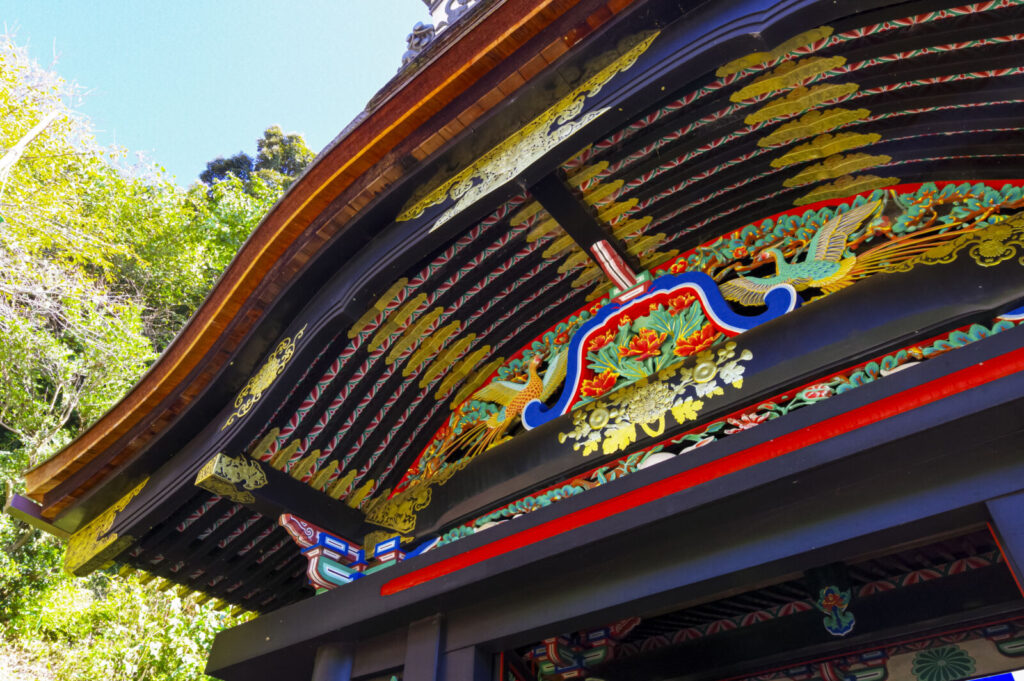
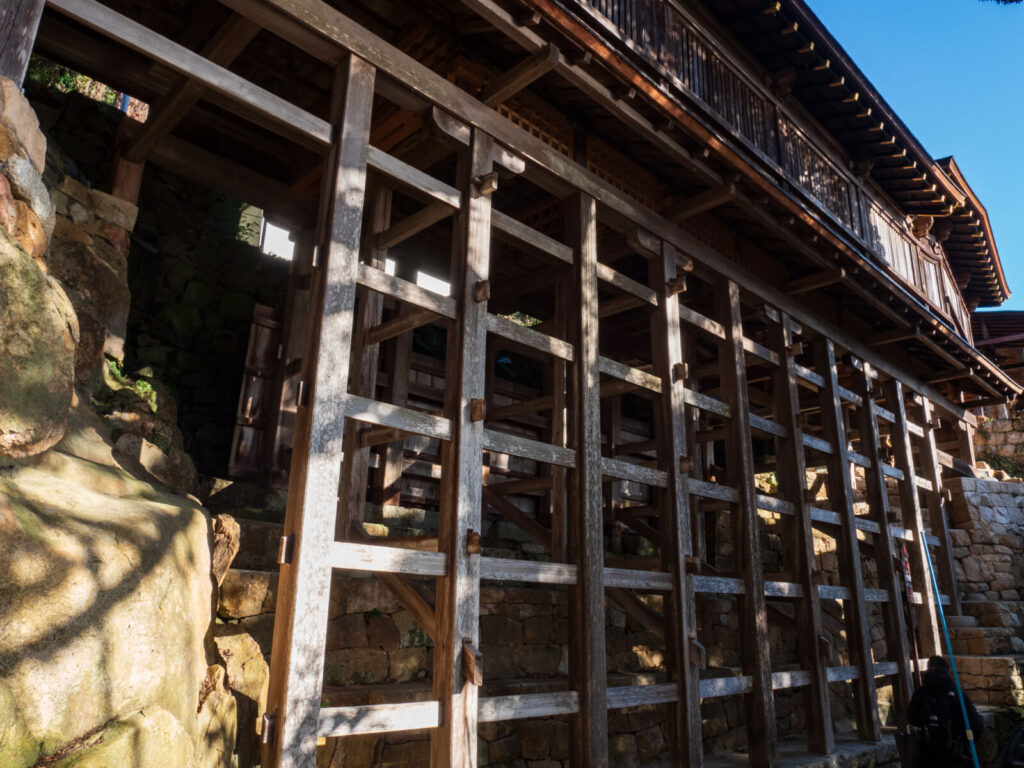
Among the island's most remarkable architectural features are the Karamon Gate and the Boat Corridor (Funa-rō), both associated with the Toyotomi family.
The elegant Karamon Gate is a masterpiece of Momoyama-period architecture and is known for its intricate carvings and decorative details. Beyond the gate lies the Boat Corridor, a covered passageway built dramatically along the island's rocky cliffside.
According to temple tradition, the corridor was constructed using materials from Toyotomi Hideyoshi's vessel Nihon-maru. The passageway connects the temple and shrine precincts and remains one of Chikubushima's most iconic sights.
How to Visit Hōgon-ji Temple
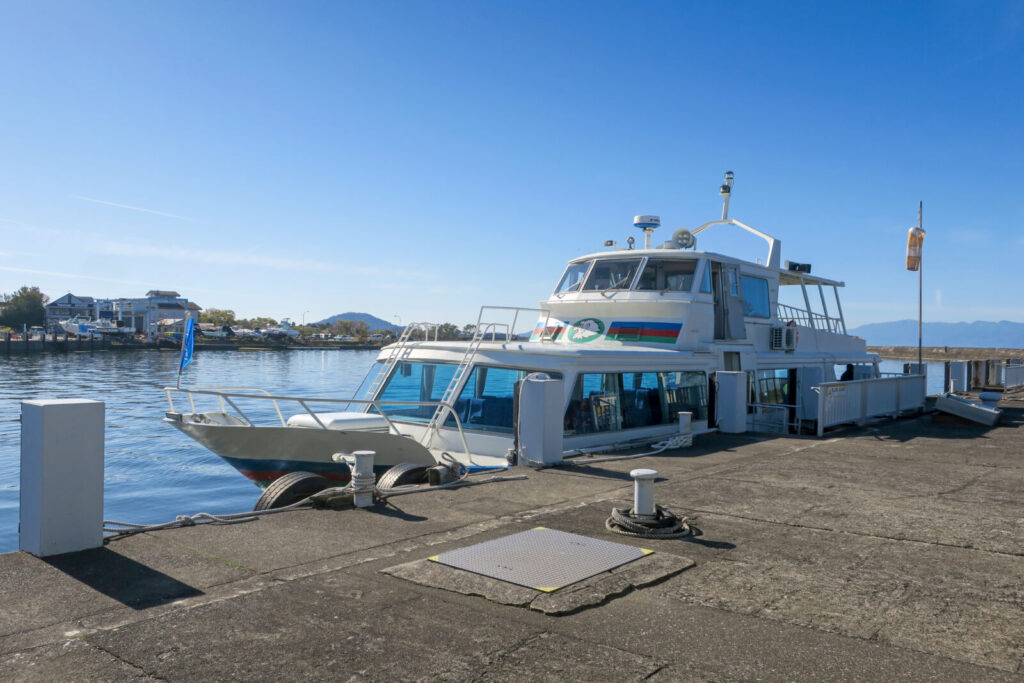
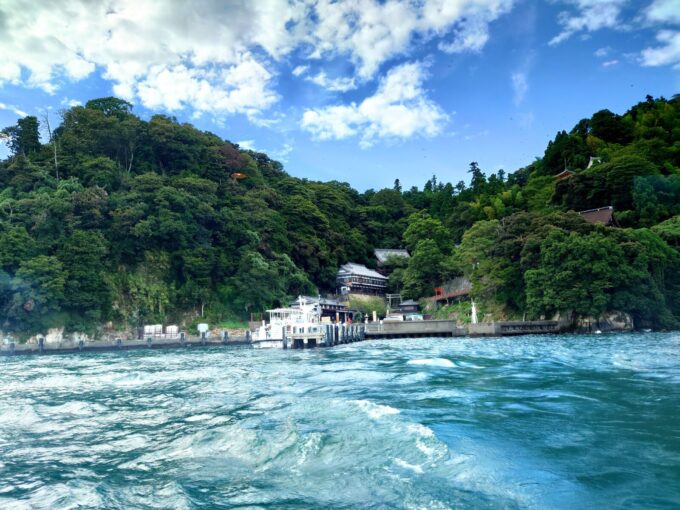
Hōgon-ji Temple is located on Chikubu Island and can only be reached by ferry. Services operate from ports around Lake Biwa, including Nagahama and Imazu, with some seasonal routes also available depending on the operator and time of year.
For detailed information about ferry routes, departure ports, travel times, and planning your visit, please see our complete Chikubu Island Cruise Guide.
Visitors typically combine Hōgon-ji Temple with nearby attractions on the island, including Tsukubusuma Shrine, the Boat Corridor, and the Karamon Gate.
Join Our Chikubu Island & Hikone Castle Tour
Want to experience Hōgon-ji Temple without worrying about train transfers, ferry schedules, or admission tickets?
Our 1-Day Tour from Kyoto: Lake Biwa Cruise, Chikubu Island & Hikone Samurai Castle includes transportation, ferry tickets, admission fees, and an English-speaking guide. Explore one of Japan's most important Benzaiten temples before continuing to historic Nagahama and Hikone Castle, one of Japan's twelve original castles.
Frequently Asked Questions
What is Hōgon-ji Temple famous for?
Hōgon-ji is famous as one of Japan's most important temples dedicated to Benzaiten and as the 30th temple of the Saigoku 33 Kannon Pilgrimage.
Is Hōgon-ji Temple part of the Saigoku Pilgrimage?
Yes. Hōgon-ji is the 30th stop on the Saigoku 33 Kannon Pilgrimage, one of Japan's oldest and most respected pilgrimage routes.
Can I collect a goshuin at Hōgon-ji Temple?
Yes. Visitors can receive a goshuin at the temple, making it a popular stop for both pilgrims and collectors.
Who is Benzaiten?
Benzaiten is the goddess of wisdom, music, eloquence, fortune, and water. She is one of Japan's Seven Lucky Gods and the principal deity worshipped at Hōgon-ji Temple.
How do I get to Hōgon-ji Temple?
The temple is located on Chikubu Island and can only be reached by ferry from ports around Lake Biwa such as Nagahama and Imazu.