



Planning to visit Kyoto in July 2026? Here's everything you need to know about Gion Matsuri including parade dates, Yoiyama evenings, viewing locations, transportation tips, and how to avoid the biggest crowds.
Every July, the streets of Kyoto come alive with one of Japan’s most spectacular and historic celebrations: Gion Matsuri. Centered around Yasaka Shrine, the festival stretches across the entire month and includes religious ceremonies, elaborate float parades, neighborhood celebrations, and lively evening street festivals.
While many visitors focus on the famous float parades, Gion Matsuri is actually a complex series of events that unfold over several weeks, beginning with purification rituals and preparations and ending with sacred processions returning the festival’s deities to their shrine.
Beyond the main parade days, the festival fills the entire month with cultural events, neighborhood celebrations, and evening street gatherings that give visitors a rare chance to experience Kyoto at its most festive.
The History of Gion Matsuri
The origins of Gion Matsuri date back to the year 869 during the Heian Period. At the time, Kyoto was suffering from a devastating plague. In response, the imperial court organized a purification ritual involving portable shrines and 66 halberds representing the provinces of Japan.
These rituals were conducted at Yasaka Shrine, where prayers were offered to appease the gods and stop the epidemic.
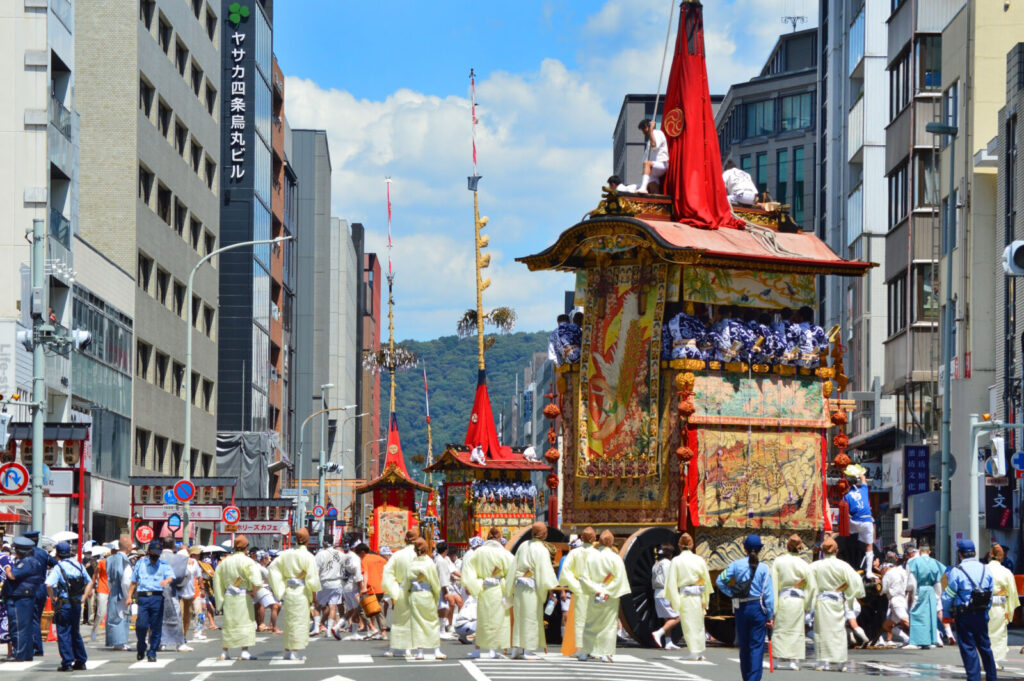
Over the centuries, these religious processions evolved into elaborate parades featuring massive floats known as yamaboko. Merchant guilds in Kyoto sponsored and decorated the floats, competing to display the most impressive designs. Many floats are decorated with imported tapestries from China and Europe, intricate wood carvings, and ornate metalwork.
Because of their artistic value and craftsmanship, the floats are sometimes referred to as “moving museums.”
Today, the traditions of the festival are recognized internationally, and the Yamaboko float procession has been designated part of UNESCO’s Intangible Cultural Heritage.
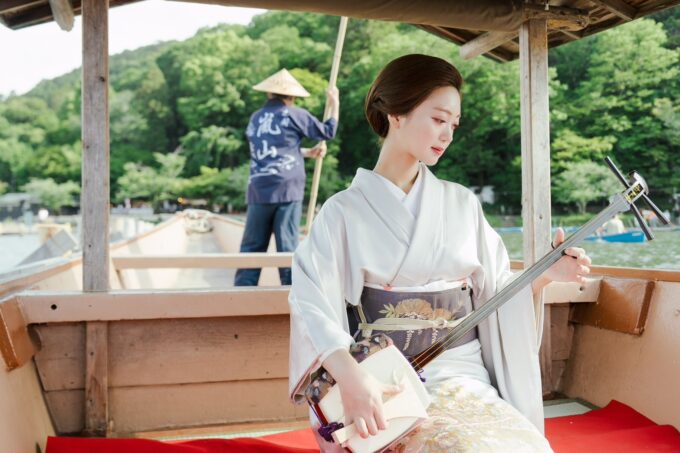
Small Group
Sacred Stone and Flowing Silk: Arashiyama Temples, Bamboo Forests, and Maiko River Cruise
The Yamaboko Floats
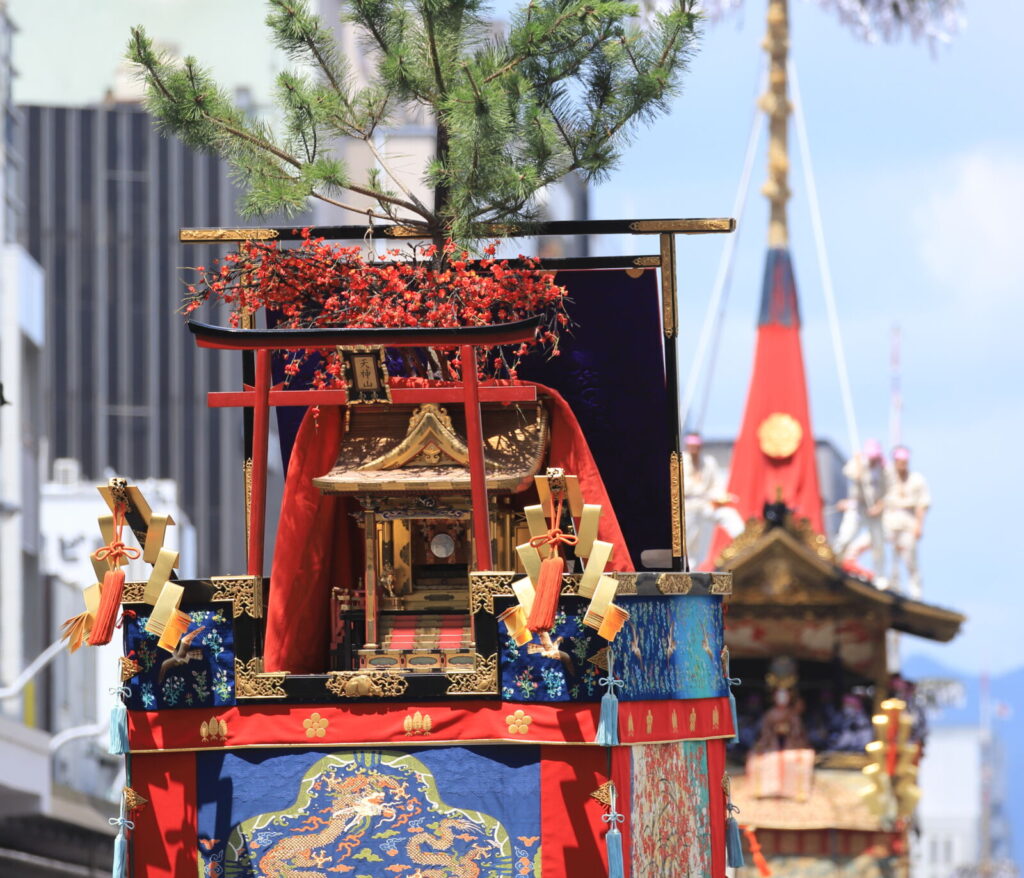
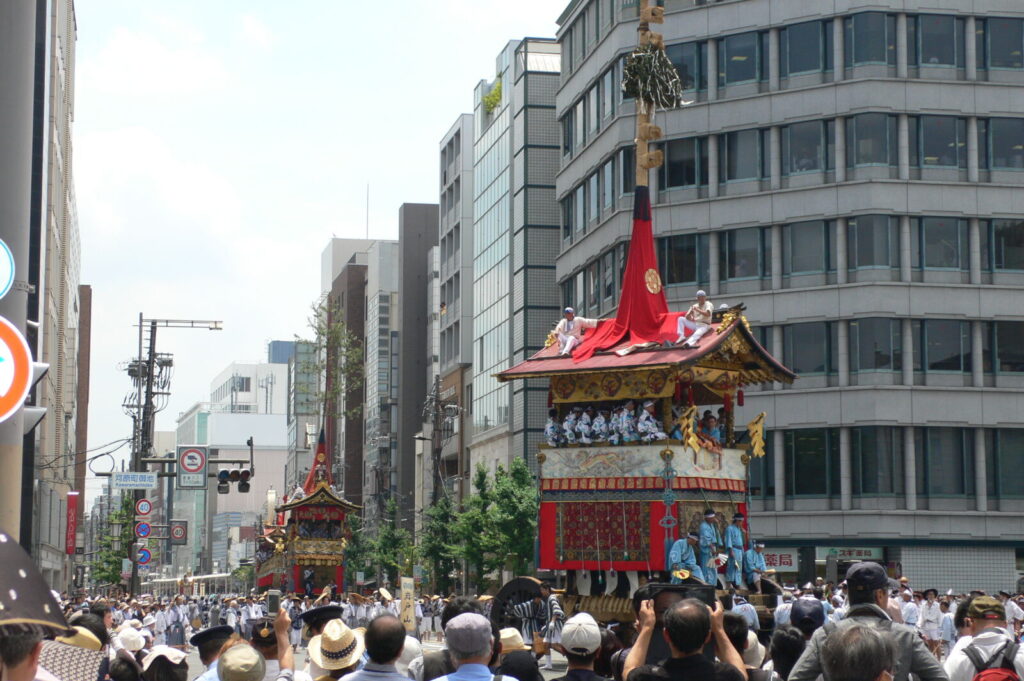
The iconic floats of Gion Matsuri are divided into two main types:
Yama floats
Smaller floats often decorated with figures from mythology or historical stories.
Hoko floats
Enormous multi-story structures reaching up to 25 meters tall and weighing several tons.
These massive floats are assembled without using nails, relying instead on traditional rope bindings. Each year they are carefully rebuilt by skilled craftsmen and local neighborhood groups who maintain the festival traditions.
Gion Matsuri Festival Map
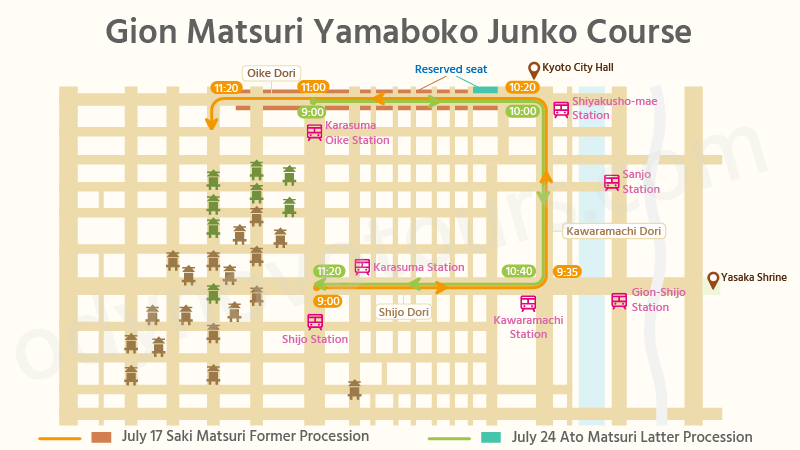
Most of the major events of Gion Matsuri take place in central Kyoto around Shijo Street, Karasuma Street, and the historic district of Gion.
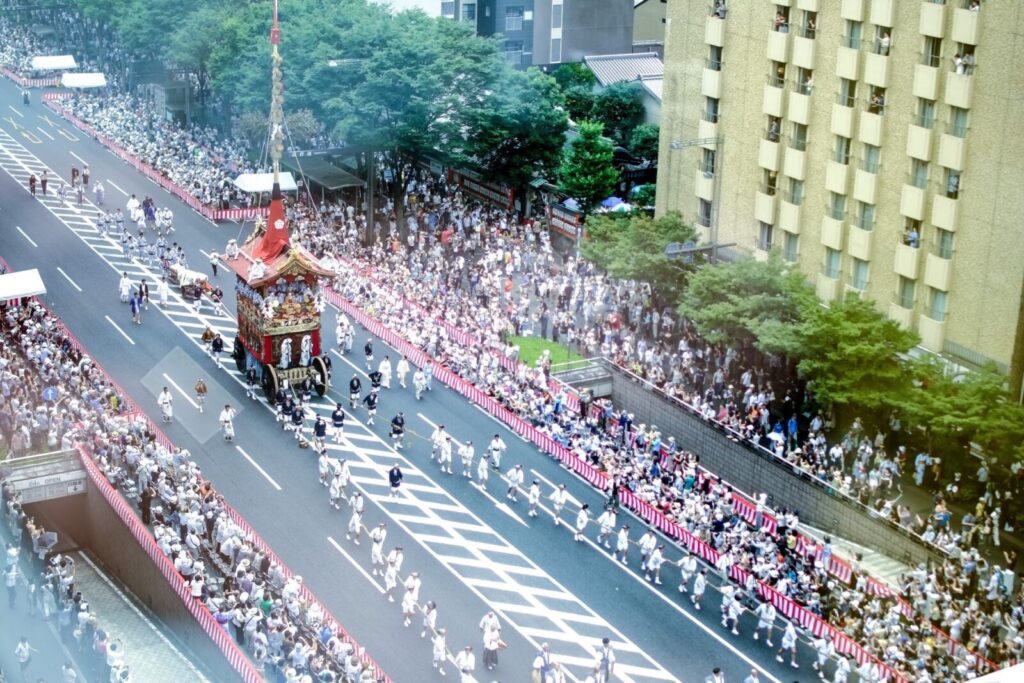
The famous Yamaboko Junko float parade travels through the downtown streets, beginning near Shijo-Karasuma Intersection before continuing west and north through the city.
During the evenings leading up to the parade, many streets in this area are closed to traffic as part of the lively Yoiyama celebrations. Visitors can walk freely through the festival districts, see the floats illuminated with lanterns, and enjoy hundreds of food stalls lining the streets.
A map of the parade route and float neighborhoods can help visitors understand where the main events take place and plan the best locations to watch the festival.
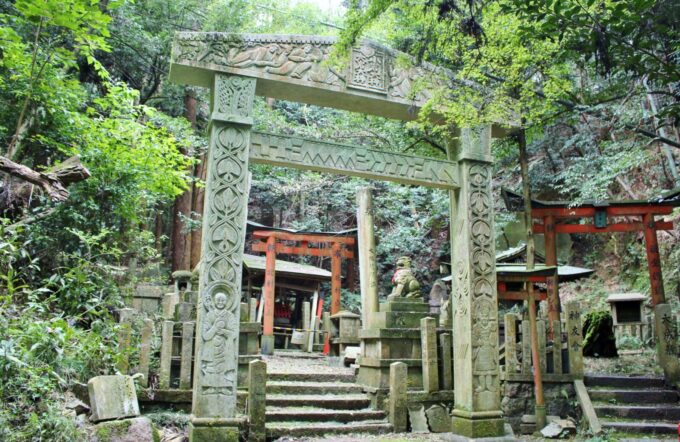
Key Events of Gion Matsuri
| Date | Event | What Happens |
|---|---|---|
| July 1 | Kippu-iri | Official opening ceremony of Gion Matsuri at neighborhood float associations. |
| July 10 | Lantern displays begin | Lanterns and decorations appear around float districts. |
| July 10–14 | Float construction | Massive yamaboko floats are assembled using traditional rope binding techniques. |
| July 13–16 | Yoiyama evenings | Streets fill with food stalls, lanterns, and visitors walking among the floats. |
| July 17 | Yamaboko Junko (First Parade) | The famous float procession travels through downtown Kyoto. |
| July 17 | Mikoshi Togyo | Sacred portable shrines leave Yasaka Shrine and travel through the city. |
| July 21–23 | Second Yoiyama | Another round of evening street festivals. |
| July 24 | Second Yamaboko Parade | Smaller but still impressive float procession. |
| July 24 | Hanagasa Parade | Parade featuring dancers and performers. |
| July 28 | Mikoshi Arai | Ritual purification of the portable shrines. |
| July 31 | Nagoshi Festival | Closing ritual returning the gods to the shrine. |
Watching the Floats Being Built
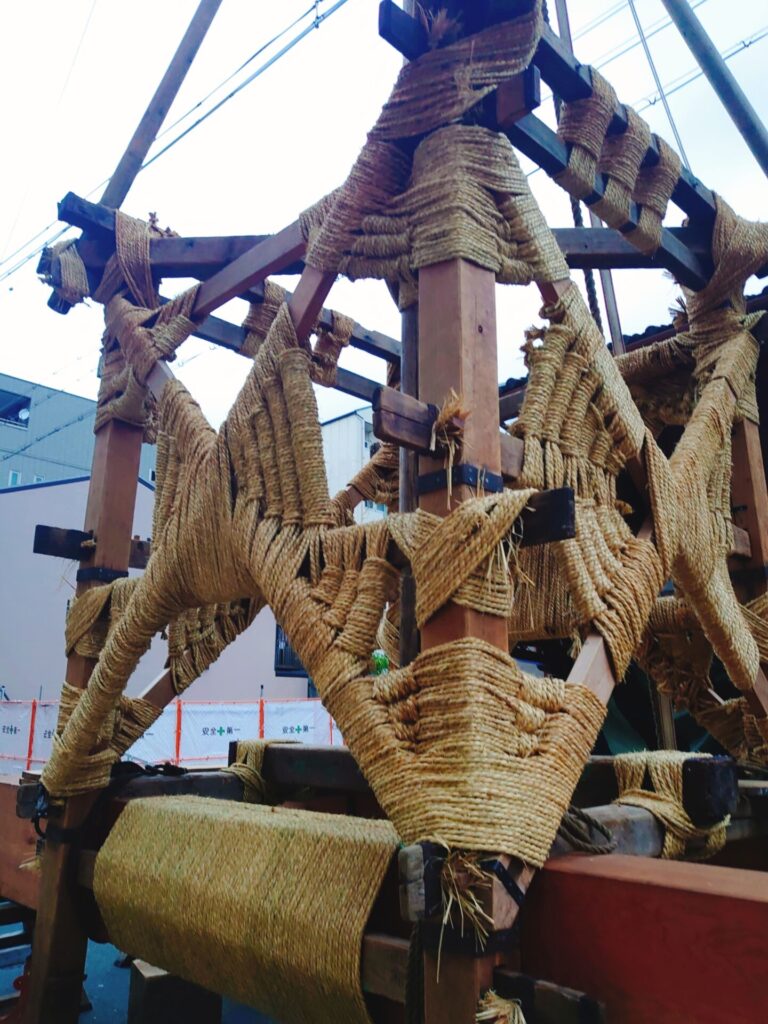

One of the most fascinating parts of the festival happens before the parade even begins.
In early July, the floats are constructed in neighborhoods across central Kyoto near Shijo Street and Karasuma Street. Visitors can watch teams of craftsmen and volunteers assemble the massive wooden structures piece by piece using traditional techniques that have been passed down for generations.
Seeing the floats under construction offers a rare glimpse into the craftsmanship behind the festival and provides a quieter alternative to the busy parade days.
Yoiyama – The Festival Evenings
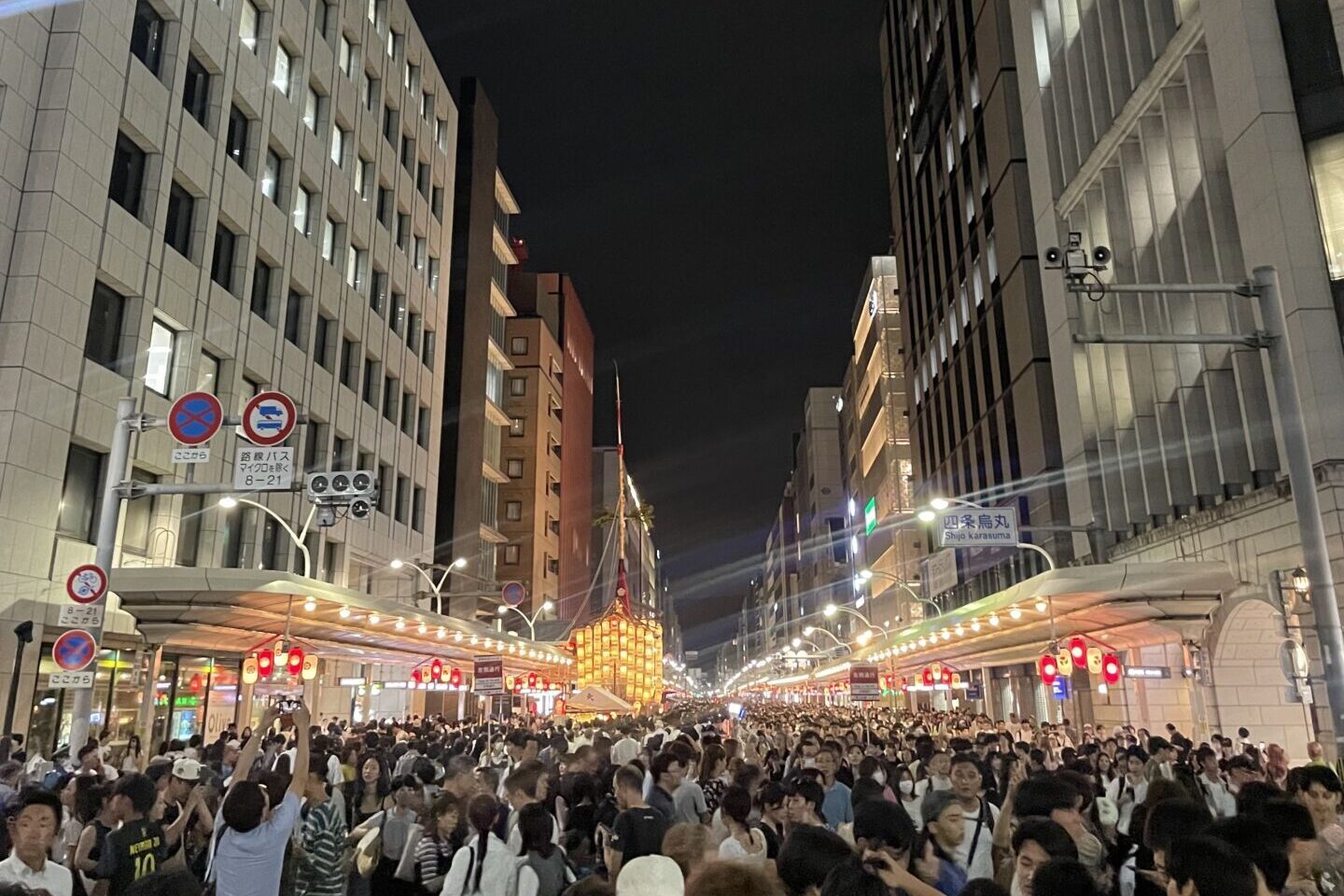
In the days leading up to the parades, Kyoto hosts lively evening street festivals known as Yoiyama.
During these nights, major streets in downtown Kyoto are closed to vehicles and filled with lanterns, food stalls, and festival music. The towering floats are displayed in the streets, illuminated against the night sky while visitors walk between them.
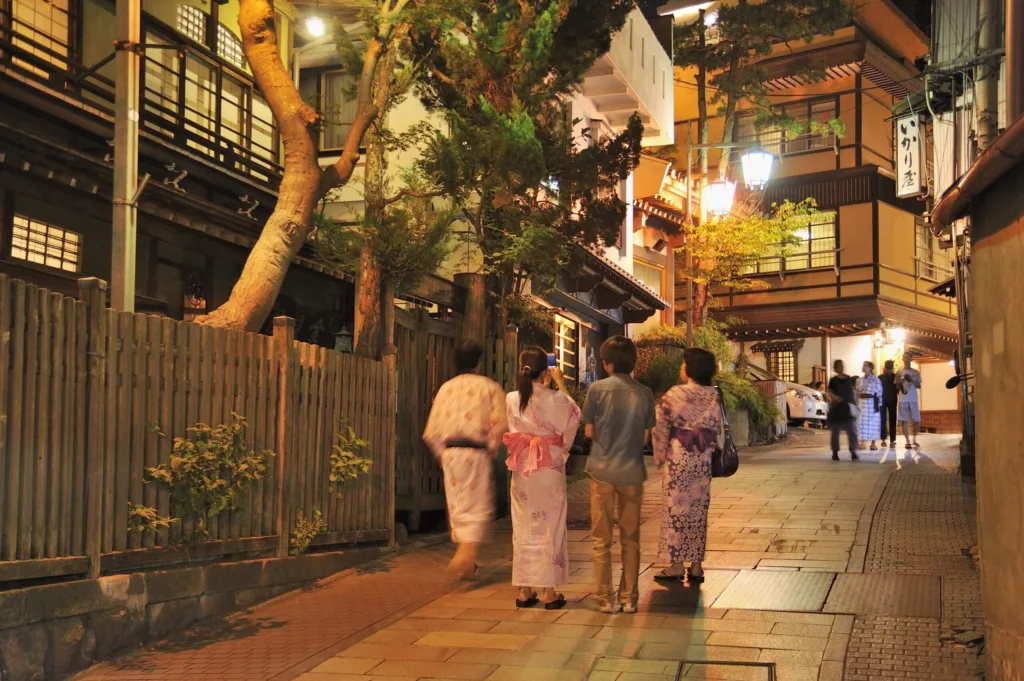
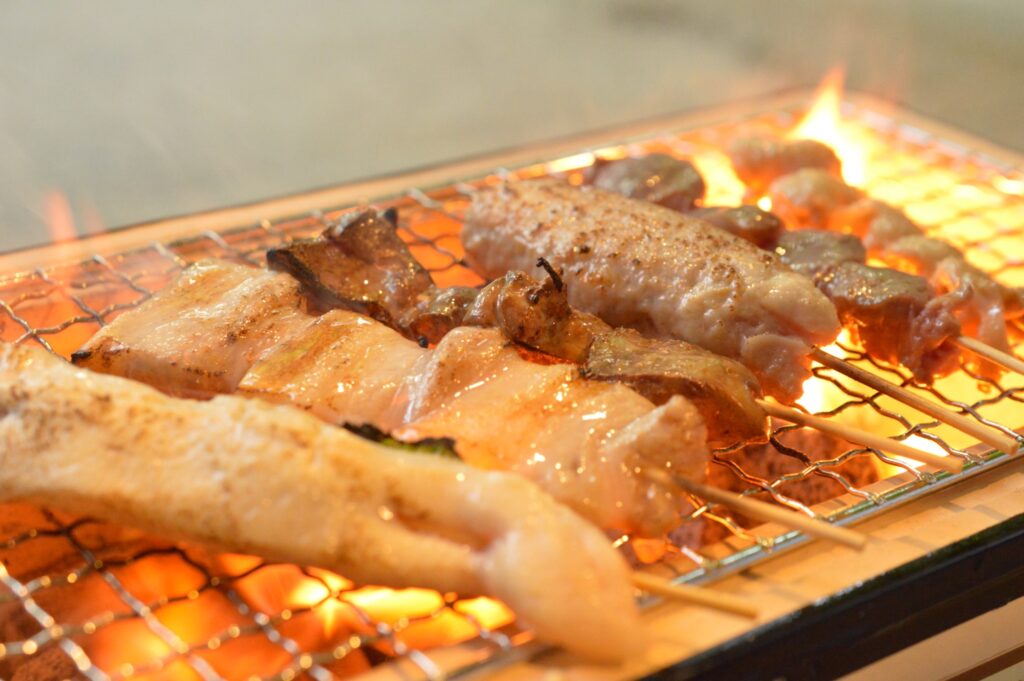
The atmosphere feels like a traditional summer festival, with locals dressed in yukata enjoying classic festival foods such as:
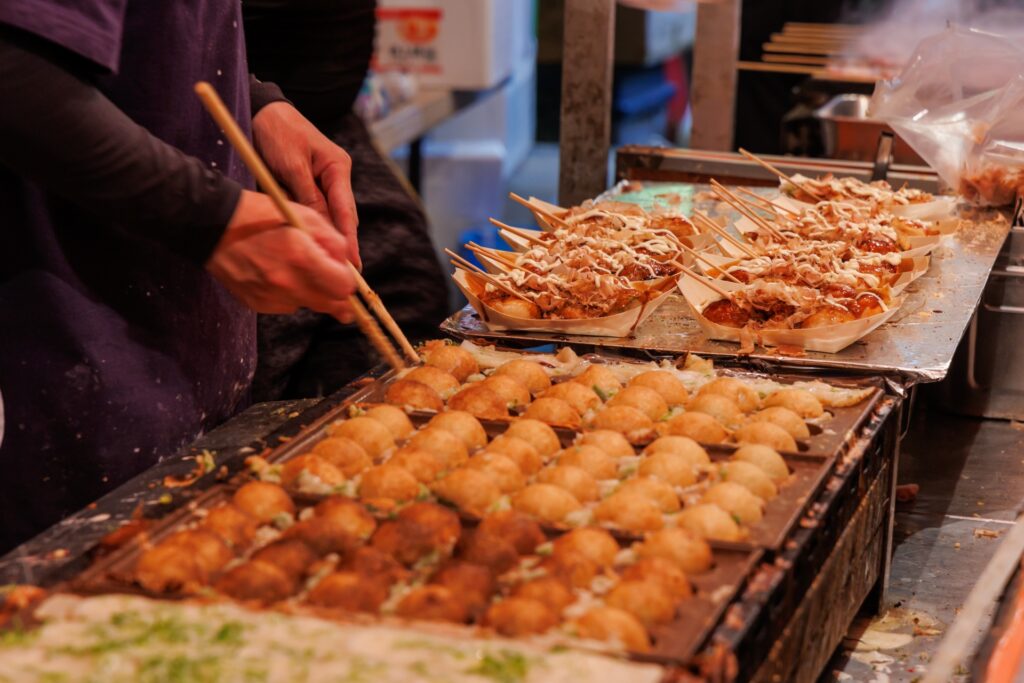
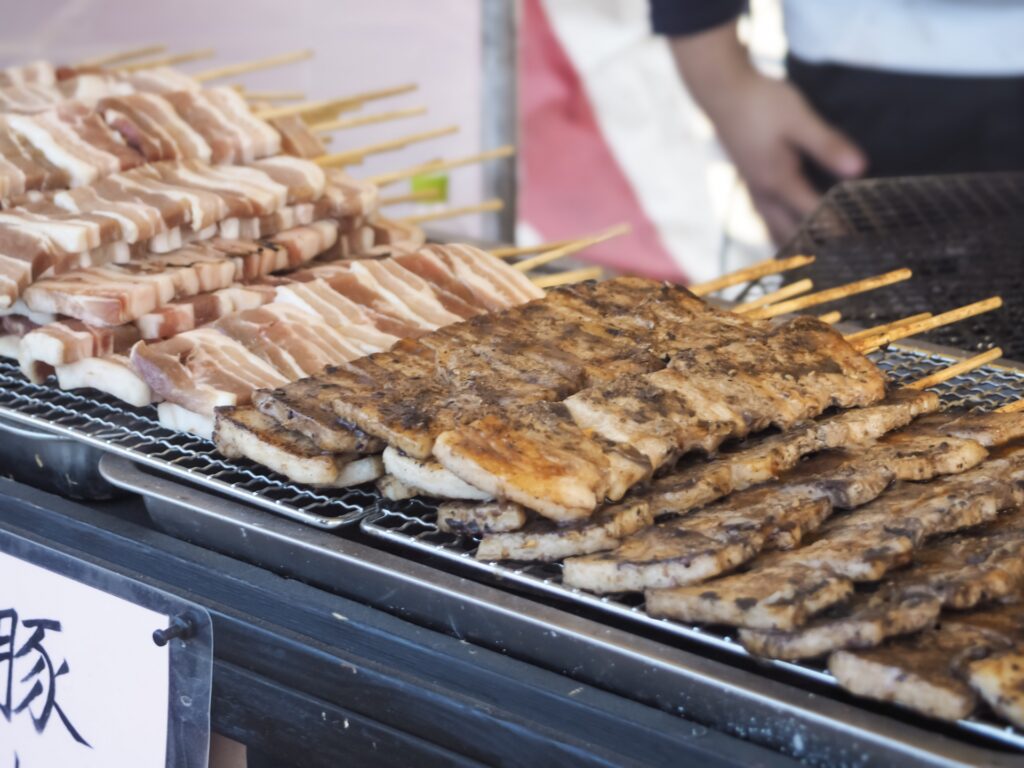
- Takoyaki
- Yakitori
- Kakigori (shaved ice)
- Grilled corn
- Candied fruit
For many visitors, Yoiyama is actually the most enjoyable part of Gion Matsuri, combining cultural tradition with a lively street-festival atmosphere.
The Yamaboko Junko Float Parades
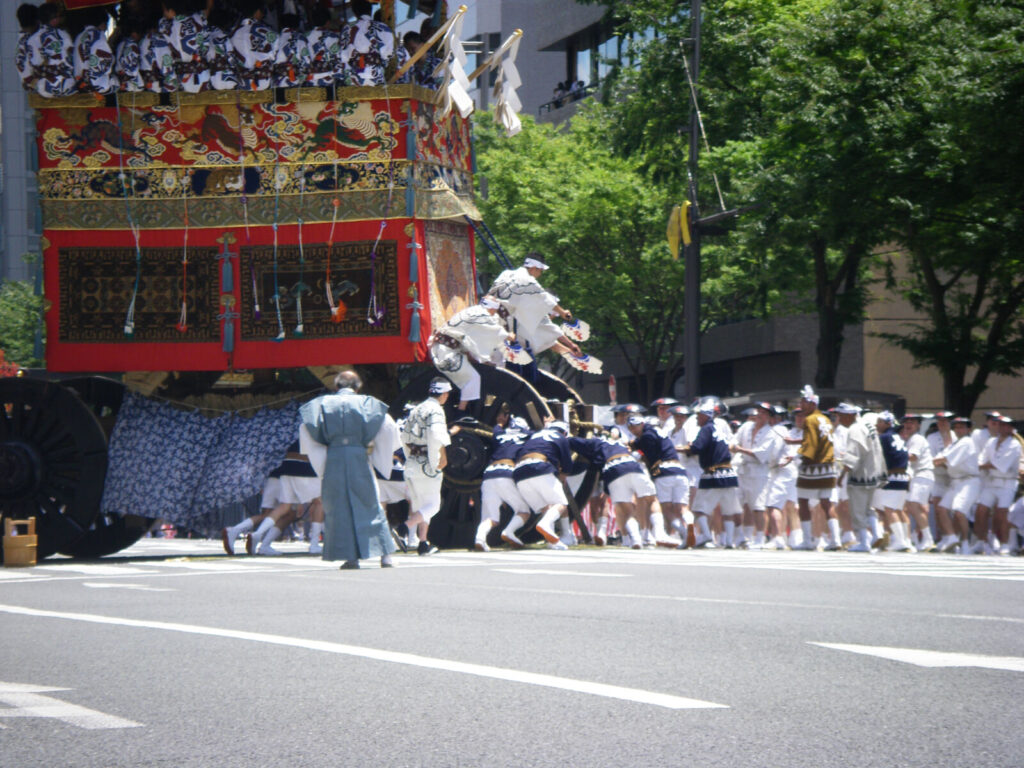
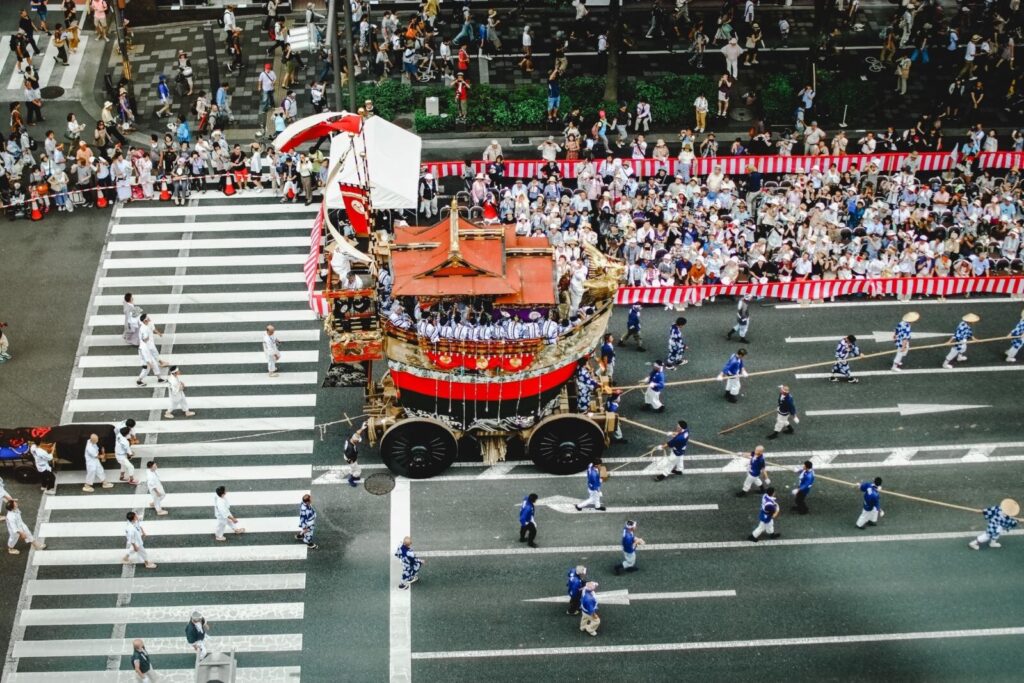
The most famous events of Gion Matsuri are the Yamaboko Junko float parades held on July 17 and July 24.
Dozens of floats move slowly through the streets of central Kyoto, pulled by teams of participants using thick ropes.
One of the most dramatic moments occurs when the floats must turn corners. Because the wheels cannot pivot, workers place bamboo under them and pour water onto the road, allowing the massive structures to slide sideways in a maneuver known as tsuji-mawashi.
Watching a several-ton float rotate slowly through an intersection is one of the festival’s most impressive sights.
The Mikoshi Processions
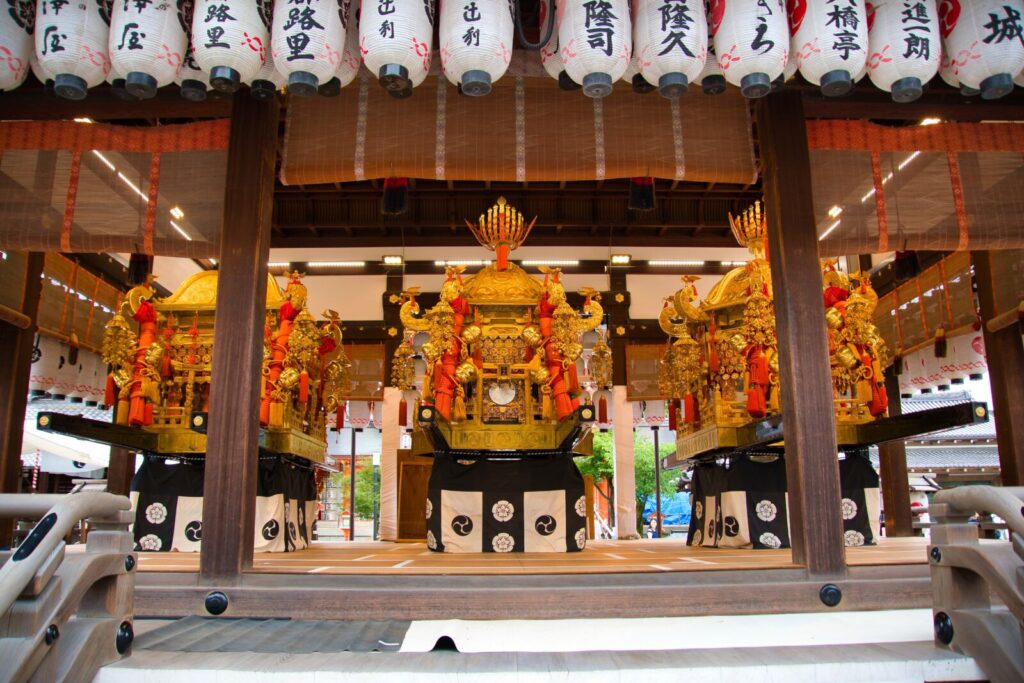

While the floats often attract the most attention, the religious heart of the festival lies in the sacred mikoshi processions.
Portable shrines carrying the deities of Yasaka Shrine are carried through the streets of Kyoto by teams of participants.
These processions symbolically allow the shrine’s gods to leave the shrine and travel through the city, blessing and protecting the community.
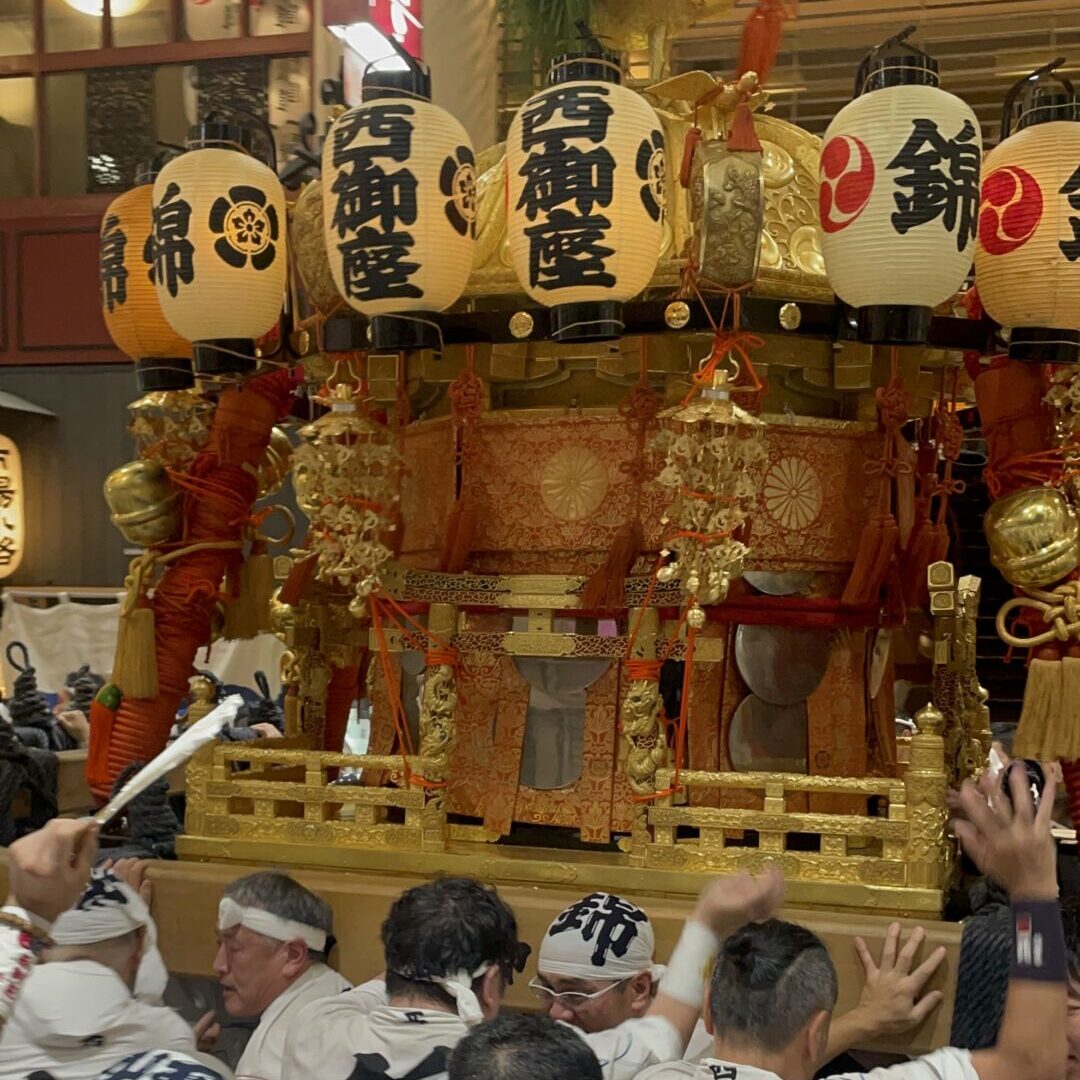
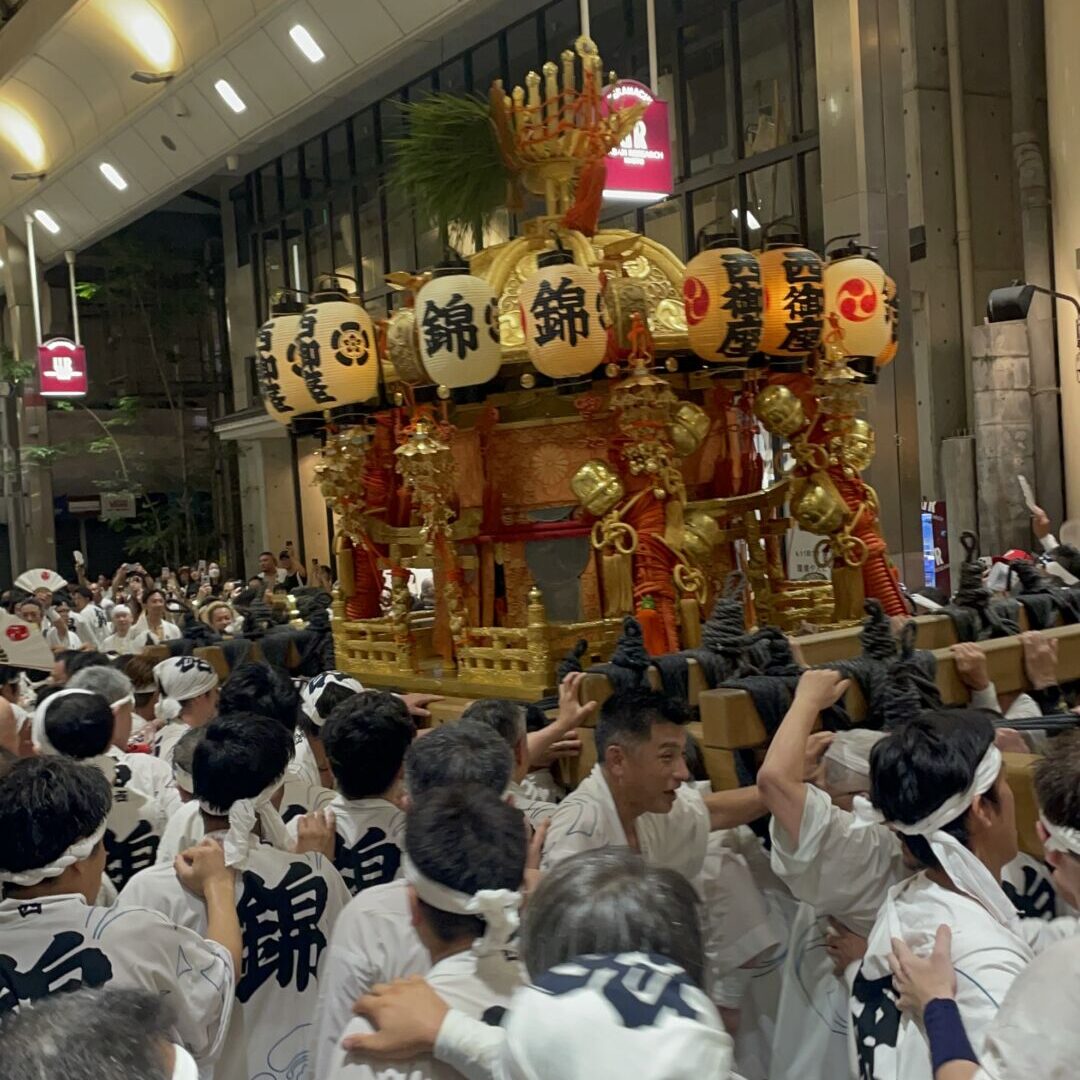
Later in the festival, the mikoshi are returned to the shrine in another dramatic nighttime procession, marking the spiritual conclusion of Gion Matsuri.
Tips for Visiting Gion Matsuri
Because Gion Matsuri is one of Japan’s most famous festivals, it attracts enormous crowds—especially during the Yoiyama evenings and the main parade days.
Tips for visitors:
- Arrive early if you want a good viewing spot for the parade.
- Expect major road closures around Shijo Street and Karasuma Street.
- Public transportation is the easiest way to reach the event. Nearby stations include Shijo Station and Karasuma Station.
- Summer in Kyoto is extremely hot and humid, so bring water, wear light clothing, and take breaks when needed.
Despite the crowds and heat, experiencing Gion Matsuri is unforgettable—an opportunity to see Kyoto’s history and traditions brought to life on a grand scale.
Best Viewing Spots for the Gion Matsuri Parade
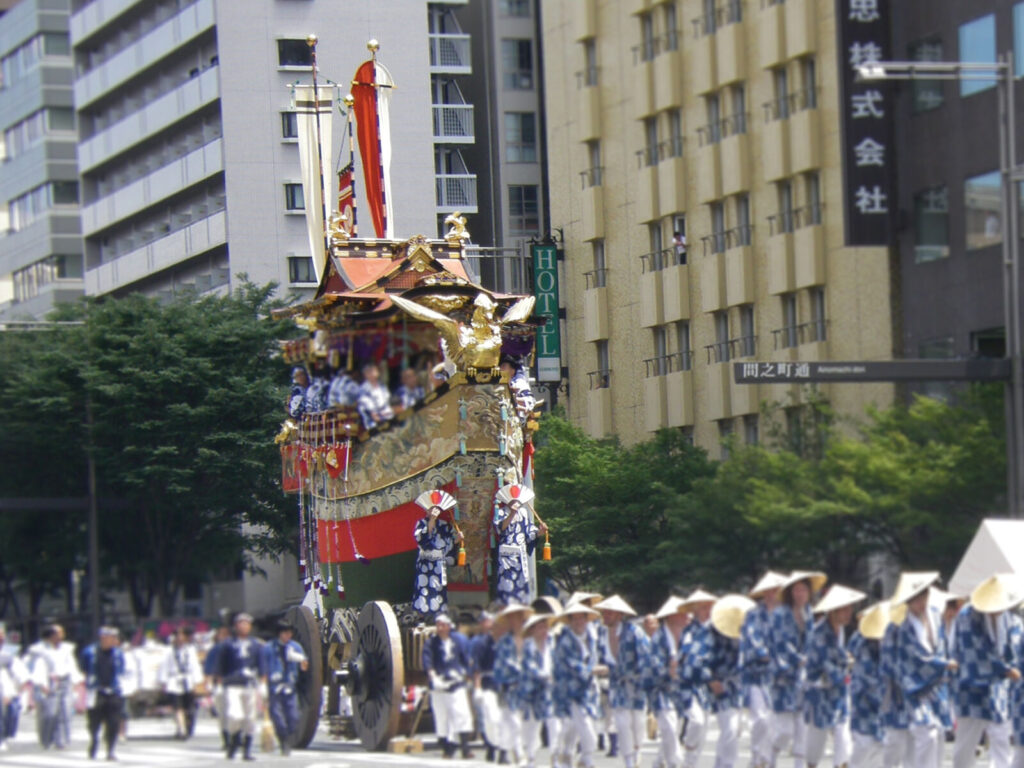
Best place to see a dramatic float turn
Shijo-Karasuma intersection
This is where floats perform the famous tsuji-mawashi, sliding sideways on bamboo to make a turn. It’s one of the most exciting moments of the parade.
Best place for photographers
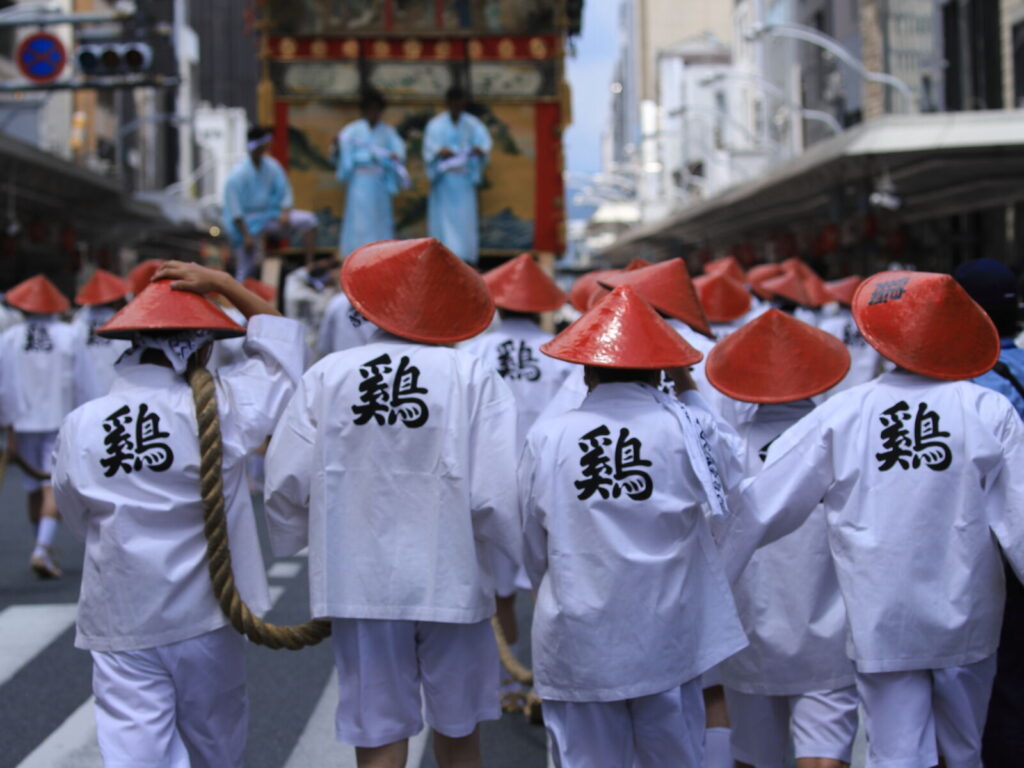
Kawaramachi Street
This stretch offers wider viewing angles and often better light in the morning.
Best place to see floats up close
The smaller streets around the float neighborhoods during Yoiyama nights.
This lets visitors stand right beside the floats, something impossible during the parade.
Famous Floats Worth Mentioning
Naginata-hoko
The most important float, which always leads the July 17 parade.
It carries a sacred child known as the chigo, who symbolically represents purity.
Tsuki-hoko
One of the largest and most beautifully decorated floats, famous for its intricate tapestries.
Fune-hoko
A float shaped like a ship, representing a legendary story about the Empress Jingu expedition.
Festival Food and Things to Buy
During Yoiyama evenings, hundreds of stalls appear around the festival streets selling classic Japanese festival food.
Popular items include:
Takoyaki
Octopus-filled batter balls topped with sauce and bonito flakes.
Yakitori
Grilled chicken skewers cooked over charcoal.
Kakigori
Shaved ice with sweet syrup — a lifesaver in Kyoto’s July heat.
Grilled corn with soy sauce
Chocolate bananas (a classic Japanese festival snack).
Visitors can also buy festival charms, fans, and decorative items related to the floats.
Many neighborhoods display family heirlooms and folding screens inside traditional townhouses during Yoiyama — a tradition called Byobu Matsuri.
Join a Guided Tour in Kyoto

If you’re visiting Kyoto during July, our guided tours are a great way to explore the city beyond the festival crowds. With a knowledgeable English-speaking guide, you can discover historic districts, hidden temples, and cultural traditions while learning the stories that shaped Kyoto over more than a thousand years.
For more information about our Kyoto tours and seasonal experiences, please contact us or browse our available tour options.
Plan-Your-Kyoto-Trip-With-Us

Still undecided? start with our 7-Day Kansai Japan Highlights Itinerary, which combines Kyoto, Osaka, and Nara into a balanced first visit. For more ideas, see our 40 Things to Do in Kyoto, Nara, and Osaka, featuring seasonal activities, neighborhoods, and cultural experiences across the region.
Looking to explore more deeply? Our Best Tours in Kyoto and Best Tours in Osaka highlight unique cultural experiences that go beyond the usual sights. For themed travel, you can also explore our Essential Guide to Geisha in Kyoto, Cherry Blossoms in Osaka, or discover local brewing traditions in our Top 10 Sake Breweries to Visit in Kansai.
Frequently Asked Questions
When is Gion Matsuri held?
Gion Matsuri takes place throughout the entire month of July in Kyoto. The most famous events are the Yamaboko Junko float parades, held on July 17 and July 24, along with the lively Yoiyama evening street festivals in the days leading up to the parades.
Where does Gion Matsuri take place?
Most events occur in central Kyoto around Shijo Street, Karasuma Street, and the historic district of Gion. The festival is closely connected to Yasaka Shrine, where many of the religious ceremonies originate.
What is the highlight of Gion Matsuri?
The highlight is the Yamaboko Junko, a grand parade of enormous wooden floats decorated with tapestries, carvings, and lanterns. Some floats reach 25 meters in height and weigh several tons.
What is Yoiyama?
Yoiyama refers to the festive evenings before the parade when central Kyoto streets are closed to traffic. Visitors can walk among the illuminated floats, enjoy traditional festival food, and experience the lively summer festival atmosphere.
Is Gion Matsuri free to attend?
Yes. Most events, including the Yoiyama street festivals and the float parades, can be enjoyed free of charge. Paid reserved seating is sometimes available for the parade for visitors who want guaranteed viewing spots.
What should visitors bring to the festival?
July in Kyoto is extremely hot and humid, so visitors should bring water, sunscreen, and light clothing. Comfortable shoes are also recommended, as the festival involves a lot of walking through crowded streets.