

Kyoto is one of the easiest cities in Kansai for tattooed travelers, thanks to its large number of tattoo-friendly sento (public bathhouses) and a small but growing number of welcoming onsen. While traditional onsen are more limited, Kyoto’s neighborhood baths offer an authentic, local experience that fits easily into a day of sightseeing. For a deeper explanation of onsen and sento culture, please check the Kansai Onsen Page.
Important note: signage is notoriously bad when it comes to tattoos and onsen. While we have done our best to verify the places on this list, we recommend checking yourself before booking an expensive onsen, as onsen can and frequently do change their policies.
Quick Bath Etiquette (Read This First)
Before entering any onsen or sento in Japan, please keep the following basic rules in mind:
- Wash thoroughly before entering the bath (showers are provided).
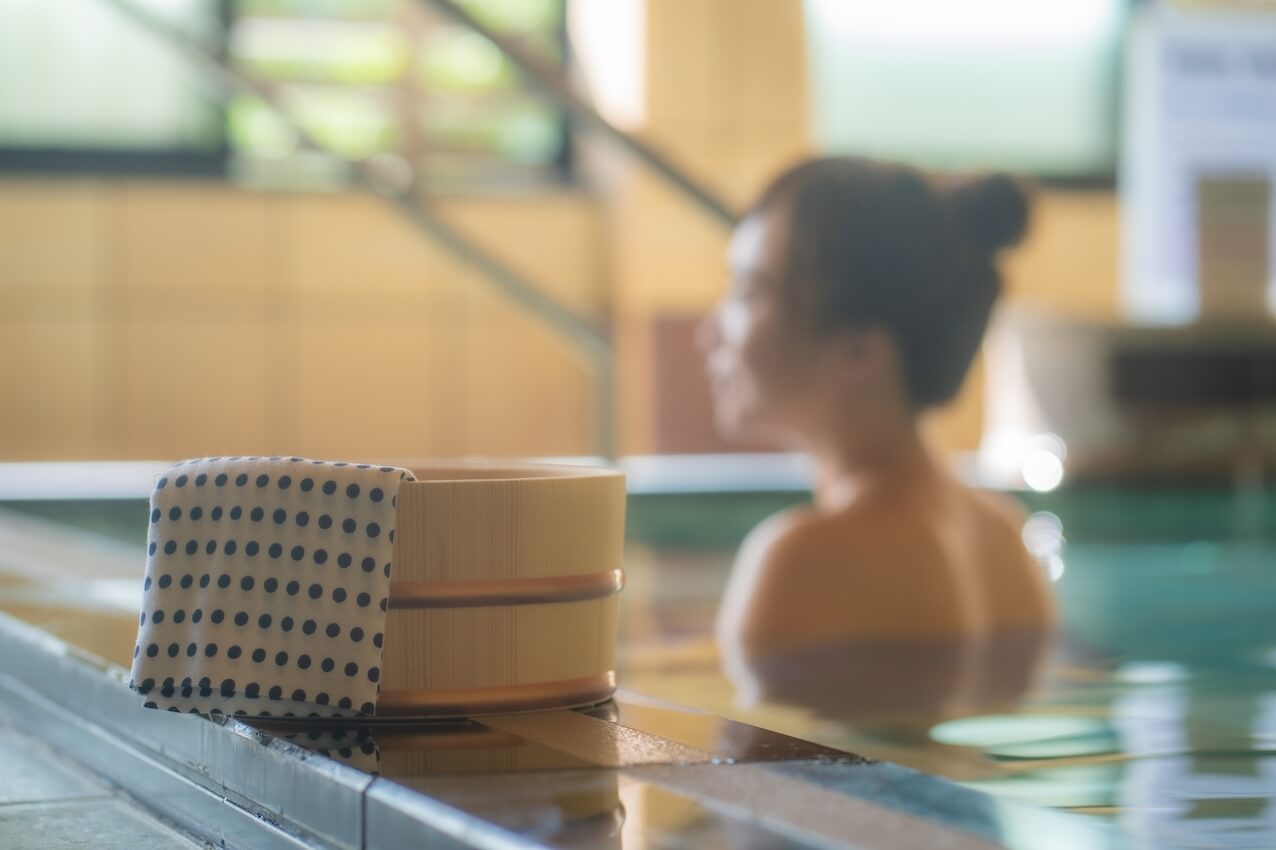
- No towels in the water — keep them on your head or at the side.
- Even at tattoo-friendly baths, always follow posted rules and staff instructions.
- Keep voices low and avoid splashing or swimming.
- No photos or phone use in the bathing or changing areas.
- Follow staff instructions and signage — rules may vary by facility.
For a full explanation of Japanese bathing culture, etiquette, and tattoo policies, please check the Kansai Onsen Page or the Onsen Etiquette page
Join Our Tours
We’ll be honest—our tours don’t go into sento or onsen in Kyoto… yet. We’re still unsure if “bathing with your guide” is the cultural experience anyone asked for.
Instead, we focus on what we do best: immersive tours that peel back the surface of Kyoto and offer real cultural depth (yes, another deep dive—couldn’t resist).
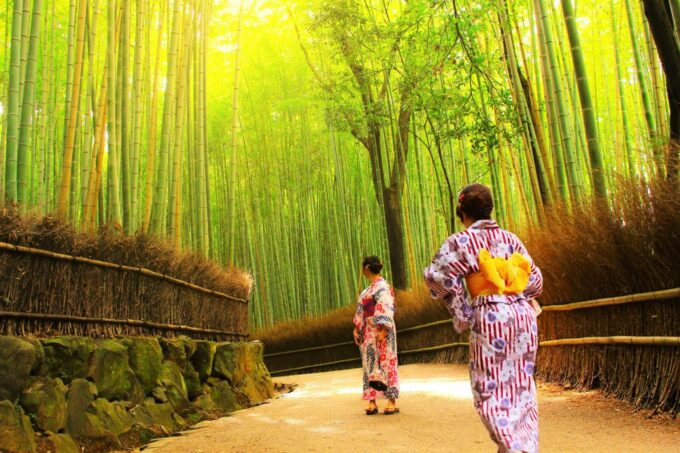
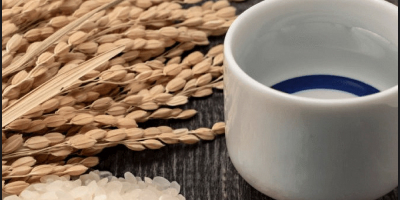
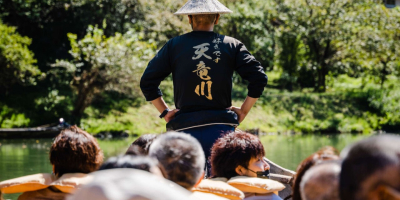
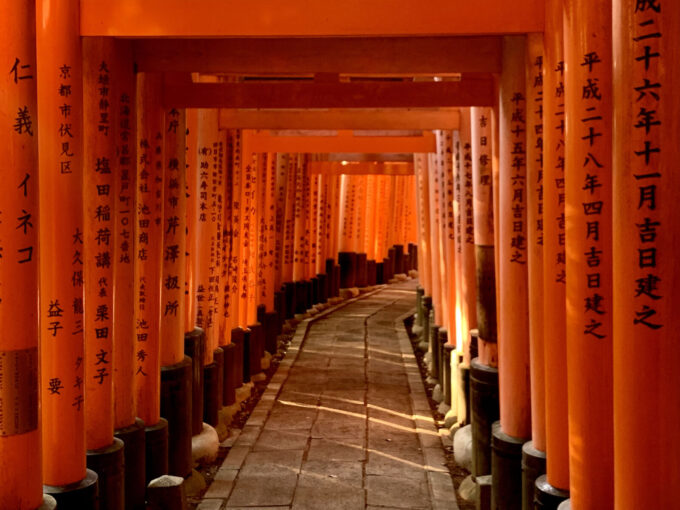
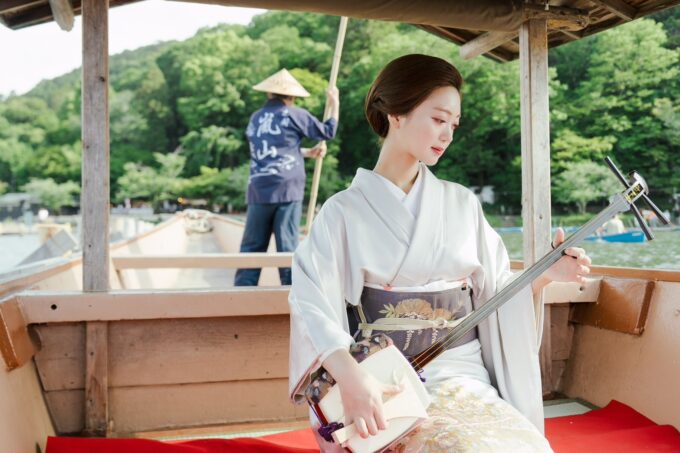
Walk beneath thousands of torii gates on our Fushimi Inari, Bamboo & Sake Tour, where spiritual landscapes meet forest paths and Kyoto’s historic brewing culture. Or experience the elegance of Kyoto’s living traditions with our Maiko River Cruise through Arashiyama a rare, respectful, and genuinely human encounter with a former maiko—no staged performances, no awkward photo lines.
Small Group
Sacred Stone and Flowing Silk: Arashiyama Temples, Bamboo Forests, and Maiko River Cruise
If you’re looking for tours that go beyond “nice photo, next stop,” you’re in the right place.
Kyoto City: Onsen and Sento
1 - Funaoka Onsen
- Opening Hours - 15:00 - 23:30 ( Sunday 8:00 - 23:30)
- Closed Tuesday
- Approx. Cost - JPY 500
- Towel Rental - Yes (JPY 230 )
- Toiletries - Available for purchase
- Website - Funaoka Onsen
Best for: History lovers, solo travelers, and anyone wanting Kyoto’s most visually stunning, old-school sento experience.
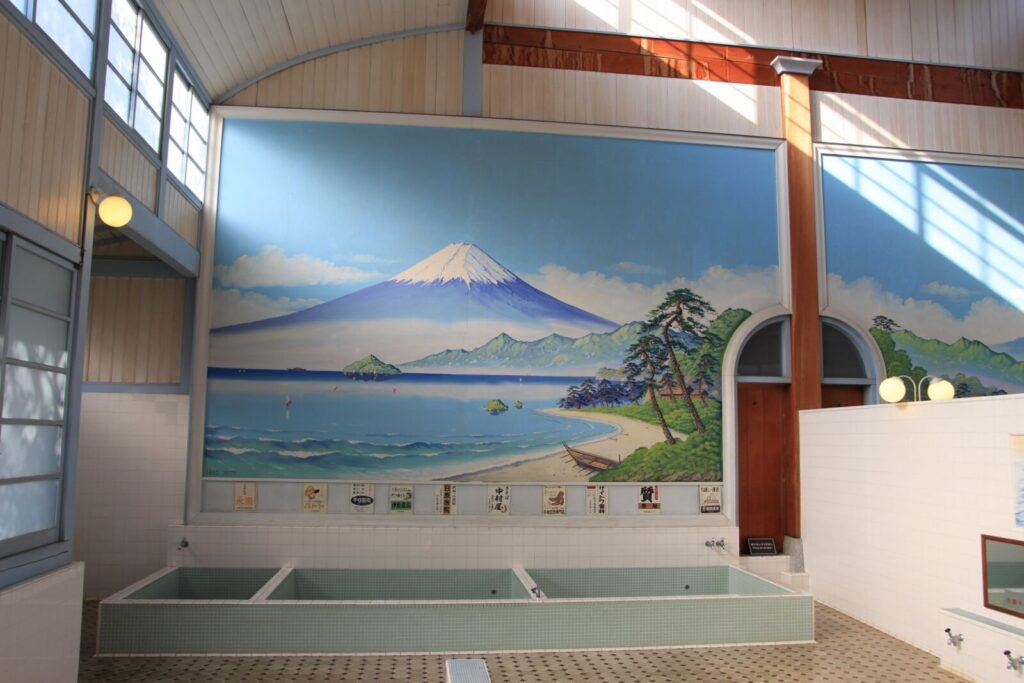
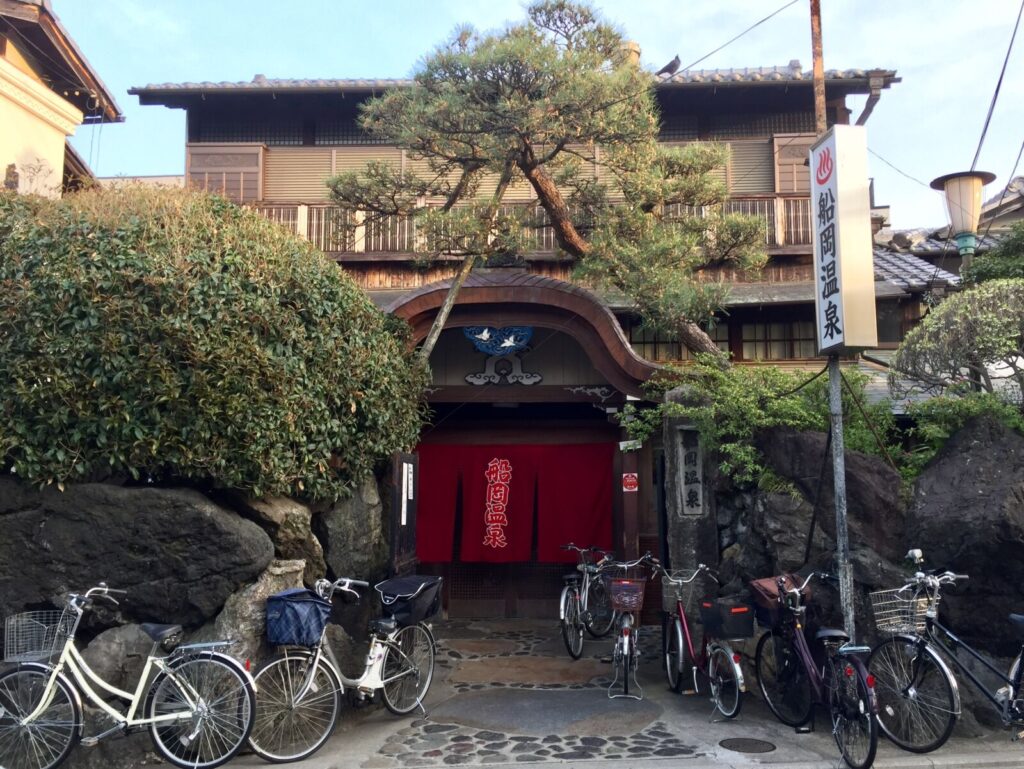
Despite its name, Funaoka Onsen is a classic neighborhood sento and one of Kyoto’s most iconic bathhouses. Stepping inside feels like entering a living museum: elaborate carved wooden transoms, richly detailed ranma panels, stained glass, and painted tiles wrap the space in Taisho-era craftsmanship that’s almost unheard of today. But this isn’t just a place to admire—it’s a place to soak properly. Inside you’ll find a wide variety of baths, including hot pools, an electric bath, jet baths, outdoor baths, and a sauna, all enjoyed shoulder-to-shoulder with locals who’ve been coming for decades.
Located near Kinkaku-ji, it’s an ideal stop after visiting the Golden Pavilion, offering a deeply Kyoto experience that balances beauty, history, and everyday life. Tattoo-friendly and refreshingly unpretentious, Funaoka Onsen remains one of the most reliable and rewarding bathing experiences in the city—especially for solo travelers or anyone wanting to see Kyoto as locals do.
2 - Kurama Onsen
- Opening Hours - 10:00 - 21:00
- Closed:
- Approx. Cost - Open air bath Adults JPY1400 Weekday JPY1600 Weekend
- Towel Rental - Yes
- Toiletries - Shampoo, Body Soap, Conditioner
- Website: Kurama Onsen
Best for: Nature lovers, open-air mountain bathing, tattoo-friendly soaking, and an easy day trip north of Kyoto.
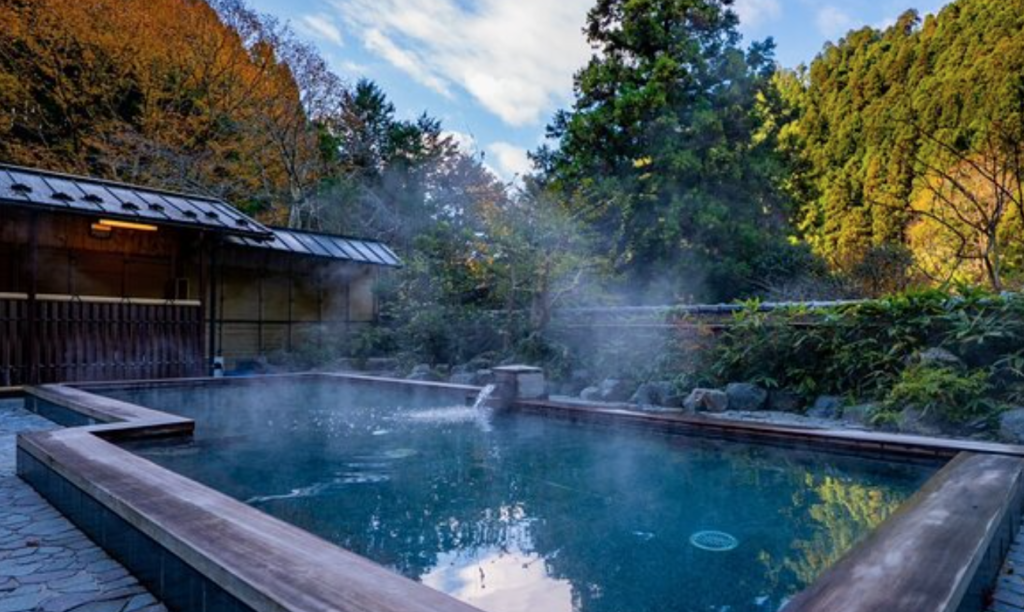
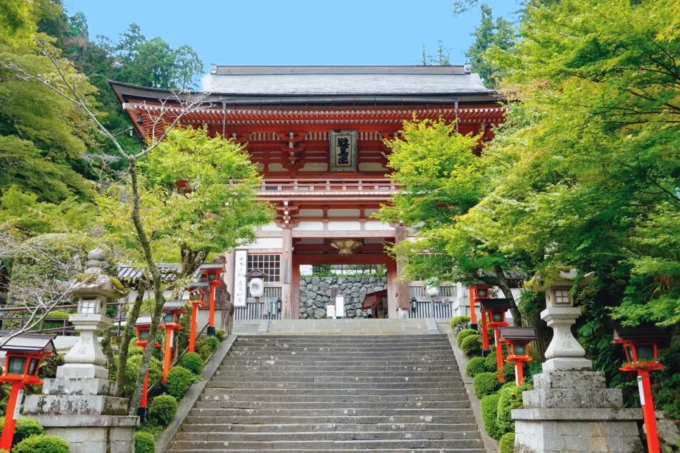
Nestled at the foot of Mount Kurama, Kurama Onsen is one of Kyoto’s most scenic and relaxing hot springs. Surrounded by forested mountains, this natural sulfur onsen is known for its skin-beautifying properties and fatigue relief. Despite its rural setting, it’s fully equipped as a hotel, restaurant, and day-use onsen, making it easy to visit even if you’re not staying overnight.
Bath Options
- Indoor bath: Spacious, with floor-to-ceiling glass windows overlooking the forest
- Outdoor bath (rotenburo): Located on a hill apart from the main building, offering sweeping mountain views and seasonal scenery
- Cold water bath: Popular with sauna lovers
You can choose indoor-only or outdoor access, with prices varying accordingly.
Discover Kyoto’s Sacred Mountain Landscapes
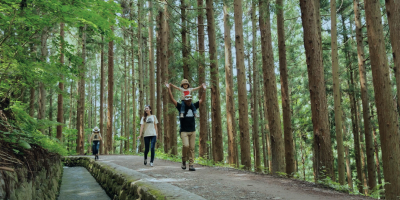
Experience a different side of Kyoto on our Kurama and Kibune Tour, a journey through forested mountain trails, historic temples, and centuries-old shrines. Visit the atmospheric Kurama-dera, walk the scenic trail connecting Kurama and Kibune, and learn about the legends, spirituality, and natural beauty that have drawn pilgrims to this area for generations. While the tour does not include a visit to a bathhouse, guests interested in experiencing a traditional onsen after the tour will find several options nearby, making it easy to combine a day of hiking and cultural discovery with a relaxing soak.
3 - Sauna no Umeyu
- Opening Hours - 06:00 - 02:00
- Closed - Thursday
- Approx. Cost - JPY 550
- Towel Rental - Yes
- Toiletries - Shampoo, Body soap, Conditioner
- Website: Sauna No Umeyu
Best for: First-time sento visitors, tattooed travelers, late-night soaking, and a fun, local Kyoto atmosphere.
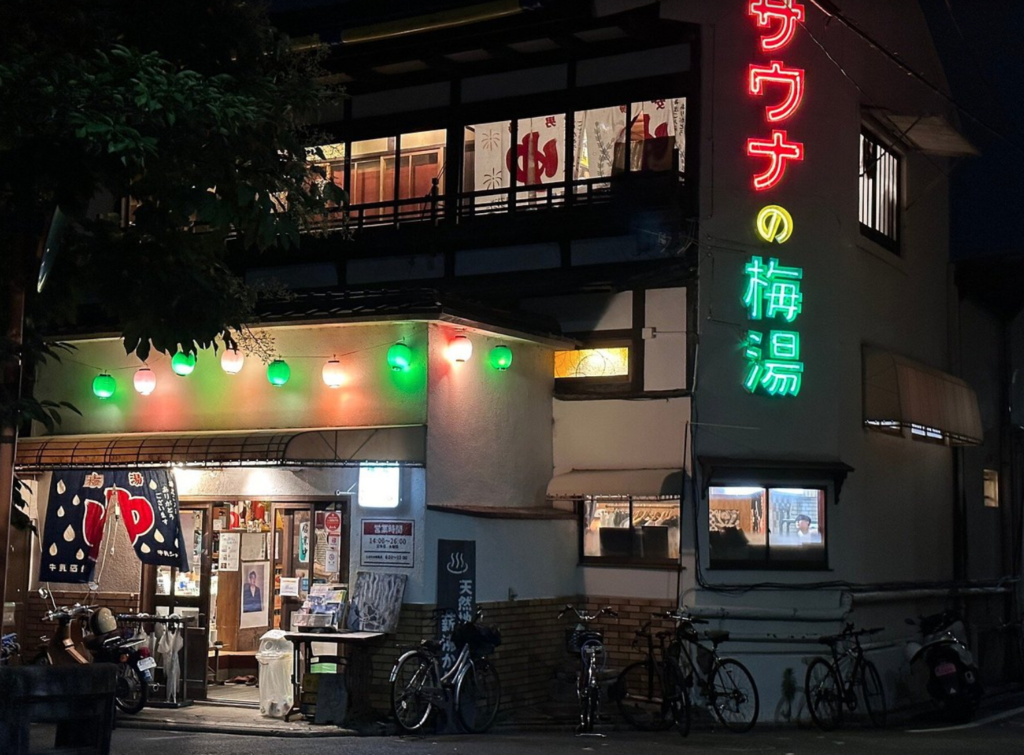
Sauna no Umeyu is a personal favorite sento in Kyoto, and it’s one of the most genuinely welcoming bathhouses you’ll find. Located near Kyoto Station along the Takase River, it attracts a wonderfully mixed crowd of locals, travelers, first-timers, and regulars of all ages and backgrounds. In fact, Umeyu is famously the place where many people make their “public bath debut”—and honestly, there’s no better spot for it. The staff are friendly, culture-loving, and often host small music events, giving the bathhouse a relaxed, creative neighborhood feel rather than a touristy one.
It’s tattoo-friendly (with an actual tattoo studio upstairs), open until 2:00 AM, and ideal after a long day of sightseeing. The retro interior, glowing neon sign, and lantern-lit river setting give it a nostalgic charm, while their original merchandise—ranging from stylish clothing to towels and artist collaborations—is surprisingly good and very wearable. This is a sento that feels alive, loved, and deeply rooted in the community—and once you go, you’ll probably want to come back.
4 - FuFu No Yu
- Opening Hours - 12:00 - 22:00
- Closed - Irregular holidays
- Approx. Cost - Adults JPY 1100 Weekdays 1300 Weekends and Holidays
- Towel Rental - Yes
- Toiletries - Shampoo, Body soap, Conditioner
- Website: Fufu-no-yu
Best for: Convenience, first-time onsen visitors, and travelers looking for an easy soak while sightseeing in Arashiyama.
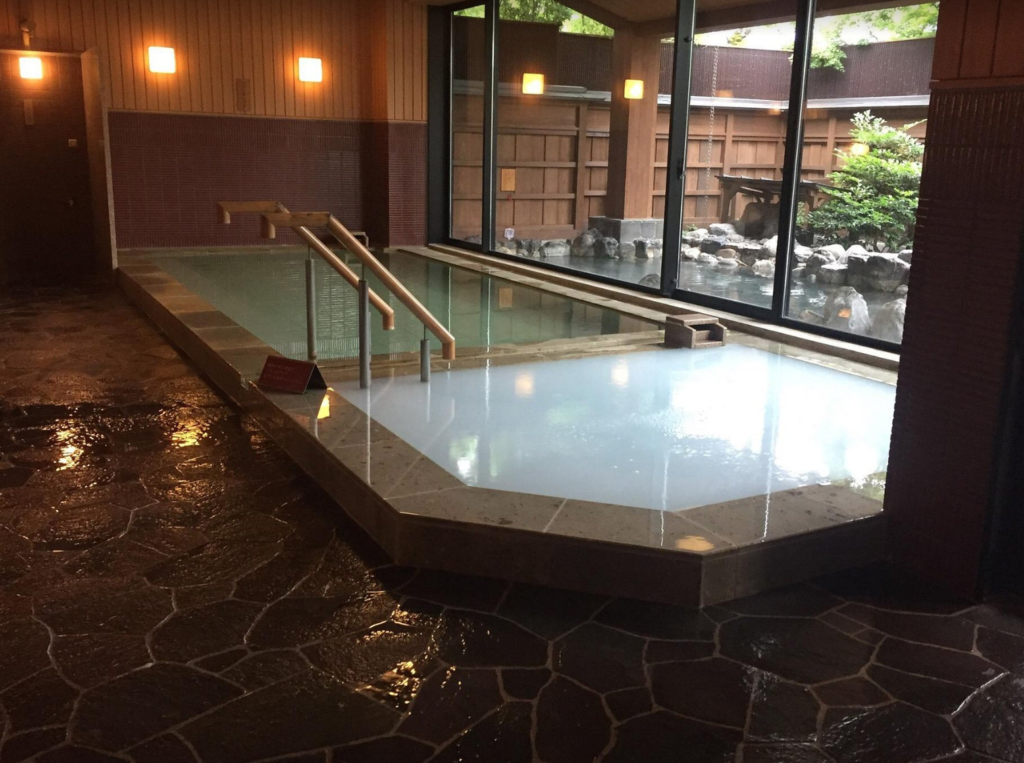
Fufu-no-yu (Arashiyama Onsen) is a modern, day-use onsen located just a one-minute walk from Hankyu Arashiyama Station. Using water from Arashiyama Onsen, known for its skin-softening properties, the facility features an indoor bath, a small open-air bath overlooking a garden, a dry sauna, and a mist sauna. Towel rentals are available, and basic toiletries (shampoo, conditioner, body soap) are provided. Tattoos are permitted only if fully covered with a provided sticker. Large or multiple tattoos may be refused entry at staff discretion.
Explore Kyoto’s Most Iconic Sights
Experience some of Kyoto’s most famous landmarks in a single day on our Arashiyama Tour. Visit three UNESCO World Heritage Sites—Tenryu-ji, Ryoan-ji, and Kinkaku-ji—stroll through the enchanting Bamboo Forest, cross the historic Togetsukyo Bridge, and enjoy a hands-on Kokeshi doll painting experience. Combining iconic scenery, cultural heritage, and traditional craftsmanship, this tour is the perfect introduction to Kyoto’s timeless charm.
5 - Goko Yu and Luck You Ryokan
- Opening Hours - 14:30 - 24:30
- Closed - Monday
- Approx. Cost - JPY 550 day use. Free if staying at Luck You Ryokan
- Towel Rental - Yes
- Toiletries - Can be bought
- Website: Goko-yu
Best for: Tattooed travelers who want a traditional ryokan stay with easy, no-stress access to a fully tattoo-friendly public bath.
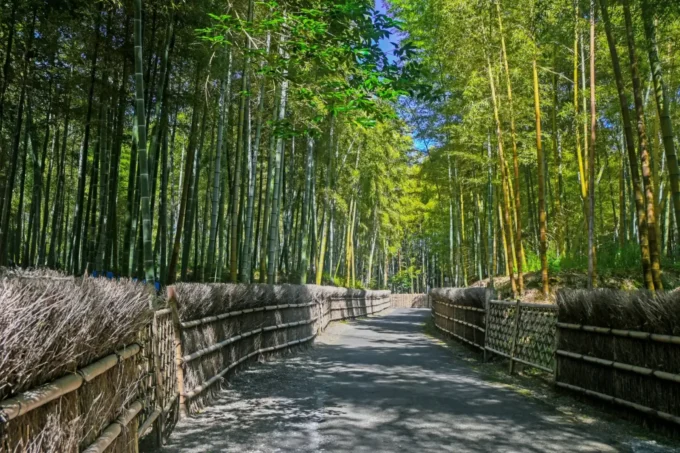
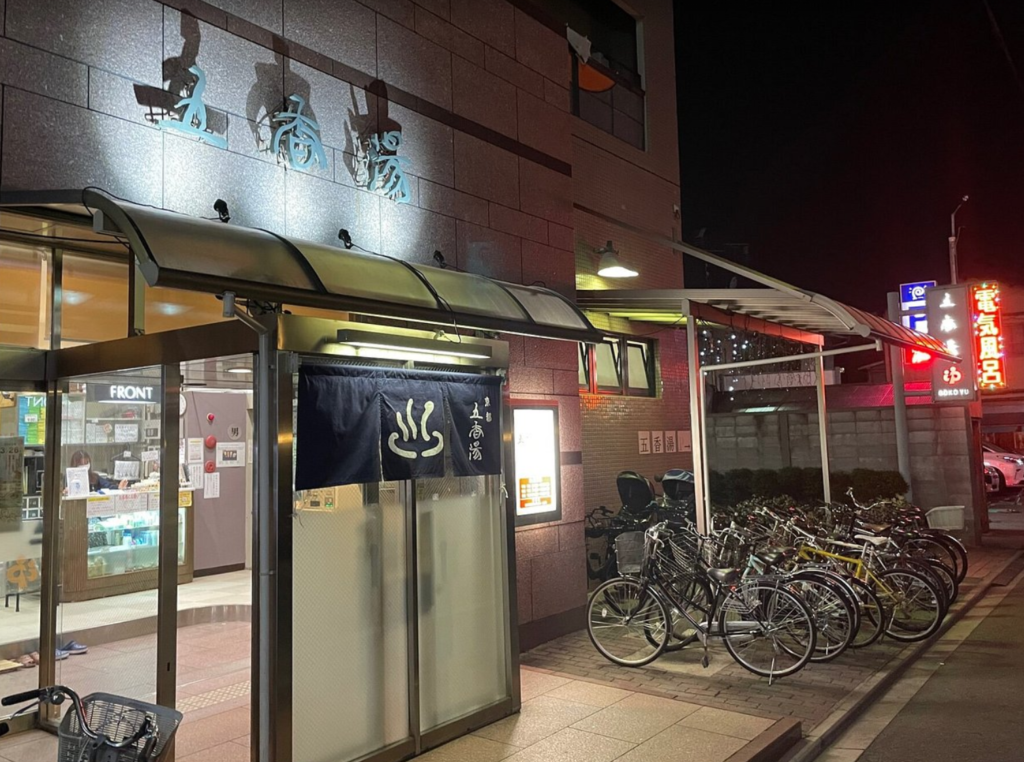
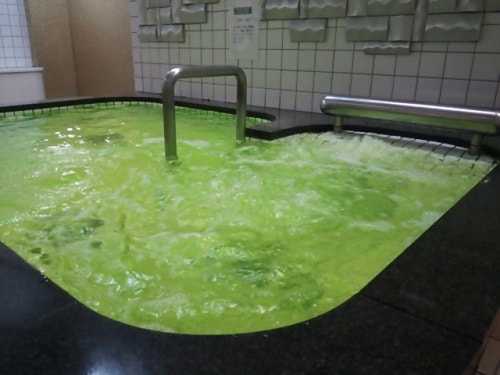
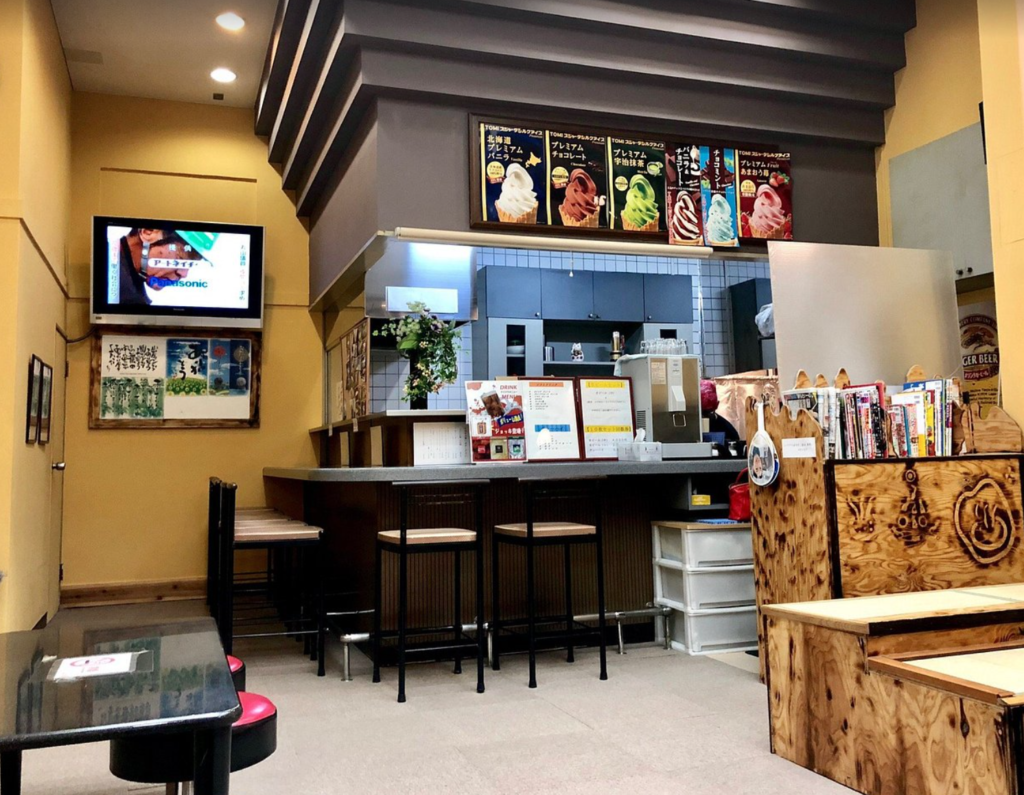
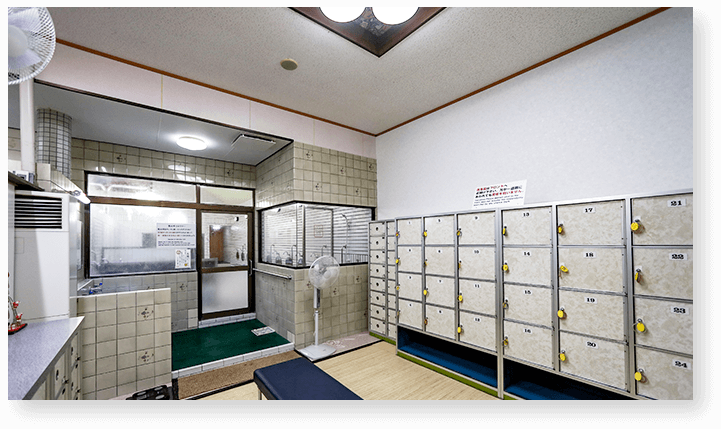
Goko-yu (五香湯) is a classic neighborhood sento in Kyoto’s Shimogyo Ward and one of the city’s most approachable public baths for first-time visitors. Spread across two floors, it offers a variety of therapeutic baths and saunas in a relaxed, down-to-earth setting that reflects everyday Japanese life. There's also a lovely little snack corner to fuel up before or after the bath. Fully tattoo friendly and accustomed to foreign guests, Goko-yu feels welcoming rather than intimidating—an ideal place to experience real Kyoto bathing culture without the formality or high cost of a luxury onsen.
Luck You Kyoto is a thoughtfully designed ryokan inspired by Taisho- and Showa-era kyomachiya townhouses, blending traditional aesthetics with modern comforts like floor heating, Wi-Fi, and air conditioning. While it does not have its own bath, guests receive complimentary access to Goko-yu right next door, making it an excellent choice for tattooed travelers who want an authentic stay without restrictions. Together, Luck You Kyoto and Goko-yu offer a seamless introduction to Japanese bathing culture—sleep on tatami, soak like a local, and enjoy Kyoto at a human pace.
6 - Thoron Onsen Inari
- Opening Hours – 10:00–19:00 (Daily)
- Closed – None
- Approx. Cost – ¥490
- Towel Rental – Yes (small additional fee)
- Toiletries – Not included
- Website – Thoron Onsen Inari
Best for: Travelers seeking a quiet, ultra-local sento experience, post-sightseeing muscle relief, and a glimpse of Kyoto’s everyday bathing culture.
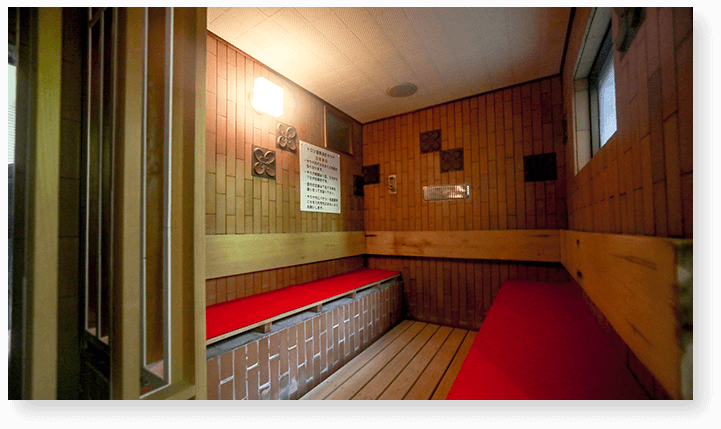
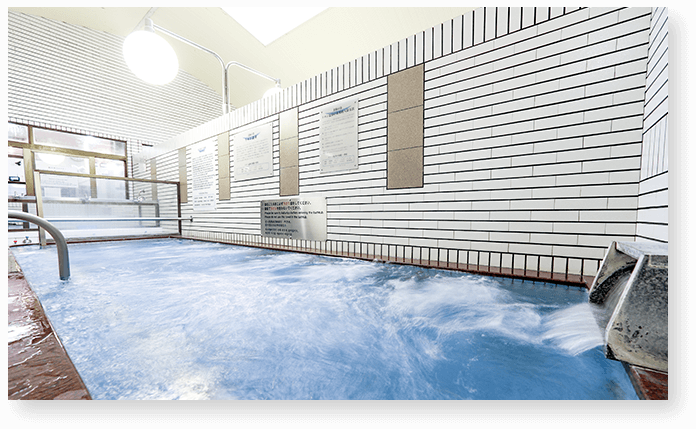
Thoron Onsen Inari is one of Kyoto’s most atmospheric sento and a genuine piece of living history. Founded in 1910 during the Meiji era, this family-run neighborhood bathhouse has served locals for over a century and remains refreshingly untouched by mass tourism. What sets it apart is its mineral-rich water, drawn from underground sources historically linked to the same water system that feeds the moats of nearby Nijo Castle—offering bathers a rare, literal connection to Kyoto’s past.
This is not a luxury onsen, and that is precisely its appeal. Thoron Onsen Inari celebrates the simplicity of everyday Japanese bathing culture, where locals come to soak, relax, and reset. The thoron jet baths and cold-water tub are especially popular for easing sore muscles after a long day of walking Kyoto’s streets, making this an ideal stop for travelers seeking authenticity over polish.
7 - Hakusan-yu Takatsuji
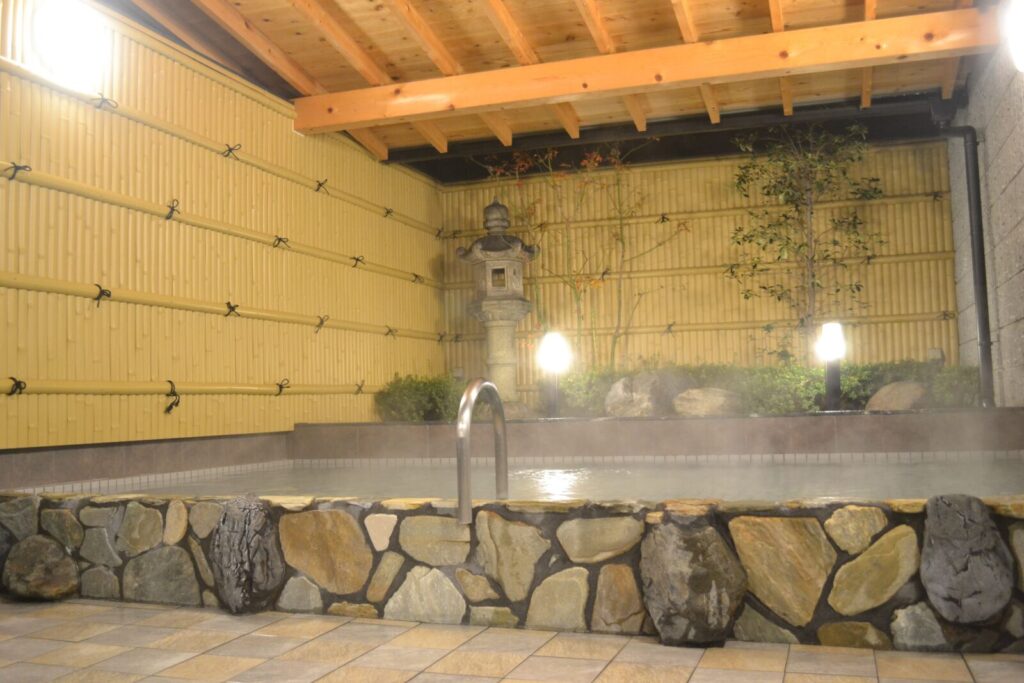
- Opening Hours – 15:00–24:00 Sunday 7:00 - 24:00
- Closed – Saturday
- Approx. Cost – ¥450
- Towel Rental – Not included (bring your own or purchase on site)
- Toiletries – Not included
- Website – Hakusan-yu Takatsuji
Best for: Sauna lovers, budget travelers, and those wanting a reliable, tattoo-friendly sento in central Kyoto.
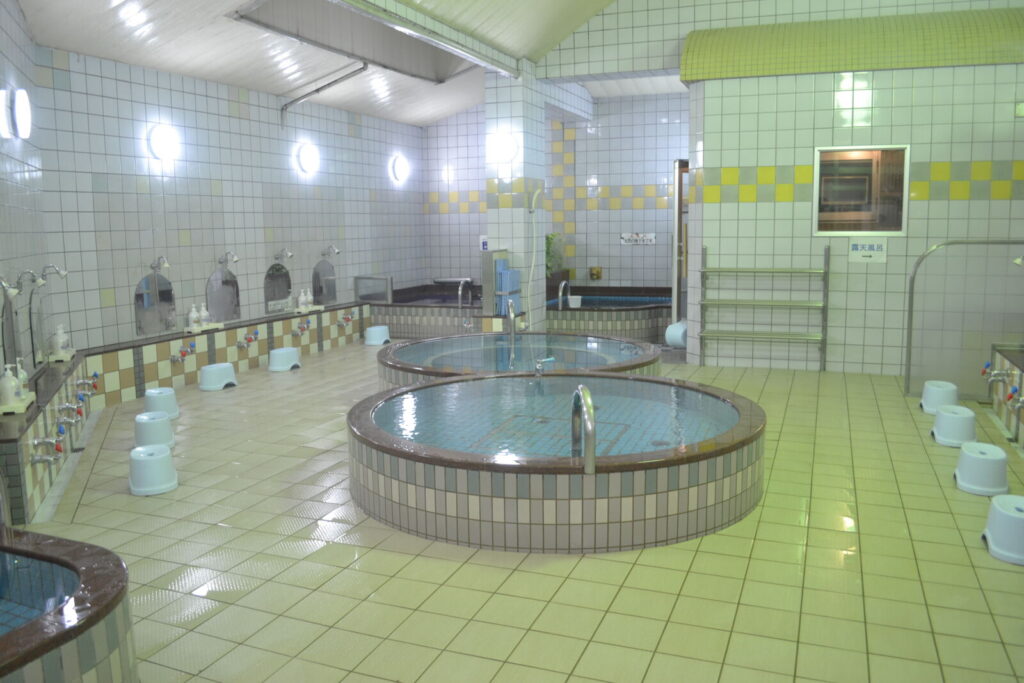
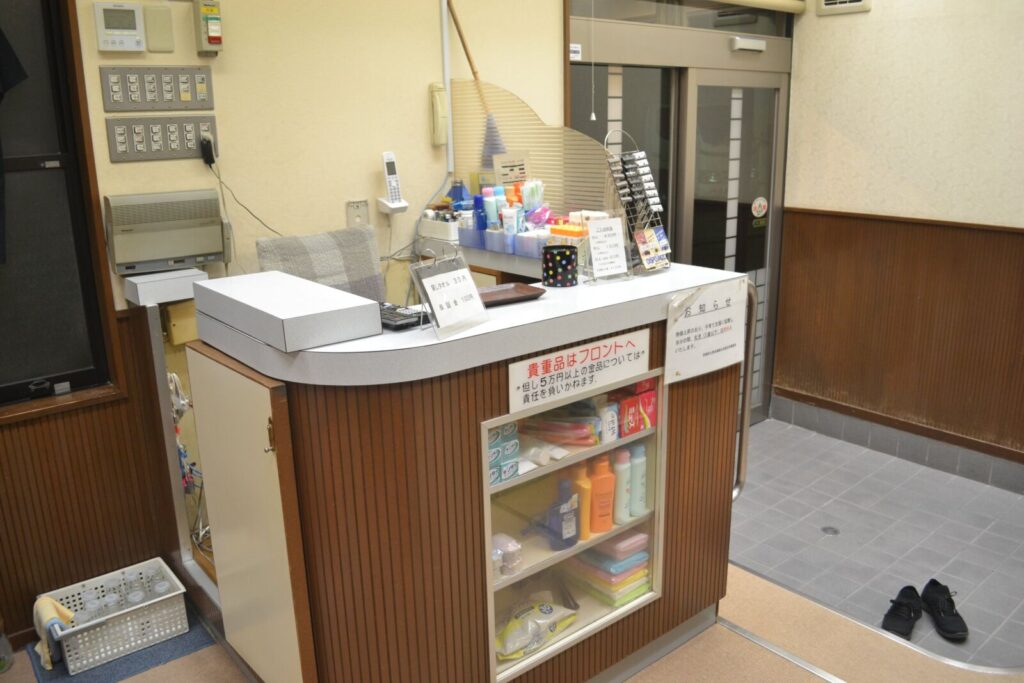
Hakusan-yu Takatsuji is a classic Kyoto sento that strikes an excellent balance between traditional communal bathing and modern comforts. Located in central Shimogyo-ku, this well-known neighborhood bathhouse is especially popular with both locals and tattooed travelers thanks to its open, welcoming atmosphere and convenient location near major transit routes. While technically a sento rather than a natural hot spring, it delivers a full, satisfying bathing circuit at an exceptional value.
The highlight here is the famously hot sauna—often exceeding 110°C—paired with a cold plunge that sauna enthusiasts swear by. Add in jet baths, electric baths, and an outdoor soaking area, and Hakusan-yu Takatsuji becomes a perfect end-of-day reset after exploring Kyoto’s temples and shopping streets. Straightforward, affordable, and unapologetically local, this is Kyoto bathing culture done right.
Note: This location is separate from Hakusan-yu Rokujo; hours and facilities differ.
8- sequence KYOTO GOJO Hotel
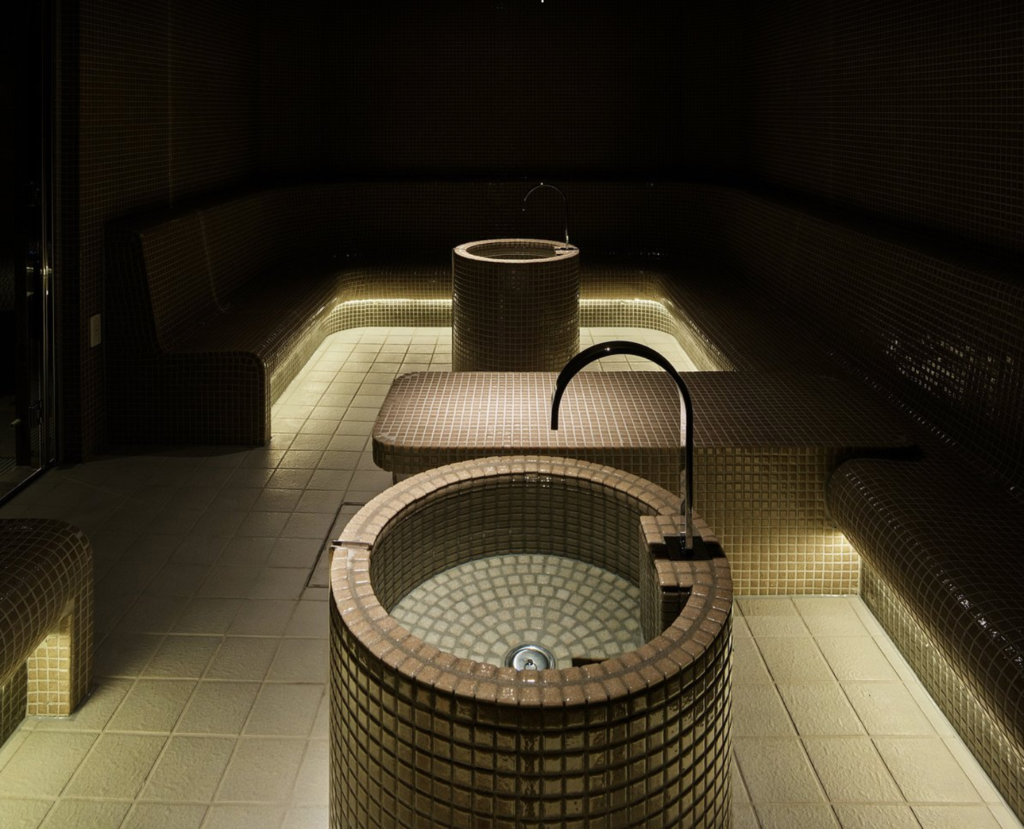
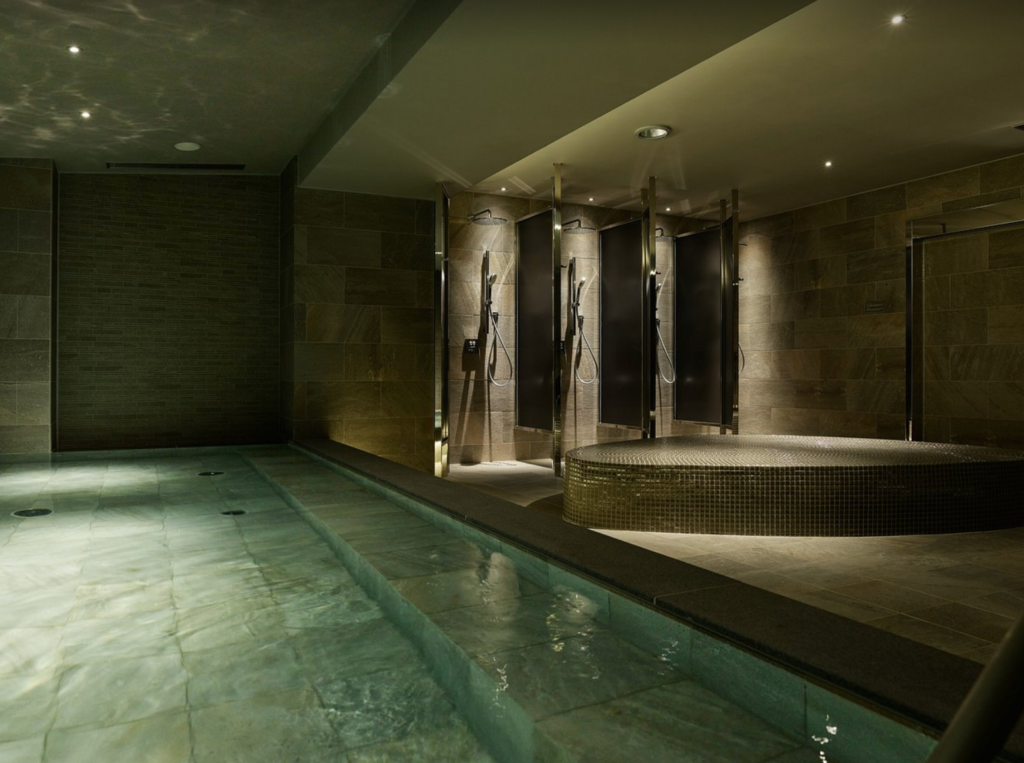
Opening Hours – The Sauna and Bath operate on a rotating schedule for men and women
Closed – None (hotel facility)
Approx. Cost – Included for guests / Day-use varies
Towel Rental – Please bring from your room
Toiletries – Provided
Website – sequence Kyoto Gojo
Best for: Modern travelers, couples, and those wanting a tattoo-friendly bath with contemporary design and hotel convenience.
sequence KYOTO GOJO offers a modern, design-forward bathing experience just steps from Gojo Station. Opened in 2020 as part of Mitsui Fudosan’s “sequence” brand, this hotel bath reimagines Japanese bathing culture for contemporary travelers. While it is not a traditional mineral onsen, the thoughtfully designed facilities—THE BATH and THE SAUNA—focus on relaxation through heat, aroma, and clean minimalist aesthetics.
The bathing spaces alternate daily between men and women and feature hot stone elements, mood lighting, and aroma-enhanced steam saunas that change seasonally. Combined with cashless payment options and English-friendly service, sequence KYOTO GOJO is an easy, stress-free option for tattooed travelers who want a comfortable, modern bathing experience after a day of sightseeing without navigating older sento facilities.
Final Thoughts: Bathing in Kyoto with Tattoos
Kyoto may not have the highest number of tattoo-friendly onsen in Japan, but it more than makes up for it with character-rich sento that offer a genuine slice of everyday life. From century-old neighborhood bathhouses to modern hotel facilities, the options listed above allow tattooed travelers to relax without stress while experiencing an essential part of Japanese culture.
As with all bathing in Japan, policies can change and signage isn’t always clear. A little flexibility, good manners, and awareness go a long way. If you’re open to sento culture and willing to step slightly off the main tourist path, Kyoto rewards you with some of the most memorable and human-scale bathing experiences in Kansai.
For a broader overview, regional comparisons, and updates across multiple cities, be sure to visit the Kansai Onsen Page.
Planning Your Kyoto Trip?
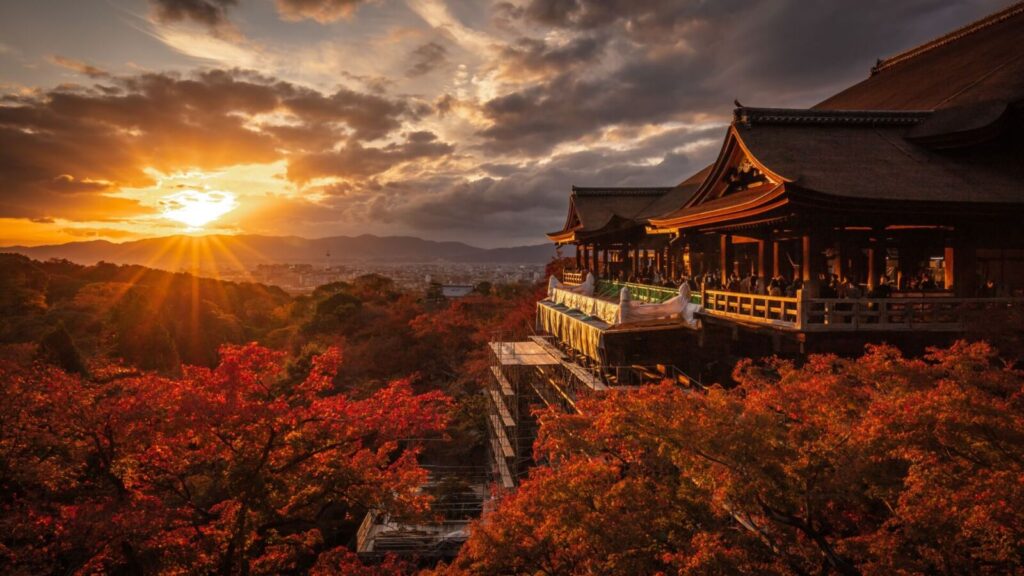
If you’re still shaping your itinerary, start with our 7-Day Kansai Japan Highlights Itinerary, which combines Kyoto, Osaka, and Nara into a balanced first visit. For inspiration and practical tips, see our 40 Things to Do in Kyoto, Nara, and Osaka, including seasonal ideas and neighborhood recommendations.
Looking to go deeper? Our Best Tours in Kyoto page highlights cultural experiences that go beyond the usual sights. If you’re deciding where to base yourself, our guide on staying in Osaka or Kyoto breaks down the pros and cons of each.
For themed travel, don’t miss our Essential Guide to Geisha in Kyoto, or explore Kansai’s brewing heritage with our Top 10 Sake Breweries to Visit in Kansai. Finally, for help making restaurant reservations in Kyoto, check out our Guide on Making Reservations in Kyoto
Frequently Asked Questions
What should I bring with me when I visit an onsen or sento?
Generally, you should bring a small towel, toiletries (soap, shampoo), and a change of underwear. Many Japanese people bathe in the evening and then change into pajamas or relaxed evening wear, so bring whatever you’re comfortable wearing afterward.
Most facilities provide basic amenities, and many have hair dryers, though some may charge a small fee. If you’re visiting a sento rather than a hotel onsen, bringing your own items is especially recommended.
Are there any rules or etiquette I should know before visiting an onsen?
Yes—onsen and sento etiquette is important, and it’s taken seriously. In fact, tattoo-friendly baths are often stricter with etiquette to balance their more flexible tattoo policies.
Key rules to know:
- Do undress fully and wash your body thoroughly before entering the bath.
- Do rinse off all soap and shampoo completely before soaking.
- Don’t take photos in the bathing area—even in private baths, many operators prohibit photography.
- Don’t let your towel or hair touch the bath water.
- Don’t swim, splash, or treat the bath like a pool.
- Do keep voices low—onsen are generally quiet, relaxing spaces.
- Do be considerate of others. Public bathing is communal, but staring is considered rude.
- If another guest makes you uncomfortable, report it to staff rather than confronting them directly.
Follow these rules and you’ll fit in just fine.
Some places mention needing stickers, plasters, or band-aids for tattoos. Why is that?
As tattoo policies slowly evolve in Japan, some onsen allow tattoos only if they can be fully covered with stickers or band-aids provided by the facility (or brought by the guest).
If you have large tattoos—such as sleeves, chest pieces, or full-back tattoos—that cannot be covered, staff may still refuse entry, even at places listed as “tattoo-friendly.” This isn’t personal; it’s simply how policies are enforced.
Always check individual rules in advance and follow staff instructions.
I have a skin condition. Is it safe to use an onsen?
Onsen are often said to have medicinal benefits, but this varies depending on the mineral content—and on you. If you have a skin condition or other medical concerns, it’s best to consult your doctor before visiting Japan and using onsen.
When in doubt, start with a short soak or choose a standard sento instead of a mineral-rich hot spring.
Why does it matter if I have tattoos when I’m clearly not Japanese?
This frustration is understandable, and most Japanese people would quickly recognize that foreign visitors with tattoos are unlikely to be affiliated with organized crime.
That said, rules are rules, and Japan is not known for flexible interpretation. Tattoo restrictions exist to maintain comfort for all guests, not to single anyone out. While policies are slowly changing, enforcement remains strict in many places.
The best approach: research ahead of time, respect posted rules, and choose tattoo-friendly facilities.
Am I really missing out if I don’t visit an onsen while in Japan?
Honestly? It depends on you.
Onsen are popular, but they’re not universal—even among Japanese people. Many locals rarely, if ever, go. We generally recommend trying it once, and maybe again if you’re unsure.
If onsen aren’t your thing, don’t worry. Japan offers far more than hot baths:
nature walks, historic neighborhoods, temples and shrines, museums, art galleries, vibrant cities, coastal scenery—and some of the best food on the planet.
Japan is not “just onsen,” and your trip will still be incredible without them.
Are onsen and sento separated by gender?
Yes. Almost all onsen and sento are separated by gender, with clearly marked entrances for men and women. Mixed-gender baths (konyoku) do exist, but they are rare and usually found in rural areas.
Children are generally allowed to bathe with a parent of either gender until a certain age, which varies by facility.
If you’re uncomfortable with gender-separated bathing, look for private baths (kashikiri) or family baths, which can often be reserved in advance.