



History of Yokokan Garden
The original villa and garden were built on the orders of the third lord of Fukui, sometime between 1623 and 1645, although the records of its founding were lost when it was destroyed in WW2 bombings. The lords of Fukui came from a branch family of the Shogun's so Fukui, through its rulers, wielded immense political and financial power through the early days of the Edo Period. The villa would have been a powerful example of that, with wide rooms featuring high ceilings made of expensive wood. The lords would entertain guests and show off their wealth.
The garden, too, would have played an important role in that. Although damaged by air raids in 1945, parts survived mostly intact. Its design philosophy is typical of the time: a strolling garden with a forest and pond intended at showcasing the changing of the seasons. It is for its execution that it became famous, however. Records detailing the visits of powerful samurai lords from across the country coming to the villa and marvelling at the garden are preserved.
Visiting the Garden
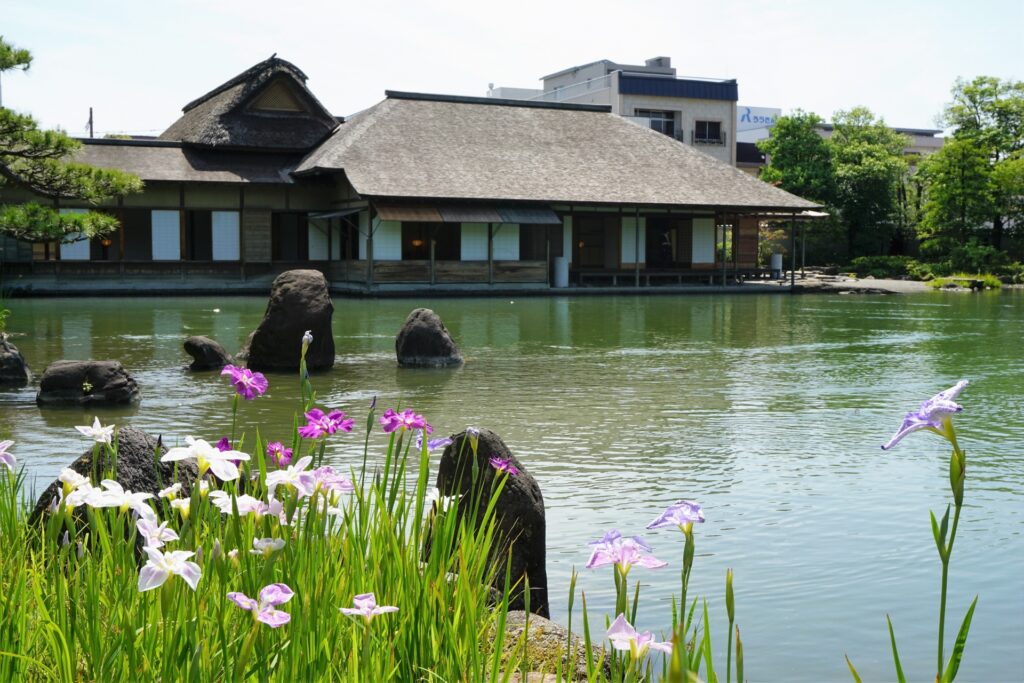
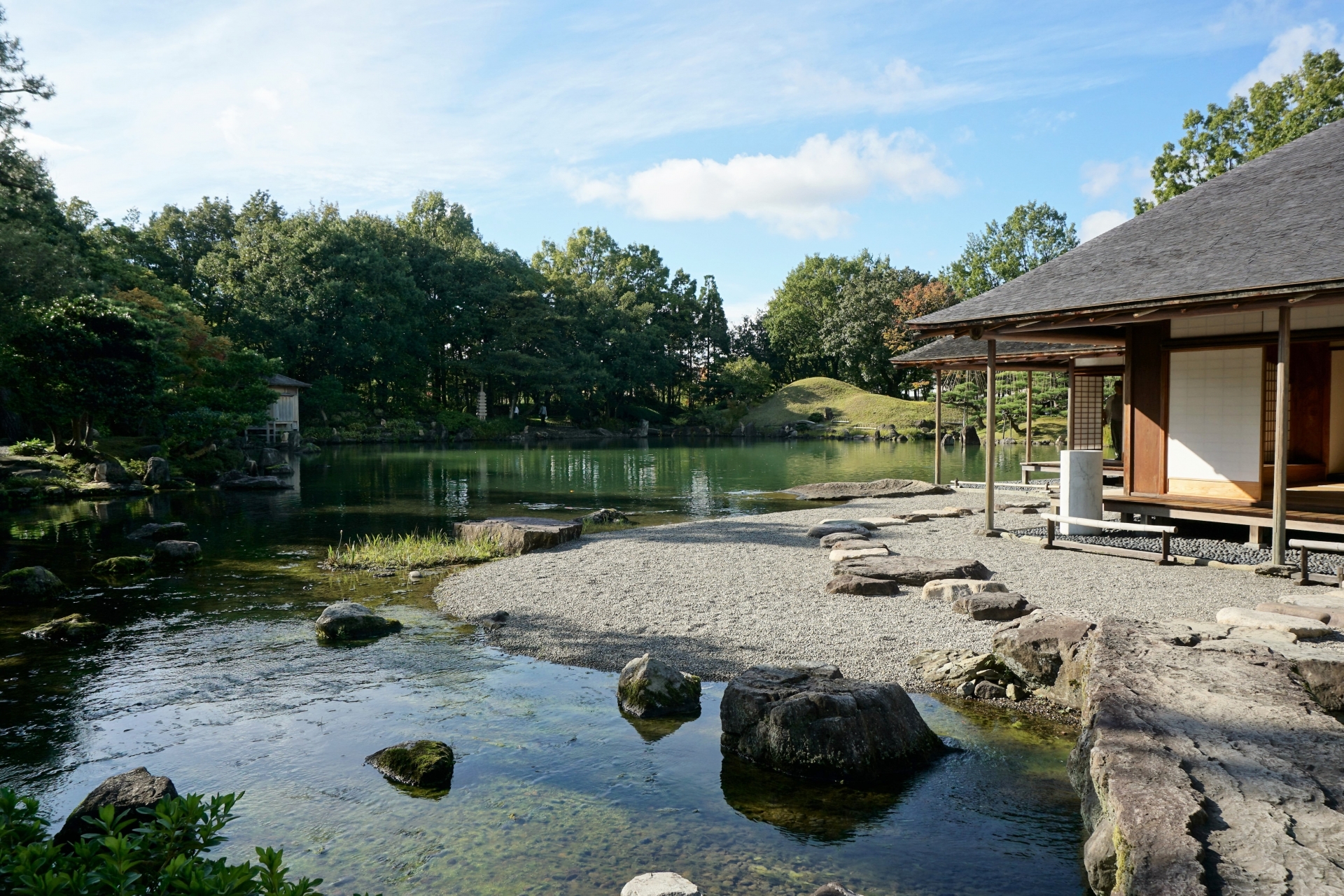
The reconstruction, which was completed in 1982, is a faithful adaptation of the the layout of both the garden and the villa as the records of their designs were well-preserved. As mentioned, the gardens were only partially damaged during the raids. Restoration work was, therefore, relatively painless. The main feature of the garden is its massive pond. The nearly-square pond fills the entire garden and, uniquely, has no island. This gives the impression that the villa floats adrift in the water.
As a former residence of the ruling-Matsudaira clan, the villa and gardens hosted guests of high status and tea ceremonies. It was located at the edge of the outer moat of the castle and frequented by the daimyos, especially during the 17th and 18th centuries. The gardens as they are represented today was the work of the 7th lord of Fukui. The gardens feature a large pond that surrounds the villa, giving the impression that is it floating in water. There are also stones used on some of the paths that were from the residence of the Asakura family in the 1400s.
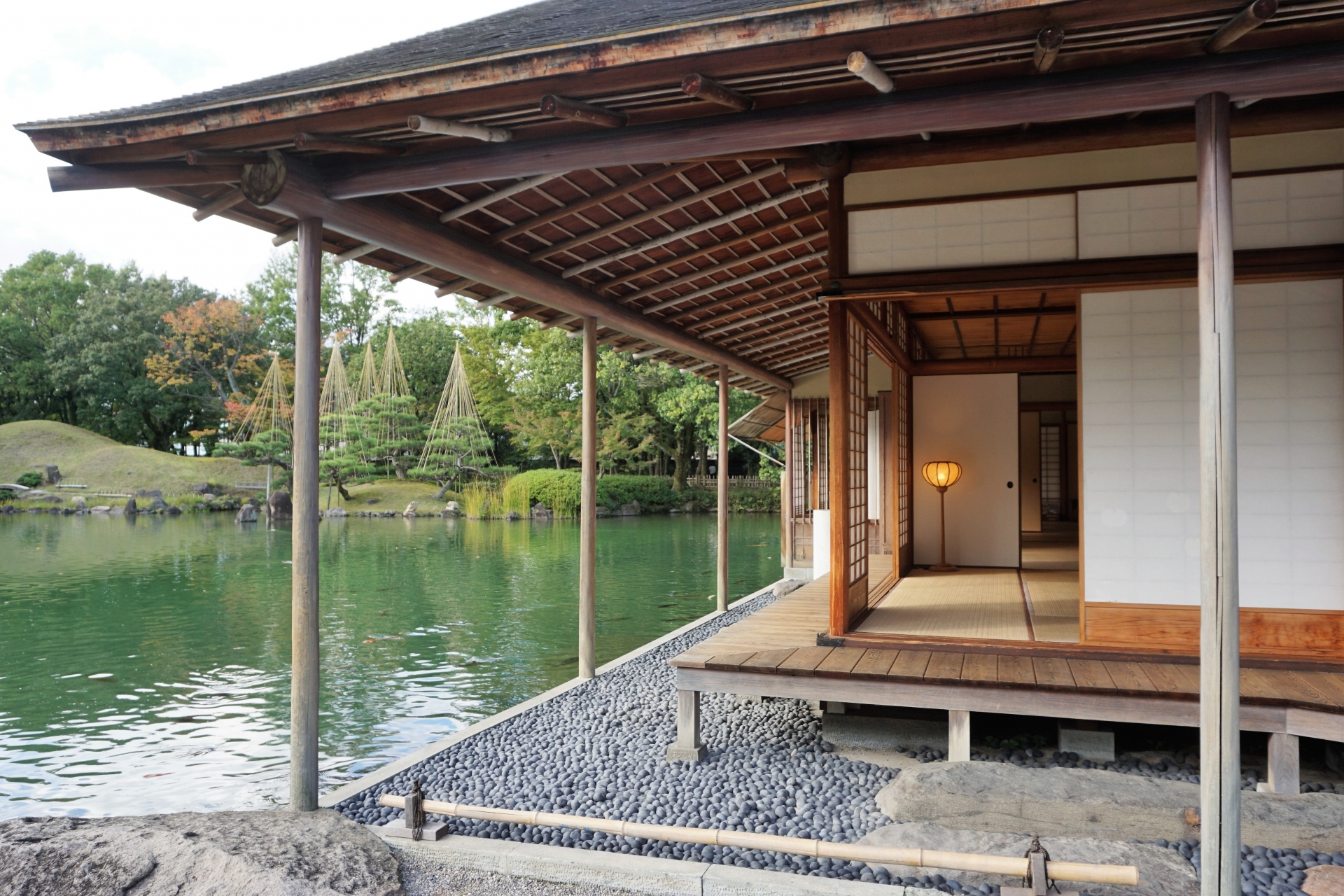
The highlight of the house is undoubtedly the Otsukiminoma, the moon-viewing room. On clear evenings, the moon reflects off the water. The room is designed so the moon can be seen from all directions, except north, from when it rises until it sets.
The garden is particularly beautiful in autumn, as the leaves change colour and turn the surrounding landscape red, gold, orange and brown. The colours of the trees against the lake and "mountain" across from the house create a picturesque view. Inside the house itself are reproductions of different pieces that the daimyo. One of the most interesting is the bath of the daimyo. This is an area that is rarely seen in other palaces and homes for daimyos around Japan. The shape of the the room is interesting as it is on a slope. Just outside of the building there is a stone bridge which is the largest in Japan.
As you look around the garden and the building there are so many points of interest that will bring you in deeper and deeper into the history of the Matsudaira family.
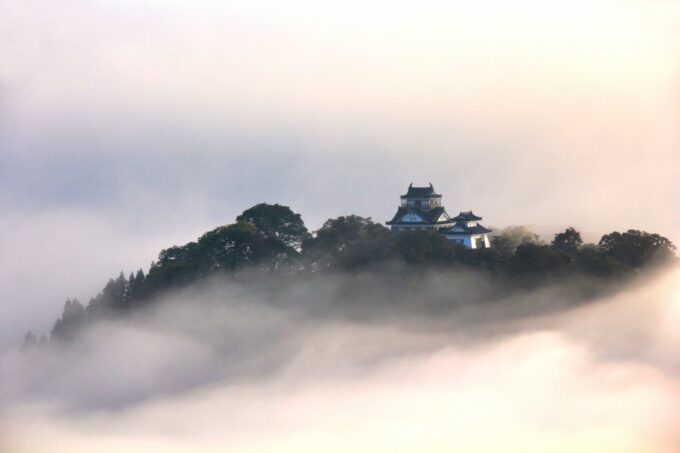
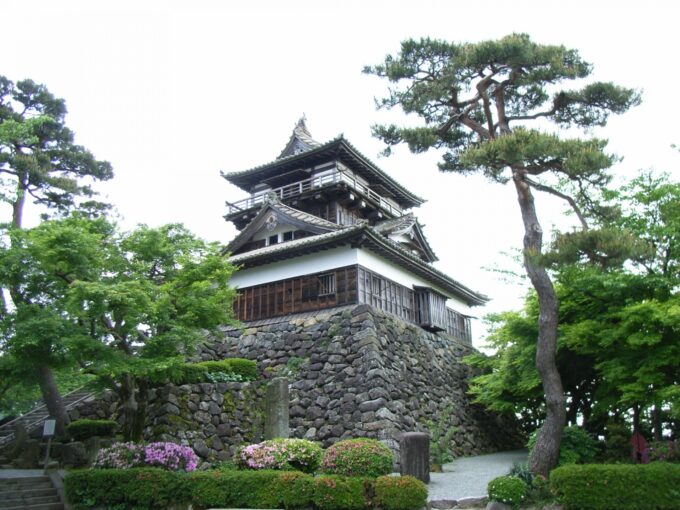
And if you are interested in visiting some of the other sights in Fukui city, such as the castle and the Atagozaka Slope, join us for one of of tours! It doesn't just stay in Fukui as well. You will have the opportunity to see Eiheiji, one of the Head Temples for Zen Buddhism. It is a full day of learning about the history of the area and feeling the spirituality of the Japanese mountains. See below for more information.
EIHEIJI & FUKUI CITY FROM KANAZAWA / all year round
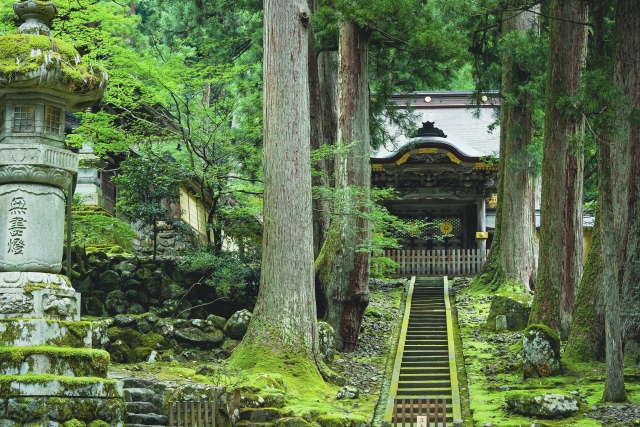
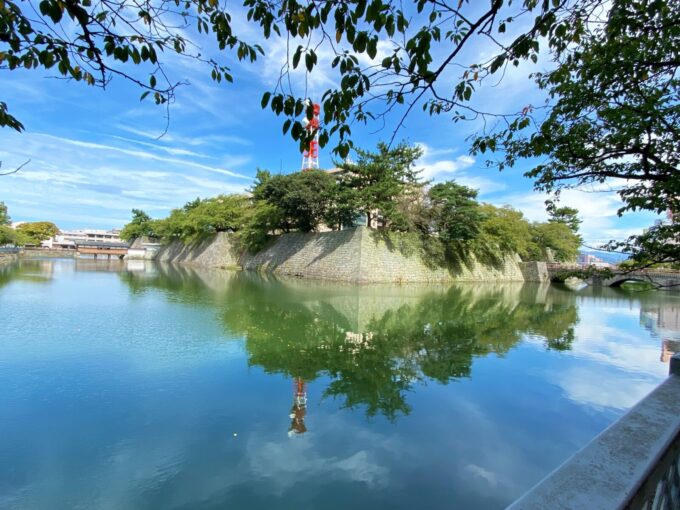
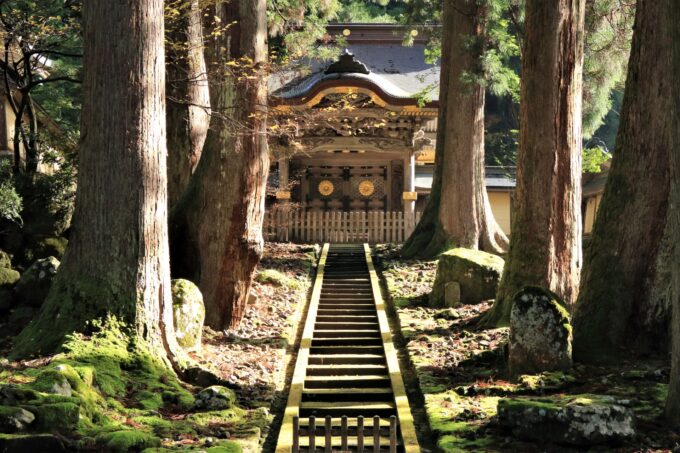
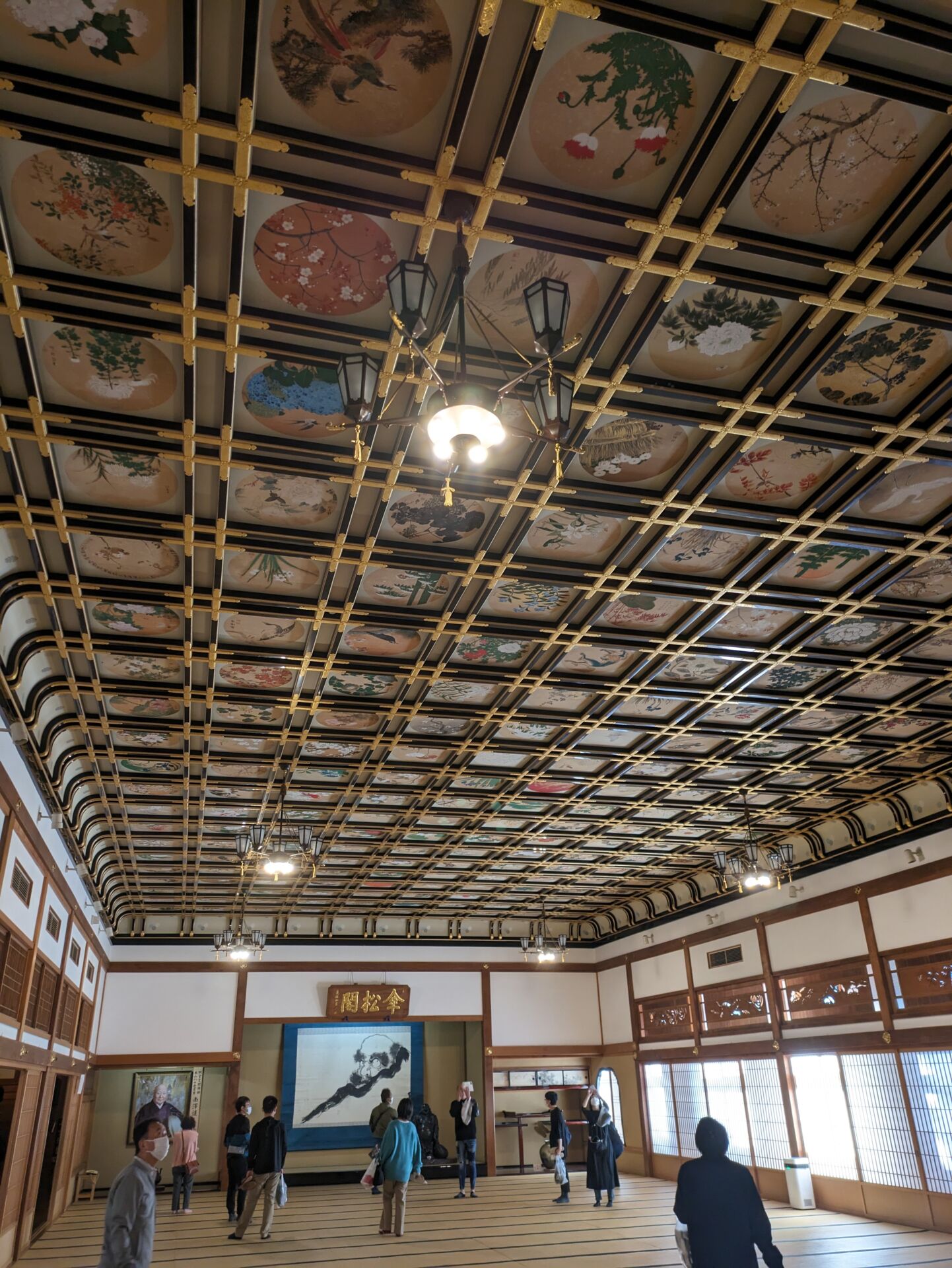
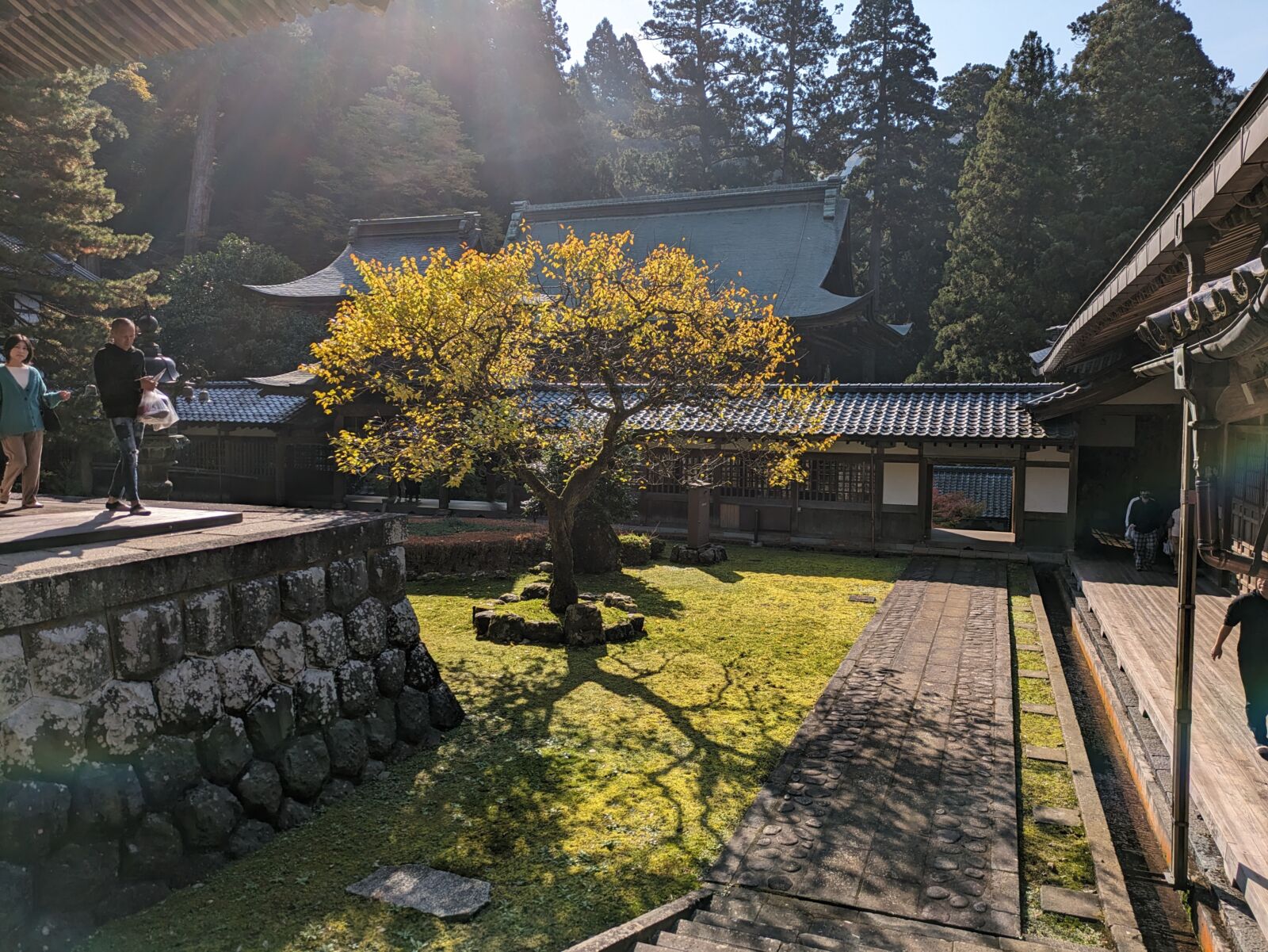
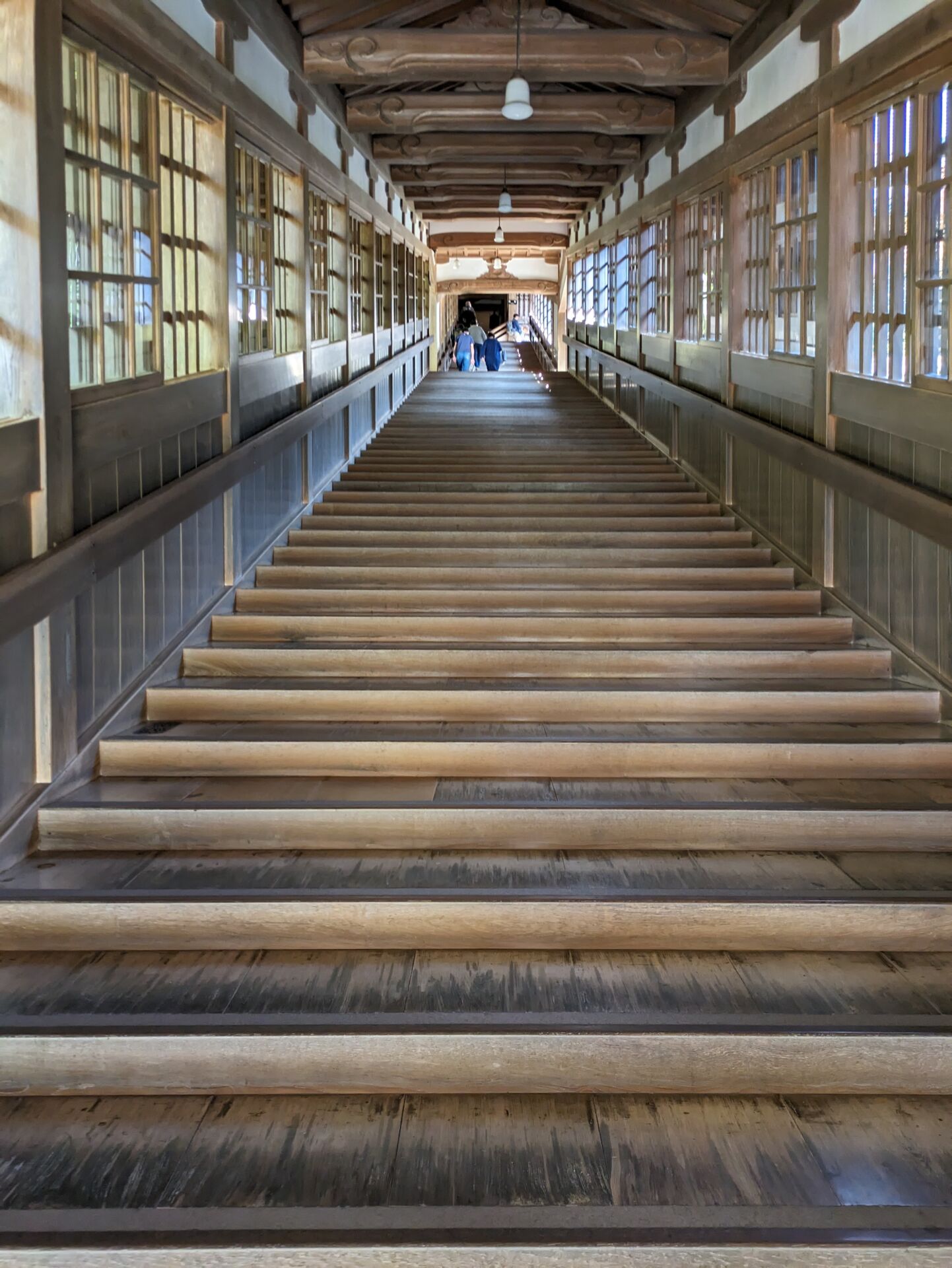
As one of the head temples of the world-famous Japanese Soto Zen Buddhist sect, Eiheiji Temple is a place where you can feel the mystery and beauty of traditional architecture hidden in a natural paradise. On this tour you can choose start from either Kanazawa Station or Fukui Station. After grouping up at Fukui Station, we will take a tour of the city in the morning, seeing the castle walls, the "rainbow" shrine, and views of the city from the Atagozaka Slope. We will eat in the city before heading out on a direct bus to Eiheiji Temple. The ride into the mountains is about 30 minutes and we will arrive near the temple grounds. This area has had groupings of temples for over 500 years and at its peak had thousands of monks living in the area. We will walk through the temple and learn about the history as we climb up deeper into the temple. There are many excellent photo spots to discover, too. There are so many interesting angles that catch the intertwining of nature and architecture all over the complex. Try to find the one that touches you the most!
Frequently Asked Questions (FAQ)
When is the best time to visit the garden?
We recommend visiting Yokokan Garden in the autumn. The garden is famous for its fall foliage and the sun sets a little earlier, so you have a chance to see the moon while the villa is open.
What are the opening hours?
The villa and garden are open from 09:00 A.M. to 07:00 P.M. every day except the week from December 28th to January 4th.
From November to February, the area closes a little earlier, at 05:00 P.M.
How long does it take to fully enjoy?
We recommend taking about 30 - 40 minutes to stroll through the garden, have a look round the villa, and take time to sit and enjoy the peace and quiet.
How do I get there from Fukui Station?
It's a simple 10-minute walk from Fukui Station. Walk past the castle on the west side and cross the road. You will see the garden immediately in front of you. If you wish to take a taxi, there is a taxi rank just outside of the station. It is a five-minute drive to the garden from there.